2024 Winter Cattle Journal | Legacy: Remembering Frank Schiefelbein

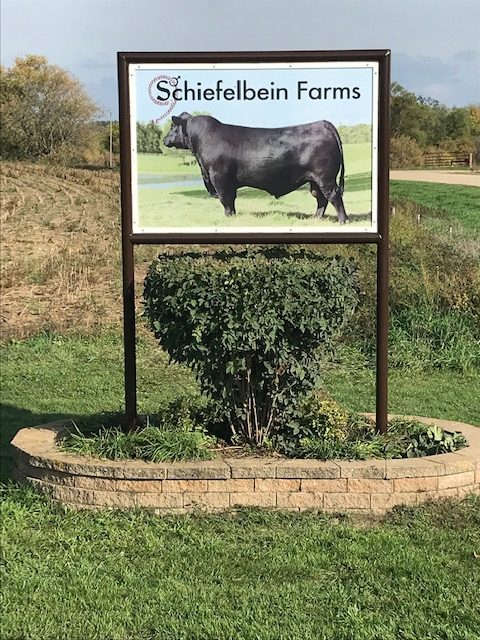
There are those who dream of creating an empire. Frank Schiefelbein did.

What’s more, seven of his nine sons continue to carry his vast legacy after his passing in 2022.
The analogy is fitting. Each son manages what the family consider a “kingdom” on their farm. Each king is responsible for what happens within his realm, whether it be marketing, feed lot management, crop raising, finances, customer relations, and more. Six of “Big Frank’s” grandsons work for the farm full-time, too, and roughly 100 family members are indirectly involved.
Frank and his wife, Donna Mae “Frosty” raised their children to find success as a team – the achievement of a lifetime. But that is only the half of it. Schiefelbein Farms is the largest seedstock producer in Minnesota and one of the top 30 producers in the nation.
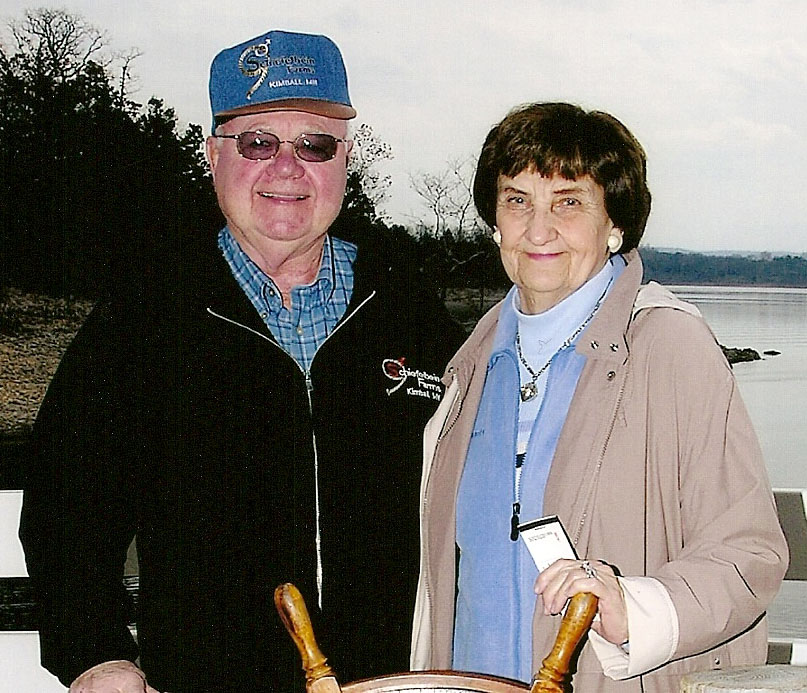
With an IQ greater than that of Albert Einstein, Big Frank’s success in his chosen passion of agriculture was non-negotiable. He was raised in the city and graduated summa cum laude from St. Thomas College with two separate degrees – in math and science – within three years. As soon as he and his bride, who was also raised a city girl, moved to the rural area of Kimball, Minnesota in 1955, they could not understand why anyone would live anywhere else.
All he knew was that he wanted to raise cattle. “He wasn’t held back by tradition of any sort. He didn’t know a thing,” said his son, Don Schiefelbein. Rather than getting sidetracked by secondary details, Frank focused on the final product: a good steak. This influenced all of his business decisions.
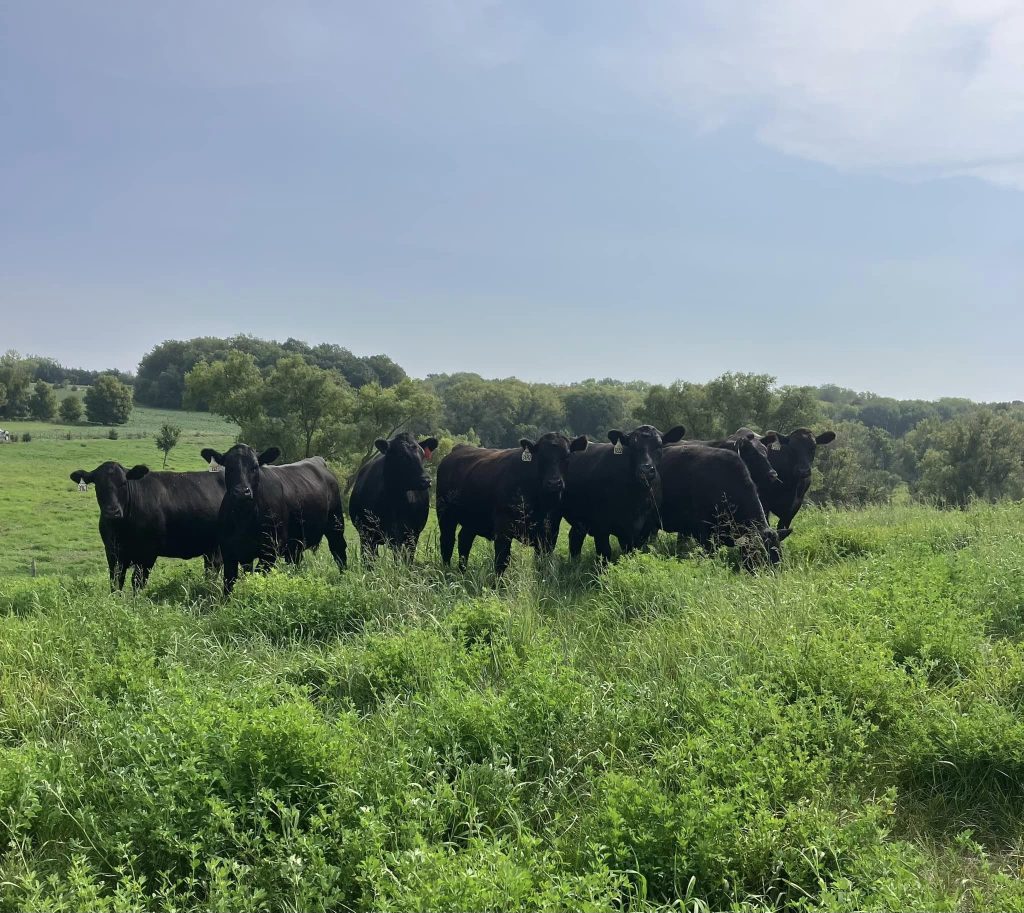
Angus cattle suited Frank’s needs best. Once he was immersed in the industry, he began collecting carcass data in 1978 before anybody dreamed of doing that.He could deduce which sires and genetics would create the best end product.
Always an innovator, Frank began the industry’s first buyback program in 1993. Today, Schiefelbein Feeders, LLC. purchases 30,000 customer calves annually.
“Dad’s whole frustration with the cattle business is that we worked so hard getting all these genetics exactly the way we wanted and then sold them on an average marketing system. So how do we convince people to pay extra for good genetics and have them sell their calves on average? That’s what we had to seal up,” Schiefelbein said. “We closed the thing full circle. Every animal we market is evaluated on a value-added grid. If the animal does better than average, we get paid better than average.”
“Our whole goal is to make customers successful as possible.”
“A generic feed lot buys head count and feeds cattle based on an average mentality and markets based on average mentality. We are feeding these cattle based on the high-growth, high-genetic cattle we know they are. Whereas a normal feed yard is getting them out at 18 months of age, the calves we feed through our system are routinely marketed at 13 months of age and weighing 1,350 or more at that time, with a carcass that can compete incredibly well on an evaluating system. From an efficiency standpoint, nobody can do what we’re doing,”
Perhaps Frank’s greatest accomplishment is passing on a successful operation to his children. “[Dad] absolutely, from day one, wanted every one of his children to have the opportunity to live the life he loved.” Of the eight living sons, seven are active operators, with the eighth still involved to a lesser degree.
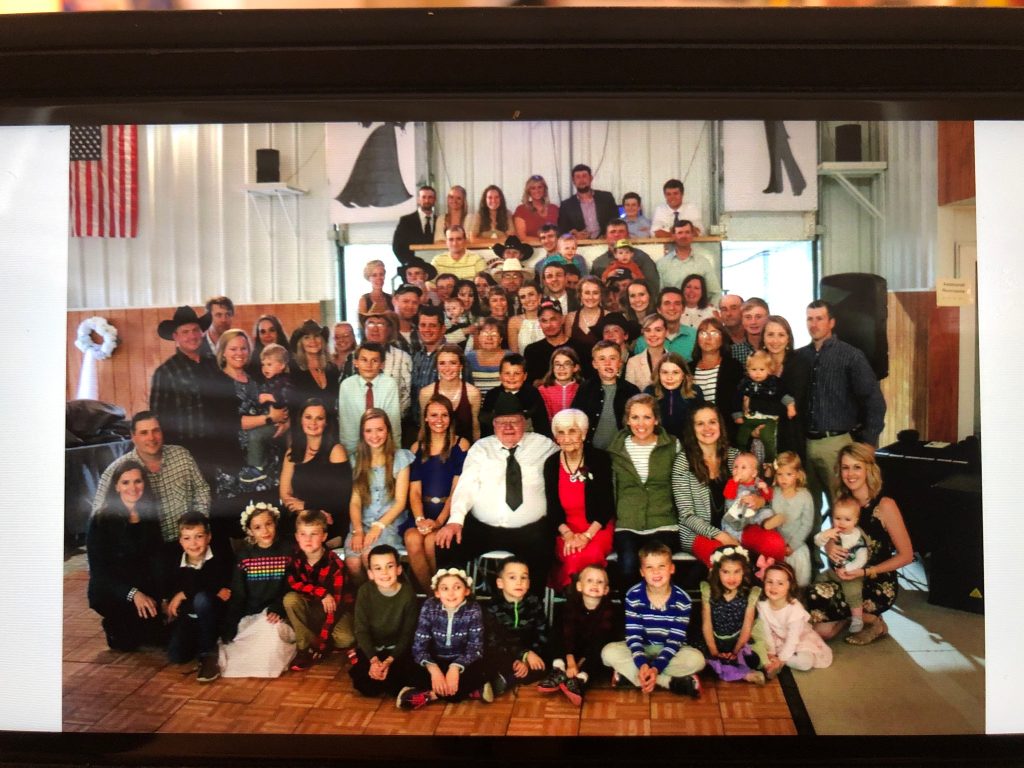
“Everybody said he couldn’t, and Dad really excelled when people say ‘you can’t,'” said Schiefelbein. Though many fathers want their children to come back, Big Frank told his sons they were not allowed to return to merely take a piece of the pie. They had to come back with a plan to grow the pie. Thus, the various enterprises within Schiefelbein Farms were born and continue growing.
Each morning begins with a meeting, in which new ideas are proposed and discussed. The key to their success is trying to be on step ahead of everybody else in the industry. “That’s the huge advantage of multiple people: you’ve got a lot of different minds contributing ideas. You can imagine the gene pool Dad started with his intelligence and shared downstream. You’ve got 15 people constantly challenging each other saying, ‘What can we do? What’s the next step?'”
For example, the family brought back the slat barn which had fallen out of style due to being hard on the feet of cattle. As the dairy industry improved slat barn designs, the Schiefelbeins took notice of it and built one for feeding beef cattle in 2008. As they anticipated, the cost of fertilizer spiked significantly, and they were able to utilize the manure instead of letting it go to waste. Suddenly, Schiefelbein said, they were netting $50-$100 per head they were feeding, just by saving the manure.
“We actually have a pretty extensive crop operation,” he said. As the crops need to live on their own merit, careful decisions are made regarding that sector of the business, too. The corn they raise is more valuable as a product, so it is sold. They then turn around and purchase a byproduct, like wet cake, for 110% the feed value at 70% of the cost.
Before anyone else, the Schiefelbeins also began taking advantage of Minnesota’s laws concerning sweet corn waste. The state government deems more than 1,000 lbs. of sweet corn shucks “hazardous waste”, so the farm implemented sweet corn pads where the feedstuff could be dumped and eaten by their cattle at no cost.
“That’s the way dad has pushed us: How can we do things smarter rather than worry about working harder? And we work hard too. Dad always said that’s how you really have success: you work smarter and you work harder,” he said.
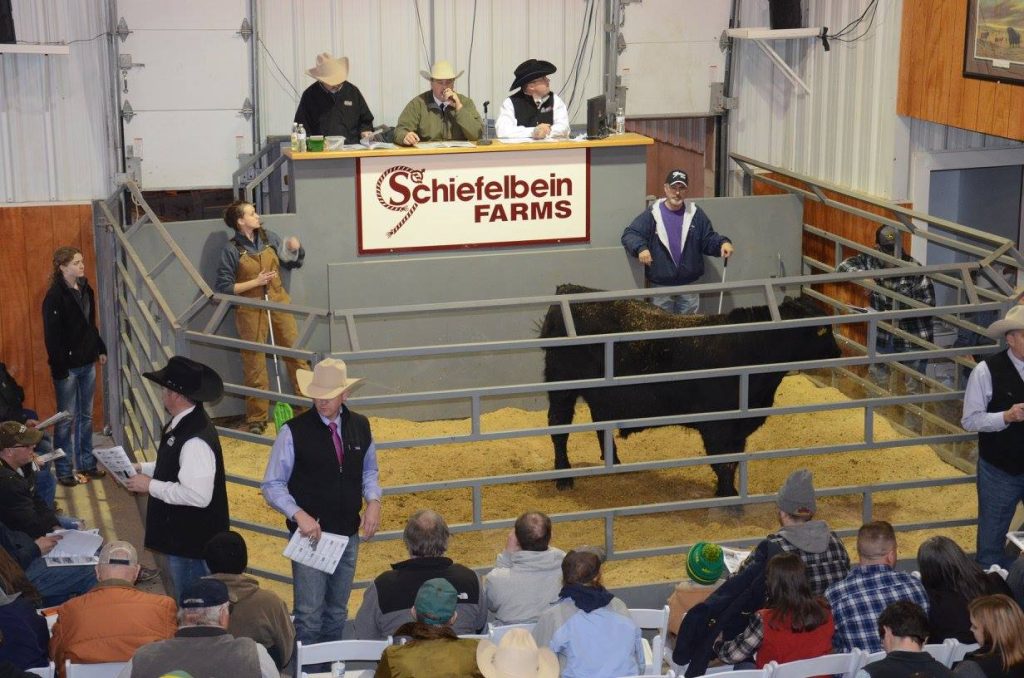
Schiefelbein Farms merchandise 500 bulls per year. Of those, 100 are sold private treaty for volume buyers. Additionally, they sell 50-100 females each year if they do not fit their calving season.
A completely heated calving barn was installed in 2015, allowing them to calve 1,000 cows in February. Their slatted barn was expanded in 2011 to house 2,500 head.
In 2019, a sire called Schiefelbein Showman became the farm’s record selling bull when Hamilton and Six Mile Ranch out of Canada purchased him for $125,000. Two years later, Schiefelbein Untouchable tied the record, being purchased by Ranch Covey Hill and MAC Angus.
In 2022, Schiefelbein G.O.A.T. surpassed all records, being sold for $232,000.
How did Big Frank build an operation so substantial? According to his son, he did it by noticing the direction everyone else was going, and going the other way.
In the 1980’s, for example, when times were horrible for agriculture, Big Frank expanded his farm and increased his cattle herd. “This is probably how we built our business the quickest,” Schiefelbein said. “[Dad] was lucky to have a banker that knew Big Frank wasn’t a chump. They allowed him to expand in times when everybody thought it was nuts.” And so it went for the past four decades.
Frank’s beloved wife of 69 years passed away less than a year after he did on November 5, 2023. Frosty, like many great matriarchs, fulfilled her obligations largely unnoticed. Yet, her influence on her children is seen in their continued familial bonds while operating a business together. “Doing that family part right is so key if you’re going to have a family operation like ours where multiple family members are working here together,” Schiefelbein said. “Mom loved the atmosphere of raising kids in the country.” While Big Frank grew the farm, she grew their boys. At the time of her passing, Frosty (and Frank) had 32 grandchildren and 32 great-grandchildren.
Schiefelbein Farms continues to do business like Big Frank, working for the success of their customer and creating the best steak possible. “Dad always said, ‘The only thing that can keep us succeeding is ourselves. If we work together, nothing can stop us.'”