2025 Horse Roundup | Better Horses: The AQHA frozen semen/embryo rule debate
“The bottom line within AQHA is that our objective and our passion is to make a better horse.”
–Jim Hunt
The American Quarter Horse Association Stud Book and Registration Committee considered proposed changes to rules concerning the use of frozen semen and embryos at this year’s AQHA convention in March. Current rules, established in 2015, limit the use of frozen semen from stallions born in 2015 or later to two years after the horse is deceased or is gelded, and limit the use of frozen embryos from a mare to two years after she is deceased or spayed. Horses foaled prior to 2015 have no limits placed on the use of frozen semen or frozen embryos.
-
The AQHA Stud Book and Registration Committee considered proposed changes to rules regarding the use of frozen semen and embryos at the 2025 convention. Current rules, established in 2015, limit the use of frozen semen from stallions born in 2015 or later to two years after the horse is deceased or is gelded, and limit the use of frozen embryos from a mare to two years after she is deceased or spayed. Horses foaled prior to 2015 have no limits placed on the use of frozen semen or frozen embryos.
bwl 5-22-2014 7-35-55 PM
-
The Stud Book and Registration Committee is a stand-alone committee in the AQHA, compiled of 20-25 individuals. Most are past presidents, veterinarians, long-time national directors.
IMG_2080
-
The “frozen semen rule” has been a hot topic this year, inviting some heated discussion at the AQHA convention and drawing attention on social media.
IMG_2096
-
-
“As breeders, it is our goal to make better horses.” –Jim Hunt
IMG_8129
-
The Stud Book committee initially allowed the use of frozen semen at the request of international members to facilitate exportation of semen from the U.S. to other countries.
IMG_8268
-
“As stewards of this breed it is necessary for each one of us who sits on that committee to take care of our American Quarter Horse. That horse comes before anything else in our decisions: what is best for his health, welfare and the future of this breed. We take that responsibility very seriously.” –Frank Merrill
IMG_8289
-
Quarter Horse breeders are charged to improve the breed in every way possible.
IMG_8705
-
Frank Merrill has serious concerns about how narrow the gene pool within the Quarter Horse breed is becoming.
kings pure breeze and mares 2016 7-8-2016 12-07-28 PM 4368×2912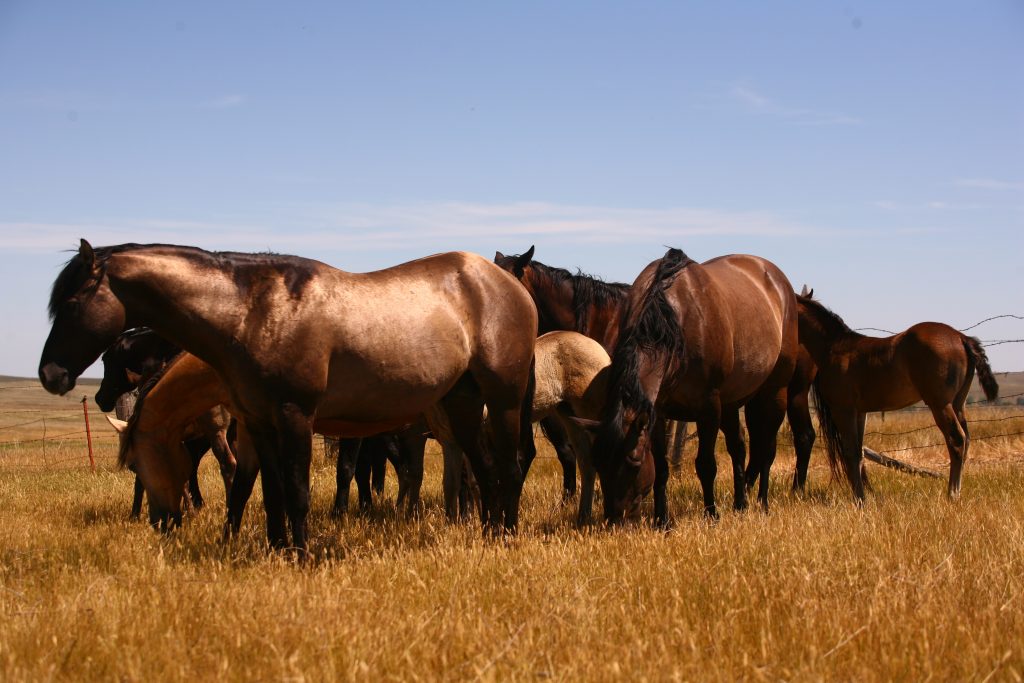
-
Lisa Fulton is one of many Quarter horse breeders who would like to see restrictions removed regarding the use of frozen semen. “All the work and money that these stallion owners put into their horses, and within two calendar years, the whole investment goes down the drain. What other kind of business would this occur in?” Fulton asked.
WH 1
-
“In my eyes, if you keep the ruling as it stands, you are limiting the expansion of our breed, because you are eliminating certain studs.” –Lisa Fulton
widows king II 4368×2912
-
Breeders and stallion owners on both sides of the debate over the frozen semen rule agree that Pandora’s box is wide open.
widows king turnout 6-16-2014 8-04-10 PM 3474×2088
Jim Hunt, Faith, South Dakota rancher and Quarter Horse breeder, served as the AQHA president in 2024. He became active on the national level of AQHA because he felt that ranch horses and their breeders were needing more focus within the association.
“I was trying to promote ranch breeders and our 50-year breeders. I thought AQHA needed to do a better job recognizing the sacrifice and commitment of those breeders,” Hunt said.
During his tenure serving at the AQHA national level, Hunt learned more about many issues he had not had previous experience with.
To provide background on the rulemaking process, Hunt explained: “The Stud Book and Registration Committee is a stand-alone committee in the AQHA, compiled of 20-25 individuals. Most are past presidents, veterinarians, long-time national directors who have been chosen to serve on that committee. They make decisions regarding the rules on registrations with the final approval of the Board of Directors.
At each year’s convention, the Stud Book committee spends two days discussing issues on their agenda, and for each item, members present at the meeting have an opportunity to speak. The committee then brings a recommendation to the general membership for a vote.
“The frozen semen issue has been and was one of the discussions of concern at the convention in March,” Hunt said. “While on the executive committee and as a breeder, I can see both sides of the issue on this.”
The frozen semen rule does affect the Hunt family’s breeding program.
Hunts still have about 100 straws of frozen semen on their Frenchman’s Guy son, French Flit, who was foaled in 2001. They have kept several of his daughters in their mare band and try to breed a couple of mares each year with their frozen semen in hopes of adding a few more mares with those bloodlines to their herd.
“He was out of a daughter of Flit Bar, and really did our program a lot of good,” Hunt said. “We’ve tried to build a set of broodmares sired by French Flit. He died two years ago, but since he was a 2001 model, his semen can still be used. We utilize that frozen semen basically for our own breeding program, But we also have some younger studs coming up who were born after 2015. I can see where people with stallions born in 2015 and after that have passed away could want to continue to register foals by their stallions for the right reasons. But in the long run this could end up good for young stallions, by giving them and their progeny more exposure.”
This year, the proposed rule change to allow the use of frozen semen for a longer period of time drew significant attention.
“The Stud Book and Registration Committee recommended that we stay with the current policy, and the rule change was denied at the convention by popular vote,” Hunt said. “This is where your voice comes in: any member who attends can vote on issues on the last day of the convention.”
Hunt said this was one of the better attended conventions in several years, and that the debate on the frozen semen rule was “somewhat heated.”
“There are two sides to every story, two sides to every situation,” Hunt said. “One reason this was implemented in 2015 was that people weren’t creating opportunities for new blood to come in and get promoted. Another reason the committee wanted to shut off the use of frozen semen two years after a stallion’s death is the concern that our gene pool has gotten too small. All those things are pieces of the puzzle.”
There is concern that some high caliber stud horses are being cloned, and current DNA testing can’t tell the difference between foals sired by the semen of a clone from foals sired by the ‘real’ horse.
“We’re against cloning,” Hunt said. “It isn’t the best thing for the breed. AQHA has taken a bad rap for DNA costs, and so forth, but there are always a few individuals who want to cheat.”
Most people raising ranch horses are not operating like this.
“When a stud dies, most ranchers have a two- or three-year-old young stud around and kick him out the next day,” Hunt said.
For every breeder, regardless of discipline, what is best for the horse should hold priority.
“As breeders it is our goal to make better horses,” Hunt said. “Some claim it is all about the money, and there is some truth in that too. But the bottom line within AQHA is that our objective and our passion is to make a better horse. Are we making the right decision to make a better one? Both a better individual and for what is best for the breed? Is it about selling contracts or making a better horse?”
Frank Merrill
Frank Merrill and his wife, Robin, are both members of the AQHA Hall of Fame. A past president of AQHA, he has owned and or managed multiple stallion stations over many years and is a Certified Equine Appraiser. He has been very successful in the horse industry for decades and serves on the Stud Book and Registration committee.
“Frank is a 55-year breeder, he’s seen it all, owned and managed some great horses, and been in every debate there’s been,” Hunt said. “Frank is a big proponent of keeping our genetics pure and opening the gene pool wider. He is probably one of the more gifted in vocalizing the details of this issue.”
Merrill has been involved politically in the AQHA since 1977 and is one of the longest tenured members of the American Quarter Horse Association Stud Book and Registration Committee.
“My wife, Robin and I are 55-year breeders, and I hold that in higher regard than either one of us being in the Hall of Fame,” Merrill said. “I have been raising and breeding Quarter Horses for 55 years, since I was in my teens.”
The Stud Book and Registration Committee answers to the Board of Directors of AQHA.
“Any rule change from the stud book committee has to be approved by the Board of Directors,” Merrill said.
The rules to allow the use of artificial insemination were initially adopted because, from a management standpoint, “it was healthier and safer for the stallions and the mares,” Merrill said.
Collecting a stallion and breeding via artificial insemination prevented the risk of injuries and sexually transmitted infections.
“Although I think it was a good idea to pass the use of AI, it has and did create complexities for our registration going forward, none of which we had envisioned at the time,” Merrill said.
The Jockey Club does not allow the use of artificial insemination semen. All mares serviced must be serviced via live cover.
“The Thoroughbred has progressed without registration complexities because of that,” Merrill said.
Still, some of the most popular stallions book over 200 mares in one season.
“They will be asked to breed mares four or five times per day. That’s not very healthy for the horse. Those stud fees are so expensive that they can gain a lot financially by doing so. It’s all about the money, it always is,” Merrill said.
Merrill was on the Stud Book committee when the original rules regarding the use of frozen semen were put in place.
At the time, Johannes Orgeldinger, prior to becoming the president of the AQHA, was the president of the German Quarter Horse Association, as well as being a leader in the international branches of the AQHA.
“Mr. Orgeldinger and others from the international segment of our membership asked us to pass the use of frozen semen to accommodate exportation of semen from the U.S.,” Merrill said. “We had already passed the use of cooled, transported semen, but cooled semen wouldn’t last long enough to ship overseas; it had to be in a frozen state for them to be able to access the genetics from us.”
“We, including myself and the members of the Stud Book and Registration Committee, were sympathetic to the situation, and were trying to help Johannes and the rest of the international membership in being able to breed mares in their countries to stallions still in the U.S. and help expand the genetics of the breed.”
Whatever the Stud Book committee does, Merrill said they try to envision how those rules will impact the future of the Quarter Horse breed.
“We try our best to look into a crystal ball and see how those rules might affect the future. Well, we had no notion that cloning would become an issue, no idea that the ICSI breeding process would become almost standard operating procedure, no idea at that time that we were going to have to deal with the abuse, in my opinion, of embryo transfer and frozen embryos.”
As these practices became more and more common, the members of the Stud Book committee felt they had opened Pandora’s Box.
“We failed miserably in my opinion, even though we were honorable in our intention, we should never have allowed the use of frozen semen,” Merrill said.
In 2014, the Stud Book and Registration Committee passed a rule stating that semen from any stallion born after January 1, 2015 could not be used to produce registered foals beyond two years after his death. Foals resulting from frozen embryos could not be registered beyond two years after the death of the dam.
“We were not just trying to draw a line in the sand,” Merrill said. “The reason why we felt compelled to do this was because we saw the errors of our ways. We saw what frozen semen had abnormally done to extend yesterday’s genetics in an unnatural way across our breed. It had the potential to become exacerbated if somebody really wanted to abuse that privilege.”
Merrill was blunt in stating that he believes the recent complaints regarding the 2015 rule are driven “by nothing other than greed.”
“As stewards of this breed it is necessary for each one of us who sits on that committee to take care of our American Quarter Horse,” he said. “That horse comes before anything else in our decisions: what is best for his health, welfare and the future of this breed. We take that responsibility very seriously.”
Financial benefit from the use of frozen semen should not take priority over the best interest of the American Quarter Horse, Merrill believes.
“We are charged as horsemen, not just as members of the Stud Book committee, and we are charged as breeders from all across the country to improve the breed in every way we can,” he said. “If we choose to foster yesterday’s genetics, our breed is not going to advance as progressively as it should.”
Merrill takes his job on the Stud Book committee and his role as a breeder very seriously.
Merrill emphasized that the committee could not indiscriminately revoke the rules they had put in place allowing the use of frozen semen and embryos.
“This is really important to understand,” he said. “We couldn’t do anything but affect the future and establish a new set of rules for breeders prior to the next breeding season. People think we’re allowing these horses born before 2015 the privilege to use their frozen semen forever. We can’t be arbitrary and capricious with the way we administer and support the rules of the association.”
When people ask ‘how could you grandfather in all those horses born before 2015?’ Merrill explained the committee couldn’t do otherwise because those were the rules that were in place when those horses were bred and born. The committee could not go back and retroactively change the rules that existed over those years.
“It is very important to articulate that those horses were raised under a set of rules that existed at that time,” he said “Frankly, we had no alternative. We could not say, ‘Ok, that’s it, nobody can use frozen semen on any horse period,’ because we had a set of rules that they bred their horses under, they understood and complied with those rules and we couldn’t take that privilege away from them.
“We didn’t have the ability to do that, and very honestly, we wanted to. We saw how those errors in judgement we made had affected us, even though it took 14 years for us to see what was occurring.”
At every meeting, members of the Stud Book committee remind each other how important it is to consider the long-term consequences of their decisions.
“It is very difficult to sit on that committee and pass judgement on the rules of registration without contemplating all of the unintended consequences,” Merrill said. “In retrospect, we should not have passed the allowance of frozen semen without some restrictions. Trying to spread the influence of the American Quarter Horse over the entire globe was honorable, but we had no idea what Pandora’s box we had opened.”
In 2014, no member of the Stud Book and Registration Committee voted against the rule to limit the use of frozen semen and embryos.
“We were unanimous in our stand to stop the use of frozen semen or frozen embryos on the distaff side past two years of the natural life of the horse,” Merrill said.
At that time, the committee had a long discussion about how impactful this rule would be for someone standing their stallion if the horse died suddenly and they were left with a book of mares with return breeding privileges.
“As an accommodation to the sympathetic side on the stud book committee, we imposed a two-year hiatus to try to accommodate stallion owners who needed to satisfy their return breeding privileges,” he said. “None of that was discussed at the 2025 convention to the degree I’m giving it to you. I had to remind them about how we got to where we are and why we did what we did in 2014.”
Merrill stressed that the job of the Stud Book and Registration Committee is “to steward the American Quarter Horse. We’re not there to make sure that everybody gets as much money out of their horse as they can. Our paramount mission is to guard the integrity of the horse,” he said.
Making “market driven” breeding decisions is not in the best interest of the breed, Merrill believes.
“The analytical data reveals how slippery this slope is. You should be making decisions predicated on the knowledge you have as a horseman, not just looking at how much money you can stick in your pocket,” he said. “That’s dangerous. All this upheaval over the rule is driven by greed. It’s about the money.”
Merrill has serious concerns about how narrow the gene pool within the Quarter Horse breed is becoming.
“If we don’t start thinking outside the box, we’ll never have an outcross stallion again, and it’s not just one we need; we need a plethora of outcross stallions so we can widen the gene pool further,” he said. “Several bloodlines are more prolific than others. We’re just helping that along with the extended use of frozen semen.”
Another reason the rules were adopted as they now stand, was that AQHA had no other way to stop the use of frozen semen from a cloned stallion without eliminating the use of frozen semen from the original stallion, Merrill said.
“Science hasn’t gotten there yet. I think they will, but they are not there now. We’ve got horses registered in our registry that were sired by cloned horses. That bothers me a great deal.”
AQHA cannot limit the number of mares booked to a single stallion in a year.
“The Jockey Club tried that,” Merrill said. “They were going to limit stallions to a specific number of mares per year. The stallion owners rose up and said that was restricting trade and threatened lawsuits, so the Jockey Club backed away. They had the right intention. Our attorneys have told us we can’t do that legally without facing multiple lawsuits that we can’t defend because we can’t tell somebody what they can or can’t do with their horses as far as how many mares they can or cannot breed to their horse each year.”
Merrill had the opportunity to learn from some of the founders of AQHA.
“I had some great teachers,” he said. “I’m one of the most passionate members of the AQHA there is. I’ve earned my living in the quarter horse business since I was a teenager and made them my life’s work. There isn’t anything that I guard more fiercely than that horse, the American Quarter Horse. I’m not the only one, there are others that are passionate too.”
The AQHA rulebook is available online and printed copies are available on request.
“If you are a breeder in this association, it is incumbent on you to know the rules you’re supposed to follow,” Merrill said. “Read the rule book and comply with the rules. If somebody doesn’t like them, there is a way to change the rules. But if this rule changes, irreparable damage will occur to our horse.”
Lisa Fulton
Lisa Fulton built Fulton Performance Horses with her late husband, Brian, in Todd County, South Dakota. Fultons built their program around the leading sire, A Streak of Fling. “Streaker” is a 1999 foal, so his frozen semen can be used indefinitely.
Fulton would like to see restrictions removed regarding the use of frozen semen.
“I’m not for this,” she said. “My old stud falls within the rules, but our young studs don’t. All the work and money that these stallion owners put into their horses, and within two calendar years, the whole investment goes down the drain.”
“What other kind of business would this occur in?” Fulton asked.
“This is backwards to me. If we want to keep good horses in the industry, we need to remove limits completely. No 10-year limit. No 20-year limit.”
When Fultons purchased Streaker in 2003, Lisa researched several big-name stallions to see how long their peak years of breeding lasted.
“In all the years we’ve had the use of frozen semen, First Down Dash, has sired 2,500 foals. Fourteen of his foals were registered last year. Dash Ta Fame registered 48 foals last year; he is slowly going down. Every stallion has a peak time. When they grow old or are deceased their popularity goes down. It’s a natural progression; the data will tell you that.”
The rules of the AQHA often go unrecognized by the membership, Fulton said. “I keep up with it, but so many people just don’t worry about it.”
The Jockey Club does not allow for the use of either transported or frozen semen within the American Thoroughbred breed.
“The Jockey Club does a good job of it, staying very old-school and natural. There’s nothing wrong with that,” Fulton said.
“The AQHA has gotten themselves into a situation that I think is totally out of control, and now we just have to deal with what we can. They opened Pandora’s box by allowing ICSI, transported cooled semen, frozen semen and embryo transfer. Now we have to put out the fire if we can. The AQHA can’t go back now, but we can do a little bit of damage control.”
Fulton respects others’ opinions.
“In my eyes, if you keep the ruling as it stands, you are limiting the expansion of our breed, because you are eliminating certain studs,” Fulton said. “Things would be different with my own program if we were old school. Who’s to say how it would be? Maybe we would be more like the Jockey Club.”
Some of today’s reproductive technology does go against Fulton’s thinking.
“When Brian was alive, people doing cloning would call every year, wanting to clone Streaker. He’d give them an ass chewing,” she said.
Since Brian’s passing, “they have continued to bug me,” she said. “I stand behind my husband’s theory: this shouldn’t be happening, no matter what species. AQHA did a wonderful thing fighting against the registration of cloned horses.”
Fulton recognizes that the difficulty in determining if a foal is sired by the “original” stallion or his clone is a part of the problem AQHA is trying to deal with.
“Unfortunately, this is an issue: there are several stallions out there that have clones and they’re shipping semen from the clone to customers. UC Davis can’t get a handle on the mitochondria because the DNA of the recip mare makes it so they can’t decipher if the foal was sired by the clone’s semen or the actual stallion’s semen,” she said.
But Fulton believes it is not necessary to limit the use of frozen semen has taken care of itself. She has observed the natural progression of the decrease in foals sired by dead stallions.
“Why put timeframes on it?” she asked. “From a businessperson’s mind, why go into a business that is going to die two years after your stud dies?
“For me, as a single mama running this ranch, I have to make every dollar I can. I’m one of the fortunate ones because my stallion falls into the ‘good’ category. But why should I have an advantage over someone else? Especially over one of my kids?”
Limiting the use of frozen semen and the registration of foals created by frozen embryos is a controversial issue, and Fulton said she can appreciate the different opinions surrounding the issue.
“Many of us think that we have opened Pandora’s box, but we’re here, now. What are we going to do about it? How are we going to go forward?” she asked.
Fulton does not see insurance as a good solution to the problem.
“You can’t put a price on your livelihood,” she said. “A lot of us don’t insure our horses. I have over 100 head and only insure five. I can’t afford to insure more.”
Fulton sees the limits on frozen semen use as a drawback for younger members of the AQHA.
“If they’re trying to get our youth involved and keep the registry going, this is not a good way to do it,” she said. “My oldest son Jake owns Flingin Jameson. That’s his whole enterprise. If that stud dies, what will he do?”
Fulton doesn’t see ICSI tipping the scale either.
“I do ICSI, and it’s still too expensive,” she said. “If I freeze my ICSI embryos, thaw them and put them in mares, maybe 30 percent survive. It’s not a good thing to count on. I don’t see it getting carried away.”
Fulton does see frozen embryos as something that could be limited.
“Old studs go away and they get replaced,” she said. “I don’t think they should worry about frozen semen. Mares are a whole different thing. Mare power is huge, and we all like to brag about our mares. If you can preserve a baby out of some of these awesome mares, this will affect the market down the road more than you will with frozen semen.
“From my perspective, Pandora’s box was opened a long time ago. Now it’s time to move onward and forward and try and find a solution. To me, the easiest thing would be to just take the ruling away. I don’t think limiting it to 10 years or 20 years is fair, either.”
Fulton also feels that AQHA members should be able to vote on issues at the annual convention even if they are not able to attend the meeting in person.
“We all pay our dues,” she said. “We should have electronic voting. We should have a better way of letting the members vote on these things. I think those two things should be neck and neck at the next meeting.”