2025 Horse Roundup | The Wald Family Rawhiders

Nate Wald learned how to braid rawhide in the calving barn as a college student at Montana State University. A Bruce Grant book showed him the way.
Up until that point, he’d used nothing but split reins, yet a set of romal reins in the Three Forks Saddlery mesmerized him.
“I saw that pair of romal reins and was just fascinated with it – the buttons and everything. And so I just started fooling with it in that calving barn. And I never, ever quit. I never have not braided anything after that.”
That was nearly 40 years ago. Now, he is a master of his craft. Beyond that, he instructed his son Jackson, and his nephew Ross in the same trade, and they are accomplished rawhide braiders in their own right.
-
Nate Wald is a horseman who raises and starts his own colts. Chris Dickensen photo.
AQHA_Wald_072024-13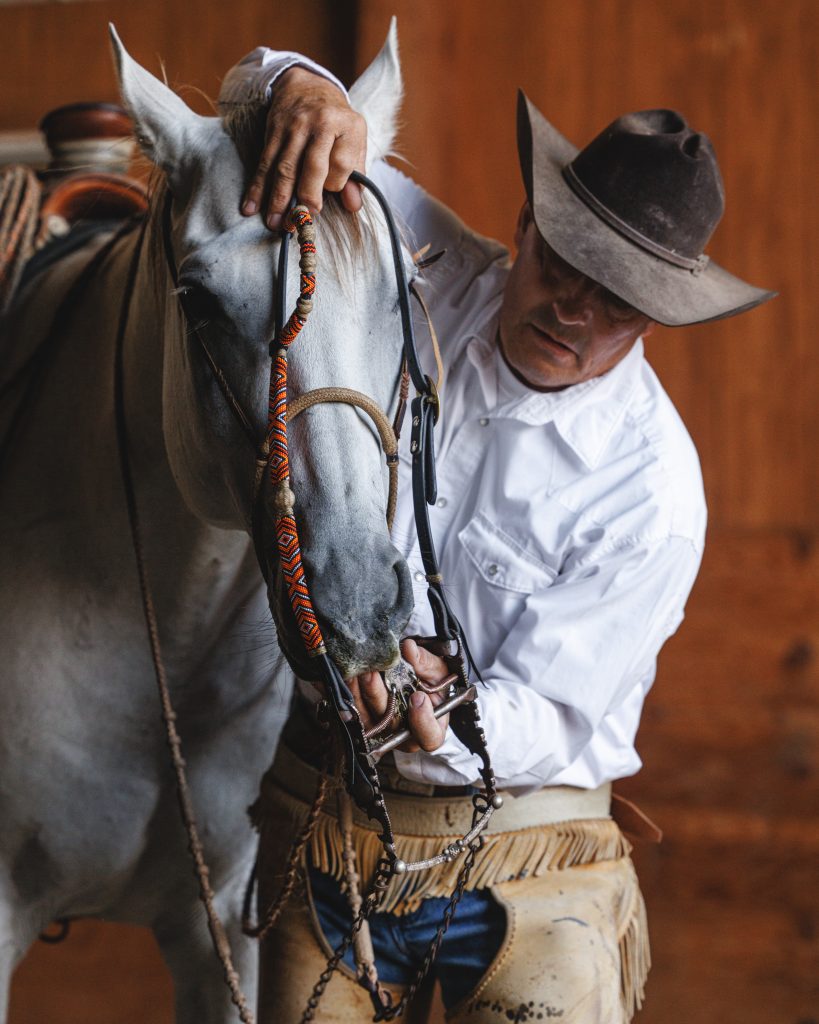
-
Jackson and Ross Wald watched their dad/uncle in his shop growing up. Chris Dickensen photo.
AQHA_Wald_072024-106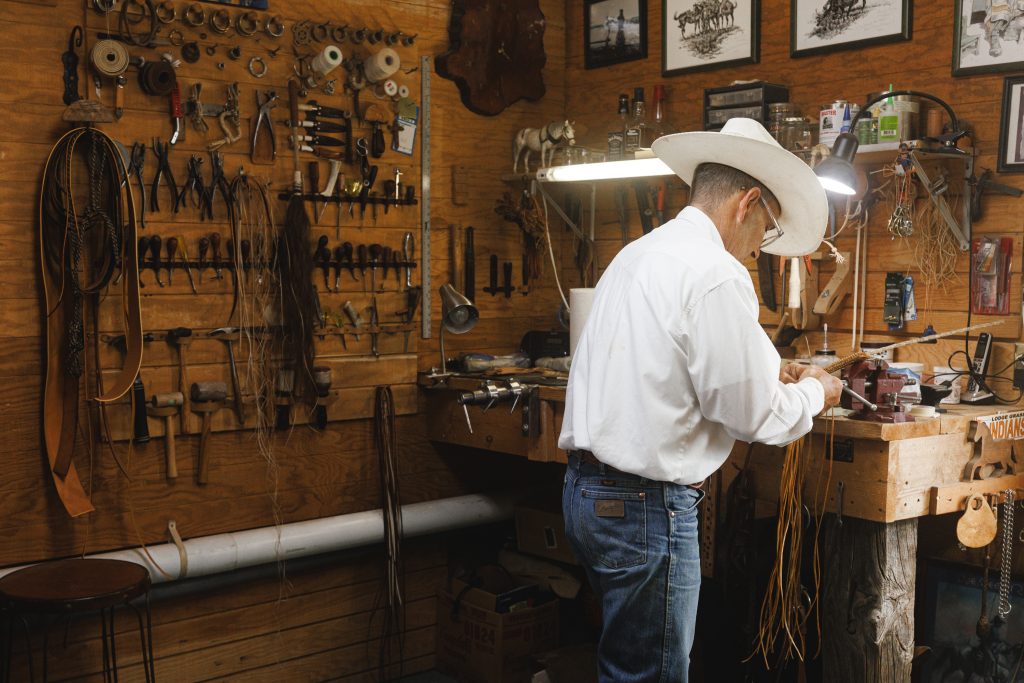
-
Jackson and Ross Wald watched their dad/uncle in his shop growing up. Chris Dickensen photo.
AQHA_Wald_072024-140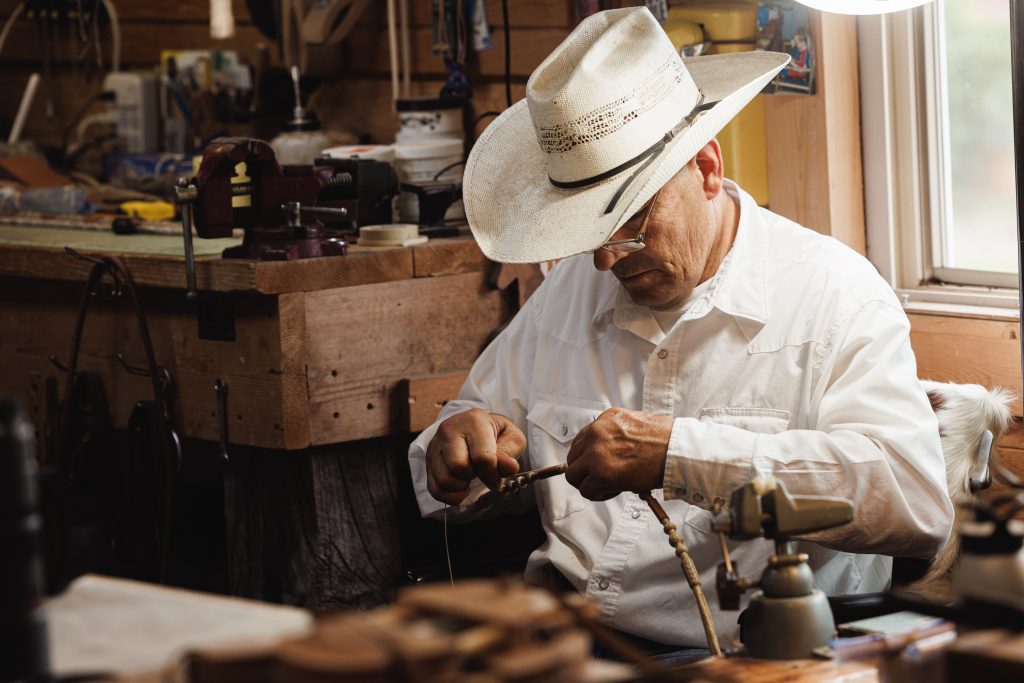
-
-
Nate Wald rawhide. Chris Dickensen photo.
AQHA_Wald_072024-155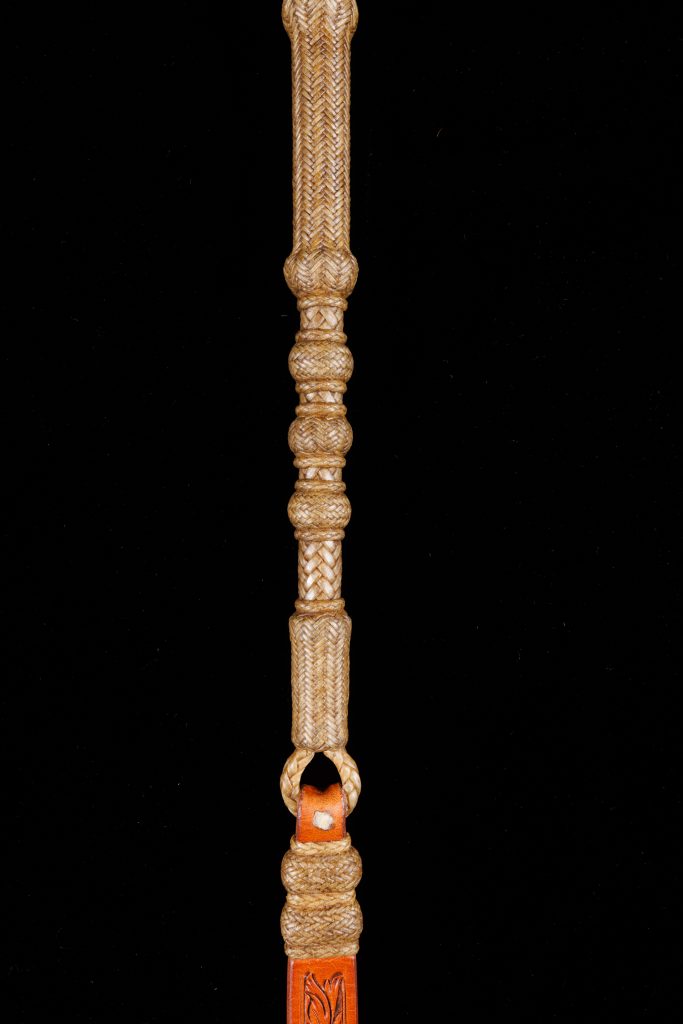
-
Nate Wald rawhide. Chris Dickensen photo.
AQHA_Wald_072024-161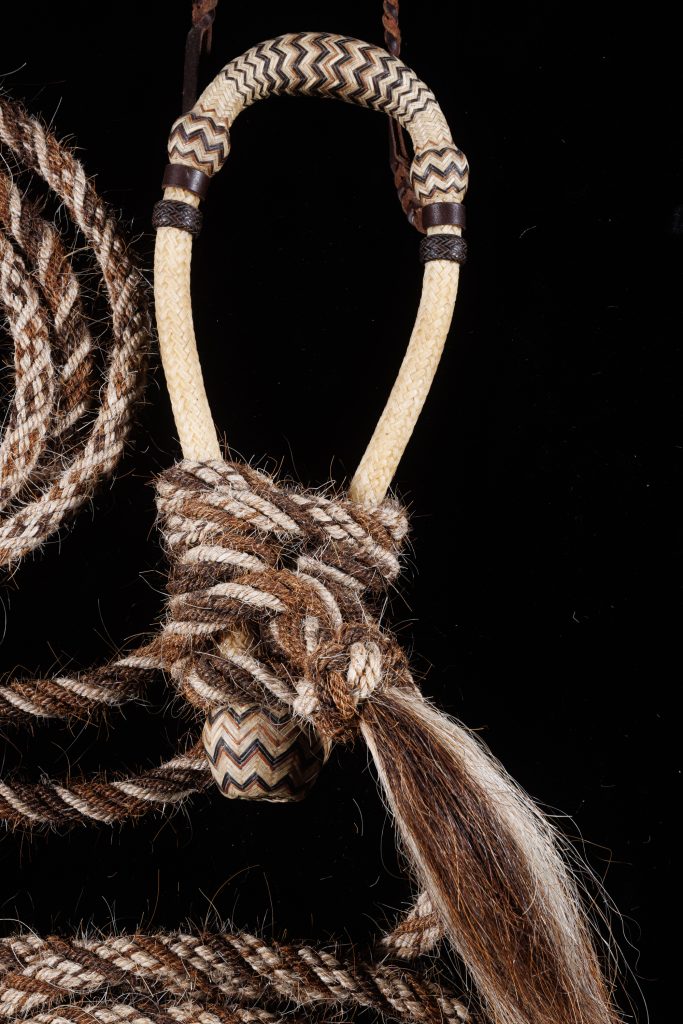
-
Nate still operates a commercial cow herd with his brother on the family’s ranch in Lodge Grass. Chris Dickensen photo.
AQHA_Wald_072024-173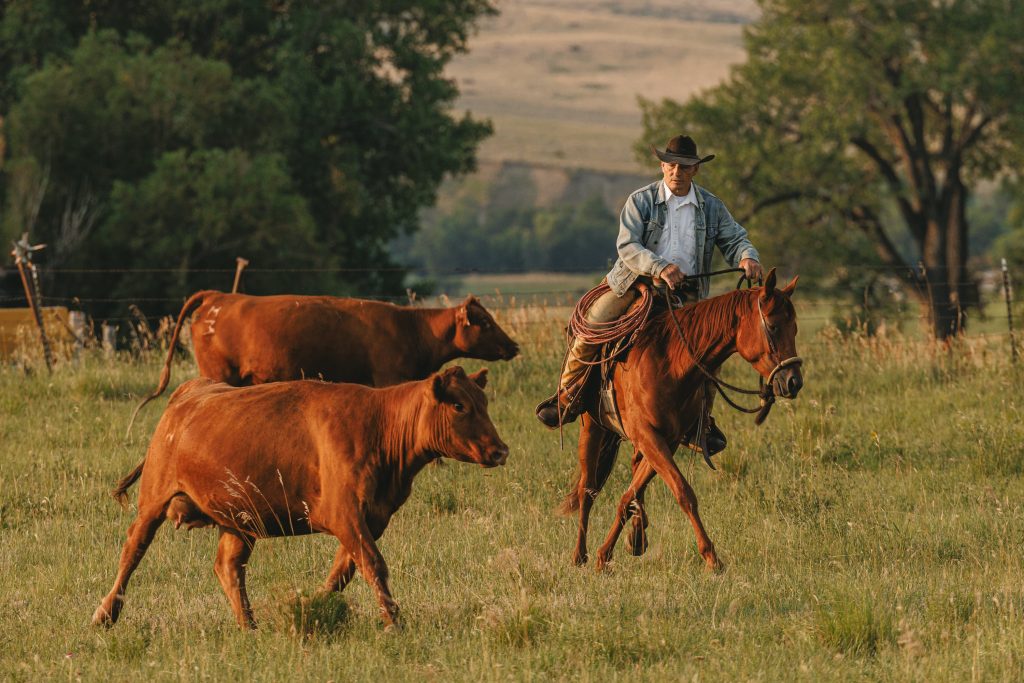
-
Happiest when hands are busy. Chris Dickensen photo.
AQHA_Wald_072024-221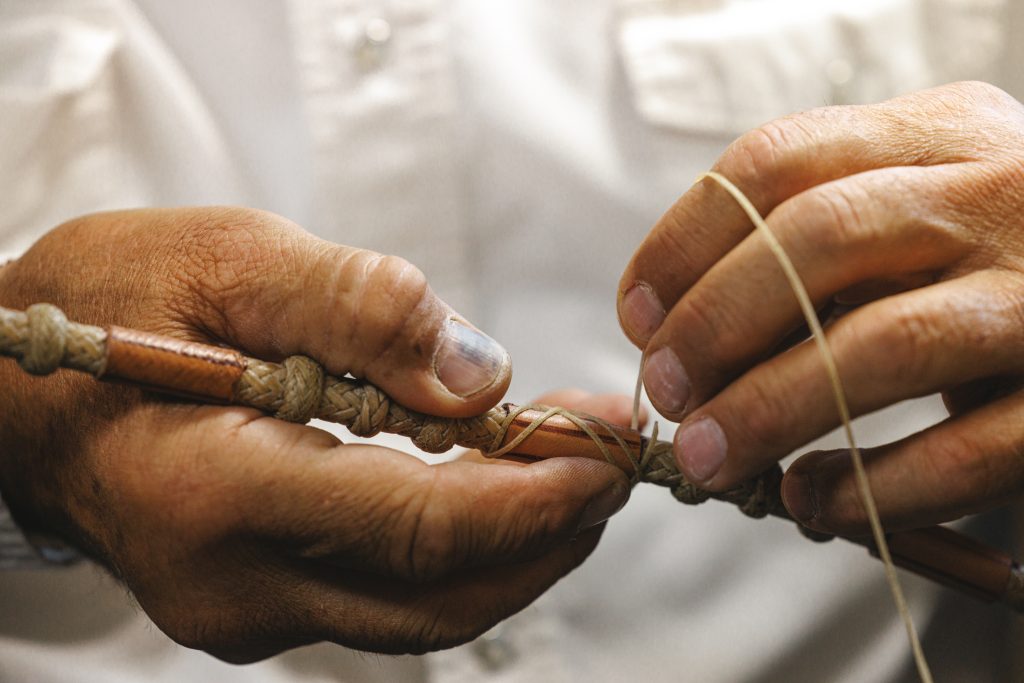
-
Happiest when hands are busy. Chris Dickensen photo.
AQHA_Wald_072024-230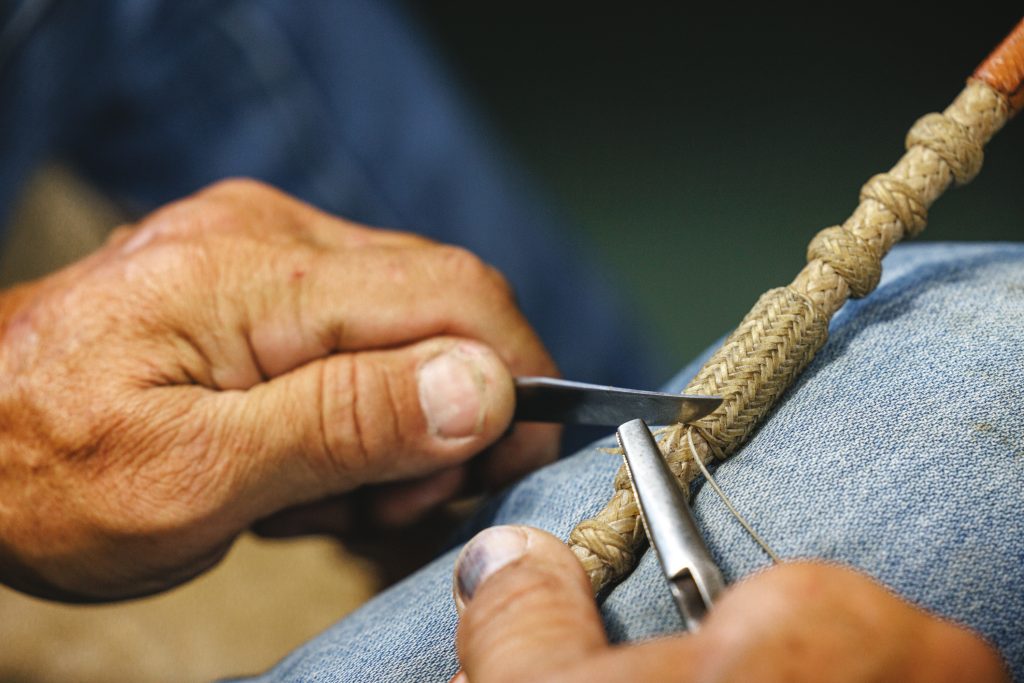
-
Jackson and Kyla Wald.
Jackson1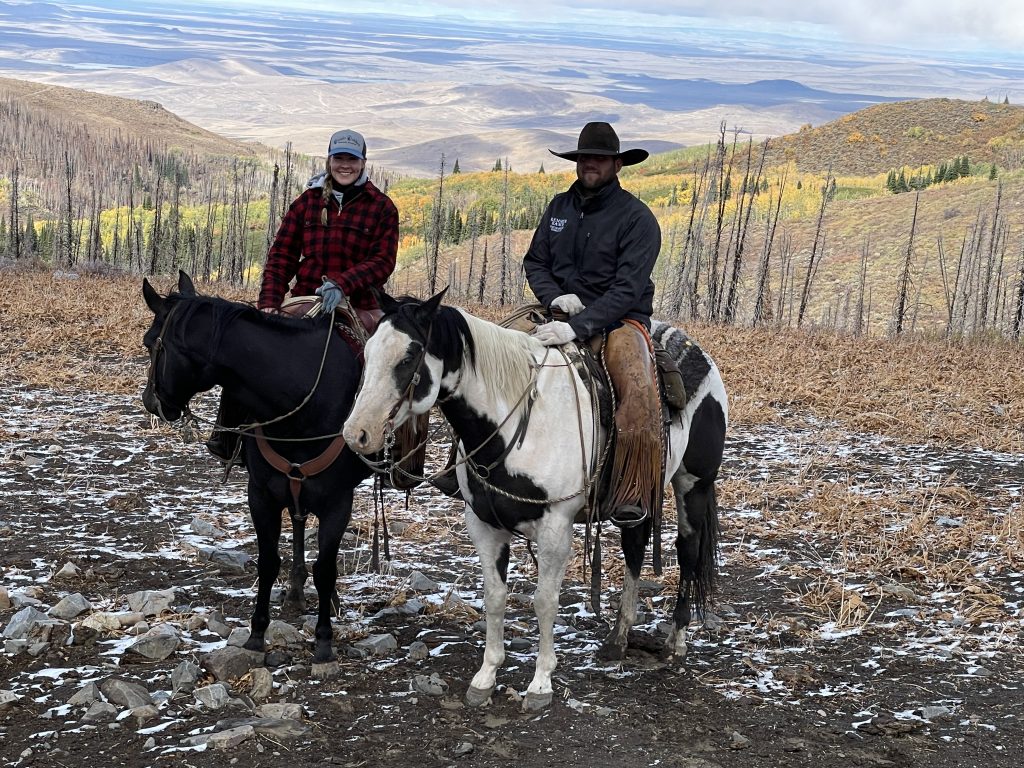
-
Jackson helps his dad start and sell colts.
Jackson2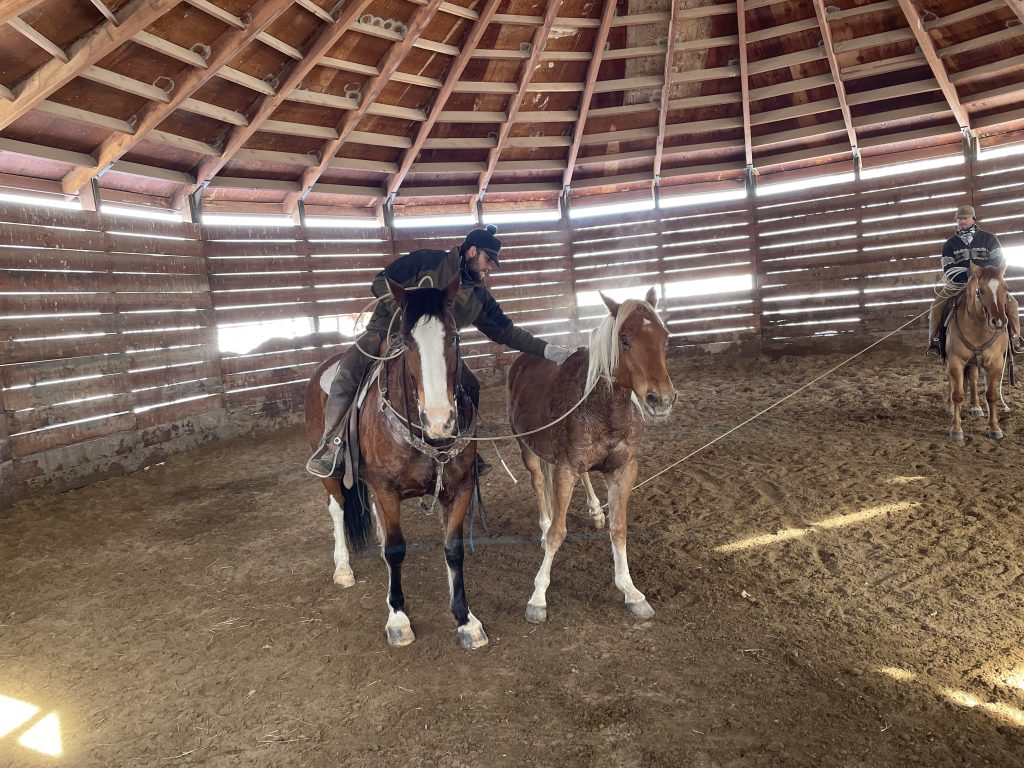
-
The gear Walds build coincide with a traditional horsemanship.
Jackson3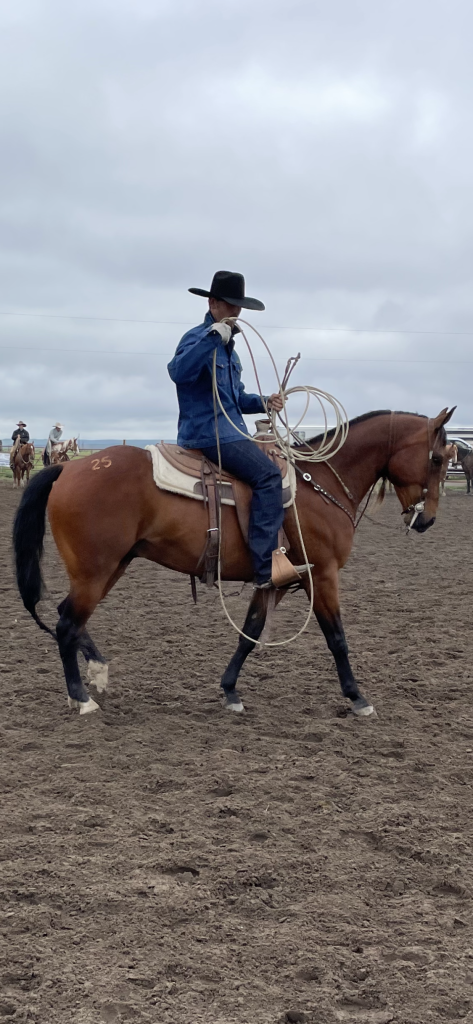
-
Jackson Wald rawhide.
Jackson4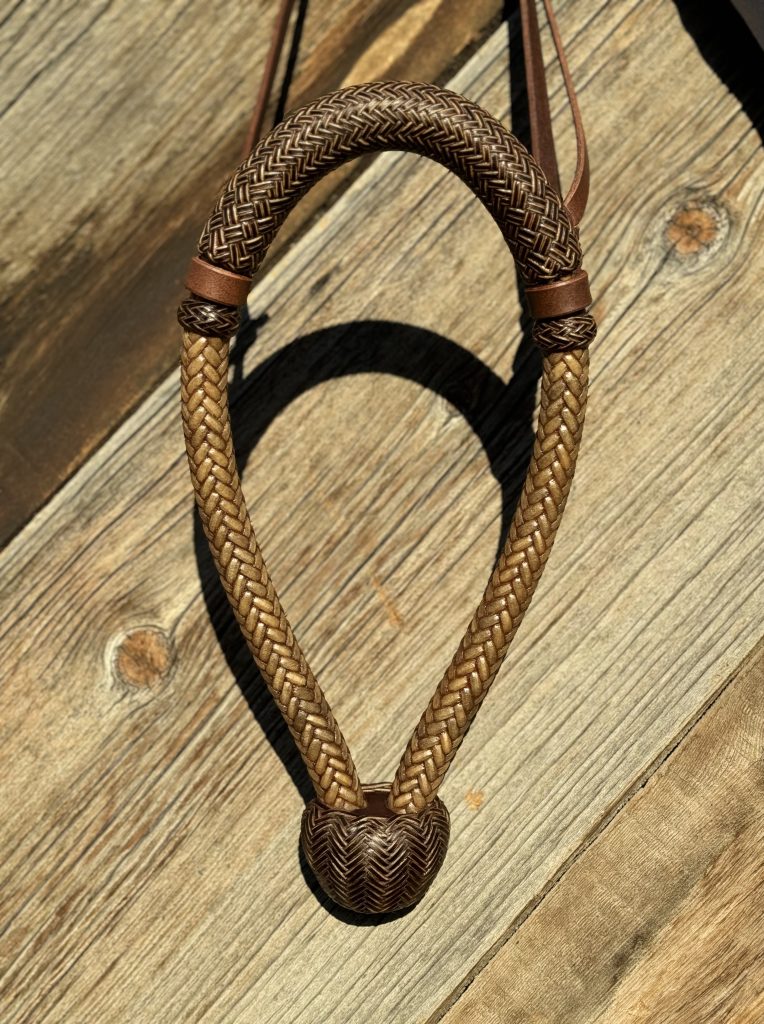
-
Jackson Wald rawhide.
Jackson5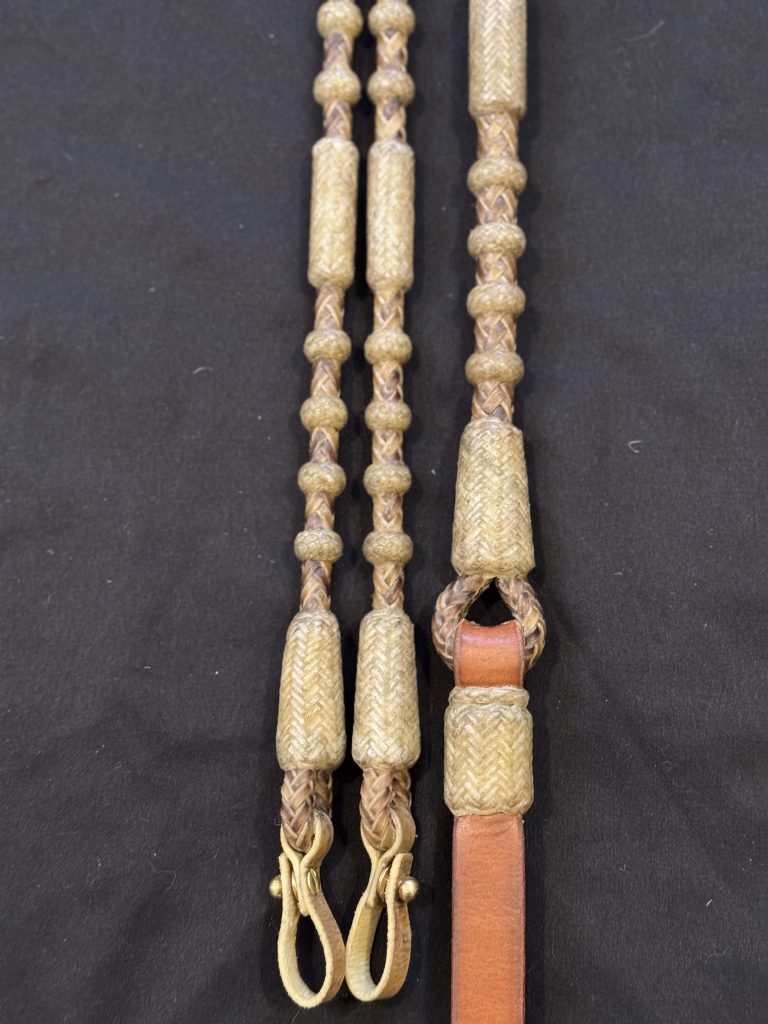
-
Jackson Wald rawhide.
Jackson6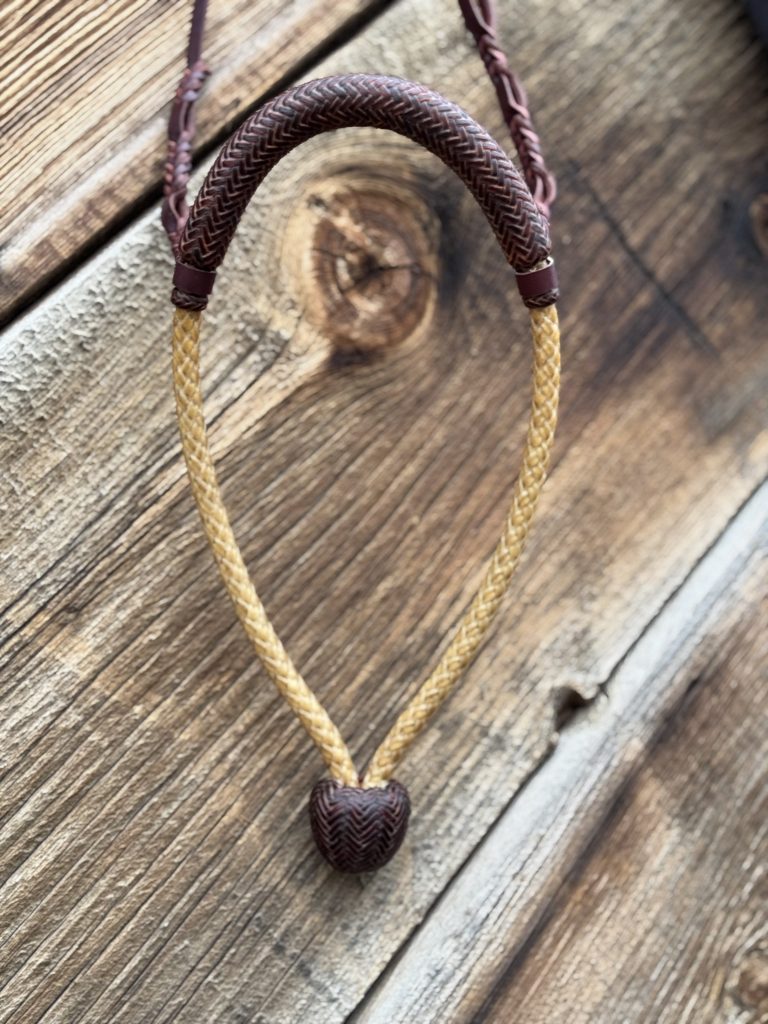
-
Ross enjoys using what he builds. Kaycee Cortner photo.
Ross1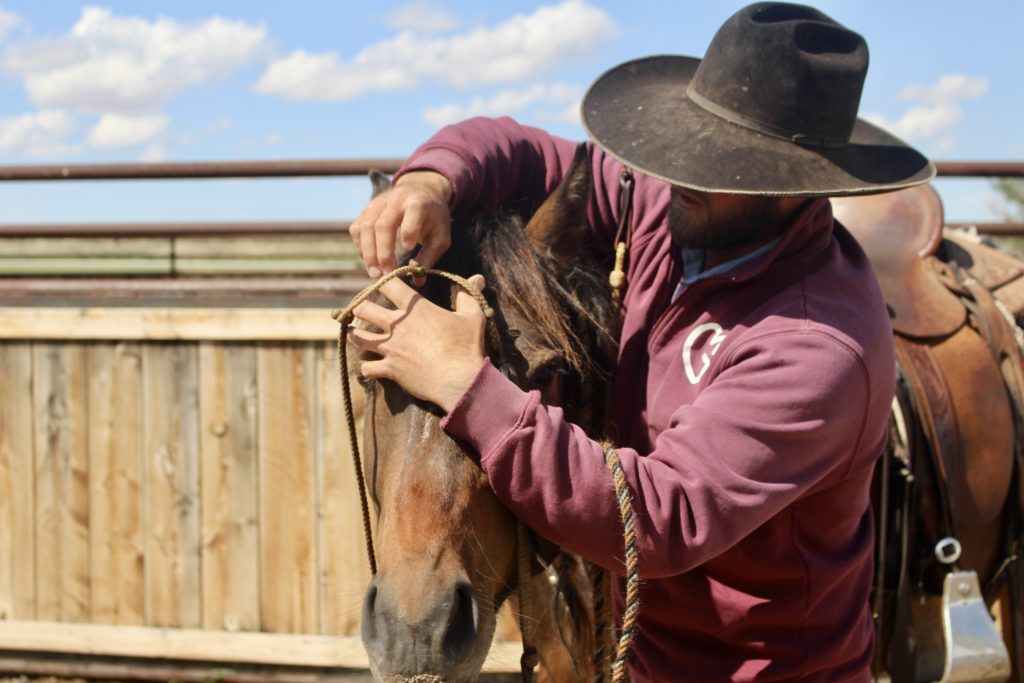
-
Rawhide gear has a desirable feel to horsemen. Kaycee Cortner photo.
Ross2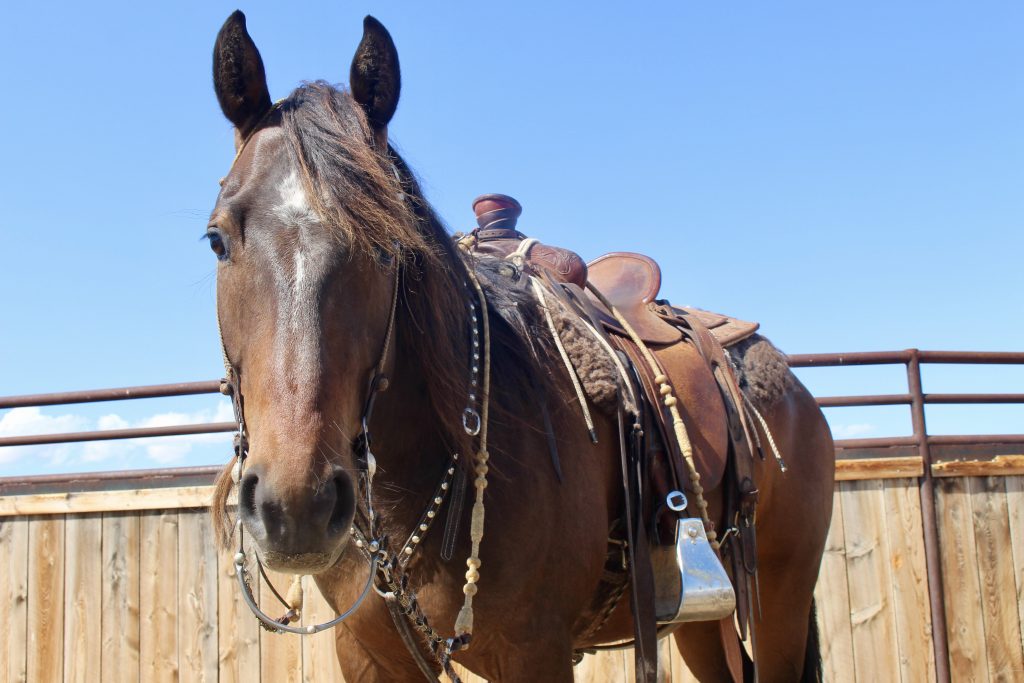
-
Ross Wald rawhide. Kaycee Cortner photo.
Ross3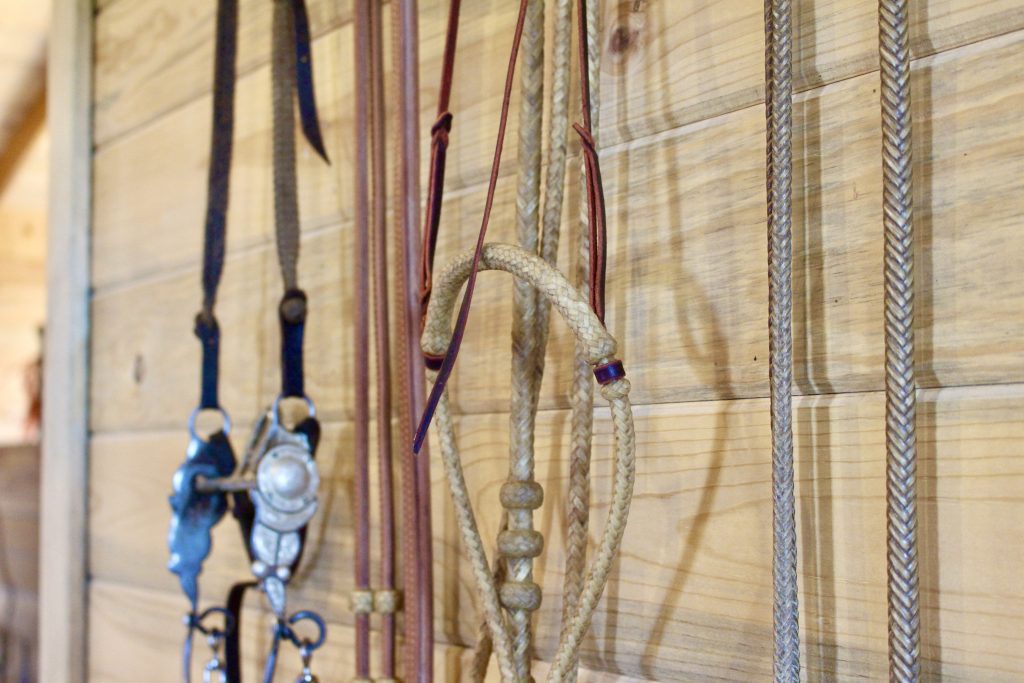
-
Ross Wald rawhide. Kaycee Cortner photo.
Ross4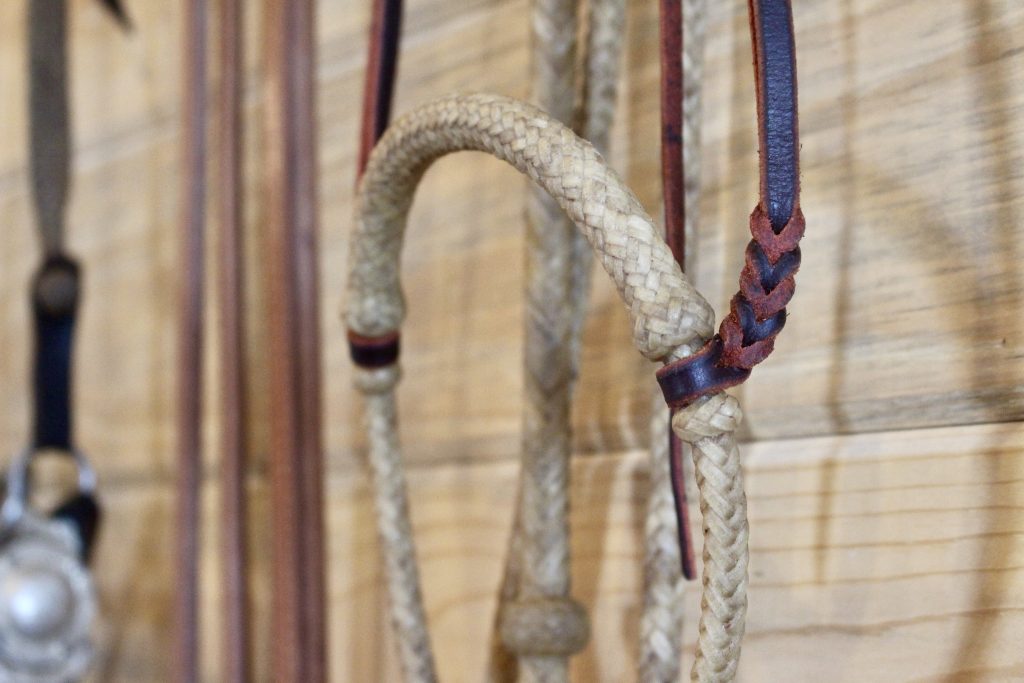
-
Rawhide gear has a desirable feel to horsemen. Kaycee Cortner photo.
Ross5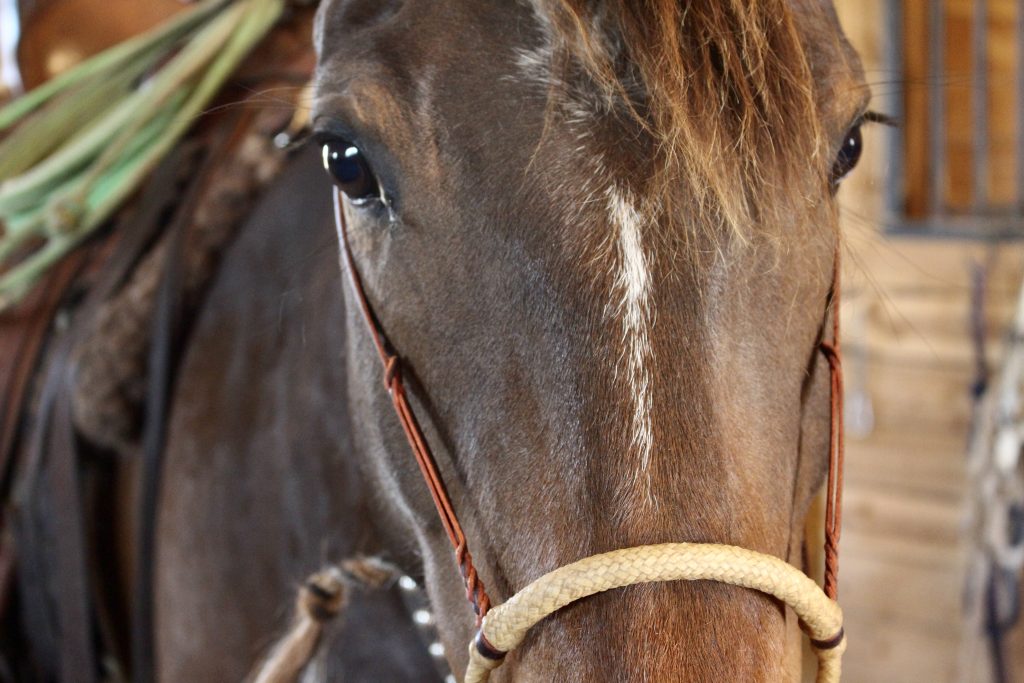
Tight Knit
Nate Wald’s father moved his family from North Dakota to their ranch in Lodge Grass, Montana in 1975. Nate grew up there with his brother, Matt.
After college, Nate continued his rodeo career as a bull rider, keeping up with his braiding. “I’d have some stuff with me in the car and when I was traveling, I’d try to tie knots and do different things, but I kept at it.”
He married his wife TJ and returned home in 1990. He set up his own shop on the place and has set foot in it every day since.
Nate raises registered Quarter Horses and a commercial cow herd. Matt still ranches on the place, too, when he’s not serving as a district court judge. Continuing the generational bond, the Wald brothers raised their children together on the family ranch.
Nate’s son, Jackson, witnessed his dad in the shop on a daily basis and took an early interest. The same was true for Ross, Jackson’s cousin.
“Jackson and Ross are within a year of one another, so they are pretty close,” said Nate.
The Learning Curve
Nate shared a memory of Jackson as a youngster: “He was probably two years old. And I’ve been somewhere, and he’s sitting at my braiding bench while I was gone, and he’s got his little feet crossed and he’s got a fid in his hand (which is an awl that you lift your strings with that you’re always using) and a piece that I was working on. When I came home, his mom said, ‘Oh, gosh, it was so cute. Jackson was sitting there just like you and do when you’re braiding.’ He thought he was braiding it, but what he did is he had torn off a couple of the buttons that I already had on it. Which, no big deal, but I’ve still got that picture and it hangs here in my shop all the time. So he’s been exposed from a young age.”
“I grew up watching dad in the shop and I would get bored and want to make something, so he would cut me some strings and put me to work doing some little project or something. And I wanted to make some things of my own,” said Jackson. Throughout his years in 4-H, Jackson would enter his rawhide projects in the leatherworking categories.
Ross remembers braiding with twine string when he was a little kid after watching Uncle Nate in his shop. He gradually took on bigger projects as he grew.
Nate, Jackson, and Ross would all describe themselves as “self-taught” to some degree.
Nate is entirely self-taught, relying on instructional books, trial and error, and occasional help along the way. One such person he called upon was Ed Debo, who lived outside of Billings. “He was a paraplegic. He had been in a horse wreck when he was a young guy and paralyzed from the waist down, so he was always in a wheelchair, but he made his own hide and he braided a lot of stuff. And man, he helped me a lot,” said Nate.
Wisdom compiled over the years allowed Nate to give his son and nephew the best start.
“He showed me how to do things right the first time,” said Ross.
While Nate is always there to guide, even to this day, he never had to babysit their work. “I’d show them something and they’d take off and go build some stuff, which I think is ideal. That’s really a good way to learn.” said Nate. “It’s not like they just have been sitting here as students.”
Cowboys First
The three Walds are steeped in the ranching and cowboy lifestyle. Nate remains on the home ranch, tending the cow herd and starting numerous home-raised colts every year.
Jackson and Ross paved their own way as cowboys on various operations across the nation.
Jackson said, “I think I was 10 or 11. I got to go along with my dad and help. A guy was running some yearlings on the mountain, and I got to go along and help with that. I think we helped him four or five days. And at the end of it, he paid me $50, and I thought I was so rich and I was never going to do anything else the rest of my life.”
“I’m definitely a cowboy first and a rawhider second as far as my time is spent,” Jackson said.
Jackson recounts his early days as a cowboy. “When I was 12, Dad started sending me to the Ceded Strip on the branding wagon for Sunlight every summer.” He worked for Sunlight Ranches between school years throughout high school and college, returning for a full-time position after graduation. Jackson went onto work for the Wagonhound, the Circle B, the Little Horn Sunlight Unit, and the YP, where he remains today with his wife, Kyla.
Ross left home at 17 and turned 18 on the Warm Springs Ranch near Jiggs, Nevada. He then returned to Miles Community College to earn a degree and later attended shoeing school. He worked for ranches such as Padlock, Sunlight, and the YP with his cousin Jackson, to name a few. He has now returned to the home ranch, where he has much more time to pursue rawhide braiding, alongside day working and shoeing.
Using their gear daily gives Walds an advantage to making it.
“That’s what they do for a living,” said Nate. “[Ross and Jackson] both worked on good ranches and been cowboys and use that stuff, so they have a pretty good idea of what something ought to work and feel like.”
“I love it out here,” said Jackson. “It’s big and empty, and there’s a lot of cattle here. We brand all spring and summer, and I mean, that’s the most fun thing there is to do. We still pull out the branding wagon. Not a lot of places left that do that. They still run a big crew and with a big cavvy and work a lot of cattle all year round.” Like Ross, Jackson has more time now than ever to braid rawhide and was able to set up his own shop on the ranch.
“I like to use it, so that’s one part of it. If you like to use it, it’s kind of fun to know how to make it too,” said Ross.
Nate recognizes that their rawhide products, which are of the vaquero tradition, may not suit everyone’s style. Still, it has its advantages. He said, “To each his own. No type of gear is going to make you better hand one way or another. But I think that California style of that tradition tends to be a little more horsemanship-oriented, with the hackamore training and then going into a bridle bit and two-rein. It’s kind of a horseman’s tradition. If you’re actually going to want to ride horses in a hackamore, you tend to want to learn more about it and get better at it.”
Making Materials
A horseman’s rawhide gear represents a unique circle of life. A cowboy cares for his animals to his best ability, and at the end of their life, their hides can be repurposed to build something lasting and useful, giving it new life.
Few tradesmen actually produce the materials they build with, but Walds each make their own rawhide.
Jackson said, “When you work on a ranch, it’s definitely an available resource, whether you have to put a cow down or get hides from the butcher. I make all my own rawhide from start to finish. I kind of like doing it. It’s a process I enjoy.”
Ross agreed. “To me, it’s just pretty cool to take something literally from a dead cow to something that is really unique and desirable. It’s just an interesting process.”
Jackson explains his process for making rawhide, though he says each rawhider has his own way of doing things.
After removing the hide, Jackson scrapes the backside as clean as he can get it. “Then I put my hides in a water and lime solution. You can just get hydrated lime at the hardware store for concrete contractors. After a few days in the lime solution, the hair starts to slip off and I’ll throw it over something and brush that hair off with the back of my draw knife. And then I wash the hide as best I can in the creek that flows past the house here.
“Then I throw it in a barrel with fresh water and vinegar. Lime is a base and vinegar is an acid. The vinegar neutralizes the lime. I’ll leave it in the vinegar overnight and then I’ll put it in a stretching rack and leave it in the sun to dry. It takes a number of days to dry and cure completely, and in theory, you should have a nice, clear glassy kind of a hide.”
Rawhide is known for having a certain feel to a horseman. “The material itself has quite a bit of its own natural life and feel, and I’m sure that’s why hackamores are made out of rawhide or have rawhide cores, because there’s a feeling of life there and some body that you need for those pieces of equipment to work,” said Nate.
Temper and Temperament
Rawhide braiding is something one must practice consistently. The temper, or the moisture level of the rawhide, decreases over time. “You’ve got to work with it when it’s the proper temper and you have a window,” said Nate. Once a project is begun, it must be seen through until the end.
One might think patience is required for rawhide braiding, but Nate believes it’s the opposite. His work provides the patience. “Working with my hands, I’m happiest. You always hear people, they’ll see something you’ve made and it’s kind of fine string and all this and that, and they’ll say, oh my gosh, I would never have the patience to build something like that. But with me, I’m the most patient when I’m here in my shop working on something. If my hands can be busy, that’s when I can really relax.”
His son agreed. “There’s something therapeutic about working with your hands and the satisfaction of building something,” said Jackson. After long days working with a crew, horses, and cattle, the quiet work in his shop is a way to unwind.
Besides his father, Jackson also seeks advice from braiders such as Jay Adcock, Pablo Lozano, Larry Schute. He also consults numerous books, which can be found at the bottom of the article.
Ross said the bar was set high for rawhide braiding standards by his uncle Nate from a young age, and he retained the desire for excellence in his own work.
“I’m a fairly methodical sort of person, so I am not artistic in any way. But for me, rawhide is a little different. It goes together a little at a time and it works for me. I don’t think I could carve leather or engrave or anything like that. I don’t really have that sort of eye for the artistic drawing. But braiding for me is different because it’s more like patterns over and over again. Once you learn the pattern, you’ve kind of got it, but then you can go so many different directions with it. You’re never going to make the same thing twice.”
Each Wald opts out of custom work, instead finding it easier to make what they like and sell it. Nate used to take deposits and orders but found himself getting behind. It’s much more conducive to his lifestyle, which prioritizes the ranch first, to simply sell as he goes. “I make what I want out of the hide that is best suited for that at the time,” said Nate.
Nate, Jackson, and Ross Wald all retreat to their braiding benches to hone their craft. While it is an individual endeavor, they know they can rely on one another for instruction and support whenever needed.
“My biggest resource is definitely my dad and his wealth of knowledge and experience,” said Jackson.
For more on the Wald Ranch, visit WaldRanch.com.
Recommended Rawhide Braiding Books:
Rawhide and Leather Braiding (I-IV) by Enrique Capone
Braiding Tips and Transitions by Tom Hall
Introduction to Turk’s Head Knots by Tom Hall
More Western Tack Tips by Tom Hall
Western Tack Tips by Tom Hall
Encyclopedia of Rawhide and Leather Braiding by Bruce Grant
How to Make Cowboy Horse Gear by Bruce Grant