2026 Fall Cattle Journal | Hay, help and heart: Morrill Fire relief

Ruth Nicolaus Follow
4
Much of the hay and other donations that poured into the Nebraska Sandhills following the Morrill Fire was funneled through Paul Cleveland and Jason Christensen, with assistance from Jill Eppert, Wyatt Thurston, Del Ray Kraupie, Jake Kraupie, and Sara Cover and her crew.
After the Morrill Fire decimated 642,029 acres of Sandhills grass in Keith, Arthur, Grant, Garden and Morrill Counties, the phones rang off the wall at Crusty’s Feed Store in Arthur, Nebraska.
It started when Jason Christensen, owner of Crusty’s with his wife Kari, and Jason’s salesman, Paul Cleveland, were talking in middle March. Jason suggested they organize the donations for hay, fencing materials, and feed that were coming in.
Then Jay Nordhausen, owner of Ogallala (Neb.) Sale Barn, and Mark and Shawna Speck, owners of Ogallala Ag, called and asked Paul to oversee the hay donations, while Jason did the feed and fencing materials.
From then on, it was organized chaos.
“At times we had four or five phones ringing at the store, cell phones and the store phone,” Jason said.
“We had people calling from all over the country, asking ‘How can we help? What can we do? Can we donate fencing materials? Funding?'” and the generosity of the American people came to light.
Every day, Paul would take his place at Crusty’s, with his phone, phone charger, bottle of water and a notepad, taking calls and organizing the distribution of loads of hay.
At first, ranchers did not want to accept help.
“The overwhelming response,” Paul said, “was ‘I’m fine. There are people worse than me. Go help my neighbors.'”
But the men were persistent.
“We got two weeks into this deal,” Jason said, “and I was like, enough of this crap, we’re going to help everybody.”
Paul got producers’ contact info from extension educators and ASCS offices and started calling. “I went through the list, one at a time,” he said, and at meetings for ASCS and NRCS help, “we pleaded,” he said. “If you know somebody who needs help, let us know. We can’t help people we don’t know about.”
As truckloads of hay came into the area, Paul would give the truck driver a contact number for the rancher and drop a pin, a digital marker in a mapping app. The driver took the hay to wherever the rancher needed it, which often was not in the burn area.
He rarely met the truck driver, but if he did and the driver had time, he’d take them out to the burn zone, “so they could see the level of loss and devastation.”
People from all over sent help, whether it was hay, fencing supplies, or financial help. It came from as far away as South Carolina, Tennessee, Illinois, Montana, the Dakotas, Wyoming, Colorado, Kansas, Iowa, “all of them helped, in one way or another,” Jason said.
The feed store got checks, and Kari would say, “do you know who this is?” “I’d say no,” Jason said. “It’s been very humbling to deliver to these guys and help them out.”
Paul didn’t keep track of how much hay was donated, but he estimates 600-700 truckloads. And that doesn’t count the hay that didn’t get distributed through him.
The response was immediate, Paul said, from other ag producers who have suffered natural disasters in the past, like the fires in eastern South Dakota, and the flooding in northeastern Nebraska. “Those communities immediately started calling and sending trucks,” he said.
Stories of people’s generosity abound.
One lady in South Dakota was responsible for over 100 loads of hay, Paul said, coordinating the hay and the trucking. And at a fuel station in South Dakota, as a fleet of trucks was fueling up, a patron asked what was going on. When he found out, he paid for a significant amount of the fuel bill.
“The amazing part,” Paul said, “was that people would show up with a load, see how bad it was, go home, rally the troops again, and come back with another load.”
Local people have been just as helpful, he said, “giving very freely especially of their time and energy.”
Protein tubs were another way to help feed cows. With no grass and cows about to calve, the tubs helped get cattle through the immediate weeks after the fire, until other arrangements could be made. “We knew these cattle were stressed and we knew we had to get a tub in front of them,” he said.
For six weeks, almost every day, Jason said, Dan Powers and Rod McConkey ran two trucks every day, delivering either protein tubs or other donated material.
He and Kari know nearly all of the producers in their area, either as customers or as residents. “I told them at a meeting, if you don’t contact one of us, I’m going to find out who needs (the supplies). You may not contact me, but I’ll find out if you need it.”
He’s paid for all of the delivery on the supplies that leave his store, and Dan and Rod drove for free. “I’m not asking for anything,” he said. “I just want to help out.”
Cattle are leaving the Sandhills for grass and grow yards elsewhere, which will affect his and Kari’s business, at least temporarily. “I’m just trying to figure out what the new normal is. You wonder and worry, but we’ll get through it.”
Donated hay has been sent to grow yards that agreed to take on yearlings affected by the fire. The grow yards have been a good place to send the older hay. “There’s a lot of three and four-year-old hay,” Paul said. “We’ve had some with high nitrates, but we could send it to some grow yards, and they knew it, and they could blend it in with rations, and give the good hay to their cows. In the end, it’s helping a lot of people do a better job of getting through.”
Paul related a story of a young rancher who called him, in tears, saying, “I’m getting all this help and I can’t pay them, and I don’t feel good about taking this.” Paul told him, “You’re at an age you’re just getting started,” he said. “There’s going to be a place in twenty years when you’re established and can pay it forward. We don’t pay anybody back, we pay it forward.”
The crisis in the Sandhills isn’t over, Paul said. “We’re through the real critical stage, but we are by no means done with this tragedy. My fear is the biggest setbacks will come this fall when it’s time to preg, and find out the true stress of all of this. Those poor cows will do their job and raise a calf, but there may be some wrecks this fall when it’s time to preg check.”
The mental stress might be the worst. Jason noted an older rancher who said, “I’ve driven out (to the burn area) twice, and it’s too tough on this,” he said, as he pointed to his brain. “It affects everybody differently.”
People are mentally tough, but Jason made sure, at a meeting, to talk about stress. “I said, the most important thing right now is you guys’ mental health. I said, look out for your neighbor. If they’re struggling, talk to them. If they need somebody to talk to, have them call me.”
Paul is still getting a few phone calls, one or two a day. Just last week someone from Iowa called with fourteen more loads of hay.
The men are humbled by and proud of their fellow ag producers.
“It was a huge effort from not just one or two people,” Paul said, “but from hundreds and thousands who worked together.”
“The strength and mental toughness of the Sandhills region have been phenomenal,” he said.
“Seeing people lock arms and battle together, it makes you feel really good, to help someone and save cattle,” Jason said.
“It makes me so proud of where we live,” Paul said. “We live in a special place, and the entire ag community in the Midwest is part of that very special place.”
-
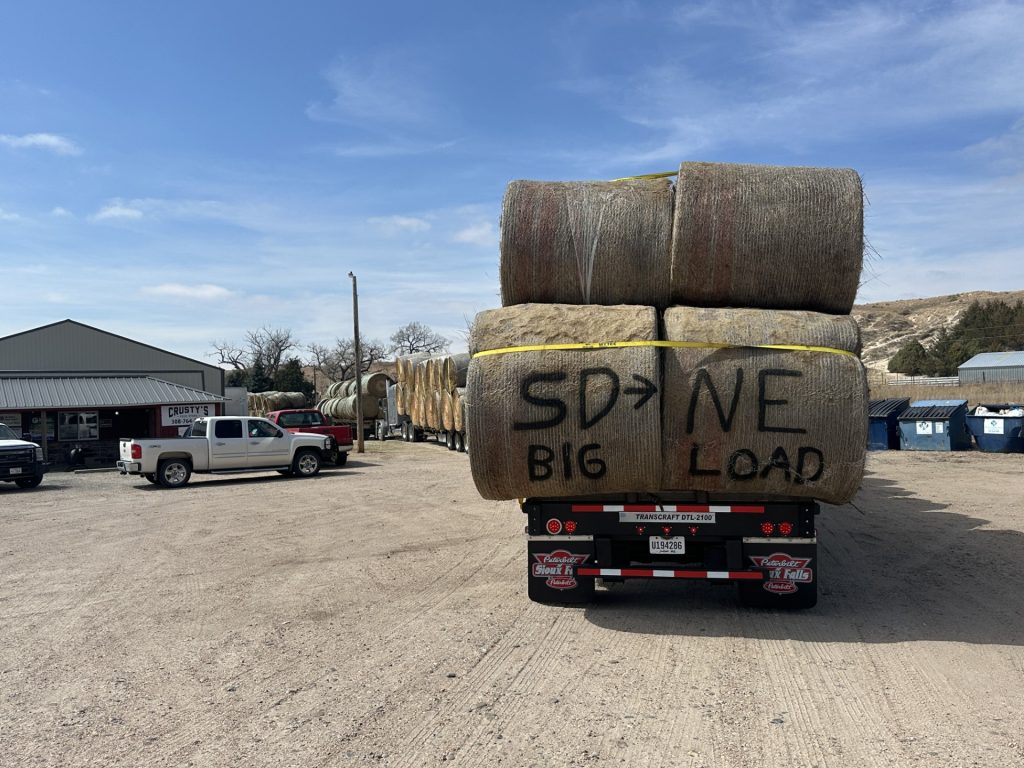
“SD – NE Big Load” is written on the bales on a load of hay brought to Nebraska.
4
-
Piles of fencing materials, ready to be used after the Morrill Fire burned more than 600,000 acres of the Sandhills.
11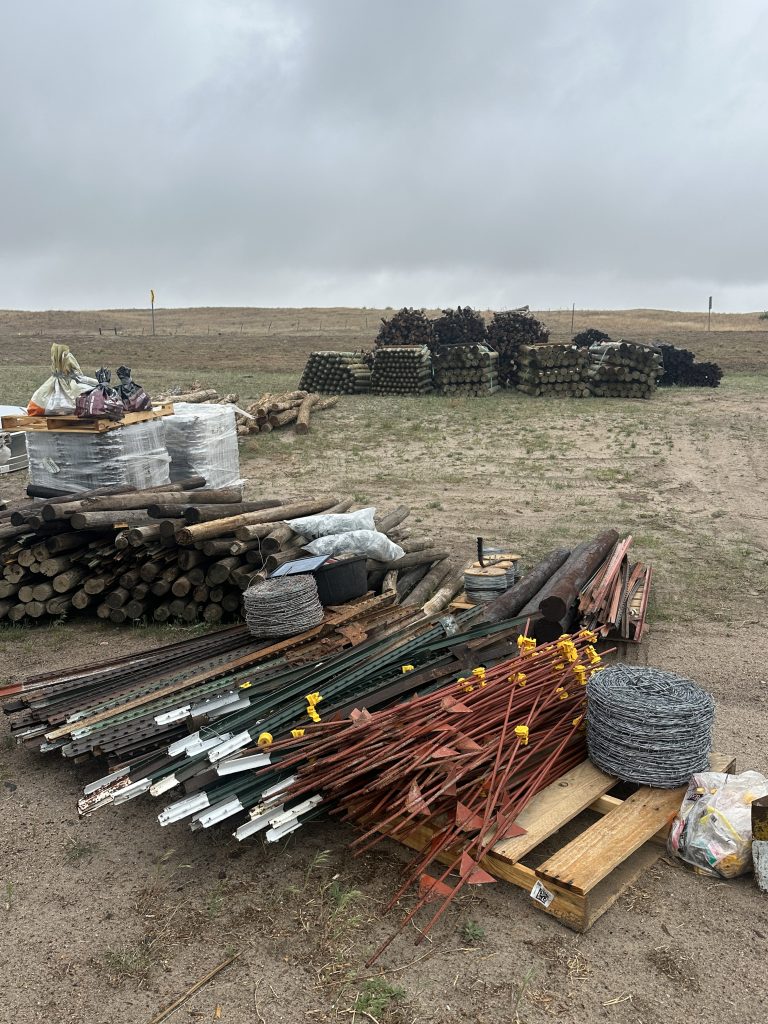
-
Jason and Kari Christensen were instrumental in getting needed supplies to ranchers across the western Sandhills after the Morrill Fire.
12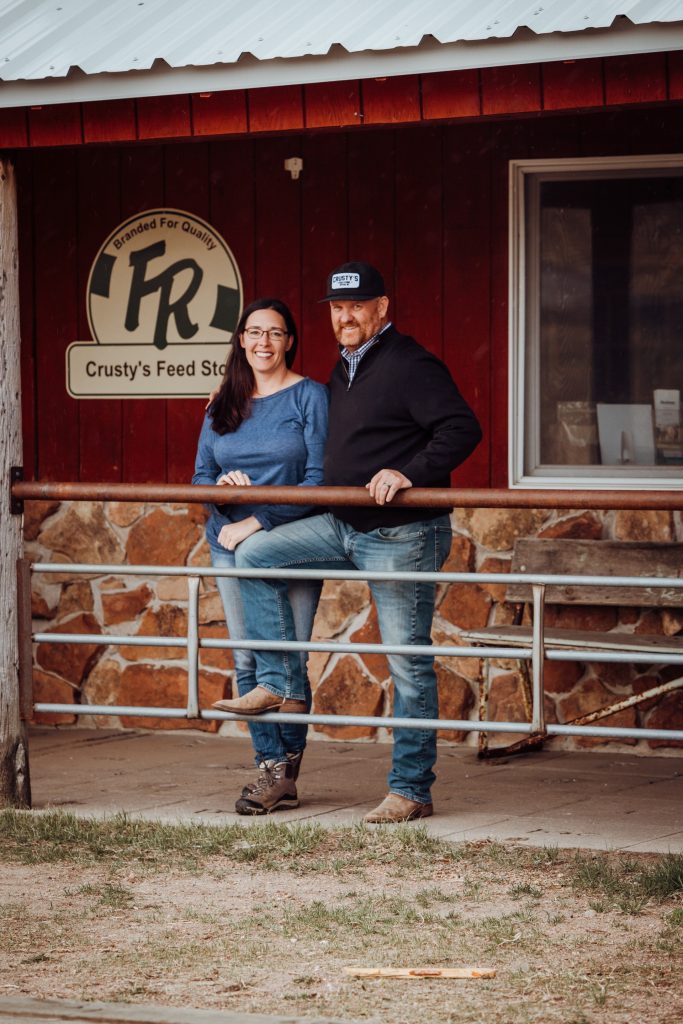
-
-
Pallets of feed sit, ready to be delivered to a ranch to feed hungry cows.
8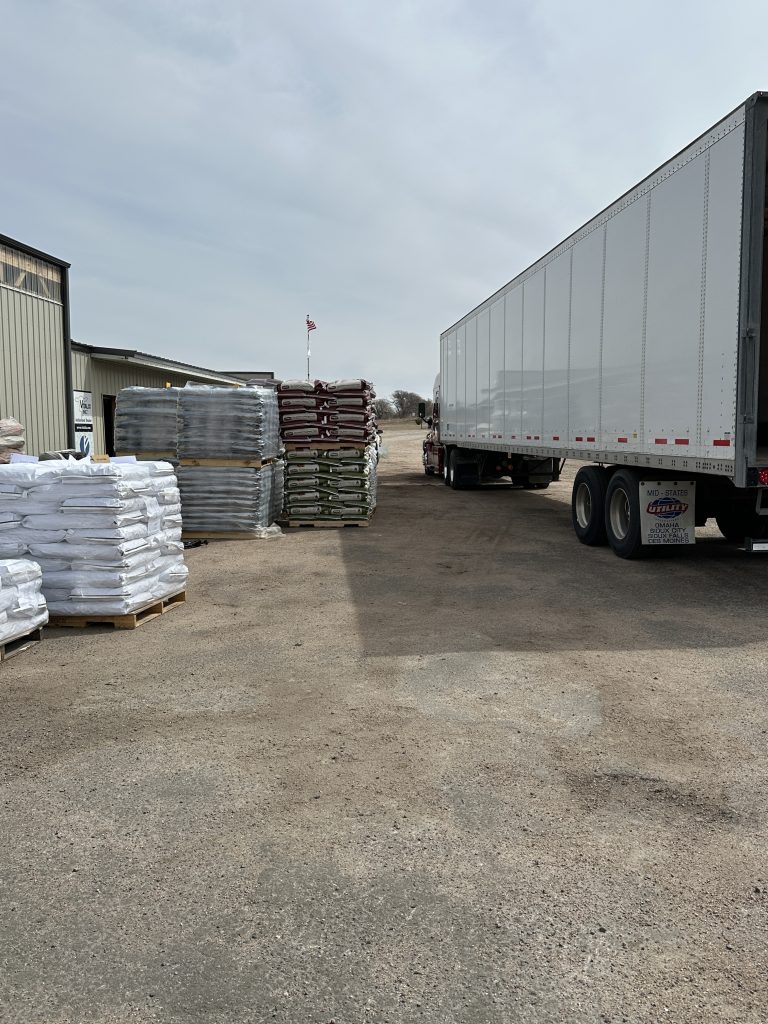
-
A convoy of trucks heads into the Sandhills, bringing much needed relief and feed for cattle after the Morrill Fire.
6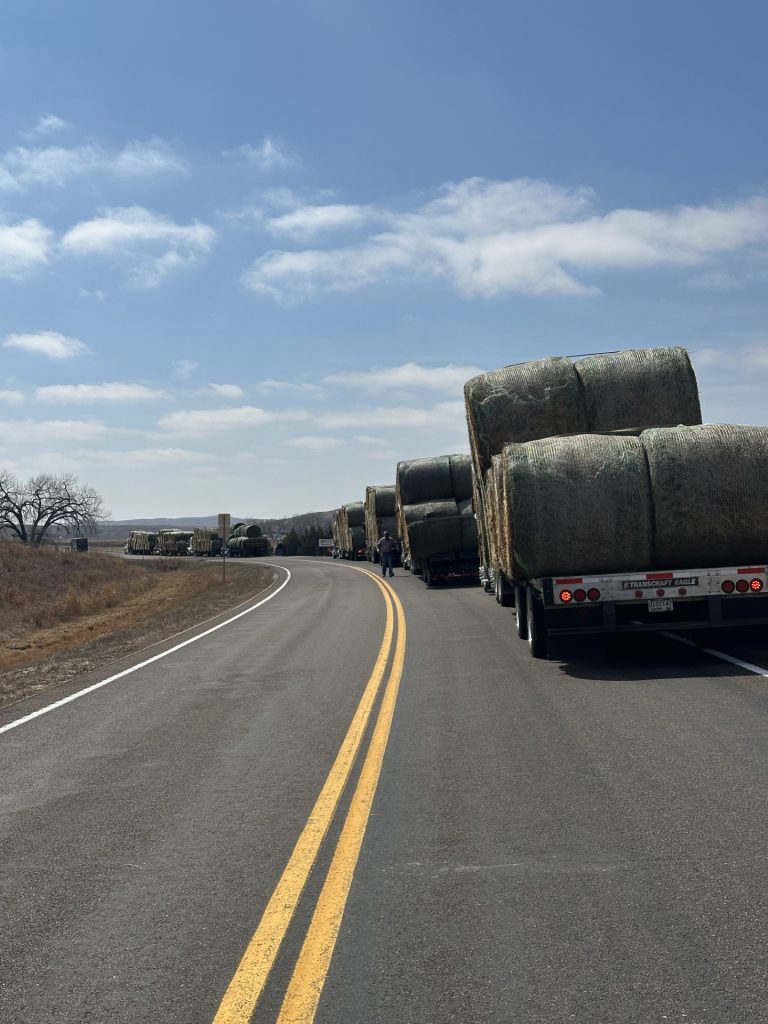
-
South Dakota truckers stand in front of a load of hay they delivered.
1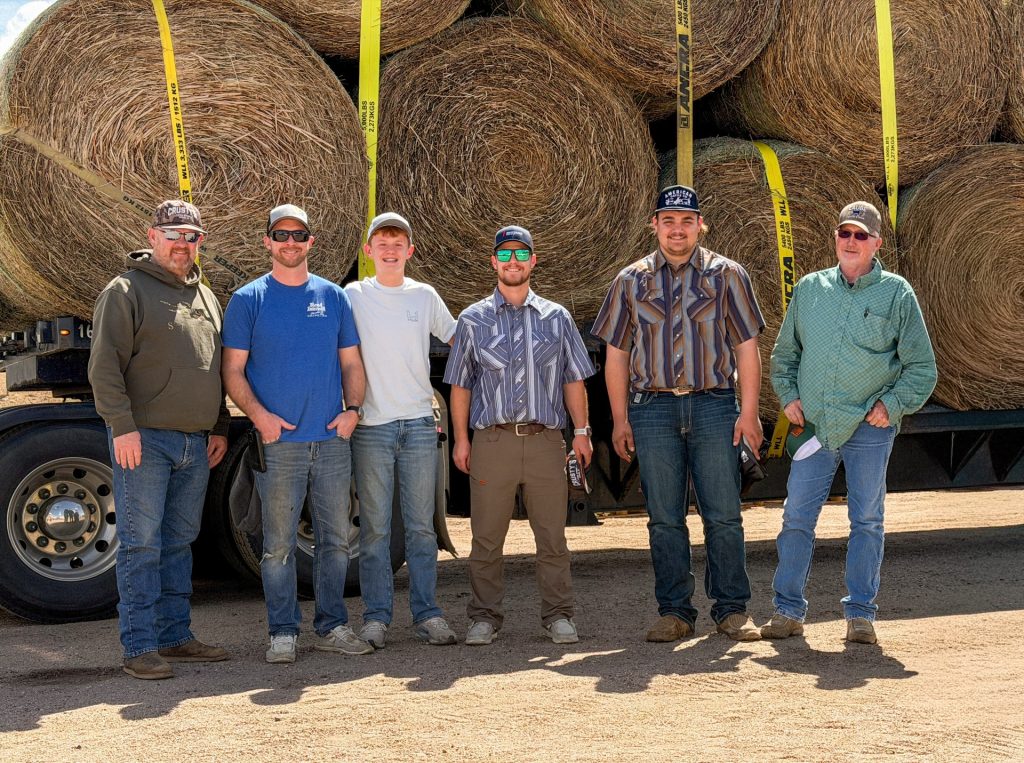
-
Protein tubs are headed out for delivery.
10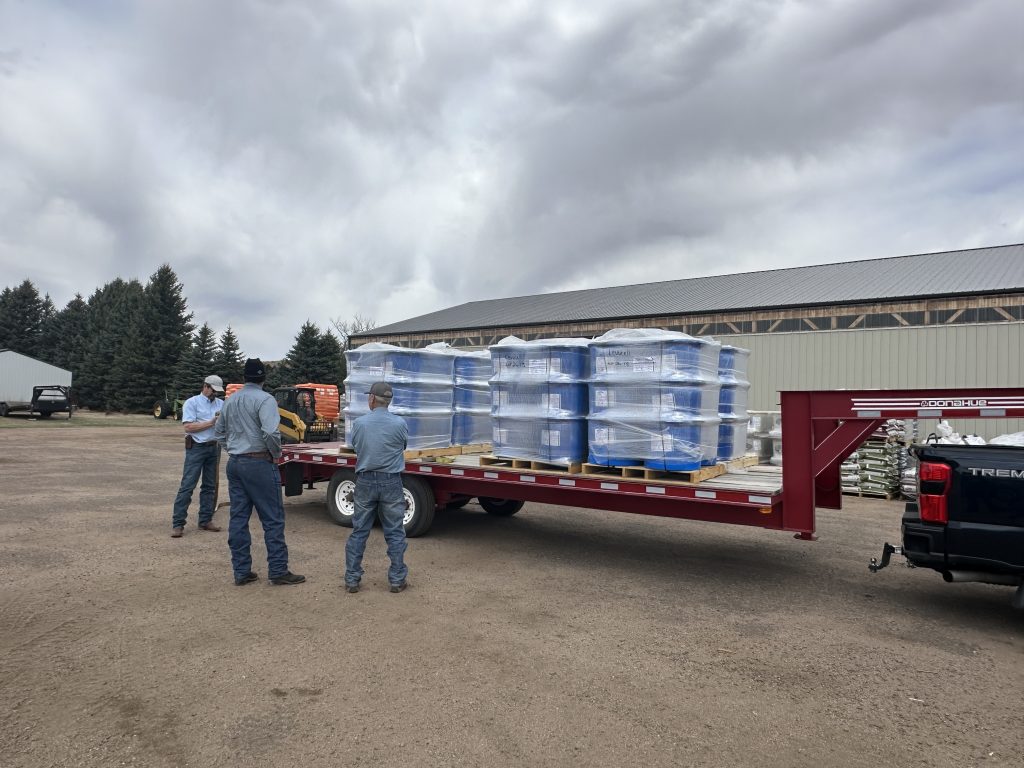
-
Paul Cleveland, with his back to the camera, gives a group of South Dakota truckers directions to the ranch where they were to take hay. This group of men made several trips and liked to stop at Crusty’s Feed Store to visit with everybody.
9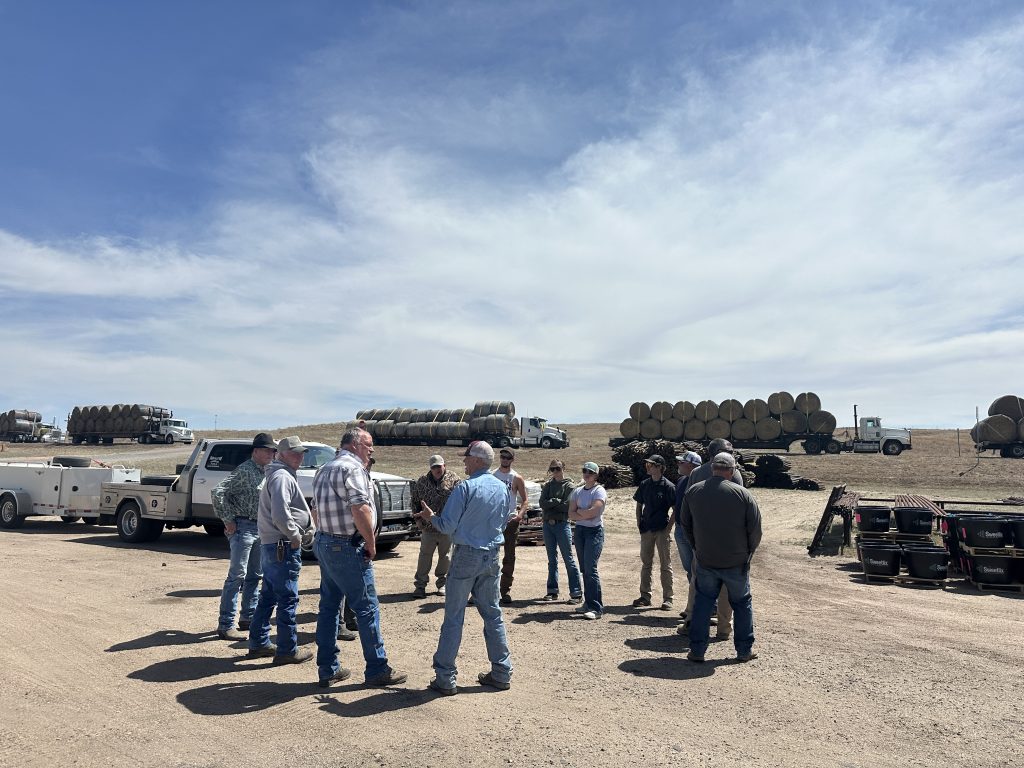
Kari Christensen | Courtesy photos