2026 Spring Homeland | Where artificial intelligence meets water stewardship in agriculture

Lindsey Langemeier Follow
-
AI_Image_1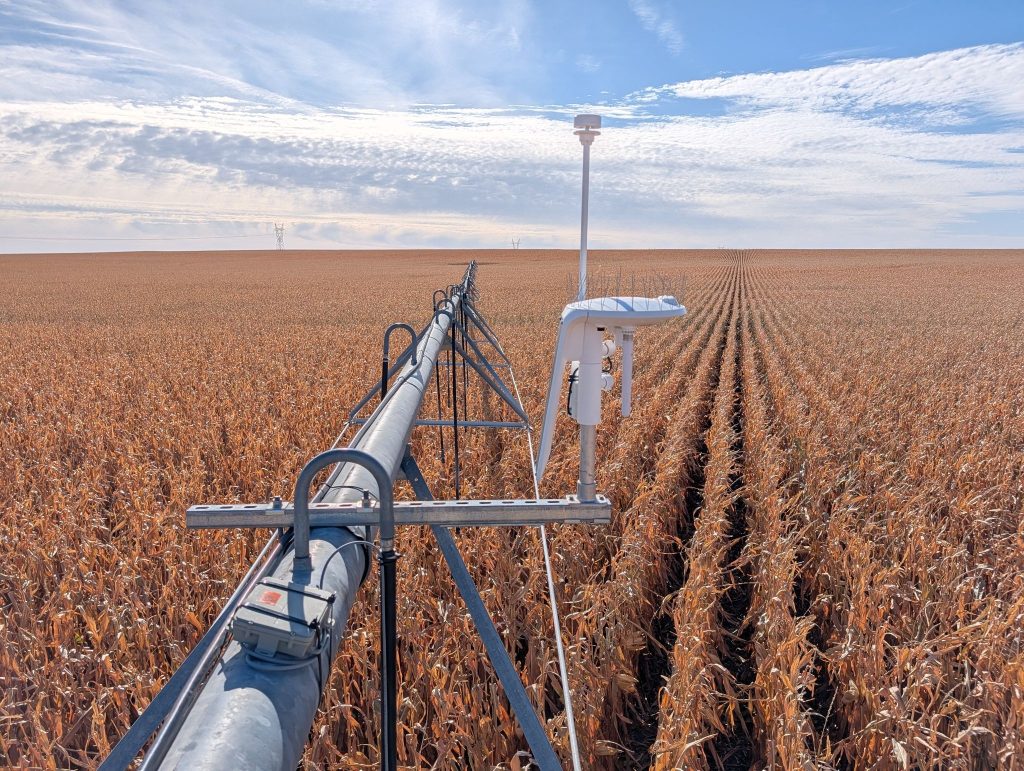
-
AI_Image_2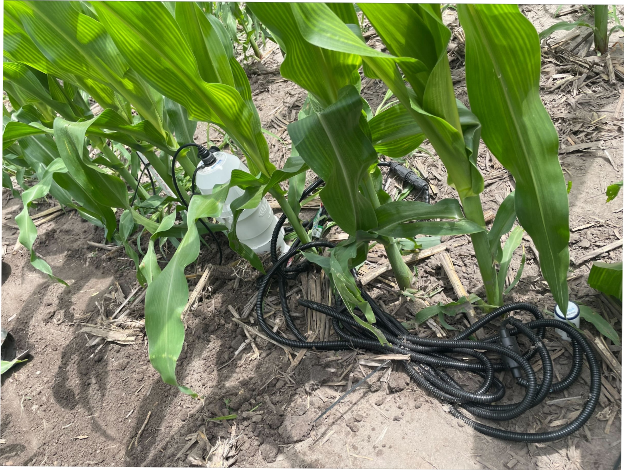
-
AI_Image_3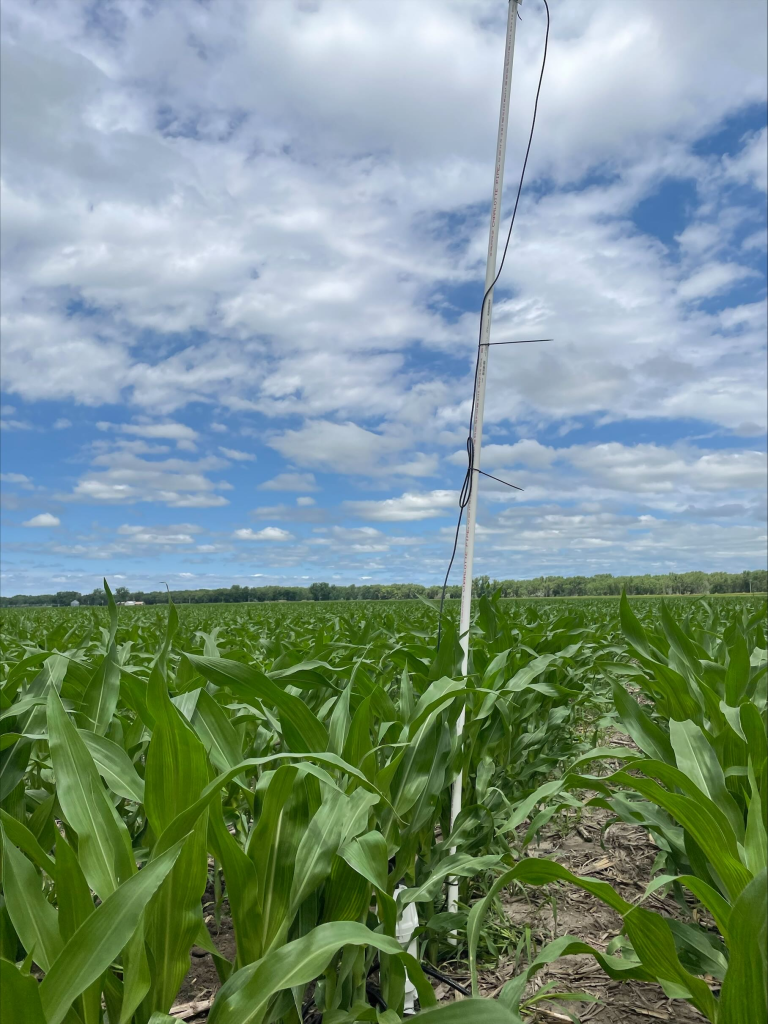
-
-
AI_Image_4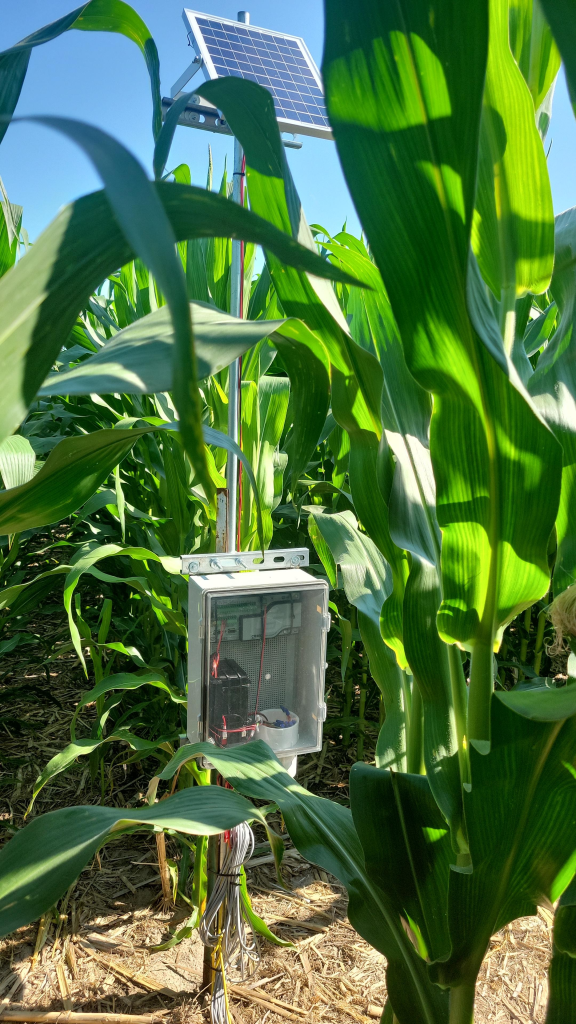
-
AI_Image_5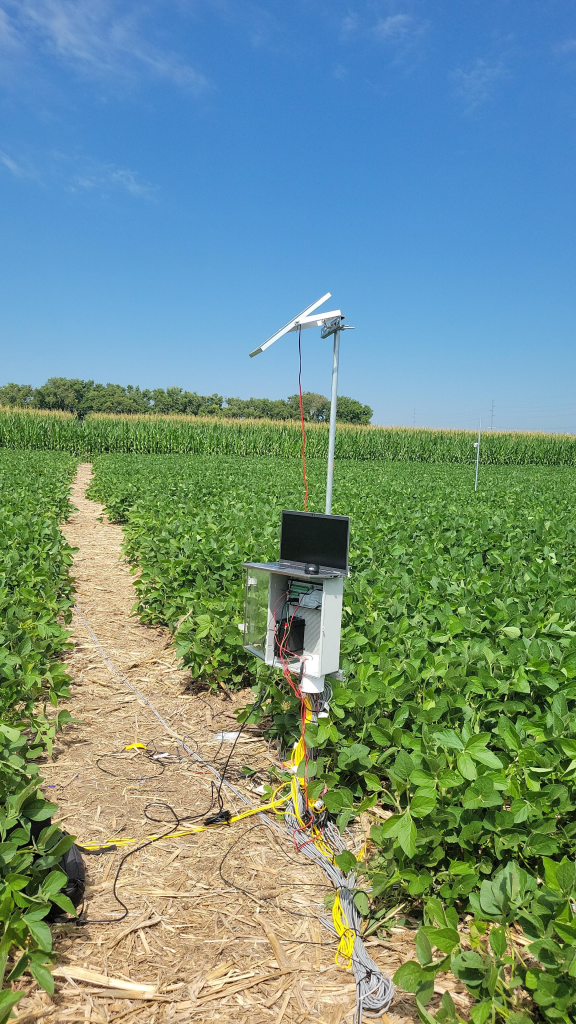
-
AI_Image_6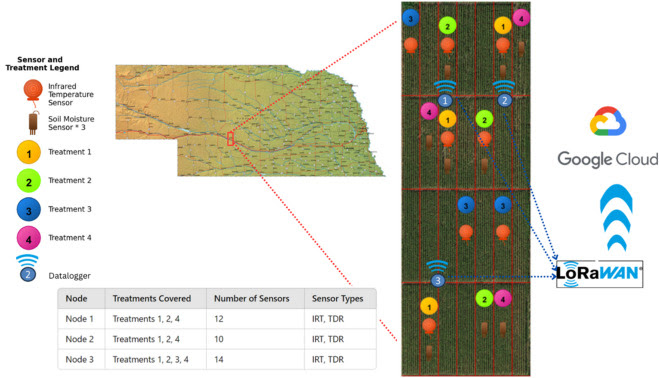
As artificial intelligence (AI), its infrastructure and footprint expand, researchers and technology companies are exploring how more precise irrigation decisions could help farmers reduce groundwater use.
Water scarcity concerns are not new, and neither is artificial intelligence, but the two discussions are increasingly intersecting in agriculture. From social media debates about water usage on farms to AI replacing jobs to headlines questioning the water required to cool AI data centers, the technology has quickly offered promises and raised concerns.
Globally, fresh water supplies are under increasing strain from population growth, aging infrastructure and recurring drought in many regions. Agriculture also accounts for a significant share of global fresh water withdrawals.
At the same time, AI infrastructure has its own footprint. Data centers that power AI systems rely on water for cooling. One 2021 report published in Nature estimated that U.S. data centers consume 449 million gallons of water per day and 163.7 billion gallons annually. While that figure has drawn attention, it remains small relative to other water withdrawals worldwide, including those from agriculture.
The larger question remains about whether AI might ultimately help reduce more water than it consumes, especially in agriculture.
The full environmental implications of AI are still being studied, but researchers from the Center for Secure Water at the University of Illinois note that AI has the potential to address major water challenges, including optimizing irrigation, improving wastewater treatment and detecting contaminants in drinking water.
In agriculture, where even small efficiency gains can translate into significant savings, technologies are already being tested, implemented and reporting positive results.
What research shows about water savings
For Abia Katimbo, Ph.D., assistant professor and irrigation management specialist with the University of Nebraska–Lincoln Extension at the West Central Research, Extension and Education Center, the promise of AI-assisted irrigation lies in its ability to manage data volume.
“On a typical operation using modern irrigation technology, soil moisture sensors, weather data and plant stress indicators can generate millions of data points throughout a growing season,” Katimbo said. “But because there are large datasets, it makes it difficult for farmers to use all this for irrigation insights in real- or near-real time.”
Farmers also have limited time in a busy growing season when other management decisions, such as weed, pest and nutrient control, compete for attention.
“With emerging AI and its potential application in agriculture, researchers and companies are now exploring ways of using various AI algorithms to quickly interpret these large datasets into simple and fast irrigation insights,” Katimbo said.
He said that most large pivot systems are not fully autonomous yet. Instead, decision support tools simplify data and provide recommendations through dashboards or mobile apps to allow producers to make fast irrigation decisions.
“In other words, AI systems will not replace the experience,” Katimbo said. “The farmer will still need to be involved and make the final call on whether to irrigate or not and on how much water should be applied. The job of the tools is to save time when making decisions and for the farmer to be confident in that decision.”
For example, in Katimbo’s Mobile Irrigation Testing Labs outreach program, farmers use soil moisture probes to support irrigation decisions, but they still walk fields weekly to confirm conditions before deciding whether to irrigate.
“As companies continue to develop AI-assisted tools or automated irrigation systems, it is very important to train and validate the AI-derived decisions based on the current field conditions and farmers’ experiences.”
Research is already showing water savings while maintaining yields when effective tools, such as AI-assisted irrigation decision systems, are adopted. In several reviews compiled by Katimbo and other researchers, water savings ranging from double-digit percentages to more than 30 percent have been documented when sensor-based irrigation technologies and decision support systems were used compared with traditional scheduling methods. Yields remained similar.
In one study, researchers documented water savings of up to 90 percent and yield increases of 26 percent when multiple sensor-based technologies were used. Another review found soil moisture sensor scheduling reduced water use by roughly 38 percent compared to traditional methods such as crop observation or soil feel. In an on-farm irrigation research study in Nebraska comparing grower practices with a commercial irrigation scheduling tool, water savings ranged from 29 to 43 percent in corn and 10 to 37 percent in soybeans while yields remained similar.
Those gains from technology-assisted irrigation matter as groundwater resources tighten across the High Plains. In Nebraska, irrigated agriculture depends heavily on groundwater from the Ogallala Aquifer, and in some regions, declining water levels and recurring drought have prompted Natural Resources Districts to impose multi-year pumping allocations.
“In this scenario, when a farmer is regulated on how much groundwater to pump, it does not matter about the amount you need to irrigate, but how you can manage multi-year limits,” Katimbo said.
Tools that help producers track water use and make more precise irrigation decisions could play an increasing role under those constraints.
“AI-assisted tools could be valuable in helping farmers track seasonal water use and plan in-season and late-season irrigation applications, especially during dry years,” Katimbo said. “As different groundwater-dependent states continue to explore approaches to increase water conservation on farms, farmers have a huge role in such initiatives to adopt technologies for more water savings on farms.”
However, technology adoption remains relatively low. According to recent USDA survey data on irrigation management methods across the U.S., only a small percentage of farms rely on soil or plant moisture data for irrigation scheduling, while many still depend on crop observation or traditional methods, such as the soil moisture hand feel method.
“Currently, most of the AI-assisted irrigation systems are still under development,” Katimbo said. “AI-enabled technology for automated irrigation systems is not common and not fully commercialized yet, particularly for large systems like pivots for row crops, but is seen in a few small drip systems for high-value crops, such as orchards.”
Before investing in emerging technology, Katimbo said producers must be clear about their goals in how the technology can help them maximize resources to be more profitable and productive.
“They need to define their problem,” he said. “For instance, are they trying to narrow yield gaps under water allocation, cut input costs or optimize resource allocation across a nonuniform field?”
Return on investment calculations over both short and long time horizons are also critical.
Ultimately, Katimbo views the adoption of AI-assisted irrigation as part of a larger shift in mindset.
“Technology adoption is about risk reduction, increasing confidence levels in decision making, better allocation of water throughout the growing season under limited water resources and, importantly, protecting the yields with high water savings,” he said. “It is not only about getting high and economical yields, but also conserving enough groundwater in the aquifer for future generations.”
AI in application
Several companies are developing tools designed to help farmers improve irrigation decisions. One example is a collaboration that was announced between Google and Arable, a California-based crop intelligence company, and growers in Nebraska aimed at improving irrigation decision-making.
This collaboration, now in its third year, supports widespread deployment of Arable’s crop intelligence solution across 25,000 acres in the Twin Platte Natural Resources District to help optimize irrigation and reduce groundwater pumping from the drought-affected Platte River system.
“This program has been really successful, the grower response has been overwhelmingly positive and the water savings have exceeded targets,” said Jim Ethington, CEO of Arable.
He said there are several other similar projects underway across the Midwest, including one in Indiana focused on improving irrigation efficiency in the Kankakee Aquifer region.
Ethington said there’s now a turning point in the market where the products that technology companies are bringing to farmers are finally starting to have the level of maturity and value for broader adoption.
“Historically, it is not that farmers aren’t willing or able to adopt technology around irrigation decision tools, but the technology products weren’t up to the level of what a grower needs in terms of trustworthy data, agronomic rigor and simplicity.”
He said that AI’s biggest role is simplifying large amounts of information into actionable insights.
“Where AI can take huge amounts of data that a grower doesn’t have time to review and pull out simple, actionable insights, that will be super valuable,” Ethington said. “And where AI can help establish trust in a product that the recommendations are going to be a fit for that grower’s fields, that is also an area that we see AI playing a bigger and bigger role.”
As AI grows, there are broader conversations happening between companies about AI’s environmental footprint, including water and energy use at data centers.
“We see data center companies being really thoughtful and proactive about how they can minimize their impact in terms of water and energy use, both in terms of inside their facilities and then projects they can sponsor that have a positive impact on the community and resources nearby,” Ethington said. “In fact, data center companies are one of the few industries where you see a concerted effort to be water neutral in the areas they operate.”
Looking ahead, he said water stewardship will only grow in importance.
“With any industrial growth, we are going to see a need for resources to power that growth,” Ethington said. “What we think about is how to make sure that agriculture can benefit from these opportunities, whether it’s via AI in our products or helping to manage water resources in a particular basin. By helping to support and inform growers’ daily decisions, we can improve efficiency, productivity and profitability on the farm, while at the same time reducing water used per bushel. Any and all technologies that can help maintain or increase economic productivity with less water will be essential.”
Photo Cutlines:
Photos: https://www.dropbox.com/scl/fo/hvhoywd3eftn306wqkop3/AA9LbkN43C64qEvGmwq9dnc?rlkey=9p0h02m6a5cldnyxf7ax1xvl2&st=iwphxbp1&dl=0
AI_Image 1 – Grower responses have been overwhelmingly positive toward emerging data-driven irrigation technologies, and water savings have exceeded targets. Growers participating in irrigation technology programs say mobile dashboards and sensor data can help prioritize irrigation decisions and day-to-day management decisions during the growing season. Photo courtesy of Arable.
AI_Image 2 & 3 – Soil Moisture Monitoring Technology installed by Abia Katimbo’s Mobile Irrigation Testing Lab Outreach and Extension program in the corn fields to support farmers’ irrigation decisions. Photos courtesy of UNL Extension.
AI_Image 4 & 5 – Complex multi-sensor suite in corn and soybean plots for Abia Katimbo’s research group is measuring soil moisture and plant water stress in real-time to optimize water use efficiency. Photo courtesy of UNL Extension.
AI_Image 6 – Crop2Cloud platform designed dashboard by former master’s student, Bryan Nsoh. This system leverages Internet of Things for sensor data storage in cloud and then fed into AI models to provide real-time irrigation recommendations. Photo courtesy of UNL Extension.