2026 Winter Cattle Journal | Jindra Angus: Generations of Dimension
Lindsay Humphrey Follow
-
Gayedene, Roger, and Jean Jindra.
Gayedene, Roger, and Jean Jindra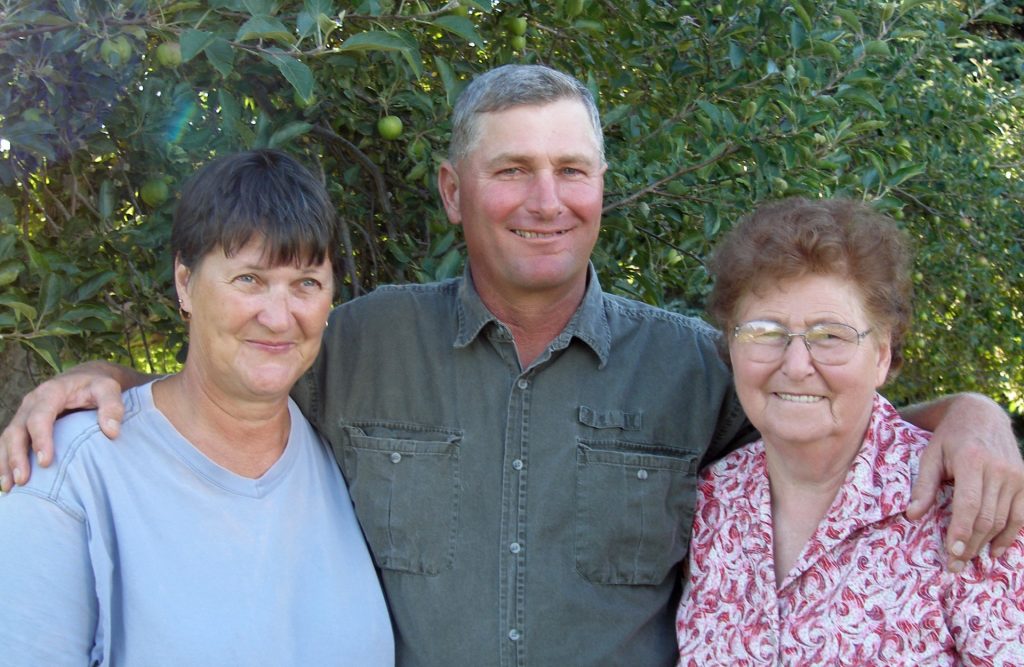
-
Jean & Edwin Jindra feeding hogs 1952 (Nick’s Grandparents)
Jean & Edwin Jindra feeding hogs 1952 (Nick’s Grandparents)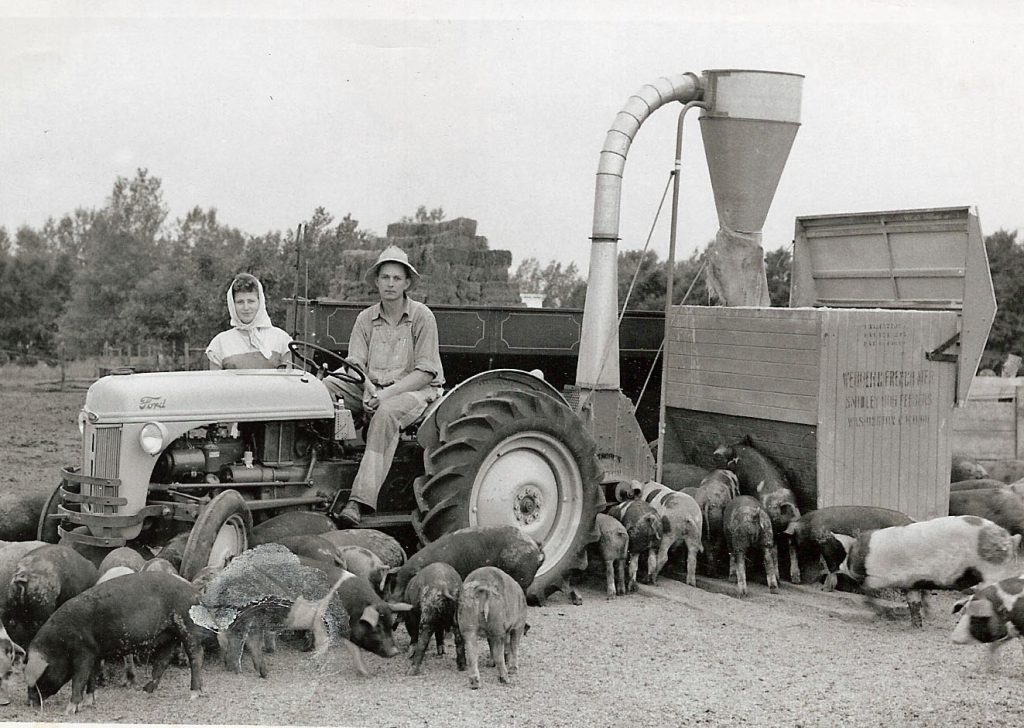
-
Jindra Family
Jindra Family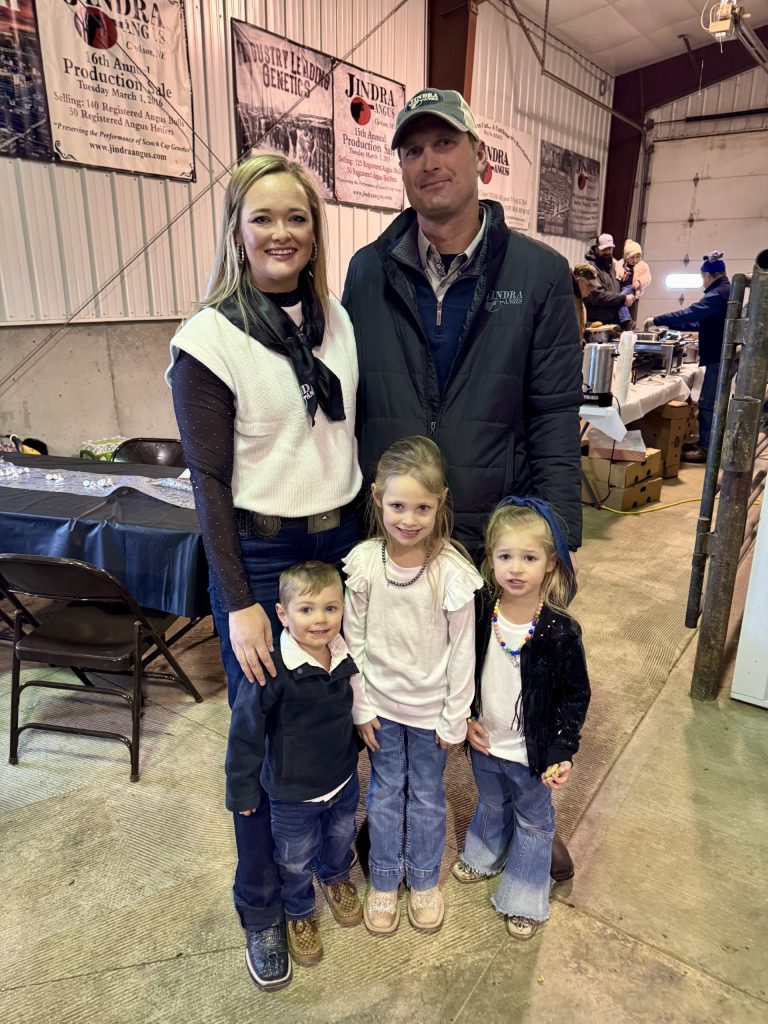
-
-
Lydia, Emma, and Carrie Jindra
Lydia, Emma, and Carrie Jindra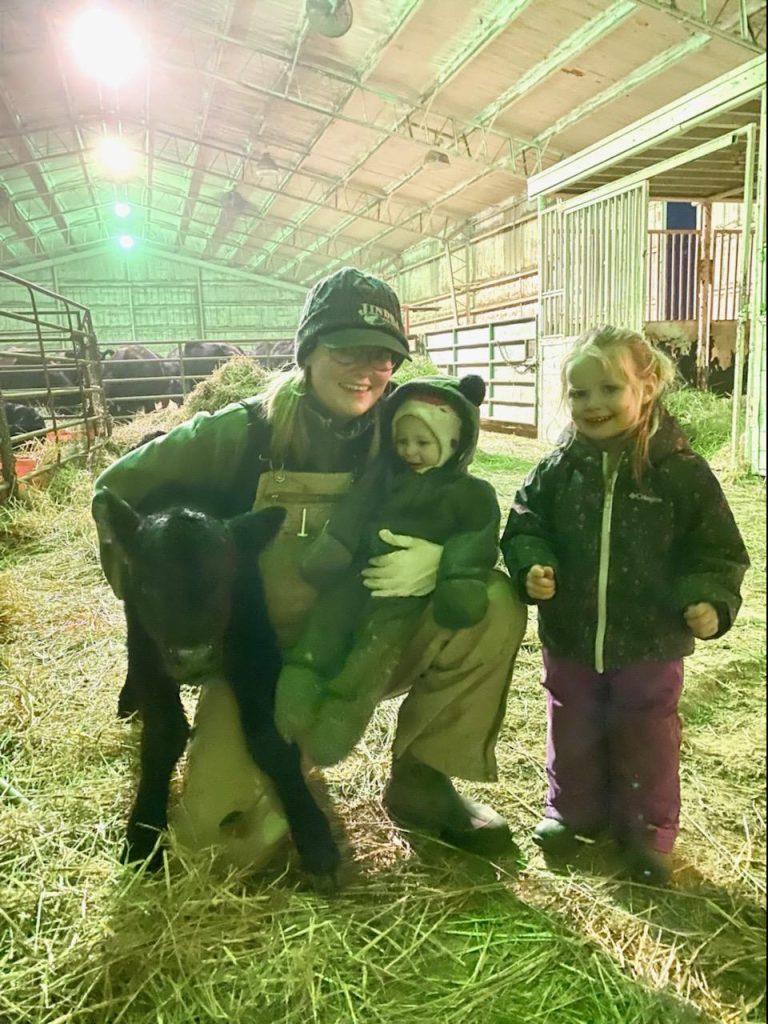
-
Nick and Lydia Jindra
Nick and Lydia Jindra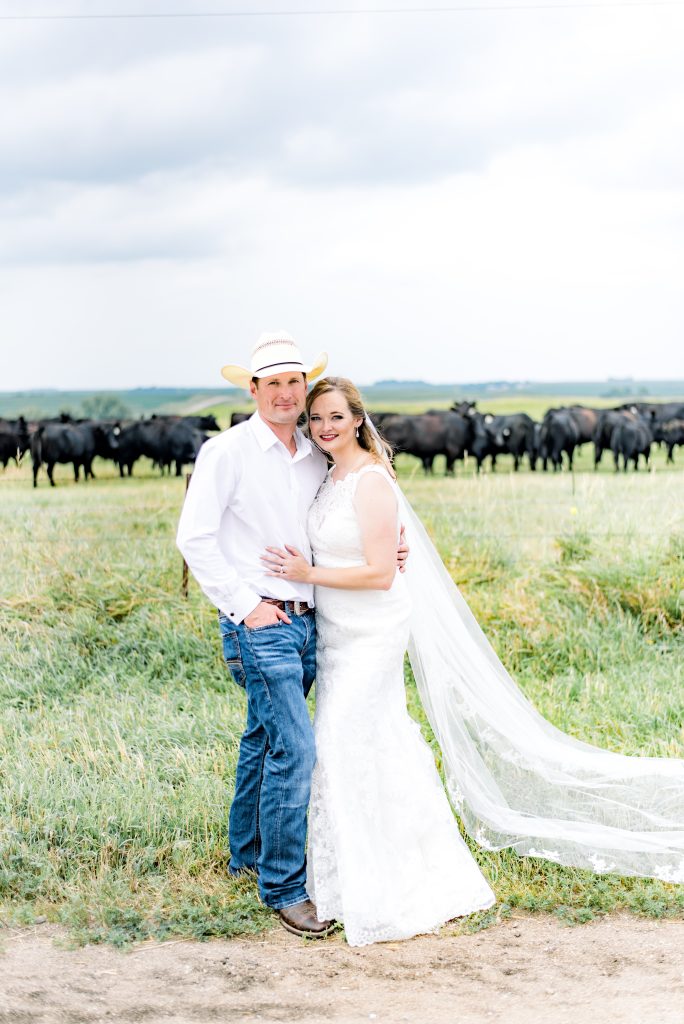
-
Visitors from Scotland
Visitors from Scotland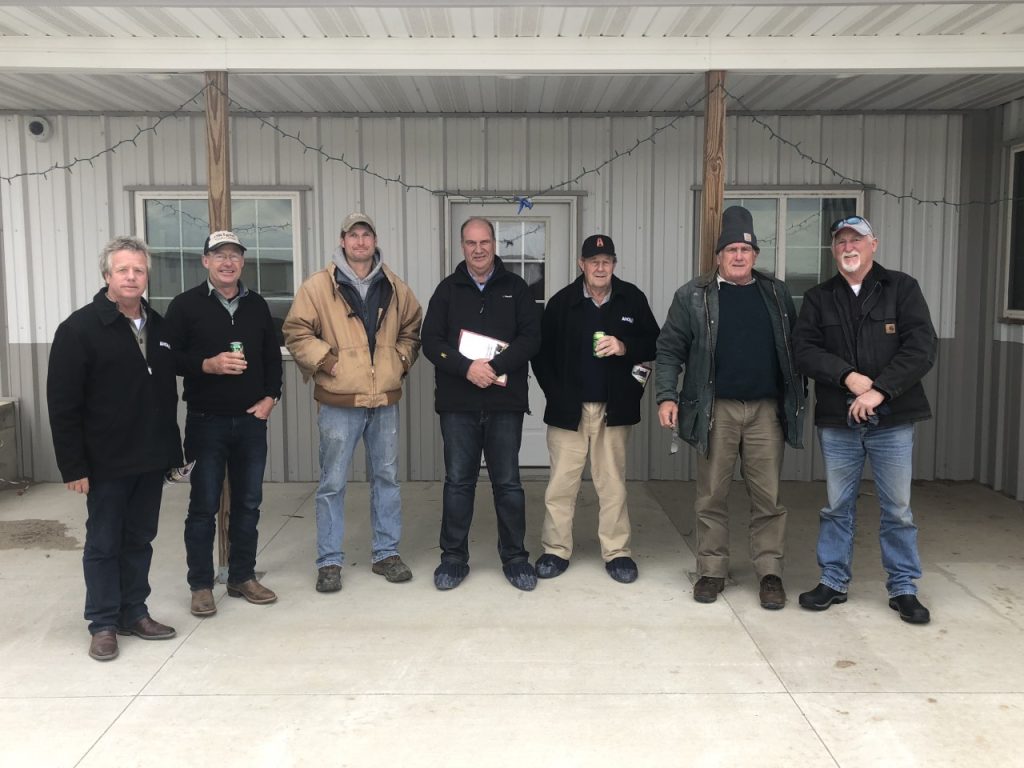
-
2020 National Western Reserve Champion Yearling Pen of Three Angus Pen Show
2020 National Western Reserve Champion Yearling Pen of Three Angus Pen Show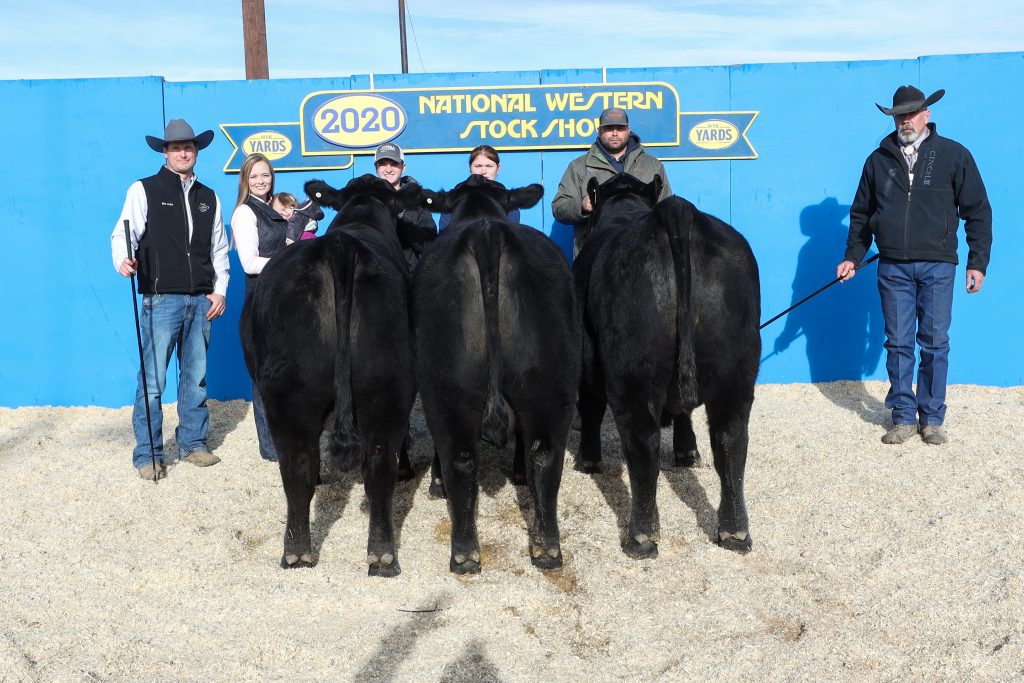
-
Brooke Theilen
Brooke Theilen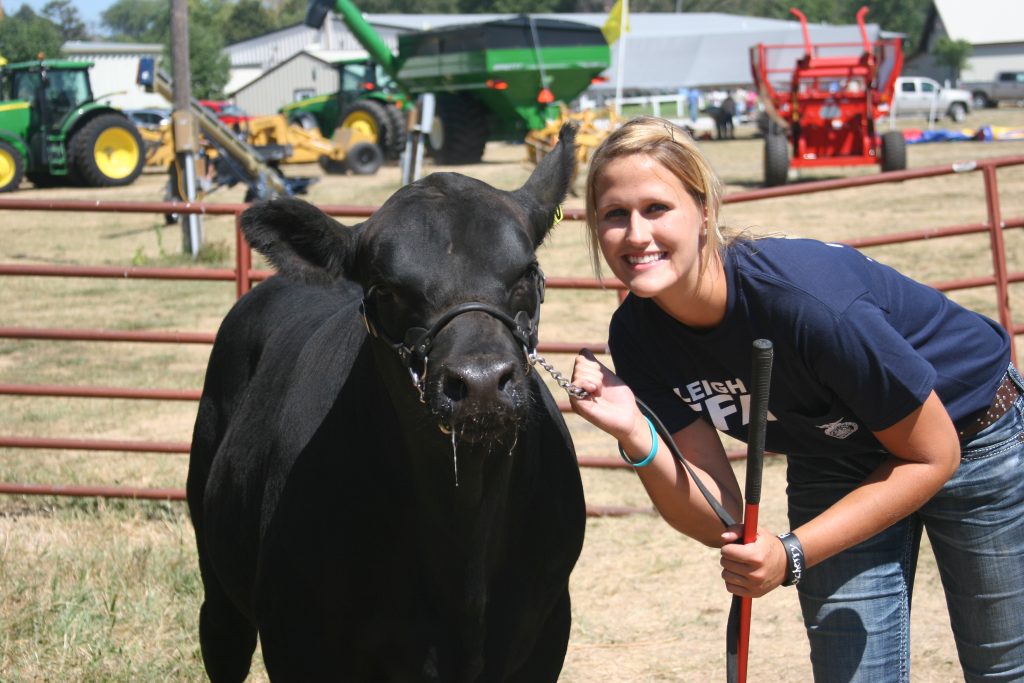
-
Carrie with Arlo
Carrie with Arlo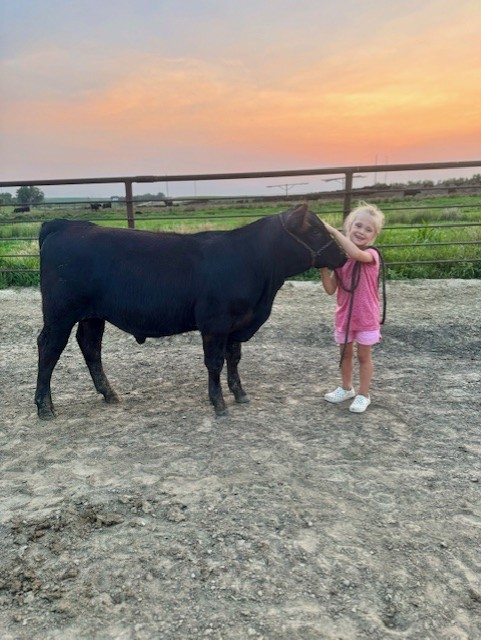
-
Cole, Emma, and Carrie Jindra
Cole, Emma, and Carrie Jindra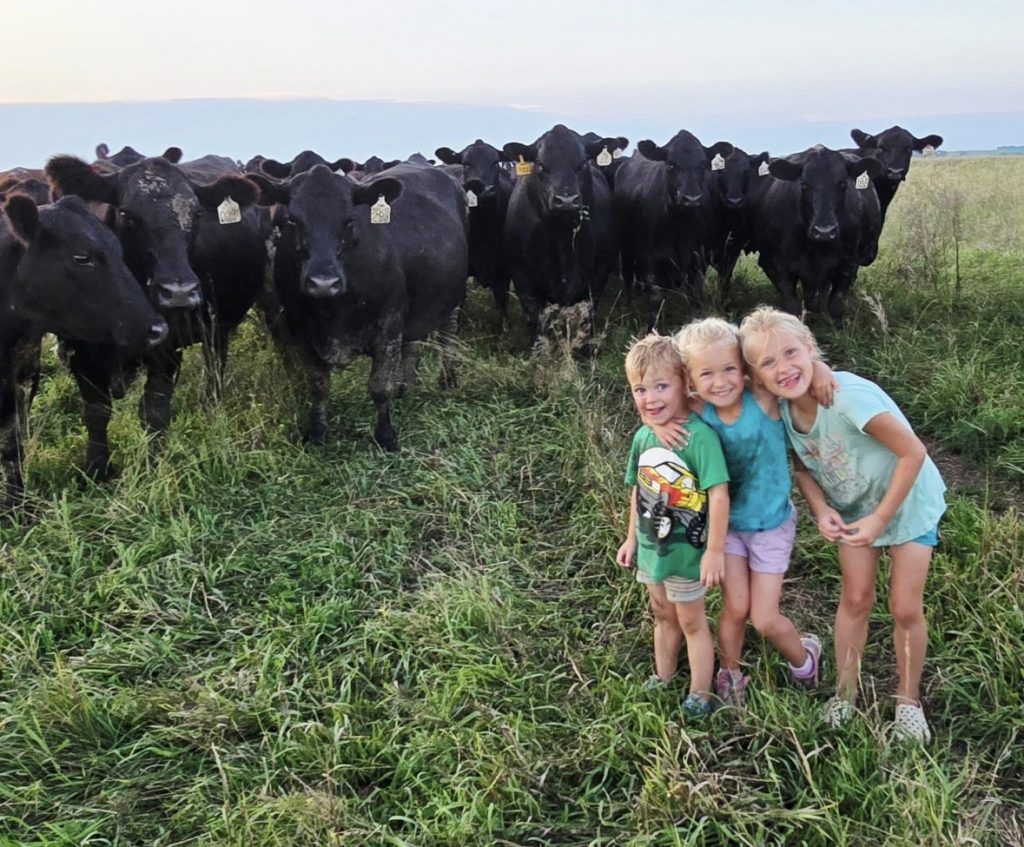
A young Nick Jindra sits in the stands of a sale barn in rural South Dakota, flanked by his dad, Roger, on one side and his grandpa, Edwin, on the other. The bidding starts and paddles go up and down. Cattle in one door and out the other, like a clock: time marches on.
For the Jindra family, time has stood still, in a way. What began almost 150 years ago when Jozef and Josefka Jindra immigrated from Hlinsko, Czech Republic, to Clarkson, Nebraska, has grown exponentially. Just a few head of cattle and some crops in the ground kicked off what would one day become an industry leader for Angus cattle.
“A lot of things stand out about Jindra Angus, but one of the most prominent is their bull, Jindra Acclaim,” said Kurt Schaff, Angus Hall of Fame. “He became one of the most widely used bulls in America. He had a lot of widespread influence, and so did his sire [Jindra Third Dimension] and grandsire [Jindra Double Vision].”
Even though Nick’s herd is now several generations beyond the Jindra Acclaim era, it’s a testament to the backbreaking, proof-is-in-the-pudding work he’s put into growing the family operation and establishing a proven registered Angus program.
Bull Power
Bulls have given Nick’s family a lot over the years. Most importantly, it brought Nick to his wife, Lydia, who was working at a bull stud at the time. It was sparks from the very beginning. The pair now have three kids – Carrie, 6, Emma, 4, and three-year-old Cole – who represent the fifth generation of Jindras on the homestead continuing the tradition of a family-ran outfit.
More than helping Nick start a family of his own, bulls put the Jindra Angus herd on the map. But behind those bulls, though, were the females. The hard work began when Nick was developing his own cow herd through 4-H and FFA. And it’s those foundation females that grew to produce Angus sires who would have a major impact on the breed.
“Production came first and went well using top genetics, artificial insemination, and embryo transfer but it was pricy and local sales alone just weren’t enough, so we needed to expand our marketing,” said Nick, the 2000 Nebraska FFA Star Production Award winner. “One way to try and do that was to take our bulls to the National Western [Stock Show] and enter the Angus Pen Show. That was a great way to get our cattle out there and make new connections across the industry.”
Things eventually started heading in the Jindra direction. At the 2011 NWSS in Denver, Colorado, Nick brought a pen of bulls which was headlined by Jindra Double Vision. He was one of Nick’s first top bred and owned bulls.
“One of the many things that stands out about Jindra Angus is that three generations of bulls, bred by Nick, were the lead bulls of the heaviest pen of bulls at the National Western,” Kurt explained. “It began with Jindra Double Vision, followed by his son Jinda Third Dimension [in 2013]. And then Jindra Acclaim did the same thing, as a lead bull for the heaviest pen of bulls at the NWSS.”
All three were major AI sires and became household names across the industry, but none more than Jindra Acclaim whose name appears on more registrations with the American Angus Association than any of the others. The leg work for this success began almost four decades earlier when Nick was cutting his teeth as a cattleman, first at the sale barn, and later, in the breed books.
“Back when I was a kid going to feeder cattle sales with my dad and grandpa as buyers, the black nosed Charolais cross calf was a hot commodity that offered top performance and profit potential,” Nick said. “At that time they were hard to beat from the feedlot onward. But my question was, if you wanted to develop a cow herd that can do it all, excelling in every sector of the industry, where should you start?”
That is the question that would steer the ship that ultimately led to Jindra Angus. On a quest to answer this question, Nick was guided north with Roger and Edwin to Bison, South Dakota.
Hoff’s Scotch Cap
What began with two show heifers purchased for a 4-H project in 1994, have stood the test of time as Nick not only preserved the superior genetics of the Hoff Scotch Cap Angus herd, but further enhanced them to reach unparalleled heights.
“The Hoff’s were at the forefront of the Angus breed in terms of performance,” Nick said. “Their genetics were exciting because they could develop more performance in a purebred Angus herd while still having maternal and carcass quality with more consistency than the crossbreds.
“Back then it seemed to me like Angus cattle had a lot of advantages but at feeder cattle auctions they were often in the shadows behind stouter crossbred calves that offered more performance and better average daily gains,” Nick said. “The Hoff genetics, however, could rival that.”
Over the years Nick continued to work with Doug and Molly Hoff, adding new genetic influences from them regularly until 2006 when the Hoff’s dispersed.
While Nick is quick to give credit where it’s due to Doug and Molly, to say that the Jindra herd hangs their hat on Hoff’s Scotch Cap would be incorrect. In fact, there is no single cow or bull that’s been the backbone of their operation. It’s been a mixed bag of carefully selected genetics over multiple decades that brought them to this current junction.
Today, Nick insists that the backbone of their operation has clearly become the commercial producer.
“It’s our job to produce the updated genetics that our customers need for their continued success,” Nick added. “We work closely with our customers to try and understand their needs and get them the genetics to meet those needs as specifically as possible.”
Nick’s family first made a name for themselves in the feeder cattle segment and while they haven’t left that behind, creating their own purebred herd has only enhanced their expertise and output as cattlemen.
“Adding seedstock production has enhanced our ability to more closely track performance on the rail all the way to the consumer while also learning constantly about what is really needed at the everyday ranch level,” Nick said. “With all the different numbers and propaganda out there today, we’re still grounded in the fundamental idea that you need to start with a functional and efficient cow with good foot and udder quality. She has to do her work and then build from there.”
With each new generation, Nick learns something new about the genetics on the ranch and builds a database that allows him to track longevity and showcase their proven results.
The Blackbird
“Nick is good at what he does because he’s grounded in the basics of the beef cattle business,” Kurt said. “He understands what cattle work best in a feedlot scenario. His broad view of what works in the business puts him in a strong position in the Angus breed.”
Spending two years at Northeast Community College, Nick transferred to the University of Nebraska-Lincoln where he earned a degree in agricultural business. He’s quick to advise the college-bound to start at a community college the way he did.
“I was fortunate that my family operation was only a few hours from Lincoln, so I could run home and help out,” Nick said. “I had what you might call more of a suitcase college experience, but I still made a lot of good connections and had fun while I was there.”
Those connections turned into peers and customers that keeps Jindra cattle crisscrossing the country and even some oceans.
“We want to offer genetics that can thrive in a variety of environments,” Nick said. “We have cattle doing well in the north: Idaho, Montana, North Dakota, and Canada. As far south as Texas, and to many states on the east coast as well, but they’re still most abundant in the central states and the sandhills of Nebraska.”
That’s how he made industry-leading bulls, but it’s also how he created the Blackbird Lassy line of females.
“Focusing on his best females over the years through embryo transfer, Nick’s propagated the best of his cows and isn’t afraid to branch out and use bulls beyond his original base,” Kurt said. “I think that’s what’s kept him competitive in the marketplace and his sensitivity to the needs of his customers.”
As longtime feeders, the Jindras get a front row seat to see the results of their purebred crosses and keep tabs on the results of their customers cattle too. Creating ever better genetics will be a lifelong pursuit for this multi-generational operation.
And while they aren’t exactly chasing a vertically integrated system, they’re well on their way to it. For now, they keep the blinkers on and run their own race. The next generation’s ability to even attempt moving the needle depends on it.
“Beyond the genetics, it’s very important to us that our bulls get out and do a great job for our customers, so we definitely stand behind them,” Nick said. “We also want to support our customers as much as we can on their sale day and nothing is better than seeing them do well with high quality Angus cattle that command top prices.”
On a different note about the road ahead Nick said, “In production agriculture, we’re definitely in a time of transition where there is a lot of change. The next generation has a huge responsibility coming their way and I look forward to watching young people step up, accept what’s in front of them and move the industry forward.”
All three of his kids are already grafting into the operation even though they haven’t even hit double digits in age yet. Watching their cattle grow and succeed pales in comparison to watching the youngest members of the Jindra family fall in love with the business that put their name on the map.
In its 26th year, the annual Jindra Angus production sale takes place every February. For more information about the operation, visit http://www.jindraangus.com.