2026 Winter Cattle Journal | Leland Red Angus

Courtesty Leland Red Angus (9)
The Leland family of Leland Red Angus raise world class red cattle on the very western edge of North Dakota. So close, in fact, their official address is Sidney, Montana. But no matter the state, the Leland family has worked for over 100 years – keeping ranching traditions alive, passing down a way of life to the next generation, and raising hardy red cattle.
The Leland Ranch was homesteaded by Melvin’s dad, Tony Leland, in 1911. Melvin was only four when his dad passed away in 1948, but his mother, Mary, continued to run the ranch with the help of hired men, and later remarried. His stepfather wanted to retire, and after Melvin graduated college, he immediately came back and has been there ever since, raising a renowned herd of Red Angus cattle surrounded by family on the home place.
When Melvin married Luella, a local ranch girl, she loved the ranching lifestyle and “between her and myself we’ve kept things going,” said Melvin. They have three children: daughter Tracey and her husband Steve Koester and their children, who also raise Red Angus near Steele, North Dakota; daughter Tana and her husband JJ Hovde live nearby in Sidney and JJ, a veterinarian, does the vet work for the ranch; and son Todd and his wife Carla are on the ranch and partners in Leland Red Angus.
What started as neighbors asking Melvin to “keep that bull calf for them at branding time” gradually evolved into a more formal purebred breeding program. The early years involved private treaty sales, but when the phone started ringing at midnight so customers could secure their preferred bulls on opening day, Melvin felt the business was ready to move to an auction format. They held their first production sale in 1984 at Sidney Livestock. In 1993, the sale was moved to the ranch, where it has remained ever since. This change allows customers to see the entire operation, view the cow herd, study herd bulls, and get a complete picture of the Leland Red Angus program.
“We like it that way,” said Melvin. “People can come here for the sale and see the whole program; it’s an open house for those who want to know how these bulls are raised.” Their sale is always the second Friday in March. This year will be their 42nd annual event. They offer around 185 bulls each year, and that number includes approximately 60 head from daughter Tracey and son-in-law’s herd. The Koesters run a fall calving program on their Red Angus program, which creates a mix of yearling and 18-month-old bulls for customers to select from at the sale. The production sale also offers open heifers.
As the Lelands range calve all their cows, “we don’t try to go too early,” said Melvin. Calving starts around March 20 – allowing just enough time to finish up the bull sale before the next work cycle begins. They implement a 21-day, full-cycle artificial insemination system on two-thirds of their cows and heifers, achieving a 75-80 percent AI breed up followed by clean up bulls, and run sire groups on the balance of the cattle.
The Lelands focus on producing easy-fleshing cattle that can earn their keep on the western North Dakota landscape. “We have rolling hills and prairie – it’s not quite the badlands, but it’s far from flat,” said Todd Leland. Their cow herd maintains high maternal ability, good udders and sound feet with strong growth performance. While many breeders have focused heavily on calving ease, the Lelands make sure they don’t put too much emphasis on a single trait. Range calving all their cows proves they have found a good balance of calving ease and productivity.
“We like our heifers to have 75- to 80-pound calves and our cows to drop 80-90s,” Todd explains. “It doesn’t always happen that way, but that’s what we strive for.”
All bulls are DNA tested and use genomic-enhanced EPDs. “Using genomic-enhanced EPDs is comparable to having a bull’s performance data evaluated a year ahead,” said Todd. Lelands have placed increased emphasis on improving carcass traits in their bulls, viewing this as crucial for the future of seedstock production. While commercial cow-calf producers may not yet see the full benefits of higher carcass bulls, Todd believes this is coming quickly with more branded programs and marketing options.
Their primary customer base consists of commercial cattlemen in North Dakota and northern South Dakota, but bulls have been sold from Texas to Washington. Several customers have been repeat buyers for decades since the very first sale.
While several sires have made significant impacts over the years, Merlin 018A stands out as a particularly influential bull who became one of the highest-selling Red Angus studs for Genex and achieved top rankings in the Red Angus breed for several years. However, Todd said they maintain a philosophy of continually seeking improvement and moving ahead. “There’s always a better one out there we have to keep working to make,” he said.
The family operates the ranch with the help of just one hired hand. They don’t creep feed any cattle, and try to raise most of their own feed, putting 700 acres of farmland into grain forage such as hay barley, sorghum or millet. In 1980, they expanded the home place, buying an adjacent ranch, and not long after that bought more property they had been leasing. The expansion allowed them to increase the size of their program, and they currently breed around 500 females a year.
The operation remains a true family business. Melvin and Luella, both in their eighties, remain active. Todd and his wife Carla manage daily operations with help from their two sons – Trey, 8, and Trip, 5. Both boys are involved in the ranch operations and have started their own small cow herds – keeping close track of their cows and breeding assignments. Carla also owns a photography business and helps maintain a social media presence for the ranch.
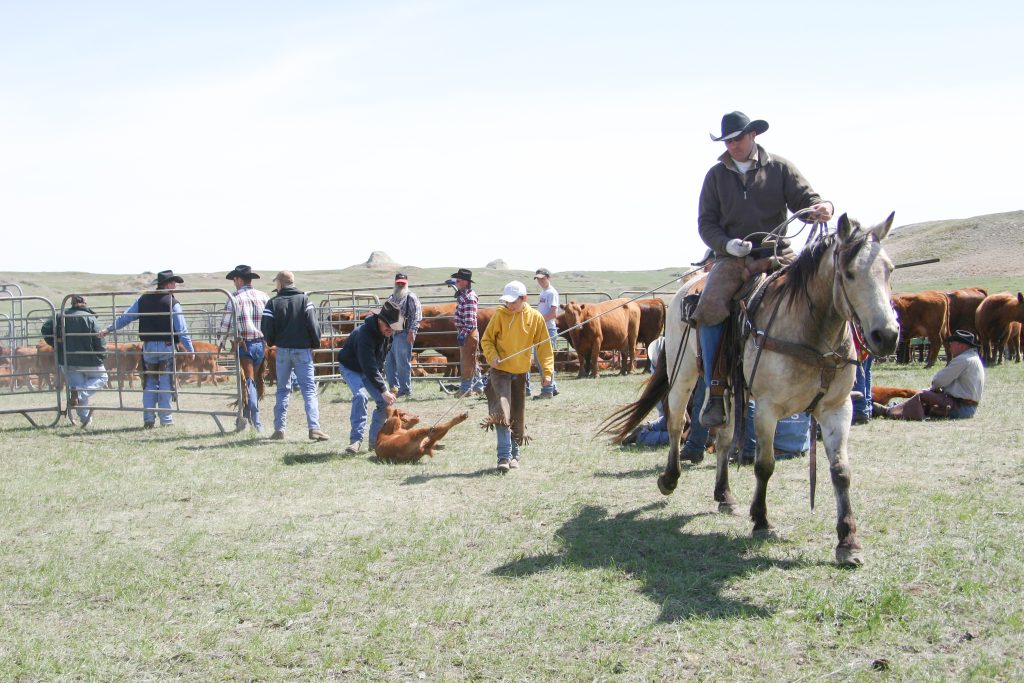
All cattle handling is done horseback, due not just to the rough terrain, but family preference and tradition as well. Among their own seasonal work, the Lelands spend a lot of time helping surrounding ranchers. Their surrounding community is still a lot like them – traditional ranchers, where neighbors help neighbors, mostly on horseback. “We still keep that social tradition alive,” said Melvin. “I suppose we end up going to a dozen brandings a year, and we still rope and drag calves.”
Melvin said the registered cattle business has been a good way of life for them. “Through it we’ve had the opportunity to meet and see a lot of people and programs over the years,” he said. He is a past president of the American Red Angus Association, and has been involved with and honored by local, state and national cattle and range associations. “I’ve gotten to know a lot of other breeders and other people who are working toward the betterment of the breed,” he said.
The disadvantages? Well, there’s a lot more bookkeeping, and more attentiveness in breeding programs, Melvin says. “But from that standpoint it forces us to excel. We do a lot of work with ultrasounding, DNA work and verifying genetic value of the cattle, which has driven us as an industry to create a higher quality product – 15 years ago we were lucky to see 40-50 percent grade Choice, now 85 percent of cattle go Choice. We’ve created a better product for the consumer, and it’s a movement that’s positive for both ends.”
As Melvin reflects on his life’s work of ranching, he noted it’s not always the easiest life and some years are not the most productive. “But it’s our lifestyle to try to maintain, and I think we’ve done well that way,” he said.
“The important thing to us is to keep it a family operation and keep our roots grounded,” said Melvin. “We are very concerned about the spiritual base of our lives, and we want to make sure we don’t lose sight of that as we make a living. We’re basically just stewards of God’s creation.”
-
Calving ease, good udders, solid feet, and productivity are all mandatory traits a cow must maintain to stay working at Leland Red Angus.
Courtesty Leland Red Angus (11)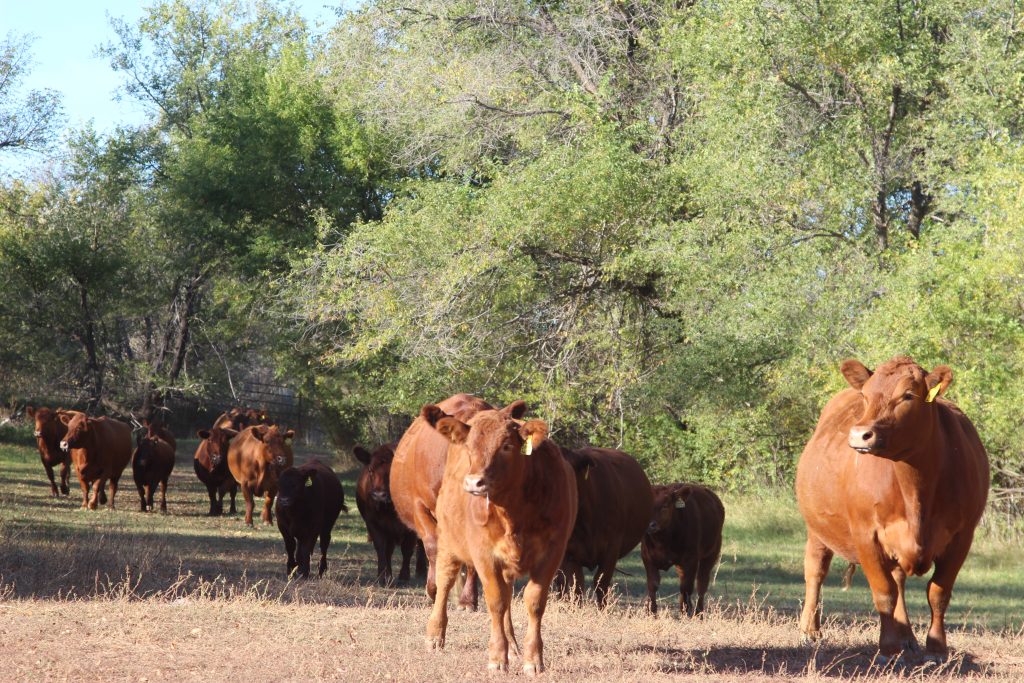
-
Leland Red Angus cattle are hardy and adapted to the sometimes harsh environment of Western North Dakota. The Lelands breed for both calving ease and productivity and range calve all their cows.
Courtesty Leland Red Angus (13)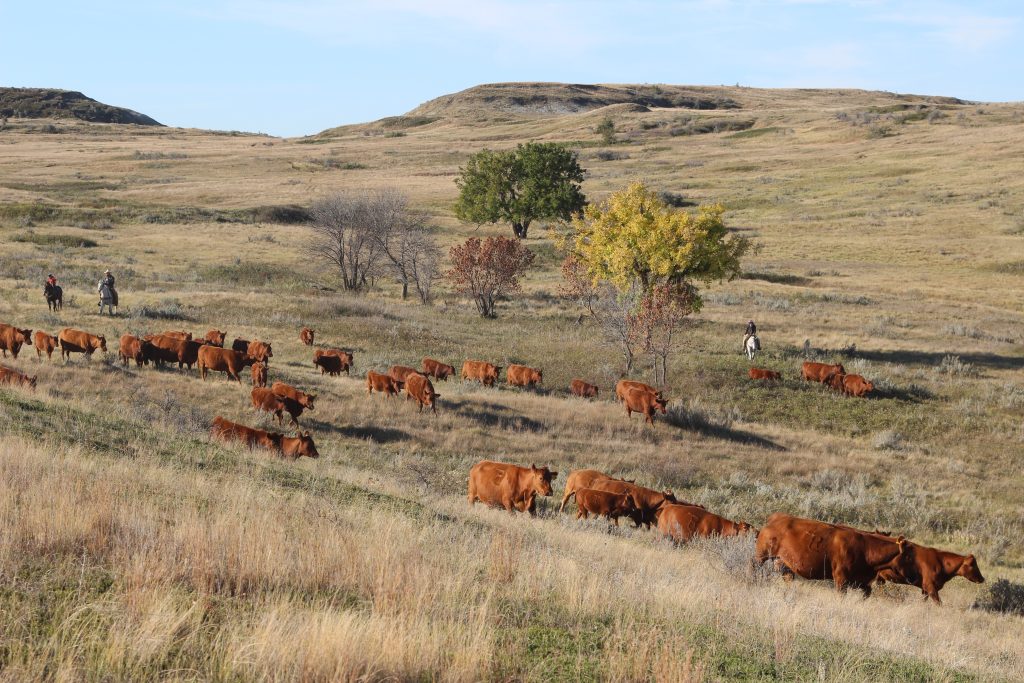
-
The Leland Red Angus family includes Melvin and Luella, their son Todd and his wife Carla, and their sons Trey (8) and Tripp (5). Daughters Tracey and Tana and their families remain close and involved with helping with ranch work and the sale.
Courtesty Leland Red Angus (16)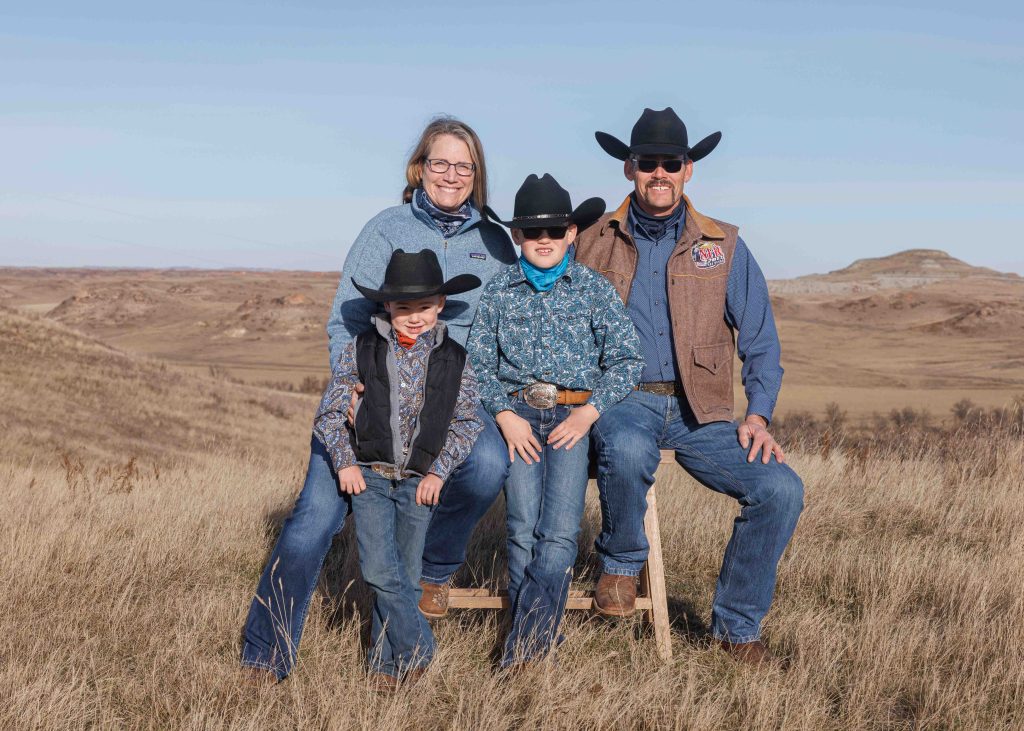
-
-
The Leland family: Melvin, Luella, Tracey, Tana and Todd, c. 1985
Courtesty Leland Red Angus (18)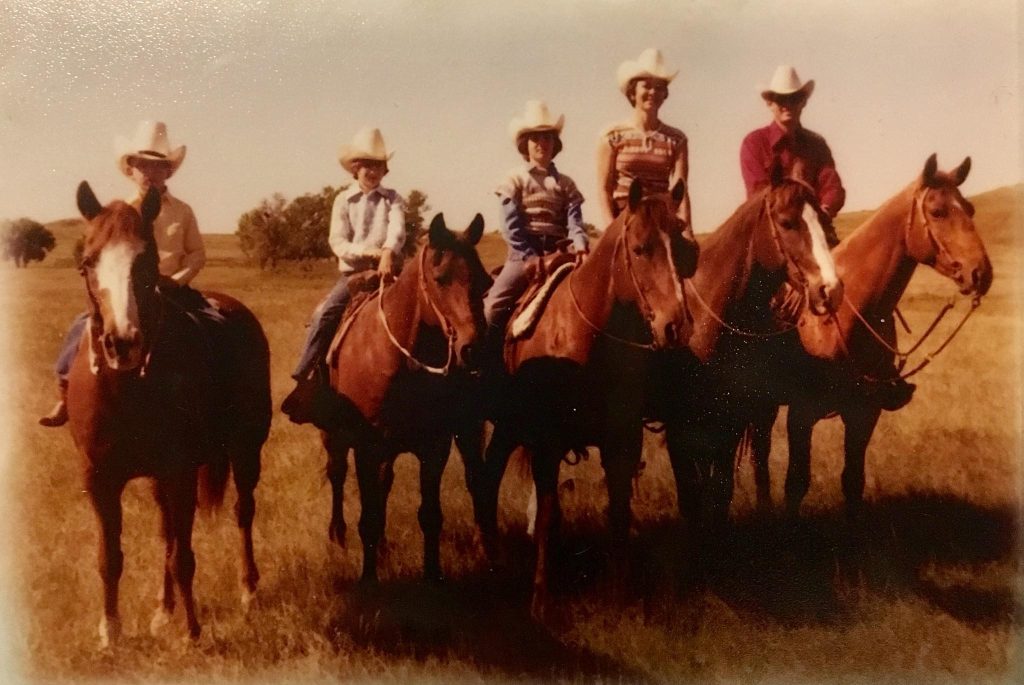
-
Melvin and Luella Leland
Courtesty Leland Red Angus (3)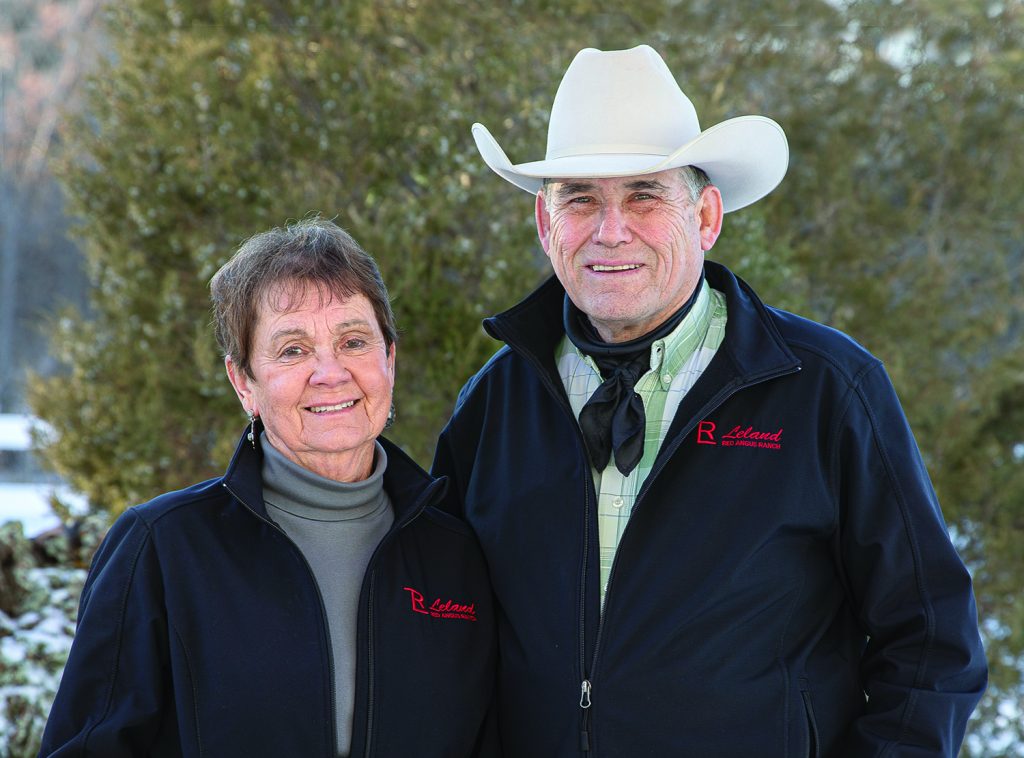
-
The Lelands do traditional ranch work on horseback. The rough terrain necessitates horses – but the Lelands also appreciate the art of cowboying and keeping the tradition alive.
Courtesty Leland Red Angus (7)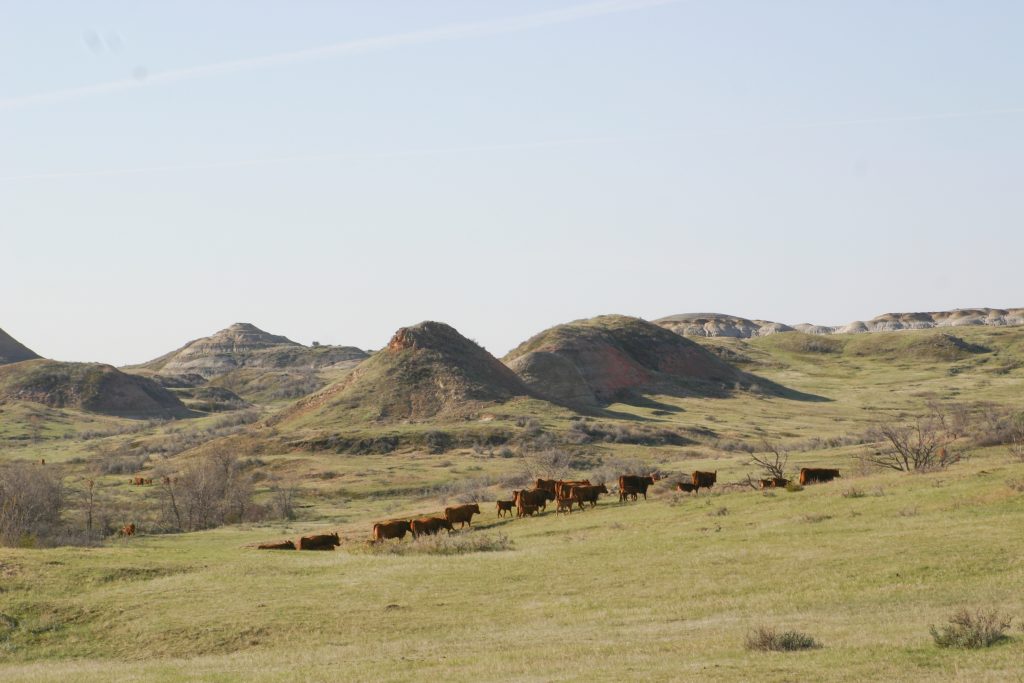
-
Branding day.
Courtesty Leland Red Angus (8)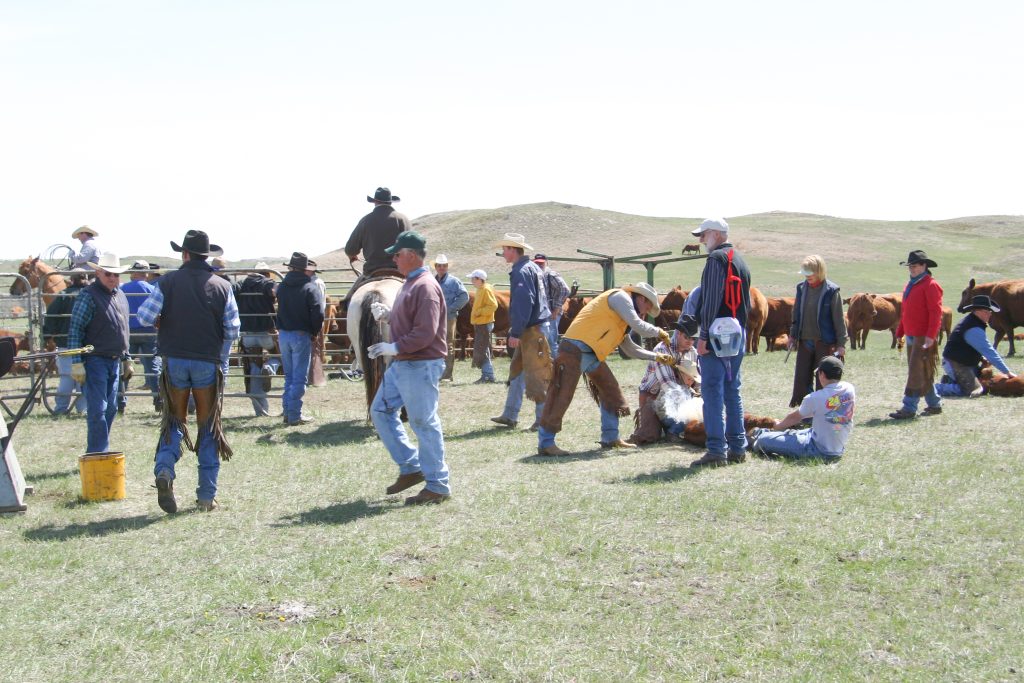
-
Branding day.
Courtesty Leland Red Angus (9)
-
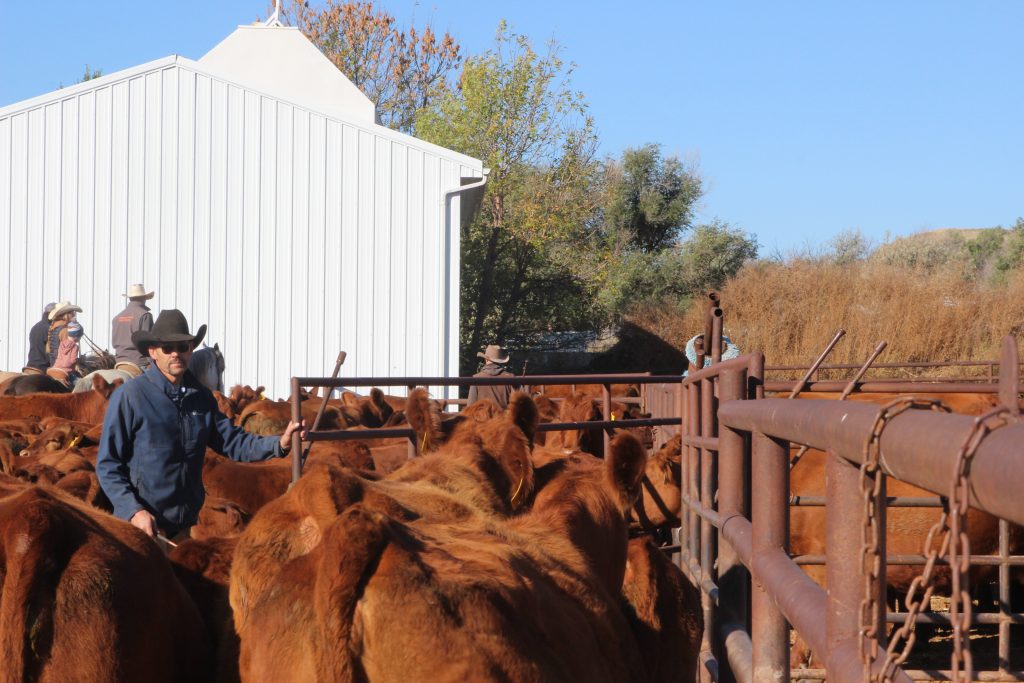
Todd Leland sorting cows.
Courtesty Leland Red Angus (10)