2026 Winter Cattle Journal | Will Grizzly Bears Ever Be Delisted?
-
Map of the proposed lower 48 grizzly bear Distinct Population Segment boundary with the current recovery zones. The southern boundary in Wyoming follows I-80 east to Rawlins, then continues north via major highways and interstates to Casper and Buffalo, and into Montana. U.S. Fish and Wildlife Service map.
MapFWSproposal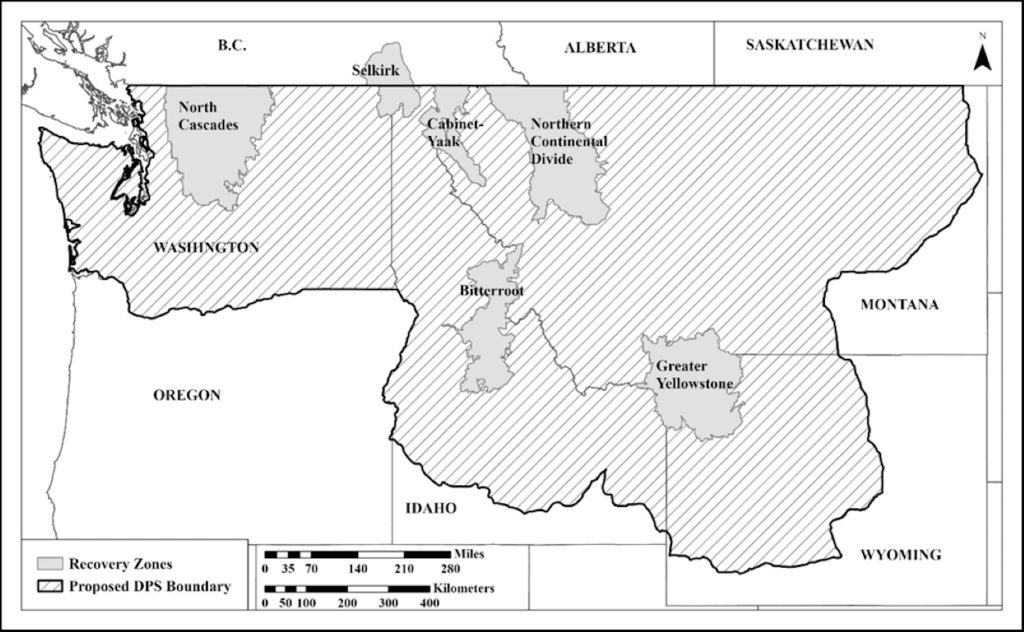
-
A map showing grizzly bear distribution in 2022 in northwestern Wyoming, with the blue line indicating the Demographic Monitoring Area (DMA), and bear icons showing where grizzlies have been observed outside the DMA. WG&F slide.
Screenshot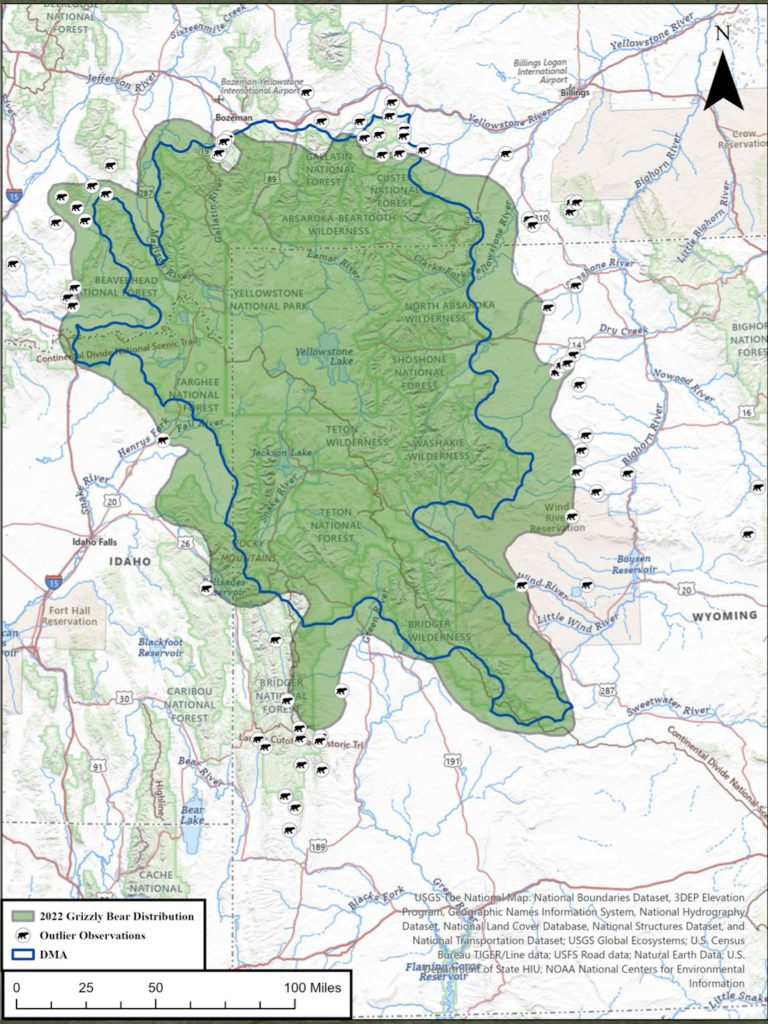
-
In addition to serving as Wyoming’s governor, Mark Gordon is also a Black Angus and Hereford cattle producer from Buffalo, Wyoming. Courtesy photo.
DCIM100GOPROGOPR3459.JPG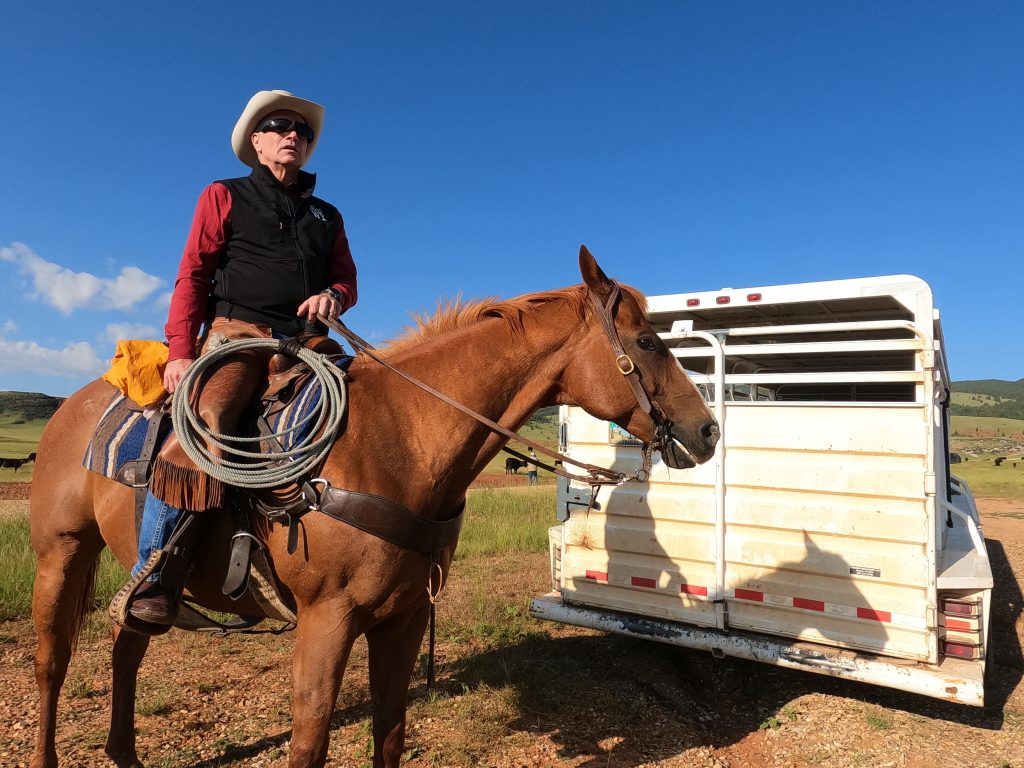
-
-
The Wyoming Game & Fish Department (WG&F) tallied more than 5,500 grizzly bear conflicts in Wyoming from 1982 through 2024. WG&F slide.
Screenshot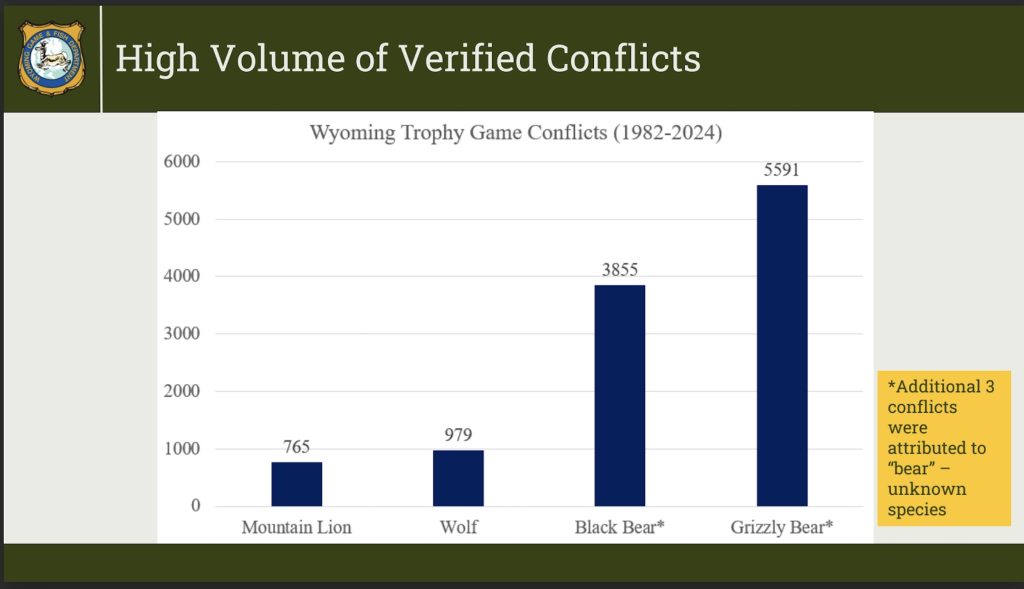
-
An immobilized adult male grizzly caught in a trap after repeated cattle depredations. Cat Urbigkit photo.
TrappedBoarGriz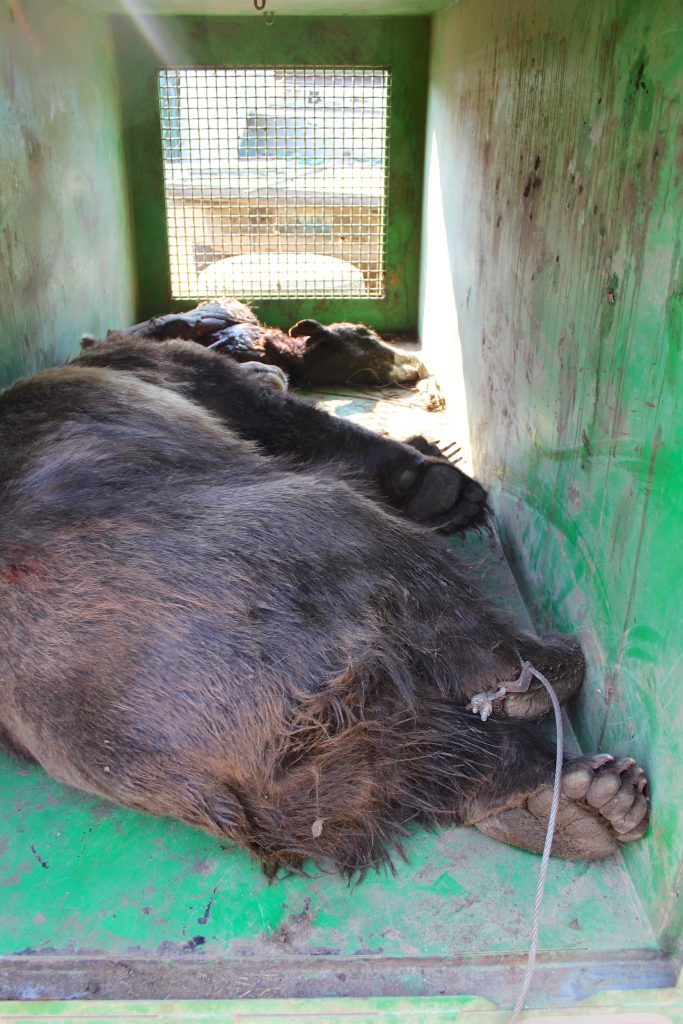
-
There were 188 confirmed grizzly bear conflicts with cattle in Wyoming in 2024, according to the Wyoming Game & Fish Department, and more than 60 percent of all conflicts were on private land. WG&F slide.
Screenshot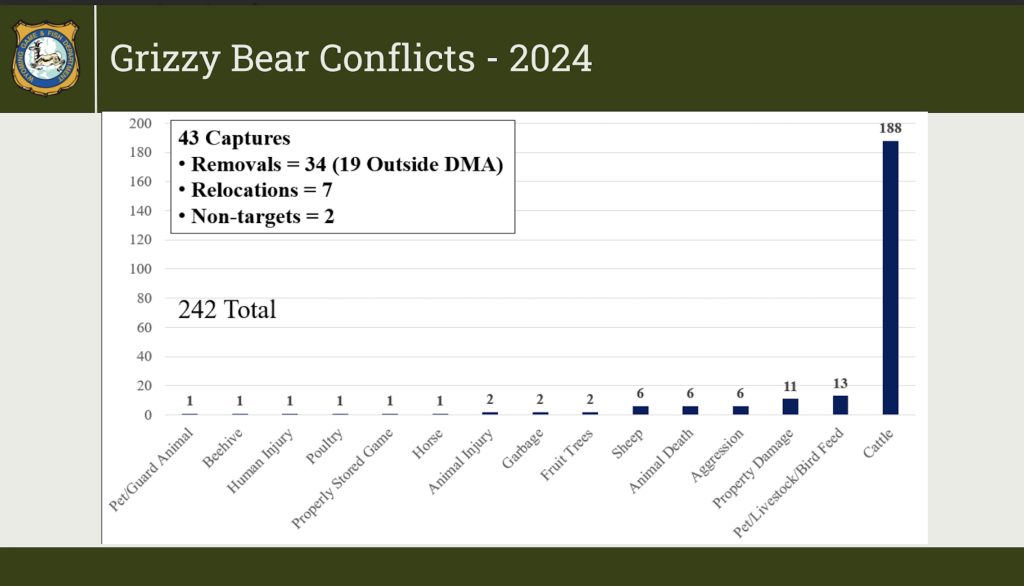
-
The front paw of an immobilized boar grizzly bear. Cat Urbigkit photo.
FrontPaw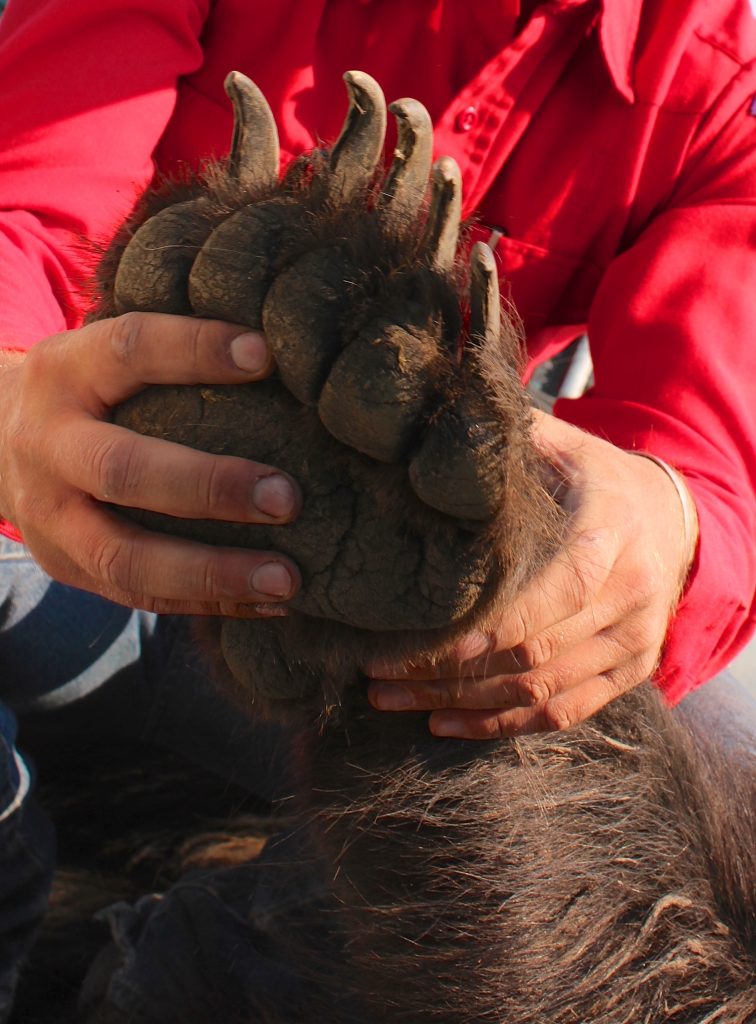
-
Riders push cattle up the Green River Drift cattle driveway for summer and fall grazing in the Upper Green, an area inhabited by grizzlies. Cat Urbigkit photo.
Drifting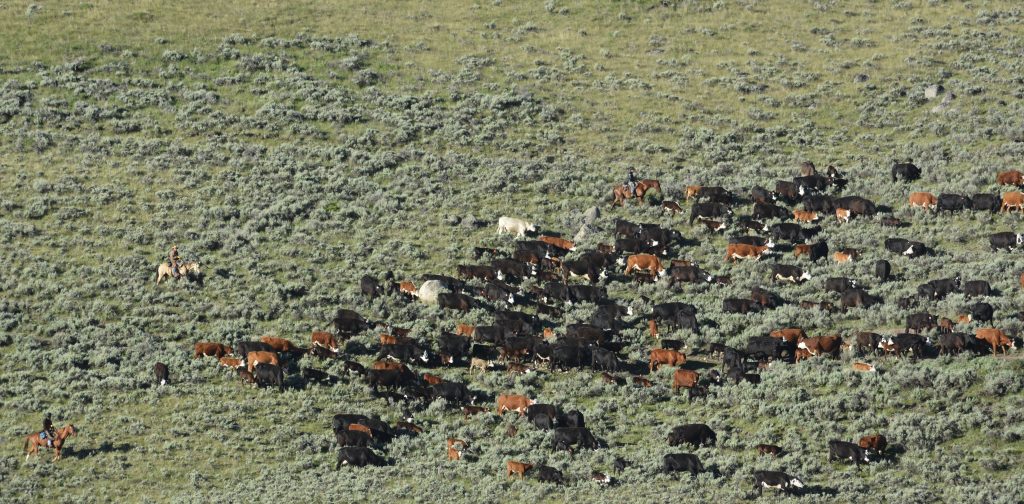
-
An adult grizzly with a fresh battle wound on its head. Cat Urbigkit photo.
ScarredBear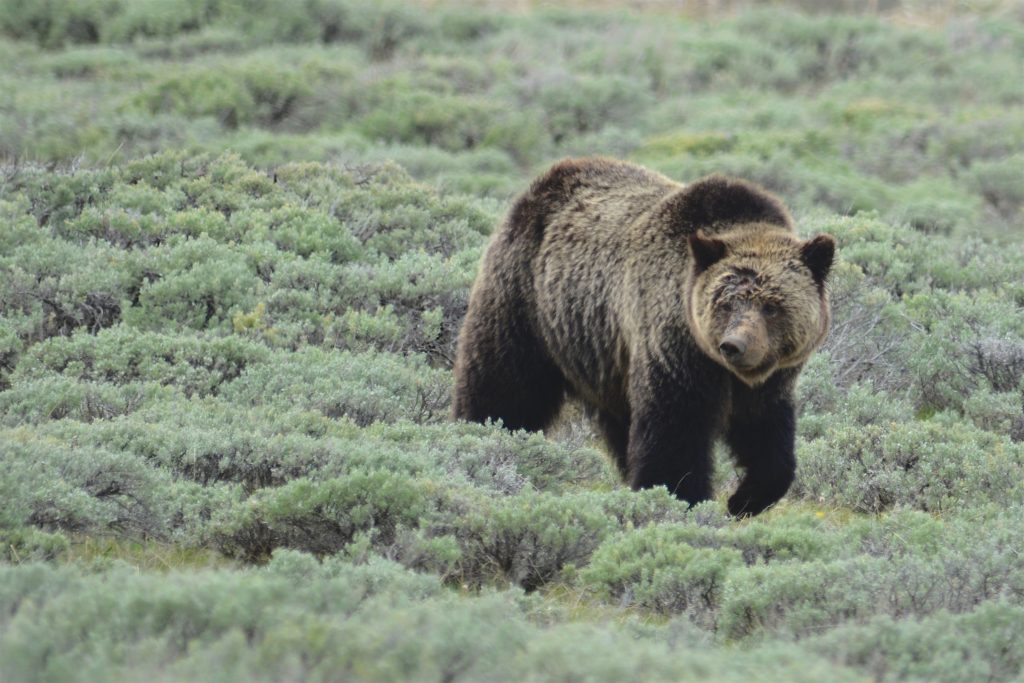
-
Congresswoman Harriet Hageman celebrating the unveiling of the new Miss Frontier statue at the Cheyenne Frontier Days Old West Museum in November. Courtesy photo.
Hageman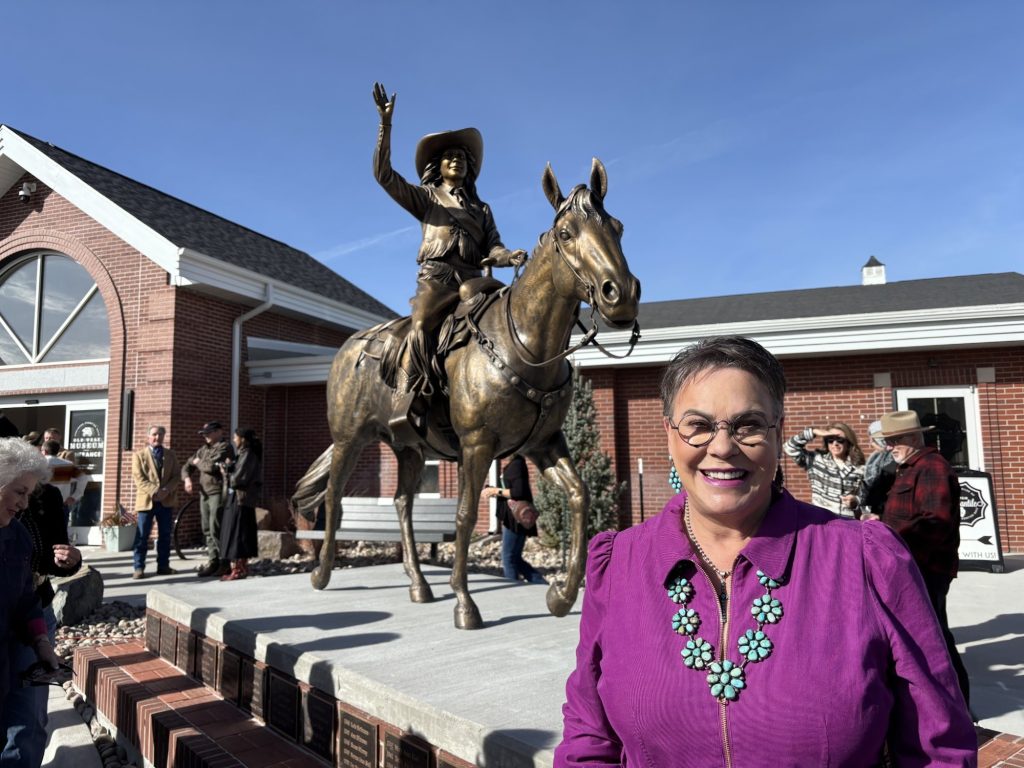
-
Cattle producer Albert Sommers continues his family’s crossbred cattle operation in addition to its registered Hereford herd.
Sommers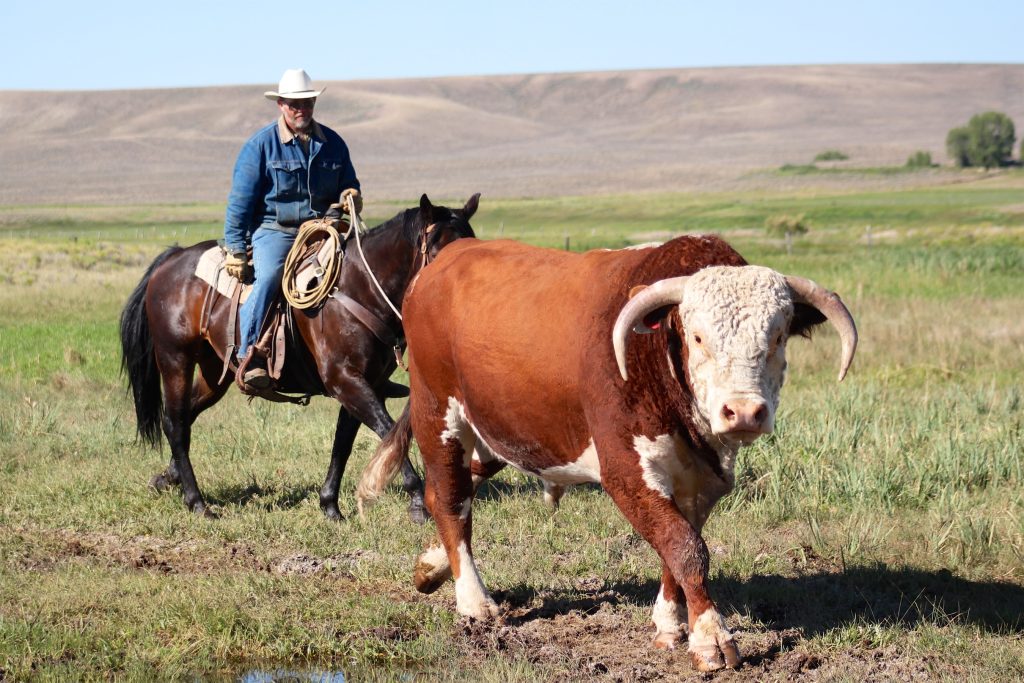
-
Grizzly bears now inhabit the landscape in most of western Wyoming.
BearLandscape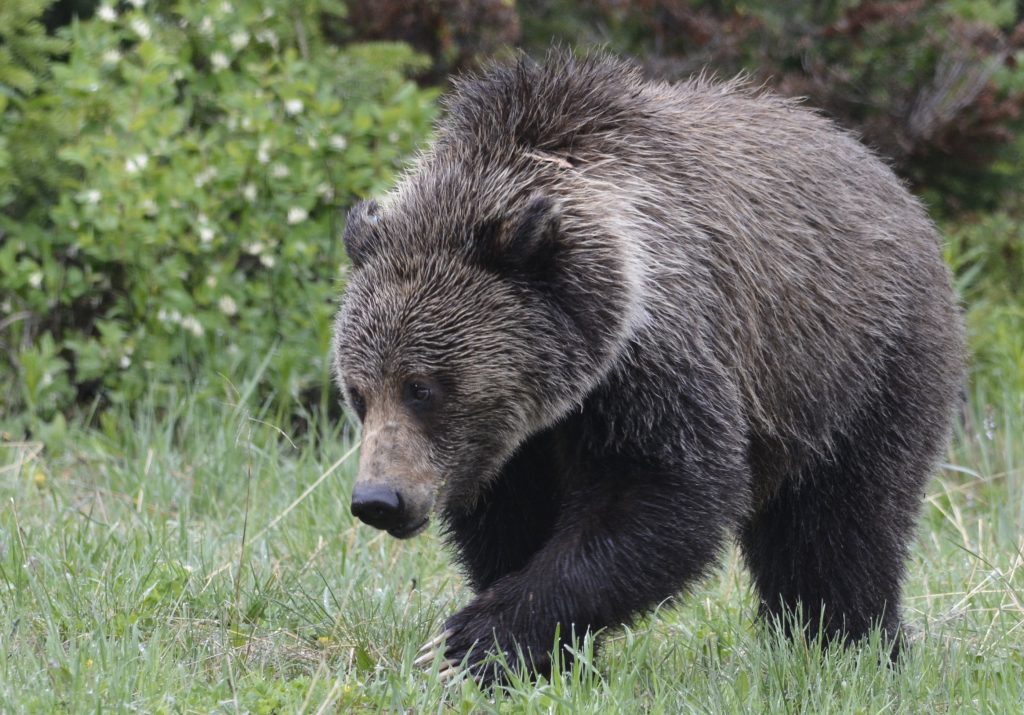
After 50 years of federal protection, the grizzly bear population in the Greater Yellowstone Ecosystem (GYE) has increased from about a hundred bears to more than a thousand. Each federally mandated measure of success for recovery has been met and exceeded. Yet, according to wildlife officials in the Biden Administration, these decades of successful recovery efforts have simply not been enough to justify removing the population from the list of federally protected species.
Less than two weeks prior to leaving office, the Biden Administration announced that not only was it rejecting the State of Wyoming’s petition to delist GYE grizzlies, but it was launching a new approach to grizzly bear recovery that linked all six western grizzly bear recovery zones in the lower 48 states into one “distinct population segment” (DPS). Delisting of the GYE grizzly population would then be tied to the status of bears in other ecosystems –including two areas in which no grizzly bear populations exist. Recovery throughout the DPS would be required before delisting could occur. It was a drastic change from the vision set forth in agency documents that interagency managers had cooperated on for more than four decades.
Wyoming’s Scathing Response
Wyoming Game & Fish Department Director Angi Bruce called the U.S. Fish & Wildlife Service (FWS) proposal “fundamentally flawed” and said it would likely keep grizzly bears in the conterminous United States listed as a threatened species “in perpetuity.” The state wildlife agency director urged the agency to rescind its proposal, saying it relied on speculation, misinterpretations of policy, and a flawed analysis that used outdated and unsupported data.
Wyoming Governor Mark Gordon pointed out that the GYE grizzly population has expanded beyond what is considered biological and socially suitable habitats by more than 8,400 square miles, at a cost of more than $60 million, paid for by Wyoming sportsmen.
U.S. Congresswoman Harriet Hageman called the proposal “absurd” and said “states were punished for doing their job too well” by FWS using such “agenda-driven reasoning:” because grizzlies expanded beyond their designated recovery zones, they supposedly cannot be delisted.
Numerous agencies sent letters in response to the FWS proposal that echoed similar criticism of “moving the goal post” when recovery targets have been reached, including the Wyoming County Commissioners Association, Governor Gordon, Sublette County Commission, and the Wyoming Department of Agriculture. Montana Fish, Wildlife & Parks Director Christy Clark called it an unacceptable and significant “breach of trust” that punishes states for recovering grizzlies while removing the incentive (delisting) for such cooperation.
Allotments threaten bears?
The Wyoming Game and Fish’s criticism of the Biden-era Fish and Wildlife Service proposal for grizzlies was justified as the agency pointed out major flaws and conflicting statements within the FWS documents. For example, the FWS proposal noted that there are multiple measures in place to reduce livestock conflicts in the GYE, but then only mentioned the closure of sheep allotments, retirement of livestock allotments, and attachment of food and attractant storage provisions on grazing permits. WG&F pointed out this demonstrates the FWS “lack of understanding and disconnect from reality” regarding the myriads of tools and measures being implemented by livestock producers, wildlife management agencies, and land management agencies to reduce the potential for livestock conflicts.
Later in the proposal FWS noted that conflicts have also been reduced by requirements for the secure storage or removal of attractants associated with livestock operations. WG&F responded, “As stated earlier, this demonstrates the misunderstanding of those that feel it is solely the {Endangered Species Act} that has resulted in any kind of reduction in conflict potential. Livestock conflicts are the highest level of conflict for the GYE, the reductions are due to concerted efforts of producers, and managers with multiple proactive and reactive measures to reduce conflicts, but they still occur regularly. Despite this, targeted removal of livestock depredators does not impact grizzly bear populations.”
But since limits to livestock allotments are only in place for two of the six ecosystems, FWS maintains that “livestock allotments would continue to be a threat to the grizzly bear DPS” and that further restrictions would need to be considered throughout this larger western DPS.
The mapped DPS includes much private land, residential areas, urban settings and areas with high conflict potential should grizzly bears eventually expand into this unsuitable habitat. The FWS proposal sets forth a major expansion in federal oversight over private lands in the western states.
As Wyoming Department of Agriculture Director Doug Miyamoto pointed out, for ag producers, the issue is not just directly dealing with physical impacts such as bear depredations on livestock, but the regulations and policies that could be imposed across the DPS–from requirements for food storage orders to elimination of livestock grazing.
That grizzly bears do not occur throughout the DPS (and that much of the mapped area south and east of existing bear range in Wyoming is unsuitable for grizzlies) isn’t a comfort when activist organizations use federally protected species as a tool to restrict livestock grazing on public lands. Some have already proposed that. A comment letter submitted in March by a coalition of environmental groups–including Wyoming Wildlife Advocates and Western Watersheds Project–the groups demand that FWS “must actively promote the reduction and elimination of federally permitted livestock grazing within the proposed DPS.” Where grazing is authorized, they demand that permit restrictions include provisions that delay turnout until “at least after mid-June,” and “in the event of a depredation, if future depredations are feared or anticipated, livestock should be moved to private pastures.”
Delisting difference
Setting aside the Biden-era proposal, what impact would delisting grizzly bears have on livestock producers using federal grazing allotments? In those areas already inhabited by grizzlies, perhaps not a lot. Albert Sommers, who grazes cattle in the Upper Green River area of Sublette County and has spent decades dealing with grizzly bear issues, predicted that little would change in terms of cattle management.
“I do not believe that the Forest Service would treat our permits much differently, because I think the safety measures around grizzly bears would still be required, like food storage and carcass removal,” Sommers said. “What would change is that our permits would not be under threat from a federal Biological Opinion (which dictate grizzly bear “take” limits) and can dictate management actions we could have to take.” Currently, with bears under Endangered Species Act (ESA) protections, if the take limits are exceeded due to livestock depredations, the permittees could be faced with a seasonal closure an allotment until a new Biological Opinion was finalized, or there could be litigation that could keep livestock from utilizing the allotments.
Sommers said that with bear delisting, state wildlife officials would be able to more quickly make management decisions. “I believe with the state having management authority, decisions would streamline and chronic depredating grizzlies would be targeted more quickly with a management action in the Demographic Monitoring Area. This is definitely a positive.”
Perhaps most importantly, Sommers said, is the message that delisting sends to producers who live and cooperate with federal recovery efforts. “It would show cattle producers that the ESA isn’t rigged, that species that are recovered can actually move off of the ESA list.”
For producers outside the DMA, WG&F would have much greater flexibility and authority to deal with livestock depredating grizzlies, Sommers said. And if future grizzly bear hunting efforts were targeted toward these areas outside the DMA, that could help to reduce further conflicts.
Whiplash
It’s a wonder Wyomingites don’t feel a bit of whiplash over the delisting controversy. After years of delisting efforts, the FWS had already tried to delist the GYE population back in 2007, and again in 2017 (during the first Trump Administration). Both efforts were overturned by courts.
In 2022, the State of Wyoming petitioned FWS to delist GYE grizzlies again, and in response, FWS announced in 2023 that the delisting “may be warranted”–only to do an about-face with the January 2025 announcement that merges all six grizzly recovery areas into one and keeps grizzlies listed into the foreseeable future.
Although FWS is slated to review all input on the listing proposal and finalize the rule by January 31, 2026, it’s doubtful that the Trump Administration will move forward with this Biden policy. Trump has withdrawn other last-minute Biden environmental rules. The proposed grizzly bear listing rule could either be withdrawn or substantially revised.
Governor Gordon said: “Grizzly bears in Wyoming have been recovered for over 20 years and we have proven that we are capable of full management. It is time our state’s expertise is recognized. Delisting grizzly bears is a top priority of mine. We are working closely with the FWS Director and our federal delegation, focusing our efforts on any path that will lead to a delisting that is durable for Wyoming bears.”
Gordon’s former WG&F Director Brian Nesvik is now FWS Director. It was Nesvik and his staff who worked with Governor Gordon to petition for GYE grizzly bear delisting in 2022. Nesvik has long held the view that grizzly bear recovery in the GYE is an Endangered Species Act success story and that state wildlife managers should be granted the authority to continue that success for the benefit of those who live and work in areas with this recovered population–while supporting a healthy grizzly bear population.
Nesvik said that the current administration is examining the issue, celebrating the success of grizzly bear recovery efforts while analyzing the grizzly bear listing status.
No matter what decision FWS makes, there is sure to be litigation, and Congresswoman Hageman wants to stop that in its tracks.
Hageman’s bill to Congressionally direct FWS to reissue its 2017 delisting rule for GYE grizzlies–while barring judicial review of the action–passed out of committee in July and now awaits further action in the House. She said: “My Grizzly Bear State Management Act delists the GYE grizzly bear from the Endangered Species Act and returns management authority back to states like Wyoming that invested millions to recover these bears, relieves unnecessary regulatory burdens on the people who live with them, and frees up federal resources for species that truly are at risk. Grizzlies are a conservation success story, and it is time our laws recognize that reality.”