Fairpoint Still Home to Bauer Family

Fairpoint6
The town of Fairpoint no longer exists, but one original family now owns the townsite and still utilizes the livery stable for their ranching operation.
A ranch belonging to Bradley Bauer and his wife Rhonda includes the old town of Fairpoint. Bradley said, “The old barn, she’s in good shape. It’s about like the day it was built. We tinned [the roof], but the inside’s about like it was in the old times.”
History
Fairpoint, South Dakota, located 30 miles east of Newell, was founded in 1906. The Fairpoint area has been home to six generations of the Bauer family, and now the town site itself is owned by Bauers. The livery stable is still in use today, but the remaining abandoned buildings tell the story of what once was a bustling community on the South Dakota plains.
Fairpoint’s founder, O.T. Sevareid, was operating the store at Stoneville for the Rounds family when he struck out on his own. He filed for land 2.5 miles west of Stoneville in about 1906, building a store and hotel first. Stoneville would later move a few miles east, making the distance between the two towns about 10 miles.
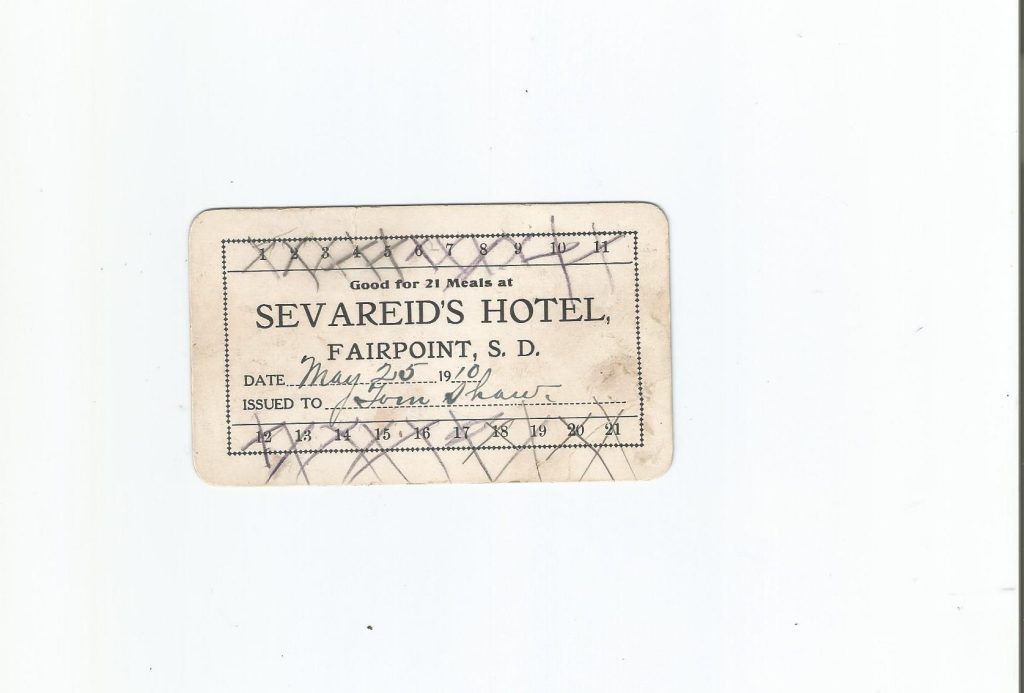
“When they built the store, they built it like a hotel because different people would be coming, the freighters would be coming through. And so they always had boarders that spent the night,” said Jo Bauer, Bradley’s mother.
By 1909, a post office was established. Fairpoint was “a real boom town” by this time, as one newspaper clipping reported.
Pete Bauer, Sr., Bradley’s great-grandfather, filed for his homestead in Fairpoint that same year.
Pete Sr., a skilled carpenter, helped build the community hall, where the locals would gather for dances and other events. He also constructed cupboards for the store, which the Bauers still possess.
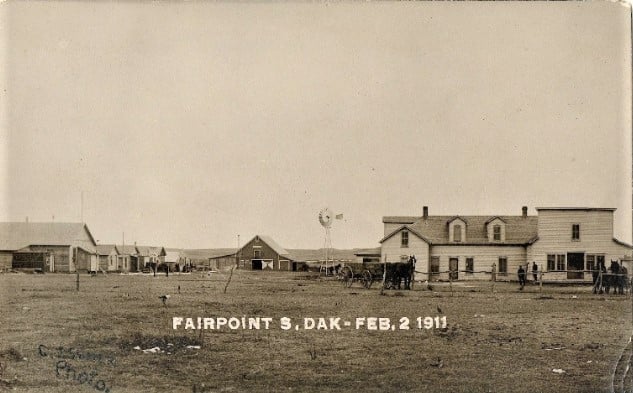
At one time, Fairpoint consisted of the livery stable, post office, a community hall, blacksmith shop, restaurant, barber shop, three land stations, a cream station, a drug store, a Catholic Church (later moved to Red Owl), a Presbyterian Church, and the Sevareid store and hotel.
Merchandise and goods were freighted in from Sturgis (60 miles away) via teams of horses. Freighters used six horses pulling two attached wagons, moving around three tons at a time. In 1910, the railroad was built to Newell, so later freighters traveled that distance instead.
Jo said, “The community was wanting a hall for dances and gatherings, so they sold shares at $25 each to raise money to build one.” The ledger can be seen amongst the photos accompanying this article.
It has been said that whenever there was a dance, the piano at the Sevareid residence was loaded up in a wagon and taken to the hall.
“Fairpoint was just a fun place, and it was a place where everybody gathered,” said Jo.
-
fairpoint-001
-
The town of Fairpoint at its height. The livery stable can be seen toward the background.
Fairpoint6
-
Fairpoint5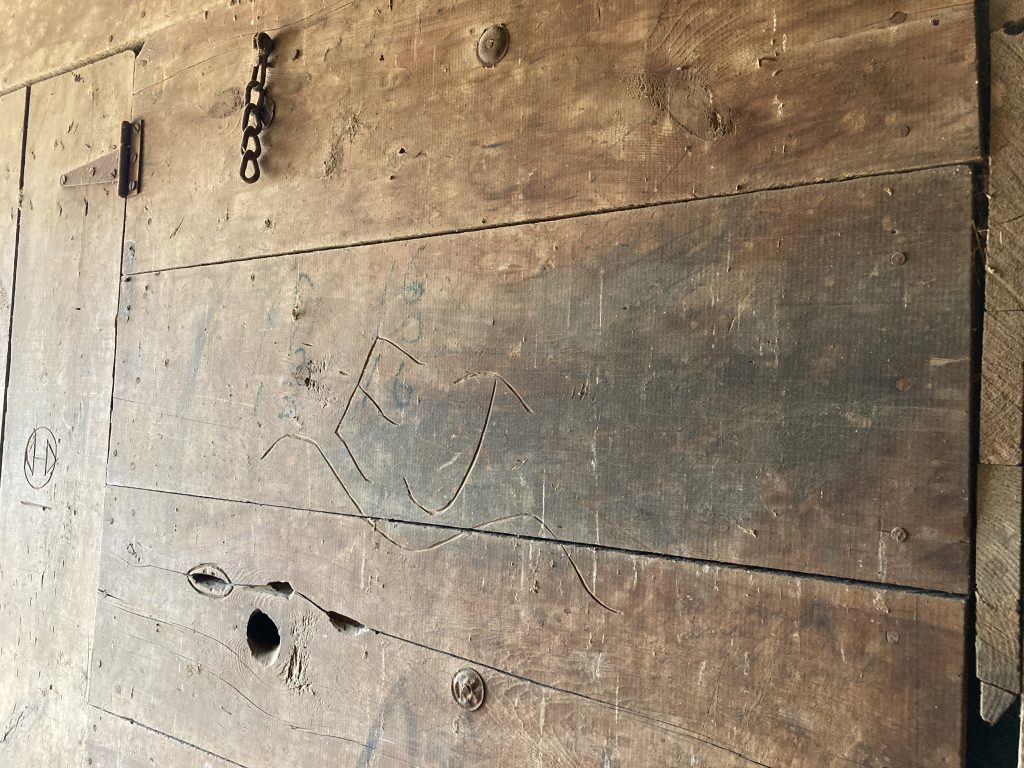
-
-
Shares for $25 apiece were sold to community members to raise money to build a community hall. Peter Bauer is last on the list of donors. The New Year’s Dance raised $50.65.
fairpoint 004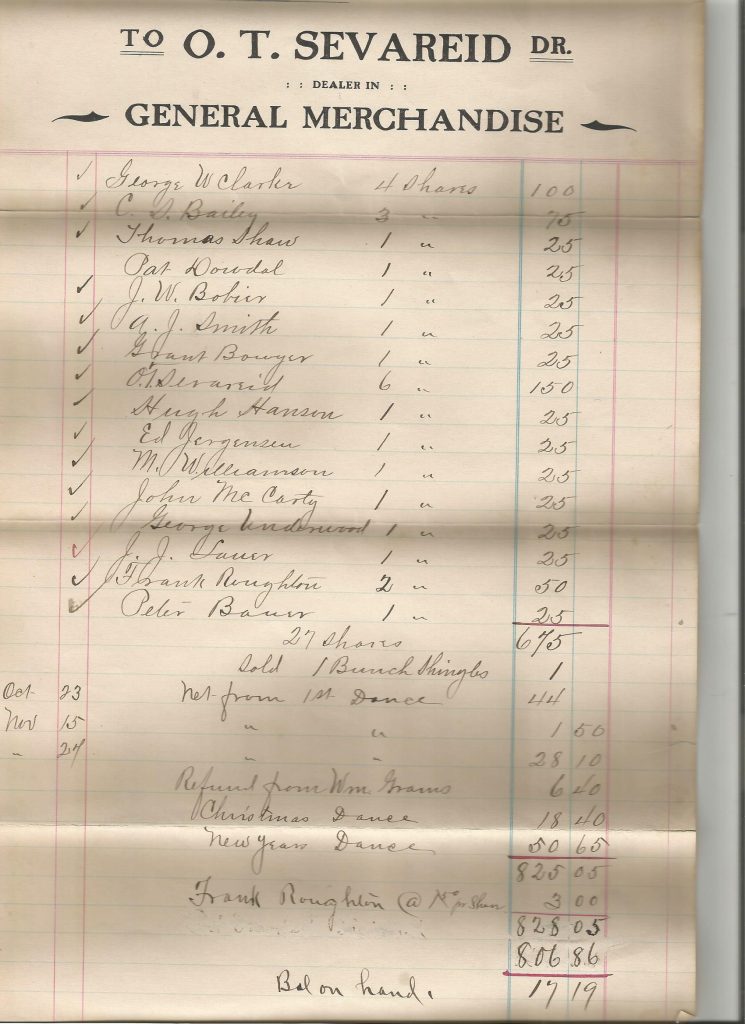
-
The livery stable has been tinned, but the structure remains sound. Bauers still utilize it as a calving barn.
Fairpoint3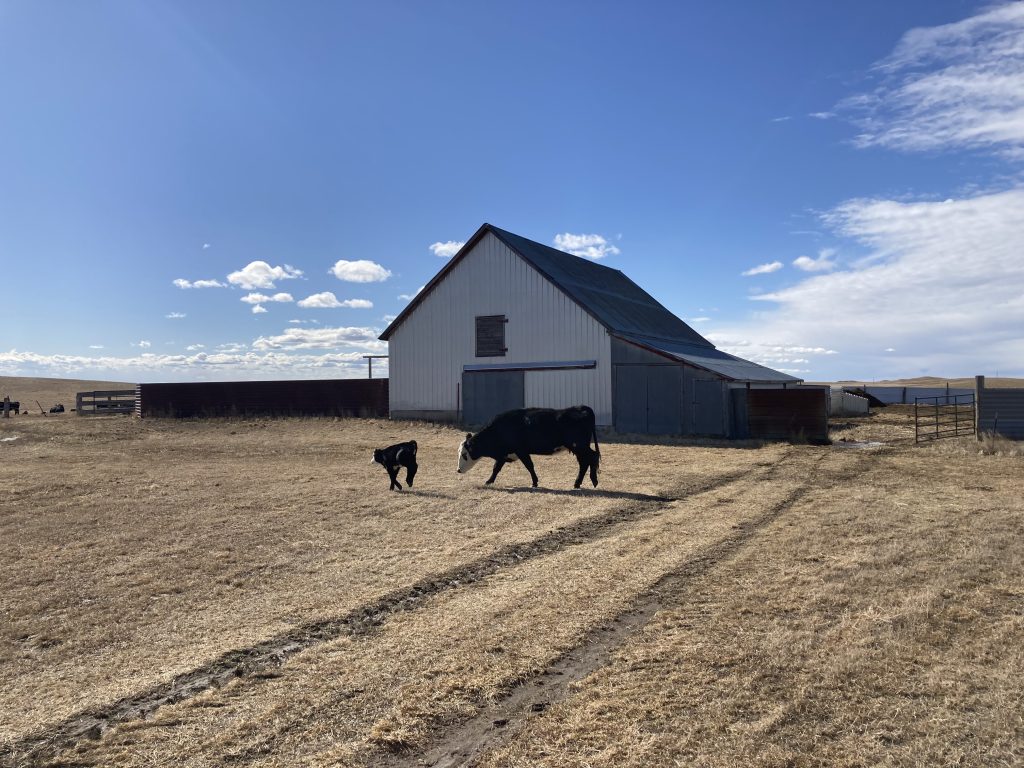
-
Fairpoint2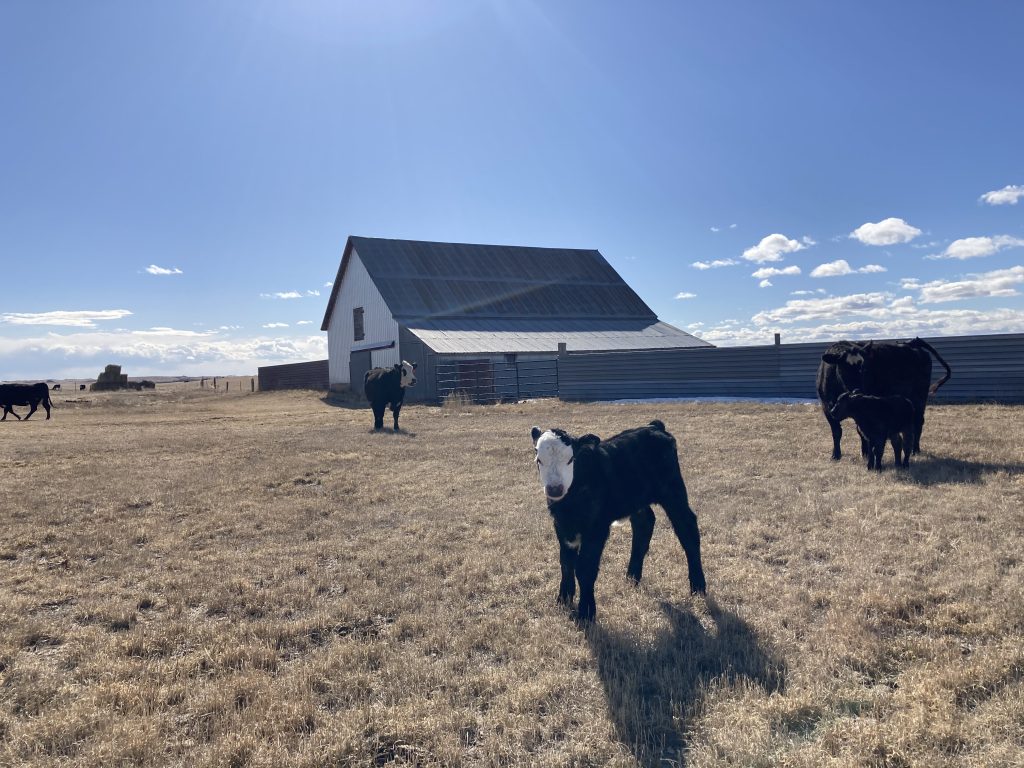
-
Carved brands from the early 1900s are preserved on the wallls inside the livery. The original office and stalls are present. Courtesy photos
Fairpoint1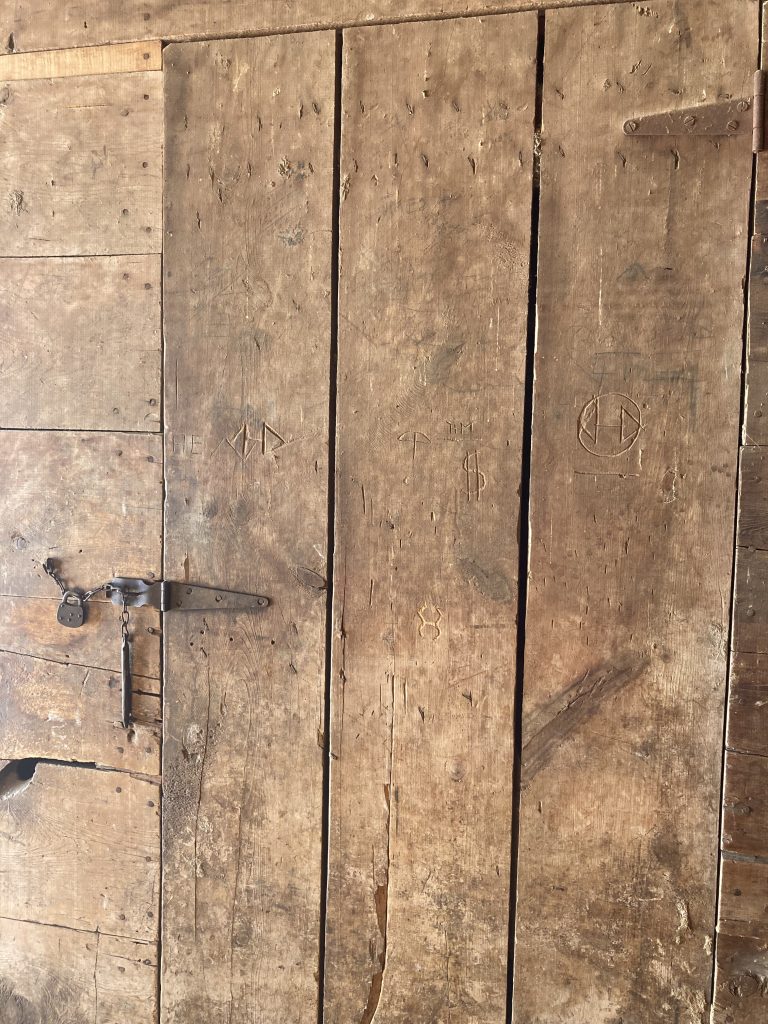
Becoming a Ghost Town
Like many Dakota homesteading towns, Fairpoint soon saw difficult times. Very little rain fell in 1910 and no moisture at all in 1911, according to the local paper.
“Everybody was kind of moving in thinking they were going to stay in this country forever. I guess somebody probably thought they could make a dollar,” Bradley said.
He joked, “It must’ve been really green and pretty that spring or summer when [my great-grandfather] stopped, because there ain’t much there. It’s kind of a hard-pan flat is all it is.”
By the 1930s, nearly everyone had been droughted out. The only remaining businesses were the Sevareid store and the post office.
Whether by luck, grit, or both, Bauers survived the hard times and stayed.
Bauer Ranch and the town of Fairpoint Today
The land around Fairpoint is conducive for cattle ranching, just not divided up into 160-acre homesteads. The Bauer Ranch grew along with the family over the decades.
Pete, Sr. and his wife’s son, George “Oley”, was Pete, Jr.’s father.
By 1978, the Fairpoint Post Office closed. Pete Bauer, Jr. and his wife Jo acquired Fairpoint on 1992.
Their son Bradley and his wife Rhonda are the current owners, and they operate alongside their son, Casey. Today, the Bauer Ranch includes the original Bauer family homestead (Pete Sr.’s homestead in 1909), as well as Pete Sr.’s in-law’s homestead, settled in the 1920s by Fred and Mamie Dow.
Casey and his wife Haley, daughter Jackie and son Pete live 2 miles south of where Fairpoint once was, and Bradley and Rhonda live 4 miles west where they raised Casey and their daughter Bailey who now lives near Belle Fourche.
Pete Jr. moved one of the land offices from Fairpoint to where Casey, Haley and family now live. It serves as the shop for his business, Glass Butte Custom Leather, in which he produces calving bags, rifle scabbards, chaps, and more.
Not much has changed about their operation over the years, said Bradley. They still run cattle as their forefathers did. Today, it’s a black and black baldy commercial cow herd.
The Fairpoint Livery stable is in good using shape and provides protection when needed during winter months.
“We can put some cows and calves in there when it’s cold or if we need someplace to hide them during a storm,” said Bradley. Bauers have also used it as a calving barn multiple years, including the spring of 2025.
The original stalls and office are still present. Numerous brands have been carved into the walls and office door, which are preserved today.
The community hall still stands and is in “decent shape,” according to Bradley. The Sevareid store is still standing but is getting “pretty shaky.”
“Somebody should have done something with it 15 years ago I guess, but there’s maybe other places money needs to be spent,” Bradley said.
Pete, Jr. and Jo saved numerous mementos from the town, including various ledgers filled out by O.T. Sevareid, a meal card belonging to Tommy Shaw, who built the livery stable, and butter stamps from when they used to use butter stamps for trade and butter and cream.
Jo said these pieces of Fairpoint history will be passed down to any family members who want a little bit of history. Then, as well as today, at least three generations of Bauers continue to work the ranch side by side.
Casey also named his baby boy Pete. The Bauer and Fairpoint histories remain intertwined for the next generation.