Kansas, Oklahoma wildfires kill livestock, injure responders
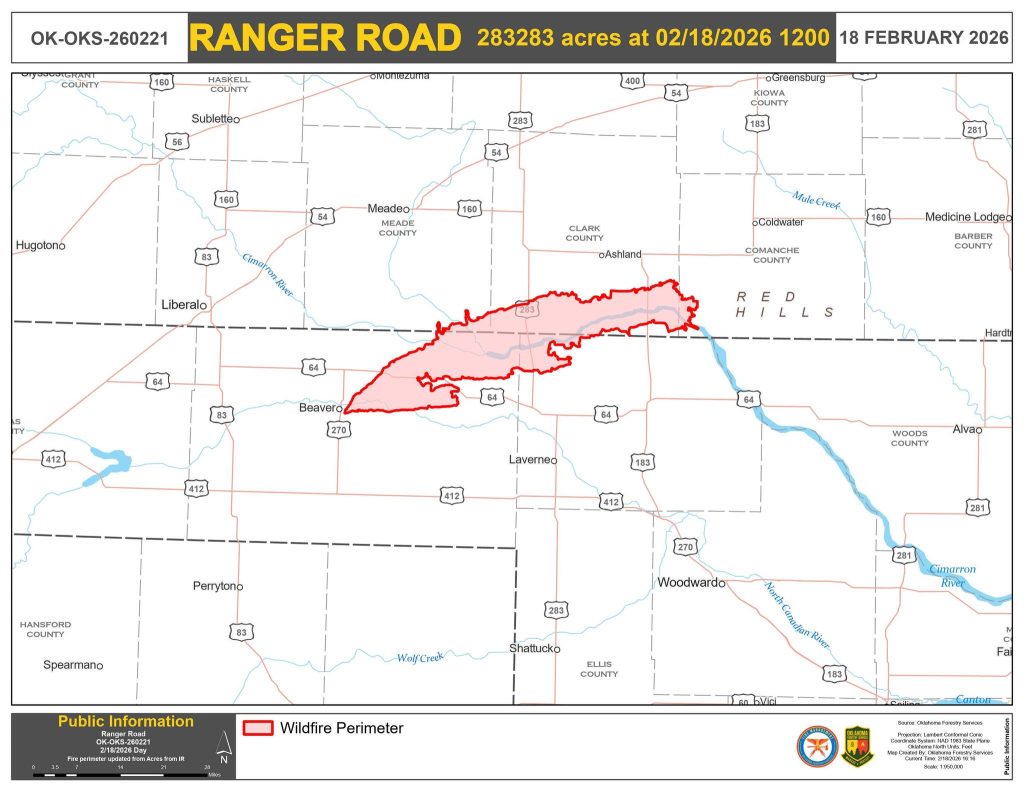
On February 17, wildfires ripped across areas of Oklahoma, Kansas, Texas and Nebraska, killing livestock, destroying structures and sending firefighters to the hospital with fire and smoke related injuries. Winds gusting over 65 miles per hour drove flames through dry fuel, and kept air support grounded for a time.
The largest fire, known as the Ranger Road fire, ignited due to unknown causes in Beaver County, Oklahoma, and crossed the state line into southwestern Kansas, burning over 283,000 acres. The towns of Ashland and Englewood, Kansas, were evacuated, as were rural residents.
“The Ashland area was the most destructive area,” said Jane Nash Dewall, who ranches with family in the area. “We had to evacuate. We did pen what cows we could and pulled the yearling heifers off the hay field into the bare corral lots.”
Dewall was able to return home around 10 p.m.
“We had no damage, just a huge amount of smoke debris flying around with dust. The winds were 60 miles an hour: just horrible, but no flames.”
The fire was stopped about 10 miles from her ranch, but others in the community suffered serious losses.
“Our son-in-law lost most of his cows and calves,” she said. “They shot around 200 cows. He is now piling them, counting them and preparing them for burial. His entire ranch burned. Fortunately, he had his weaned calves and bred heifers in other parts of the county and they are fine. He backfired around his hay yard and did save it and the feed truck.”
On March 6, 2017, the Starbuck Fire scorched more than 660,000 acres in Oklahoma and Kansas. The Ranger Road Fire followed an eerily similar path. Many of the same ranchers and communities suffered serious livestock and infrastructure losses for a second time.
Gardiner Angus Ranch of Ashland, Kansas, was one of the places hit by both fires. They shared the following on social media.
“We are thankful for all the messages of concern and comfort these past 24 hours. Although we have lost pastures, our structures are safe. Although we lost cattle, unlike the Starbuck Fire nine years ago, we were able to save most of the herd yesterday. Our employees and their families, and our families are safe. Clark County and Ashland, Kansas, is our home. We are thankful to be safe and truly believe it is a privilege to get to do what we do each day. We are grateful for your thoughts and prayers for our well-being. We are no less determined today than we were yesterday and will be tomorrow to embrace every challenge to be the best stewards of the land God intended us to be. We go forward.
“Many of you have reached out with generous offers to help. The greatest need across our community now is hay, any available grass and money. If you want to help, we encourage you to contact any of the following:
SHAW FEEDYARD:
Shaw Feedyard will be a dropping point for hay. Please contact Ryan Koons at 620-805-4682 if you have any questions. The address is 2428 CR 15 in Ashland, KS.
ASHLAND FEED & SEED:
Ashland Feed & Seed will be a dropping point for hay and feed. The address is 1975 CR U, Ashland, KS 67831. Contact the main office: (620) 635-2856.
Cash donations can be made to the ASHLAND COMMUNITY FOUNDATION. 100% of the money is redistributed to those in need. You can donate directly by clicking https://www.ashlandcf.com/donate-today or mail or drop off monetary donations to STOCKGROWERS STATE BANK, 622 Main Street, Ashland, KS 67831, or mail checks to ASHLAND COMMUNITY FOUNDATION, P.O. Box 276, Ashland, KS 67831.
“We are grateful for the extraordinary response from so many from across America. We are blessed to be a part of a greater agricultural community that always rises to help.”
Mark Gardiner shared photos taken in front of their home during the night of the fire, and ov moving surviving cattle across the burned landscape.
“I only can speak of our losses,” he said. The family has accounted for “maybe 300 cows to date” and 35,000 acres of their grass burned.
“We have a substantial amount of fence standing because of how we rebuilt from the last fire,” Gardiner said. “Many neighbors have substantial loss of homes, equipment, cattle, fences, and hay. To quantify that now, I can’t. All of the people in the corridor of the Ranger Road Fire were the same ones affected in 2017 with the Starbuck Fire. Some were spared this time because of the trajectory of the fire. In short, it was bad but very personal for all involved.”
-
Livestock and infrastructure losses from the Ranger Road Fire are significant, but not fully accounted for as of press time. | PC Mark Gardiner
20260217_194340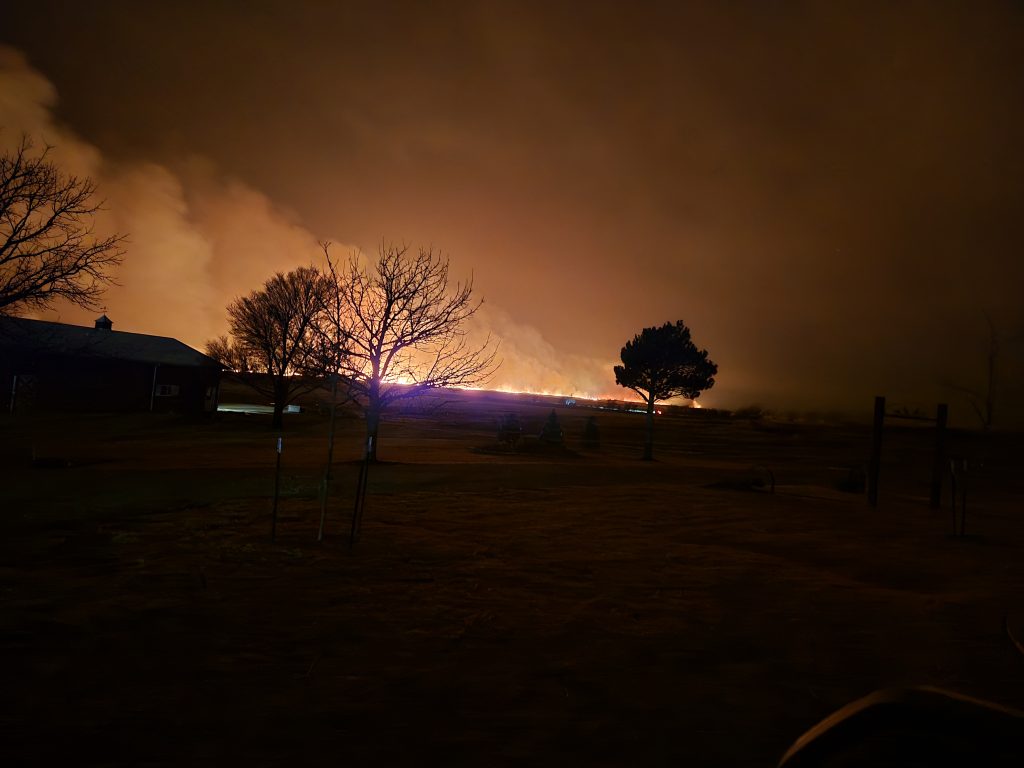
-
The charred landscape following the Ranger Road Fire, which burned over 280,000 acres in Oklahoma and Kansas. | PC Mark Gardiner
20260219_093643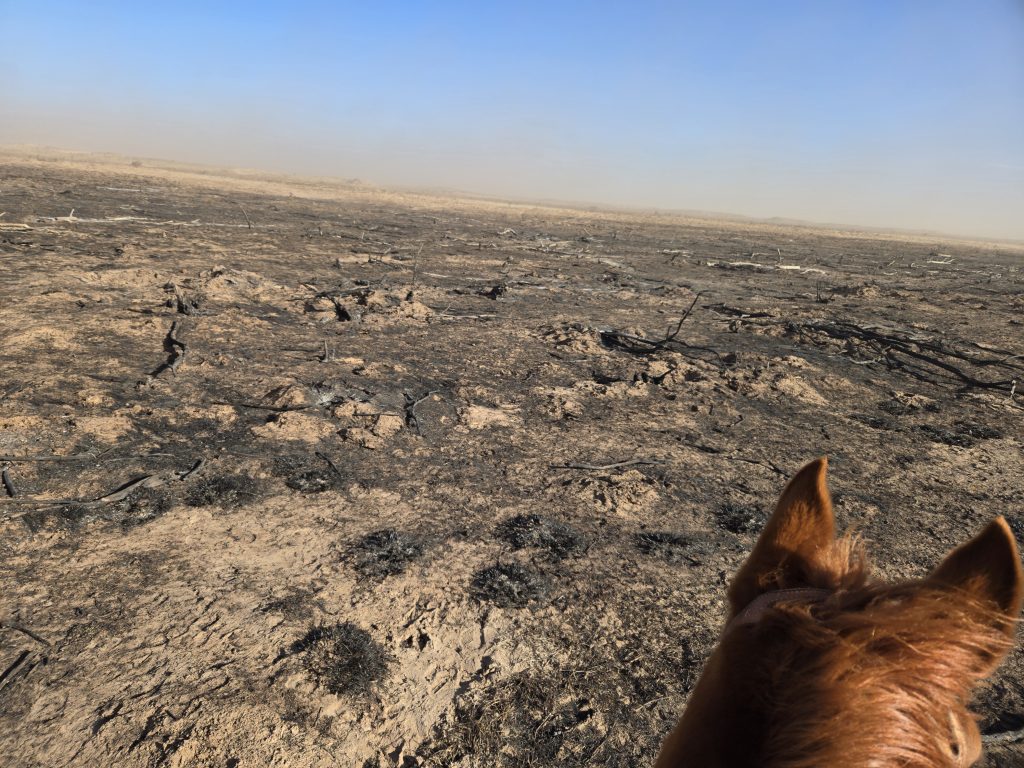
-
Gardiner Angus Ranch cattle are moved away from the burned ground following the Ranger Road Fire. | PC Mark Gardiner
20260219_095536(1)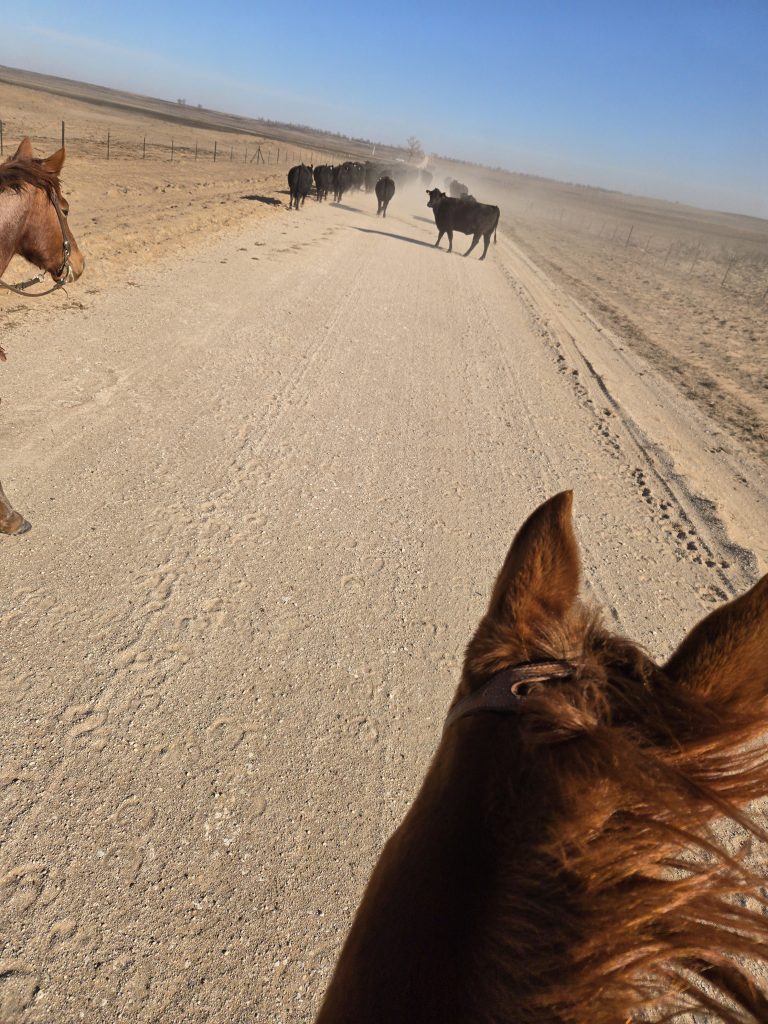
-
-
The view at Gardiner Angus Ranch, Ashland Kansas, during the Ranger Road Fire on Tuesday, Feb. 17, 2026. | PC Mark Gardiner
20260217_192446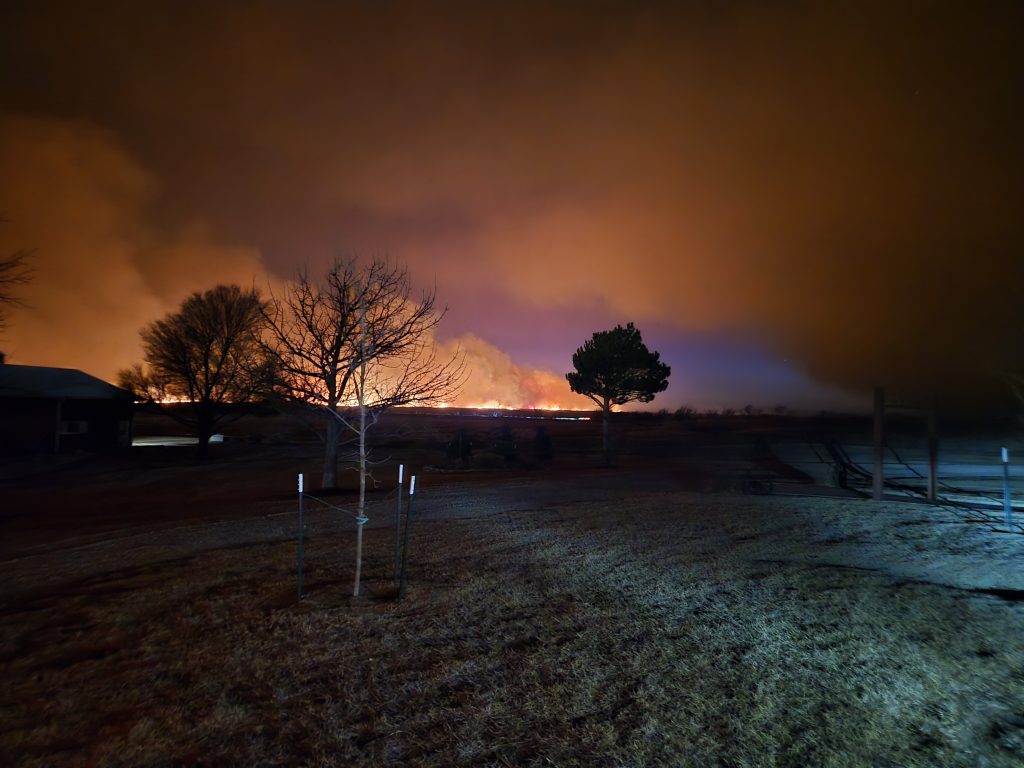
Naomi Osborn, Ashland City Clerk, said that while this fire was not quite so destructive as the 2017 fire, there are many emotions that have surfaced as people in the community and surrounding area went through another hellish experience.
“Quite a few people were affected in the same area [as the Starbuck Fire]. We are very fortunate that the devastation was not nearly so much, and also that we learned from that fire. Our task force was able to implement their action plan a little quicker and we had a little more knowledge going into this fire than we had in 2017,” she said.
Many ranchers were affected by both the 2017 fire and the Ranger Road fire. While it is too early to know for certain on numbers of livestock lost, Osborn is hopeful that these losses will not be as high.
“People are still working diligently to get numbers for insurance purposes,” she said. “It is a high number. In 2017, cattle losses were in the thousands; this time it is not going to be that high.”
Help is already rolling into the community. Osborn said quite a bit of hay is expected to arrive over the weekend.
“It sure is amazing seeing the sense of community that comes out of it,” she said. “A lot of people are feeling a lot more emotion with this fire. One rancher who lost quite a few head had just gotten back his cattle following the 2017 fire. This devastation just adds a layer onto the mental damage from 2017, but I think people felt a lot more prepared. I know our firemen felt a lot more prepared and felt they had better action plans in place. There are some highlights to having gone through it so recently, but it is still very devastating for everyone, and there will be quite a bit more mental devastation from this one.”
Something so catastrophic as a wildfire “makes you realize how thankful you are for what you have,” Osborn said. “We need continued prayers for rain and moisture of any kind.”
The National Interagency Fire Center indicates that the state of Kansas, much of Texas, and parts of Oklahoma, Colorado and Wyoming are at risk for “above normal” significant wildfire potential. The U.S. Drought Monitor map shows “abnormally dry” to “extreme drought” areas growing across Montana, Wyoming, Colorado, Nebraska, South Dakota, Oklahoma and Texas, with pockets of “exceptional drought” in Texas and Colorado. Continued dry and windy conditions and low relative humidity are keeping the fire danger high. As of Thursday, Feb. 19, the National Weather Service has a Red Flag Warning in effect for areas of Texas, Oklahoma, Kansas, New Mexico and Colorado.
The Oklahoma Highway Patrol reported that three firefighters were injured when their fire truck rolled in a pasture.
“This past Tuesday, troopers in Troop I responded to an overturned Rosston fire truck during the Ranger Road wildfire between Rosston and Englewood KS. Three firefighters were on board. Two were riding on the back of the truck as they navigated a smoke-filled pasture with extremely limited visibility.
“The driver, unable to see through the dense smoke, drove into a burning canyon. The truck overturned, trapping the driver and ejecting the two firefighters who were riding on the rear.
“After noticing a missing fire truck, fellow first responders searched for the fireman as every second counted. Once located, all three men were rescued from the burning canyon and transported by ambulance to a hospital. Each sustained serious injuries. The trapped driver suffered second-degree burns to his upper body.
“We are grateful for the fellow first responders who, like these brave Rosston firefighters, came from across the state to assist Oklahomans as this massive wildfire spread. They pushed flames back from homes, evacuated residents, and moved livestock for people they may never meet.
“Please keep these three firefighters in your thoughts as they recover, along with the men and women who continue responding to the ongoing wildfire threat,” stated a social media post.
A fire near Long Pine, Nebraska, threatened a feed lot and forced evacuations of several homes. Tracie Booth, Brown and Rock County emergency manager, told News Channel Nebraska that it ignited from a power line.
Any producers impacted by the wildfires are encouraged to get in touch with their local Farm Service Agency office.
Oklahoma Senator Casey Murdock, R-Felt, issued the following statement on the ongoing wildfires.
“I’m at a loss for words at the size and scale of the wildfires sweeping across Woodward, Texas and Beaver counties. My heart goes out to my constituents who have suffered property damage and to those who have had to leave their homes behind. I also know there are many families in the area who are anxiously waiting to see what happens next as firefighters work tirelessly to get these wildfires contained.
“I’m grateful to all the firefighters, emergency management personnel, law enforcement officers and first responders working on the front lines. My family and I will keep these brave first responders in our prayers as they risk their lives to keep local residents safe.
“I’ve been in constant contact with local emergency officials and the Oklahoma Department of Emergency Management as they work together to keep Oklahomans safe. I appreciate Governor Stitt’s swift action in declaring a State of Emergency for Beaver, Texas and Woodward counties, which will help with emergency response and recovery efforts. The Federal Emergency Management Agency has also approved requests for Fire Management Assistance Grants for the Stevens Fire in Texas County, the Ranger Road Fire in Beaver County and the 43 Fire in Woodward County.
“The residents of Northwest Oklahoma and the Panhandle are resilient. We have faced wildfires before, and once this is all said and done, we will join together to recover and rebuild. As high winds make conditions unpredictable, I urge everyone to remain cautious and stay informed. If you need assistance, please don’t hesitate to contact my office.”
To assist livestock producers affected by the Ranger Road fire, please reach out to one of the following:
SHAW FEEDYARD:
Shaw Feedyard will be a dropping point for hay. Please contact Ryan Koons at 620-805-4682 if you have any questions. The address is 2428 CR 15 in Ashland, KS.
ASHLAND FEED & SEED:
Ashland Feed & Seed will be a dropping point for hay and feed. The address is 1975 CR U, Ashland, KS 67831. Contact the main office: (620) 635-2856.
Cash donations can be made to the ASHLAND COMMUNITY FOUNDATION. 100% of the money is redistributed to those in need. You can donate directly by clicking https://www.ashlandcf.com/donate-today or mail or drop off monetary donations to STOCKGROWERS STATE BANK, 622 Main Street, Ashland, KS 67831, or mail checks to ASHLAND COMMUNITY FOUNDATION, P.O. Box 276, Ashland, KS 67831.