Graze it: U.S. Agriculture and Interior Departments commit to improved federal lands grazing strategies

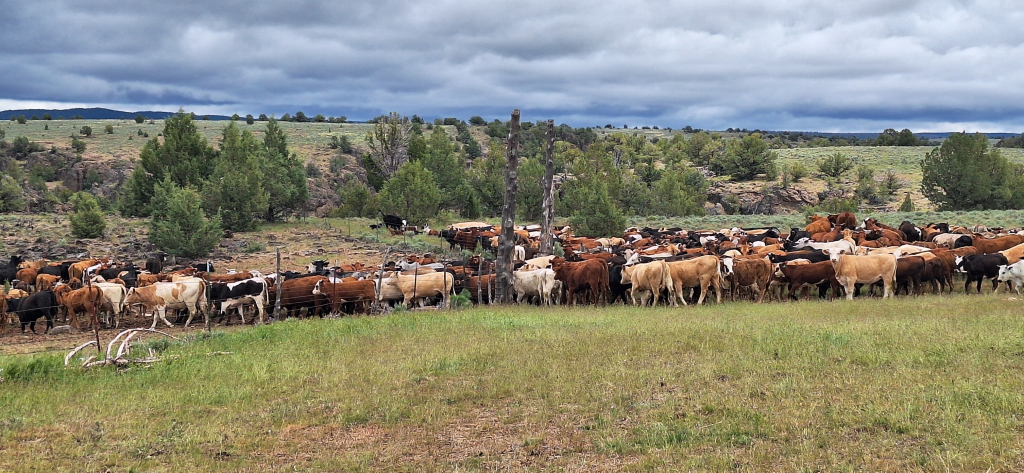
If it had happened a day later, it might have been hard to believe, but as it was, on March 31, 2026, the U.S. Department of Agriculture and U.S. Department of the Interior announced a joint effort to better the relationship between federal lands grazers and the federal government.
Under the leadership of Secretary Brooke Rollins, USDA of late seems willing to take on cattle industry issues and offer solutions based on feedback from affected ranchers.
So this was no April Fool’s joke.
“Our public lands are there for the people, and this action demonstrates the commitment at USDA and the Department of the Interior to improve our services so farmers and ranchers who use public lands can run more efficient operations,” said USDA Secretary Rollins in a news release.
“By working closely with American ranchers, we are enhancing communication, investing in innovation, and modernizing our approach to land management practices to deliver real results for the people who feed and sustain this country. In coordination with the Department of Agriculture, the Trump administration is advancing actions designed to support farmers and ranchers – securing a more resilient future for grazing on public lands and protecting America’s ranching heritage for generations to come,” said DOI Secretary Burgum in a news release.
Land within the US Forest Service purview (which includes the National Grasslands) is under UDSA’s oversight. Bureau of Land Management land is under the DOI.
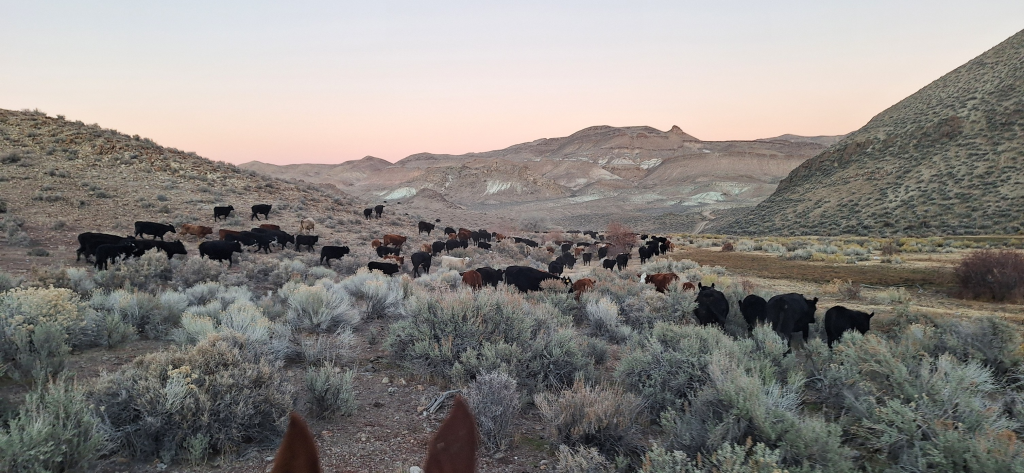
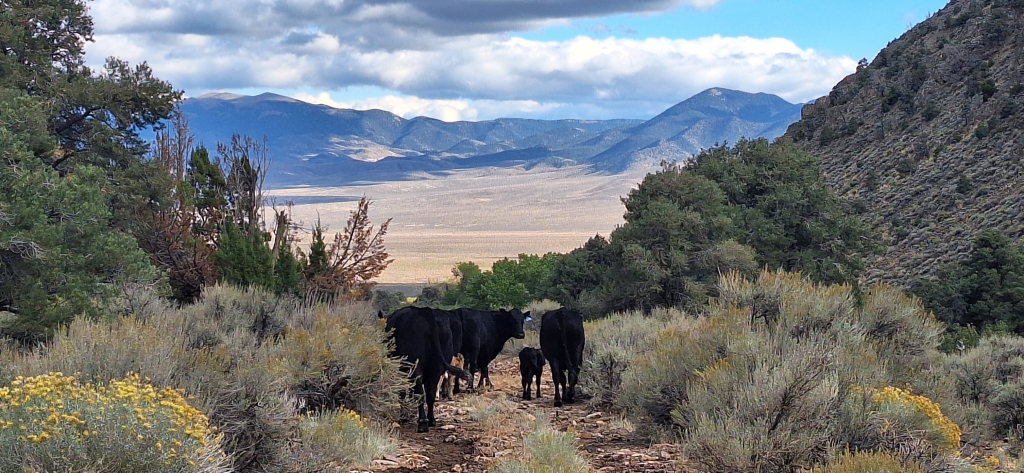
Nevada rancher and livestock market owner Jack Payne has spoken with the Secretary and her team on multiple occasions about the negative effects of drastic grazing cuts across the west in recent decades. Payne grazes cattle in Oregon, Idaho and Nevada, where the vast majority of rangeland is owned by the federal government.
He is very pleased to see this effort to reverse the trend of removing cattle and sheep from federal lands.
Payne said on his ranch in Idaho, for example, the original agreement was for 6,000 Aums (animal units per month) from June through Oct ober, or about 1,200 cow-calf pairs for the summer, now the agreement allows for 2,400 head from April 1 to July 15, or about 685 cow-calf pairs for 3.5 months – a nearly 50 percent cut in numbers. Payne said ranchers across the west have dealt with this same situation or worse. Additionally, many grazing agreements have been totally suspended.
Particularly during the 1990s when the anti-grazing lobby was gaining considerable power, the BLM drastically cut grazing numbers with apparently no intention of ever returning to the original numbers, he said. “They are supposed to have ten-year renewals where they come in and assess the feed situation, but what I’ve learned is that if they’ve already slashed your grazing numbers, they are under a 40-year renewal plan. They only come back and review if they want to cut your numbers even more,” he said.
The Payne family’s Idaho grazing numbers were reduced based on a skewed report saying the grass stubble height along creek banks was too short.
Ironically, Payne has tried to gain approval to fence off three different creeks but the BLM has refused to consider his proposal. “I could build three miles of fence and put three creeks in one pasture and hardly ever use that one, but they don’t want me to move my cows, they want to continue to find isolated examples of cattle congregating in one place like a water source and use that against me,” he said.
Payne hopes the new agreement with USDA and DOI can resolve issues like his, which ranchers across the west have experienced.
Payne has a couple of suggestions he believes are simple but would yield big results as far as ensuring the BLM and USFS grazing land is properly cared for and being used as it was originally intended by the Taylor Grazing Act.
- During the information gathering phase, provide opportunities for every allotment owner/grazer to provide input without concern of retribution. This can be accomplished by holding meetings at neutral locations with neutral hosts.
- Create elected grazing districts/boards that include significant representation of allotment owners in each area as well as county commissioners. Payne recommends a board of at least 10 allotment owners (possibly include every allotment owner) and approximately three county commissioners.
- The grazing districts/boards would oversee much of the management and decision-making on allotments. With possibly pre-assessment by an independent third party range expert contractor, the districts/boards would determine best use of suspended (vacant) AUMs, approve project requests such as water lines, fencing, etc., and timeframe/AUMs for grazing/resting suspended AUMs.
- In cases where political motivation or lawfare was used to revoke allotments, they should be returned to the individual or family who lost them, whenever possible.
- Create a sensible system to ensure the final result is healthy for the community and local economy, with priority being placed on those who live and work in the communities.
Payne wants to ensure that suspended and reduced AUMs are not used as leverage or rewards for politically connected individuals. “We need to ensure these meetings are open to all grazers. Allotment owners shouldn’t feel like there is a pre-determined outcome or a bias at these meetings. They need to be free to share their ideas. We’ve already seen examples of corruption where grazing leases are ‘awarded’ to people with political connections. I don’t believe that is Secretary Rollins’ or Secretary Burgum’s intent and we need to take every precaution to ensure that doesn’t happen.
“I don’t care who gets the allotments, I just want it to be fair,” said Payne.
He suggests that a portion of vacant allotments be set aside for grass banks to be used by neighboring ranchers for emergency situations such as fires or drought, or non-emergencies such as rest rotations on their current allotments.
In addition to the vacant allotments being used for grass banks, the hundreds of thousands of acres of wildlife refuges that are overgrown and going to waste need to be considered in the rotation, he said. “As most ranchers know, the wildlife have left the refuges and gone to the allotments where livestock are grazed, and forage is more nutrient-dense.”
“Also, easements, right of ways and accessibility must be considered when choosing the recipient of the vacant allotment,” he said. Base property, should also be a consideration.
Payne also wants to be sure this project isn’t used as a veiled effort to require any sort of mandatory identification on federal lands.
- Cutting red tape and improving efficiency – The MOU streamlines permitting and processes and encourages agencies to use existing authorities more effectively – reducing delays for grazing permits, infrastructure improvements, and emergency response actions.
- Strengthening rancher partnerships – Agencies will expand collaboration with permittees through structured engagement, including learning roundtables and enhanced communication channels.
- Ranch immersion programs for federal employees – New initiatives will place agency staff on working ranches to build firsthand understanding of operational challenges and realities on the ground.
- Enhancing transparency and data access – Improved data systems will make grazing allotment information more accessible and predictable, giving producers greater certainty to plan and invest.
- Expanding practical land management tools – The agreement promotes targeted grazing to reduce wildfire risk, supports reopening vacant allotments, and encourages adoption of innovative technologies such as virtual fencing.
- Wildfire coordination and response – The creation of Grazing Permittee Wildfire Liaisons will ensure ranchers have clear points of contact and a voice during wildfire response and recovery efforts.
- Maintaining grazing capacity – The MOU affirms a goal of maintaining grazing capacity wherever possible, including no net loss of Animal Unit Months within allotments, consistent with applicable law.
Additional background
More than 20,000 ranchers and farmers across 28 states graze on federal lands. The FS and the BLM are responsible for a total of 240 million acres of federal rangelands. The two agencies together administer more than 23,000 permits and leases held by ranchers who graze their livestock on approximately 29,000 allotments. About 10% of grazing allotments, or roughly 24 million acres, are not under permit but are targeted as opportunities to allow more grazing on federal lands. The FS collects an average of $6 million annually in grazing fees.
Livestock grazing on national forests and grasslands contributes about 14,200 jobs and $645 million to the nation’s gross domestic product annually, supporting agriculture-related sectors and private operations. Across Western rangelands, livestock grazing on BLM lands generate $2.7 billion in total economic output, supporting 35,000 jobs and $700 million in total labor income.
Charles and Heather Maude of Caputa, South Dakota and earlier generations of Maudes have utilized grazing allotments on the Association of National Grasslands since the inception of the USFS.
After criminal charges were dropped accusing the Maudes of theft of federal property, the couple has spoken multiple times with Rollins as well as the chief of the USFS, Tom Schultz about a variety of federal lands grazing issues.
Heather said she believes the efforts to improve communication, efficiency and ultimately return cattle to the land is a positive change.
“I’ve had the opportunity to speak with the United States Forest Service (USFS) about this in the last week. I am generally optimistic about the direction they are taking their priorities on the range side. My understanding is that many changes are coming with a focus on increased AUM’s, smoother and more efficient processes., and reduced oversight and regulation.
“Time will tell if the ground-level actions match the statements, and all of us in the west are understandably head shy at taking the federal government at just its word.
“One aspect I would like to see implemented into the plan is cleaning up of small, isolated federal tracts of land via sale to the allotment owner. This would help with the ongoing challenges at both USDA and DOI of physically managing all the lands under their purview. These lands are often located in remote, poor communities and counties that could see positive change from having more acres on their tax base,” said Heather.
Heather also believes it is crucial that the upcoming meetings intended to gather input from ranchers will be held in neutral locations and with neutral hosts.
“I am hopeful we can see these round tables occur at state agriculture organization meetings, sale barns, extension offices, and other places where the entire local ranching community overlaps. With regard to the USDA, Secretary Rollins has many supporters across numerous facets of ranching, and I see this as an opportunity to showcase them in conjunction with educating them on the changes to come,” said Heather.
Heather is concerned about the potential endurance of changes, should they be made. She said Chief Shultz spoke to her about codifying changes in law, rather than just in a rulebook, and she believes this is crucial to provide some stability to the agricultural community.
“One conversation local to our area that these changes are bringing up focuses on agency rules and regulations. Several of the unconfirmed changes coming down the pipes are in direct violation of the USFS Handbook. Many already question how an agency can create its own rules and require citizens to abide by those rules without Congressional approval. Now we potentially see them circumventing those rules, again with Congressional approval.
“The ability of a government agency to apply rules to citizens, as well as the required process to make and change those rules, needs to be part of this conversation. If the agency itself does not have to follow any due process to change or violate their rules, it shows that they can also change their rules without due process when targeting citizens,” said Heather.
Heather said in her part of the country, reductions in AUMs isn’t as common as it is further west. However, she said understocking seems to be the norm. She added that access to water often limits the ability of ranchers to graze certain parts of their allotments. A faster, more efficient process for approving water projects such as pipelines would provide ranchers the means to more adequately utilize their grazing allotments, she said. She pointed out that some ranchers have been waiting for five years or more for water line approval.
Lawfare occurrences such as the indictment against herself and her husband have added another level of stress to the ranchers in her community, said Heather.
“Personally, I find the lawfare event that occurred against my family, and was in the process of occurring to my next-door neighbor’s family, as the most troubling agency strategy to see play out. We have all watched that unfold since 2024, and while we want to believe in a better working relationship with all agencies going forward, their historic actions cause us all a great deal of concern.
“Agencies cannot just say, ‘That was wrong, lets carry on.’ They must take action to ensure it does not happen again. Employees proven to be using lawfare against citizens need fired. Court cases need prosecuted to set the precedent that lawfare is wrong and unconstitutional. Restitution needs made to those who suffer acts of lawfare – pulling that restitution from the budget of the agency practicing lawfare to be another reasonable consequence.
“We are seeing some of those things discussed at this point, and a few actions occurring, but I can say with certainty that the ranching community is still very on edge about what has occurred in western South Dakota,” she said.
Kaitlynn Glover with the Public Lands Council, an arm of the National Cattlemen’s Beef Association, is also pleased to see the current administration seemingly working toward more efficient grazing and communication strategies. Her organization organized a recent meeting in Nevada and also an upcoming one in Montana to allow grazers to share ideas and concerns.
Glover narrowed down her three priorities when it comes to improving federal lands grazing:
- Taking action on NEPA (National Environmental Policy Act) – “We need to make sure NEPA is an information gathering tool rather than an action forcing tool,” she said. Glover said NEPA has been a tool used by anti-grazing activists to prevent improvements on federal land (such as fencing and water projects) that would enhance grazing opportunities.
- Revise the regulations that govern the permitting process.
- Open and make accessible vacant allotments.
To the point of the NEPA process, Glover said, “NEPA was intended to be an analytical tool to review projects, not a means to stop or delay projects,” she said, adding that a process to move through NEPA more quickly will be crucial.
Heather agrees with Payne’s belief that local management is the key to the success of federal lands grazing policy. “The owner operator rancher is the best manager of rangelands in the world,” said Heather.