Lindskov-Thiel Ranch: 34 years of business and friendship

Coming of age in the Great Depression, Bill Lindskov left home at fourteen-years-old to find work to support his family. He found a job herding sheep on a neighbor’s ranch near Isabel, South Dakota. Seven years later in 1934, Bill leased that same ranch and bought his first band of Targhee-Rambouillet crossbred sheep. A few years later, he had the opportunity to buy the ranch – land rich with native grasses, 60 miles west of the Missouri River. It gave him a great start, but making ends meet raising sheep wasn’t easy, especially during the Great Depression. To keep afloat, Bill diversified his business. He started a hamburger shop in town and sheared sheep for other shepherds around the area.
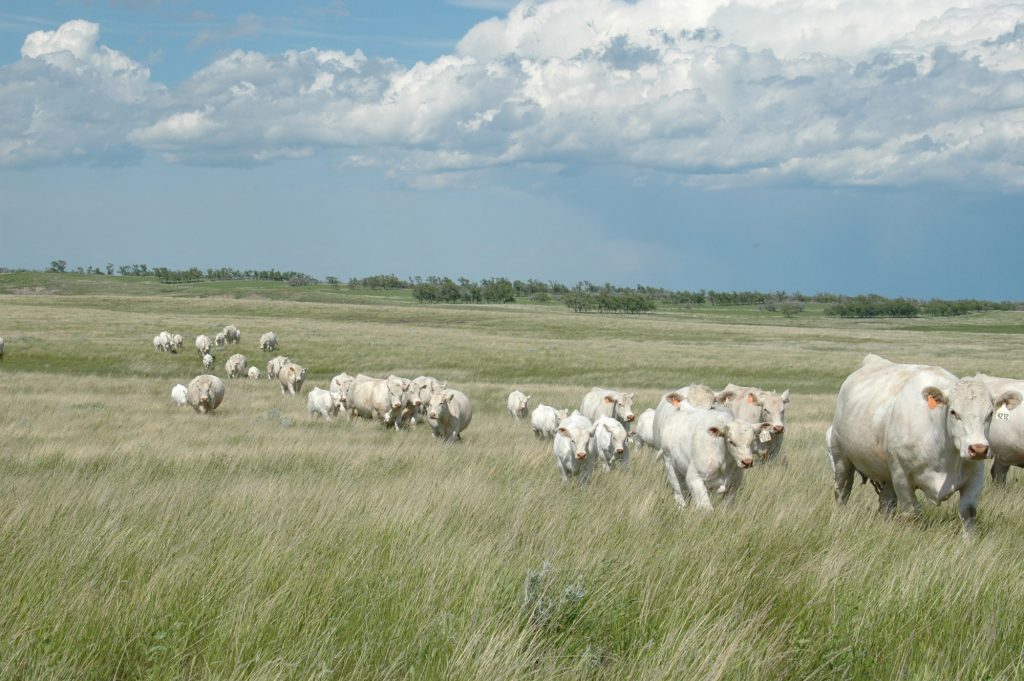
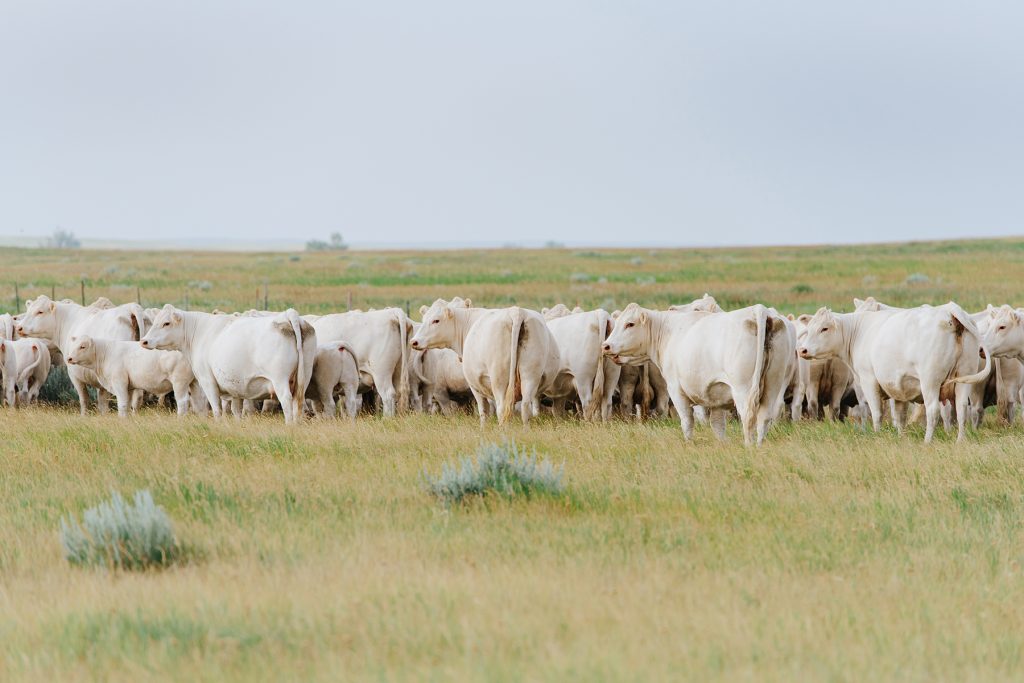
In the 1940s, Bill started raising Hereford cattle and later branched out to Angus. Bill became one of the first ranchers in the country to start incorporating Charolais bloodlines into his herd. Additionally in 1951, Bill bought a local farm implement shop. The ability to diversify and explore new opportunities was key to the long-term success of his ranch as well as something he passed onto his children.
Fresh out of college with a teaching degree from Black Hills State University, Bill’s son Les Lindskov had a tough decision to make: “I took an offer to teach high school math. But the next day, dad asked me for help on the ranch.” With the blessing of the superintendent, Les decided to join his dad on the ranch. Along with trading fur, Les worked for Bill for ten years until Bill’s death in 1981.
Bill Lindskov’s story is one of grit, adaptability, and commitment to core values. “Dad left with me two important lessons,” says Les, “always be honest and always treat people the way you want to be treated. One of the biggest blessings in my life was being raised by two wonderful parents.”
After his father’s death, Les Lindskov took an aggressive approach to the ranch, leaning heavily into what the ranch is known for around the nation and globe: purebred Charolais bulls. “I took a lot of risk right after dad died and bought some properties. I was lucky and somehow talked the bankers into letting me do it,” Les chuckled. Meanwhile Les and his wife, Marcia, were having a difficult time keeping up with their expanding operation and family. “After 5 or 6 years, we were still living in a trailer home, with four boys trying to run a ranch and implement business with no office space,” remembers Les. “It was a lot to handle.” In need of a partner, the Lindskovs met Brent Thiel at just the right time.
Raised on a sheep and cattle ranch south of Aberdeen, South Dakota, Brent Thiel knew from a young age he wanted to work in the ag industry. With an ag journalism degree from South Dakota State University, Brent interned at Tri-State Livestock News before taking a job as a traveling field representative for the Charolais Association. Representing South Dakota, Brent met Les Linskov as a client first, but they quickly became good friends. “Les was very interested in improving the breed,” says Brent, “he is a very forward-thinking man – a cattleman first and a businessman too. His ambition was magnetic.”
Likewise, Les noticed Brent’s talent right off: “I thought, this guy has a keen eye for good cattle – isn’t a man in the world with a better eye for cattle than Brent Thiel. Some people are just blessed to have a real niche in life.”
In the spring of 1987, Brent drove to Isabel to visit Les for work. “We drove by the ranch where I live now,” mused Brent, “Les asked me, ‘why don’t you come buy this place and we’ll get into the business together?’ But I loved my job at the Charolais Association – traveling territory from Canada to Texas, meeting new people. I wasn’t that interested.”
The Charolais Association not only fit Brent’s passions, but more importantly, it introduced him to his wife, Nancy, who was the Charolais Association’s editor and communications director. In the summer of 1987, Nancy and Brent got married and began to reconsider Les’s offer: “I got to thinking about raising a family and the kind of life I wanted our children to have. We moved to Isabel December first of 1987.”
The news was well received by Les and Marcia, “Somehow I talked him into believing in me,” Les laughed. It was a decision that, “apart from a few blizzards,” Brent has never regretted – the beginning of a 34-year-partnership.
Although no strangers to risk, both Brent and Les shared a conservative mindset towards overhead expenses. Starting out with not much more than an antique tractor and old pickup, the team kept costs low. Old machinery makes for a wealth of stories, “One time Brent went out to deliver bulls with a bumper pull trailer and the bumper fell off!” chuckled Les.
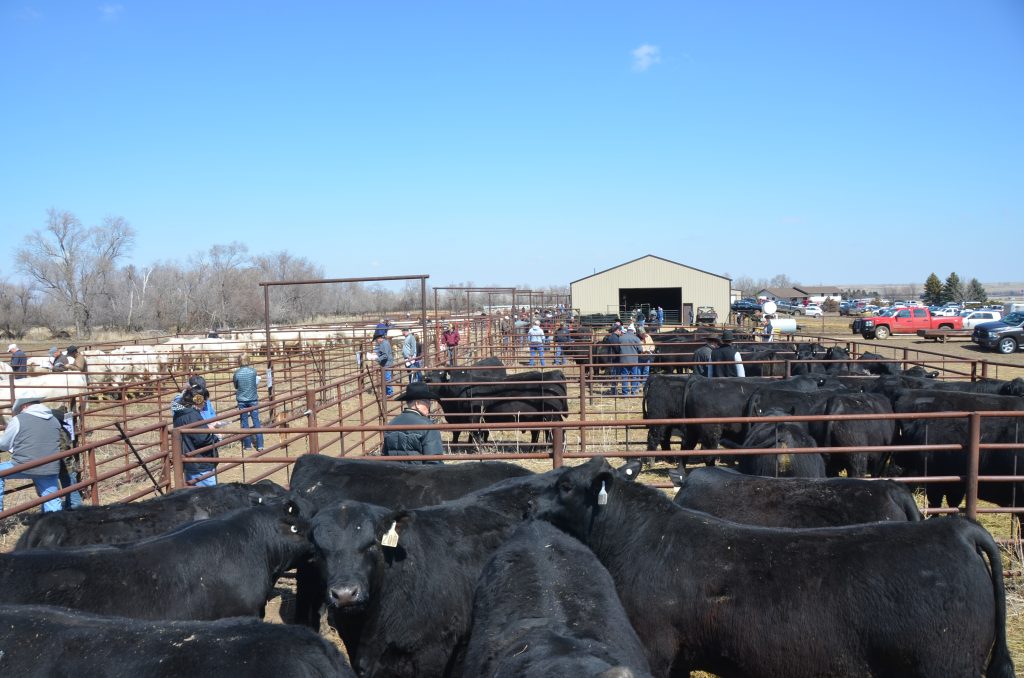
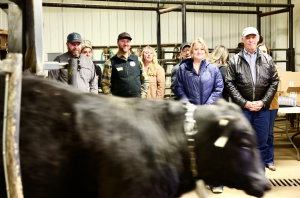
Before Brent joined the team, Les and Marcia had the bull sale at Faith Livestock. In 1988, the Lindskov-Thiel Ranch had its first sale at home in Isabel. They added pens and bleachers to a barn near Brent and Nancy’s place and converted it into a sale ring. “We didn’t have it perfect,” recalls Brent. But a lack of plumbing and electricity didn’t stop the Lindskov-Thiel Ranch from hosting crowds from across the country. “We borrowed an old wooden outhouse from a fellow who lived out at Red Elm. So, every year we’d haul that thing up here and back in the fall. It was quite the tradition,” says Brent. Additionally, a meal for the crowd was cooked by Marcia, who had to get creative without running water or heat. “She’d cart everything up there. It was an interesting ten years,” adds Les. But breeders didn’t care too much about heated sale rings, even in frosty South Dakota springs, they came for top notch bulls.
With each year, the crowds got larger and larger. Brent remembers one year having 4 planes parked in the yard: “They’d land along the highway and taxi down.” People came across the nation and even the globe, to bid on the Lindskov-Thiel bulls. But, what the Thiels and Lindskovs are most grateful for is the local support from the Isabel ranch community. “One year we had 11 ranchers from around Isabel purchase our bulls. That really meant so much to us,” says Brent.
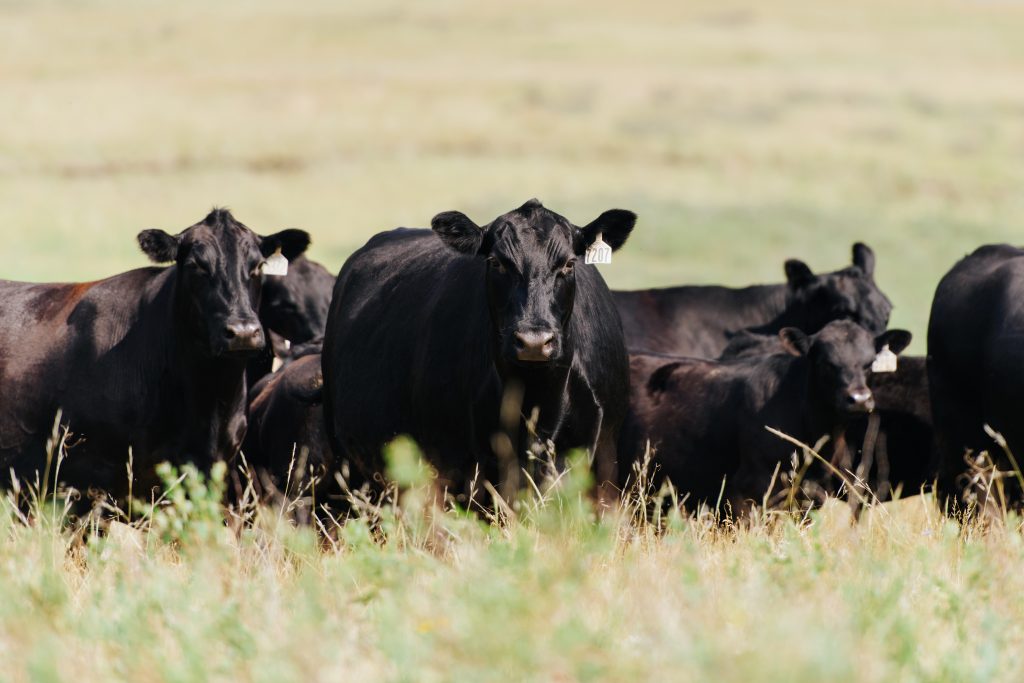
Les and Brent’s decisions were made with their customers at the forefront. In 1996, the ranch started offering purebred black Angus bulls to accommodate their customers – many of which were breeding part of their cows to Charolais and the rest to Angus bulls. But customer service didn’t stop after the bull sale each spring. “Les and I would travel to customer ranches and get to know them and their families,” says Brent. “We wanted to make our business personal. Plus, we got to know what was working and what wasn’t first-hand. It was very educational.” In 1995, Brent and Les started helping customers market their customers’ calves by building a network of farmer feeders. Each year, Nancy put together a list of over 25,000 calves bred by LT bulls as a free service to customers. The list told potential buyers about sale dates, estimated weights, genetic background and shot information. Les and Brent also made a habit of attending sales in which customer calves were being offered.
Both Les and Brent have a hard time giving themselves much credit. “We’ve been lucky,” is all Brent has to say regarding the legendary success of the partnership. The Lindskov-Thiel Ranch started selling around 50-70 bulls in the early years, but in 2022, their last year in partnership, over 230 Charolais and Angus bulls were sold, along with another 100 bulls sold through private treaty and semen shipments to foreign countries across the planet.
In 2022, the partnership was dissolved amicably. The Lindskov-Thiel Ranch became Lindskov’s LT Ranch and continues to hold its sales as usual each April, in the same converted sale barn on Brent’s property. The sale even has the same auctioneer, Lynn Weishaar, who has been the sale’s auctioneer since the first sale, 42 years ago.
Les’s four sons took complete ownership with Bryce Lindskov and Todd Linskov taking the lead on the cattle business. Les stresses the importance of handing decisions to the next generation. “I think a lot of people don’t step down soon enough. There’s 50-year-olds still unable to take the reins from dad. I didn’t want it to be like that for my kids. The boys grew up with this life; from the time they were little, they knew the ins and outs.” Nancy Thiel, who had the intense task of doing all bookkeeping, registrations, and data entry for the purebreds, passed the baton to Bryce’s wife Tennlle, and Todd’s wife Marisa.
The Lindskov brothers now manage one of the largest, most diversified operations in the country. Not only do they continue to produce industry leading Charolais and Angus cattle, but they also farm thousands of acres, operate a high-fenced elk ranch, as well take in pheasant hunters. But both Brent and Les say they’re up to the challenge. “I think we’re just seeing the tip of the iceberg of what’s coming for the Lindskov brothers,” says Brent. “They’re expanding, offering more bulls and I suspect, female sales.” The Lindskovs also continue to connect their commercial bull customers to buyers for fall calves as well as purchase thousands of customer feeder cattle and replacement heifers to background and breed on the Lindskov LT Ranch through their buyback program.
Brent and Nancy took the top end of the purebred Angus cows and still raise bulls for the annual sale. But the lighter load allows Nancy and Brent to spend more time with their five grandchildren who live in Arkansas and Texas. They lease some of their pasture to the Lindskov brothers. “Now Nancy and I just want to be good neighbors.”
The partnership is over, but an enduring friendship and respect remains between the Lindskovs and Thiels.