‘Livestock aren’t the villain’: Aussie red meat sector abandons ‘unachievable’ 2030 carbon neutral target
AUSTRALIA’S red meat industry has held its hands up and walked away from the ambitious Carbon Neutral 2030 target vowing it unachievable in the timeframe.
Meat & Livestock Australia (MLA) first committed to the target in 2017 with the goal of reaching net zero greenhouse gas emissions by 2030 from beef, lamb and goat production in Australia.
To help achieve the targets the Red Meat Advisory Council (RMAC) introduced the Red Meat 2030 plan in 2019, but after a recent review the council says it isn’t going to work.
With less than five years to achieve the target, and despite making progress, the industry remains about 90 percent short of reaching its carbon neutral goal.
Australia has already been working hard to cut its emissions using a number of tools to achieve respectable results. These included breeding animals that genetically produce lower emissions, using feed additives such as seaweed that reduce methane production and boosting the carbon storage in its agricultural fields.
Emissions from the red meat sector fell by 78% between 2005 and 2021, according to Australia’s national science agency CSIRO.
However, the biggest chunk of that reduction was generated by less land clearing and a smaller national herd, rather than innovations that directly reduce methane emissions per head of livestock.
The RMAC has reacted to the results of its freshly reviewed and released plan, following a six-month industry consultation.
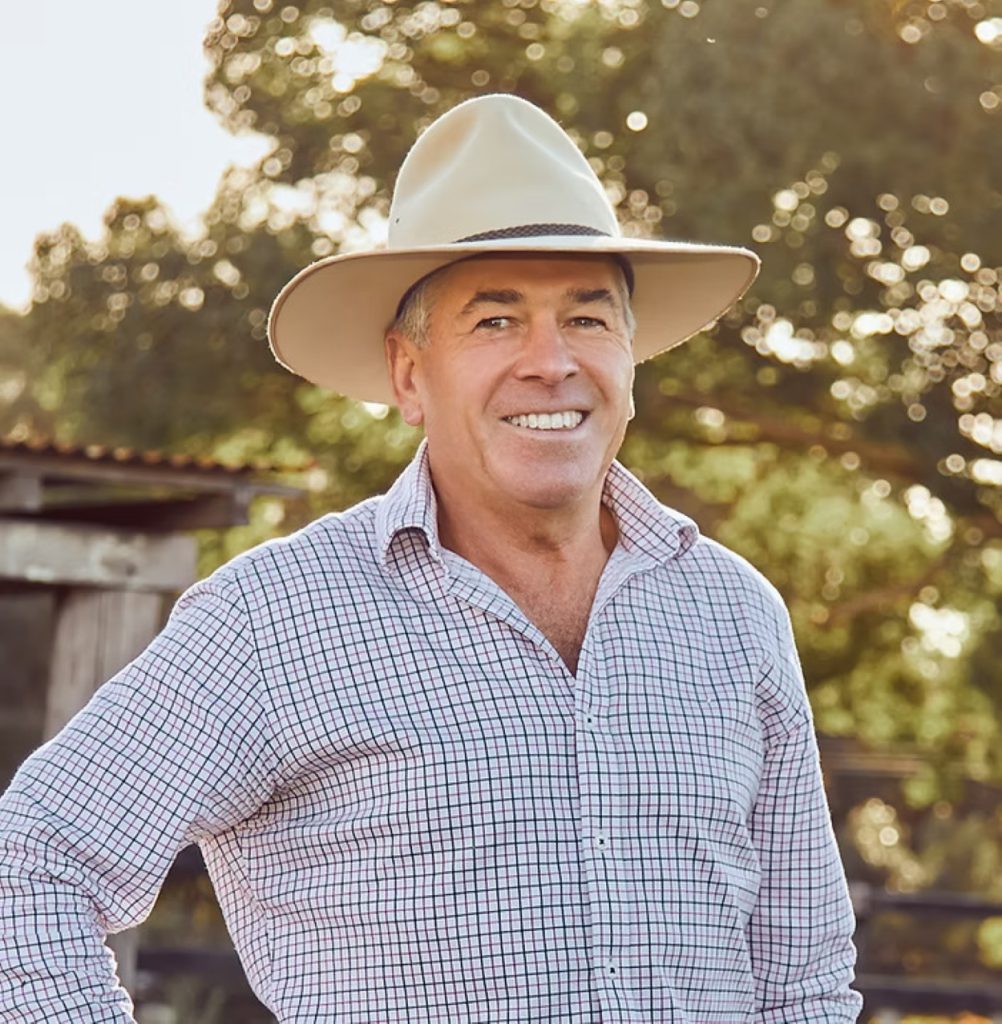
According to RMAC independent chair John McKillop, the plan was updated in line with ‘the changing operating environment and industry’s needs and objectives for the next five years.’
Mr. McKillop said: “Since Red Meat 2030 was launched, the red meat sector has achieved record breaking success. In 2024 alone, Australia set a record for the export of red meat and livestock.
“Australia exported product worth over $20 billion in 2024 and was the world’s second largest beef exporter and largest sheep meat and goatmeat exporter.
“Red Meat 2030 updates the goal of doubling the value of red meat and livestock sales to focus on productivity and profitability outcomes, rather than a total sales volume focus.
“This updated metric ensures industry focuses on growing demand for Australian products through global market access.
“Looking ahead, the industry would build on the strong foundations to accelerate investment to help us reduce emissions intensity per kilogram of red meat, increase carbon storage in the landscape, and improve productivity,” he said.
Australia is among the world’s top red meat exporters, with over 30 million cattle and more than 70 million sheep across the country.
However, over recent years livestock farmers in Australia have become increasingly sceptical of reaching carbon neutral by 2030, encouraged by scientific research that gives differing results.
The decision to abandon the Carbon Neutral 2030 target was jointly taken by all red meat industry councils and now means all sectors are on the same page.
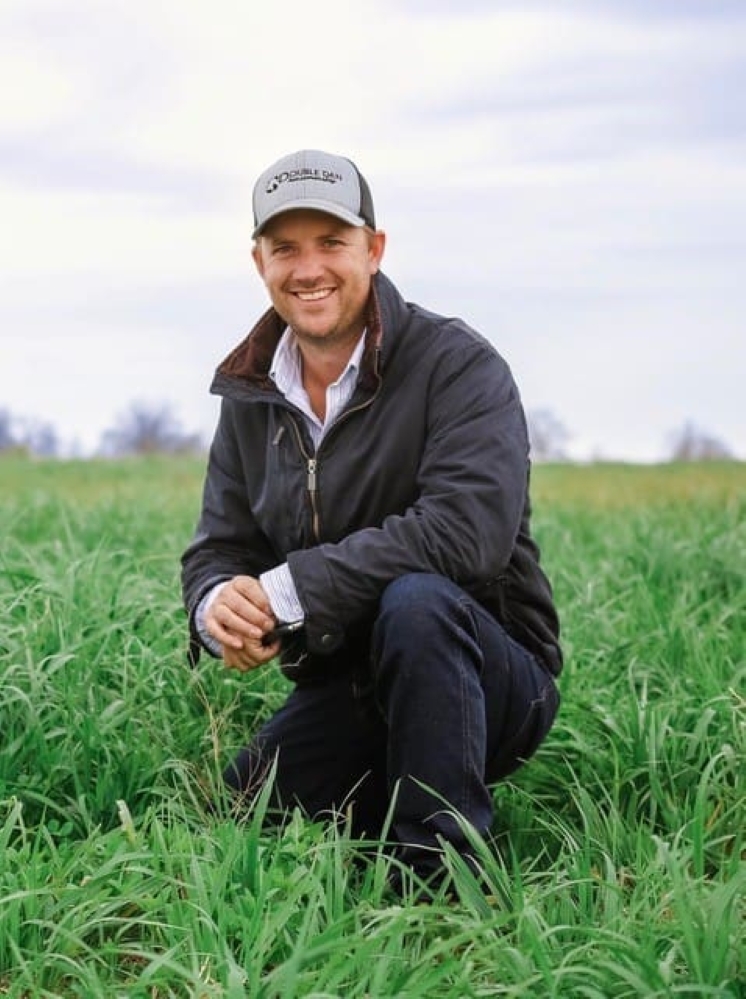
Adam Coffey, Cattle Australia vice-president and beef farmer, has been active researching prevailing greenhouse gas accounting metrics.
Speaking to Beef Central he said: “Our reduction ambitions around emissions don’t change, we’re just not heading for a target that is unachievable and more importantly sets the wrong context. The crucial thing is that livestock aren’t the climate villain they’ve been made out to be. Our emissions reductions are very important but as a grassfed producer in Australia, you are inherently at a point of climate neutral, so you are not contributing to further warming.
“Compared to a fossil emitter, any further interventions we make are removing more carbon dioxide from the atmosphere than previously existed, not just emitting less. This is why policy change at a federal level is hugely important. We are back at the steering wheel of our emissions future and this will be the basis for more meaningful discussions and outcomes as we move forward. This is an important part of a global reset around how we measure and account for enteric methane from livestock,” said Adam.
The organization will continue to strive to find ways to lower livestock emissions.
In the group’s announcement of its five year strategic plan, it indicates it will focus more on ‘contributing to Australia’s net zero ambitions’, a nationwide commitment to net zero emissions by 2050, under the Paris agreement.
“Productivity-led sustainability will ensure we can grow the herd and flock while delivering positive environmental outcomes. We will continue to invest in carbon storage and emissions avoidance initiatives. Additional leverage will be achieved through our partnership with Zero Net Emissions for Agriculture CRC.”
Mike Williams, the immediate past chair of the United States Roundtable for Sustainable Beef’s goal is climate neutral by 2040, but he emphasizes that “climate neutral” is not the same thing as “carbon neutral.”
Williams said that the USRSB believes one thing ranchers can do to help lower greenhouse gas emissions is to operate more efficiently by trying to be sure cows breed up as well as possible, maintaining herd health and utilizing a grazing plan. He said many ranchers are already focusing on these practices, but some may not.
“A term that is thrown around is ‘continuous improvement.'”
Tom McDonald, the chair-elect of the USRSB, and the Vice President of Environmental Affairs at Fiver Rivers, and a Texas Cattle Feeder Association representative, said that the political climate has changed since USRSB set the climate neutral by 2040 goal. But he said continuous improvement is a strategy the cattle industry has embraced over the past 70 years. “Each sector can revise their targets as needed but the goals don’t change,” he said. He said the goals won’t necessarily follow the “latest political inclinations,” but rather the “existing progress made by the U.S. cattle industry.”
“The USRSB’s goal is based on existing progress made by the U.S. cattle industry – reducing our emissions per pound of beef by over 40% since 1960. Based on this progress and market-driven incentives for continuous improvement, our goal is an accurate reflection of the industry’s intent to continue being the world’s most efficient and profitable beef supply chain,” said Donald.
The USRSB is financially supported by the Foundation for Food and Agriculture Research.
Brian Palmer, a Montgomery, Texas, rancher said the “whole premise of cows being part of the problem” is false and he has vocalized his concern about the industry approach to this topic.
He said producers are paying a high price for the global push to lower emissions from ruminant animals.
“I think there is a potential massive cost. There are already so many stressors for ranchers to deal with,” he said. “We have a wonderful tool with cattle. They can take unfarmable land and create a wonderful protein. To entertain the idea that cows are part of a proplem, it opens up for the other side to get a foothold. Instead of them having to prove that, some in our industry seem willing to accept it as the standard,” he said.

“When you look at the country and the globe and our responsibility to feed people, these become very scary conversations,” he said.
He said 40,000 head of cattle were euthanized by the Irish government in the name of reducing greenhouse gases, and that Denmark taxes each head of cattle. “Ultimately these are tools to reduce animal agriculture in a time that at we have higher demand for our product than ever before,” he said.
“We are at a tipping point for the beef industry. And if we buy into the climate conversation, we are making it even more difficult for ranchers to want to stay in this. So giving this whole thing credence, eventually you get to this toxic environment where producers are the outsiders,” said Palmer.