Senate Finance Committee talks about Brazilian cattle production
| At a hearing Thursday, the Senate Finance Committee discussed the impact of Brazilian beef production in the Amazon on the environment. In an opening statement, Senate Finance Committee Chairman Ron Wyden, D-Ore., said, the “Finance Committee has broad jurisdiction over trade, a keen interest in fighting for strong environmental protections, and a commitment to leveling the playing field for American workers, farmers, ranchers and businesses.” Wyden said that JBS, a large Brazilian meat producer with interests in the United States, has been “turning a blind eye as parts of its supply chain burn down the Amazon, push the world toward climate catastrophe, and undercut American ranchers who play by the rules on international trade.” “This issue has been the focus of a two-year investigation by this committee. Deforestation in the Amazon is a recipe for environmental disaster. When you burn the Amazon, you burn the lungs of the earth.” Wyden said. Wyden said that the Cattle Price Discovery and Transparency Act, which he introduced with Sens. Jon Tester, D-Mont., Chuck Grassley, R-Iowa, and Deb Fischer, R-Neb., “would bring some much needed transparency and accountability to the cattle market in the U.S.” “Beyond that, this committee will also be writing legislation to modernize and improve our customs system. I’m going to be pushing for better data collection and information sharing that’ll shine sunlight on U.S. supply chains and what’s coming across our border.” The committee heard from a series of stakeholders in the cattle business. |
Excerpt from Leo McDonnell’s (US Cattlemen’s Association Director) testimony:
Day-to-day, my wife, Sam, and I own and operate McDonnell Angus, with herds in Montana and North Dakota. Born and raised in Billings, Montana, our family is fourth-, fifth-, and now sixth-generation ranchers. Our daughter and son-in-law run cattle in Wyoming, while our son runs Midland Bull Test, the largest genetic bull evaluation public center in the U.S. and the largest feed efficiency testing program in North America. Through McDonnell Angus and Midland Bull Test, we pioneered the measuring of feed efficiency and individual intake on a high roughage ration. Making sure our customers can get good females that stay in the herd, that breed back, that have good feet, that make them money — that is our drive.
An efficient animal husbandry program is only the first piece that has to fall in place for a cattle operation to be successful. U.S. cattle producers also need a fair and competitive marketplace to sell their cattle into, and that means setting ground rules for both sides to play by, along with a referee to call out violations. International trade is an outsized factor in the domestic cattle market. In our testimony, we will outline the impact on the U.S. cattle supply chain of importing beef raised in
other countries, with lesser standards of production. Specifically, Brazil’s deforestation and the subsequent growth in their cattle herd, of their beef packers, and impact on the U.S. cattle market and international beef market. We offer the following for consideration by this Committee.
GROWTH OF THE BRAZIL CATTLE HERD
From 1970 to today, the Brazilian cattle numbers have grown from 78.6 million head in 1970 to 241.6 million in 2022 and according to USDA FAS will grow another 1 % in 2023.
According to the U.S. Department of Agriculture, by 2018, Brazil held the world’s second-largest cattle herd. That same year, Brazil reached its highest level of beef production at 9.9 million metric tons (21.8 billion pounds). Prior to that record year, Brazil’s beef production had last peaked in 2014, when it reached 9.7 million metric tons (21.4 billion pounds). In 2022, Brazilian beef production reached its highest level at 10,350,000 metric ton. Most of that production is largely grass-based, which requires
vast swaths of land for animals to roam. That land is often the result of deforesting the
region’s rainforests.
According to a report by the U.S. Department of Agriculture’s Foreign Agriculture Service (USDA FAS), programs that subsidize and improve pastures and crossbreeding are primary drivers of the overall increase of cattle production. Another significant factor is improved pasture conditions in the country’s major production regions. Due to these favorable conditions, between 1990 and 2018, the FAS Production, Supply and Distribution database estimated that the Brazilian cattle herd expanded by 56 percent.
GROWTH OF THE BRAZIL BEEF TRADE
Historically, the U.S. and Australia have been the dominant global beef exporters. In 2000, USDA reported that both countries exported nearly twice as much beef as the volume exported by Brazil. However, both the U.S. and Australia have now been surpassed by Brazil in the global export market.
In 2018, Brazil reigned as the largest exporter of beef, providing close to 20 percent of global beef exports – outpacing India, the second-largest exporter, by 527,000 metric tons (1.2 billion pounds) carcass weight equivalent (CWE).
USDA predicts that Brazil will continue its export growth trajectory for the next decade, reaching 2.9 million metric tons (6.4 billion pounds), or 23 percent of the world’s total beef exports by 2028.
As the Brazilian cow herd has grown, downstream industries, such as the proliferation of JBS & Marfrig processing plants, have also grown.
To support JBS’s expansion, the National Bank for Economic and Social Development invested around $580 million as part of a policy to promote “national champions.” With this investment, JBS created Swift & Company, which allowed them to enter the markets for beef, pork, and lamb in the United States and Australia. Noted later in this testimony will be both US and Brazilian findings of gross corruption practices in procuring these funds to outbid U.S. businesses from being able to compete in these purchases.
According to Statista, JBS is now the largest beef packer in the U.S., controlling 23 percent of the slaughter capacity. Currently, the four major meat packing plants in the U.S., including JBS, have significant control over the fed cattle slaughter market, with regional impacts throughout the country.
BRAZIL ALLOWS RAMPANT INDUSTRY CORRUPTION
In recent years, corruption scandals have engulfed major Brazilian meatpacking corporations both at home and abroad.
In 2013, JBS and other major meatpackers had reached a settlement with prosecutors, agreeing not to source cattle from ranches involved in illegal clearing since 2008 or blacklisted for environmental crimes. Additionally, the companies committed to avoiding purchases from ranchers involved in slave labor, encroaching on indigenous land, or violating environmental reserves.
Despite this agreement, a 2020 audit of JBS revealed that nearly one-third of the cattle purchased by the company in the Brazilian Amazon state of Para originated from ranches with “irregularities,” such as illegal deforestation. The audit, conducted by federal prosecutors, found “unsatisfactory and worsening” performance in JBS’s compliance with environmental regulations between January 2018 and June 2019. As a result, negotiations were underway to address and improve these issues.
In contrast, the audit did not uncover any irregularities in cattle purchases from Minerva, South America’s largest beef exporter and a key competitor of JBS, according to the presentation made by federal prosecutors.
From May 15 to June 2, 2017, USDA FSIS conducted an audit of the Brazilian beef industry due to a high number of rejected exports from the country attempting to make their way into our borders. In total, over 1.9 million pounds of Brazilian beef product has been rejected due to “public health concerns, sanitary conditions, and animal health issues.”
Following the release of this audit, the concerns of U.S. cattle producers were validated as Brazil failed in several categories regarding its trade with the U.S., including: oversight; statutory authority, food safety and additional consumer protection regulations; sanitation; hazard analysis and critical control points; chemical residue testing programs, and microbiological testing programs.
The nearly 50-page report detailed findings of blood clots, bone chips and abscesses in imported beef from Brazil, proving that mitigation efforts currently in place are not adequate to keep products that can carry Foot and Mouth Disease (FMD) out of the U.S.
Also in 2017, it was revealed that Brazilian meat inspectors had been caught accepting bribes to allow expired meats to be sold and sanitary permits to be falsified. The sting investigation, dubbed “Operation Weak Meat” also detailed fraudulent laboratories that conducted fabricated microbiological checks. The scandal resulted in the suspension of Brazilian meat imports in China, South Korea, the European Union, Chile, and the United States.
In 2018, the Brazilian Beef Association petitioned USDA FSIS to amend the import inspection instructions in FSIS Directive 9900.1 to eliminate “loose tin” from the list of conditions identified as container defects. A loose tin is considered a defective container under USDA FSIS current regulations, as the looseness of the container would indicate the failure of a full vacuum of the food product, allowing for air to enter and spoilage to occur. The petition is just another example of the country attempting to circumvent our rules and regulations for what constitutes a safe food product.
In 2019, Senators Bob Menendez (D-NJ) and Marco Rubio (R-FL) asked Treasury Secretary Steven Mnuchin to investigate whether JBS South America (S.A.) poses a national security and agricultural threat to the U.S. Senators Menendez and Rubio asked Mnuchin to conduct the investigation through the Committee on Foreign Investment in the U.S. (CFIUS). The Senators specifically wanted to know whether JBS S.A. funded its massive U.S. expansion through an extensive record of bribery, corruption and business with blacklisted Venezuelan officials.
JBS S.A. owners Joesely and Wesely Batista had previously admitted to spending roughly $150 million to bribe more than 1,800 Brazilian government officials to secure $1.3 billion in loans from the Brazilian Development Bank (BNDES) and federal pension funds.
Through these fraudulent activities, it is reported that JBS secured enough funds to begin buying up 40 rival companies in four countries. According to Brazilian Federal Prosecutor Ivan Marx, “the company also benefited from the over evaluation of stock prices in financial operations, and by having the payment of interest waived.”
In October 2020, Brazilian investment company J&F Investimentos S.A., which owns companies in various industries including meat and agriculture, agreed to pay a criminal penalty of over $256 million to settle an investigation into violations of the Foreign Corrupt Practices Act (FCPA). The investigation revealed a scheme where J&F paid bribes to government officials in Brazil to secure financing and other benefits. J&F pleaded guilty to one count of conspiracy to violate the anti-bribery provisions of the FCPA and entered into a cooperation plea agreement with the U.S. Department of
Justice.
That same year, the Batistas, along with their companies J&F Investimentos S.A. and JBS S.A., agreed to pay nearly $27 million to settle charges brought by the U.S. Securities and Exchange Commission (SEC) regarding a bribery scheme. The scheme was aimed at facilitating JBS’s acquisition of Pilgrim’s Pride Corporation in 2009, with payments of approximately $150 million in bribes made by the Batistas. The SEC found that the Batistas exerted significant control over Pilgrim’s Pride, causing the company to fail in maintaining proper accounting controls and accurate records.
More recently, antitrust allegations in the U.S. against Brazilian-based meatpacker, JBS, are on the rise. In 2021, JBS and its subsidiaries racked up at least $202.75 million in criminal fines or to settle lawsuits involving price-fixing allegations. For example, JBS S.A. subsidiary, Pilgrim’s Pride, the second-largest chicken processing plant in the United States, pleaded guilty to charges of price-fixing and bid- rigging in the chicken industry. The company paid a $108 million criminal fine as part of
a Department of Justice antitrust investigation. The plea agreement reveals that Pilgrim’s Pride participated in a conspiracy between 2012 and 2017, affecting at least $361 million in sales, with major customers including Costco and Kentucky Fried Chicken.
In 2020, JBS reached a $20 million settlement in a lawsuit with consumers who alleged that the company conspired with other meat companies to inflate pork prices. The judge ruled that nearly $7 million of the settlement will go to the plaintiffs’ lawyers for their work in the case, and its not sure what individual consumers will receive from the remaining $13 million.
Again, that same year, JBS agreed to a $52.5 million settlement to resolve litigation accusing meat packing companies of conspiring to limit supply in the U.S. beef market to inflate prices and boost profits. This settlement marked the first in nationwide antitrust litigation over beef price-fixing. The lawsuit filed by grocery stores and wholesalers alleged that the companies worked together to suppress the number of cattle being slaughtered since 2015, leading to increased beef prices.
U.S. Senator Chuck Grassley commented that while the settlement was small compared to JBS’s record profits during the COVID-19 pandemic, it validated the concerns raised by ranchers and highlighted the practices of big packers to benefit themselves at the expense of consumers and independent producers. All of this combined led to the three major cattle and beef trade associations in the U.S. requesting an immediate halt of Brazilian beef imports in late 2022. USDA denied those
requests.
Through this same period, beginning in 2016 and continuing through to the present day, the spread between U.S. live cattle prices grew to historical highs as billions of equity was lost by U.S. cattle producers to JBS and other beef-packing plants in the U.S.
PERVASIVE FORCED LABOR CONDITIONS EXIST IN BRAZIL
“Beef” and “cattle” are both listed next to Brazil’s name on the most recent report issued by the U.S. Department of Labor’s Bureau of International Labor Affairs (DOL ILAB) of goods produced by child or forced labor. According to the DOL’s International Labor Affairs , it is estimated that 25,000 to 40,000 workers, including children, are victims of forced labor.
Brazilian authorities have already rescued 523 forced labor victims so far this year. The Ministry of Labor and Employment described “terrible conditions of hygiene and comfort,” explaining that they found “old mattresses, torn linings, old stoves and refrigerators, bathrooms in precarious conditions of hygiene, and exposed electrical installations.”
Despite efforts by the Brazilian government to combat the issue, slavery-like conditions still exist throughout the Brazilian beef supply chain. It is largely concentrated in remote areas with precarious access roads and communications. The International Labor Organization cites other constraints in enforcement, including limited labor inspection as well as legal and institutional loopholes, which often impede or minimize punishment.
As recently as 2019 Europe’s largest supermarket chain, Carrefour, announced it would cut ties with three major Brazilian beef producers over allegations of slave labor in their operations. Notably, JBS was explicitly called out by investigators and watchdogs for links to slave labor and deforestation in its supply chain.
In 2023, the DOL awarded a $5 million grant under a cooperative agreement with a United Nations agency to fund initiatives specifically addressing abusive labor practices on Brazilian and Paraguayan cattle ranches.
Reuters reported that Brazilian labor prosecutors based in Mato Grosso do Sul, tasked with probing labor right abuses in the state, said violations are common on farm towns close to the Paraguayan border. Yet, the USDA recently proposed allowing the importation of fresh beef imports from Paraguay, which would only strengthen the use of illegal labor conditions.
It is imperative that Congress and the Administration ramp up its efforts to investigate illegal labor conditions in the Brazilian beef supply chain and immediately halt the importation of Brazilian beef products until sufficient evidence is presented to show that the country is implementing serious enforcement of fair labor laws.
DECLINE OF THE U.S. CATTLE HERD
Estimates from USDA’s National Agricultural Statistics Service show the U.S. cattle herd has shrunk from around 130 million animals in 1970 to 89.3 million animals on January 1, 2023.
In 2020, the U.S. was among the top four nations importing beef from Brazil. Two years later in 2022, the U.S. imported a record amount of Brazilian beef at 466,373,000 pounds per hundredweight, as reported by USDA ERS. That year pushed Brazil to the third largest beef exporter into the U.S.
USDA also reported from January 2023 to April 2023, Brazilian beef imports into the U.S. amounted to 141,017,000 pounds per hundredweight So far this year, Brazil has already claimed the title of the second largest beef importer into the U.S.
U.S. cattle and beef industry experts have agreed that a 1 percent change in beef supply can impact live cattle prices from 1.5- 2 percent. However, when there are rapid or unexpected surges in supply, the impact can be even more significant. This situation is exacerbated by Brazil’s growing presence in the international market.
Major players like JBS, which is the largest meatpacker in both Brazil and the U.S., have a significant advantage in influencing U.S. cattle markets by manipulating supplies to keep their purchasing costs low. In fact, back in 1999, during the U.S. cattle industry’s cases against Canada and Mexico for antidumping and countervailing duty violations, the Chairmen of the U.S. International Trade Commission (ITC) acknowledged that”packers can and do use imports to suppress domestic cattle prices.” This sentiment was reiterated in the 2002 U.S. Senate Deficit Review Commission, where Republican Commissioners noted that “imports can and are used to suppress domestic prices at
times.”
Additionally, for the most part, this lean beef is comingled with the fattier beef produced in the U.S. and sold to consumers as a USDA-inspected beef product. The package will even bear the “Product of the USA” label due to current regulatory loopholes allowing its use on foreign beef product.
A survey completed by USDA’s Food Safety and Inspection Service (FSIS) in 2022 showed that although nearly half of eligible consumers reported they always or most of the time look for the “Product of the USA” labeling claim when shopping, only 16 percent correctly identified the correct definition and another 11 percent thought the USDA mark of inspection meant that the beef was a “Product of the USA.”
USCA offers the following as ways that Members of Congress and the Biden Administration can support its domestic cattle producers:
1. Conduct a Section 301 Investigation to examine how practices in the Brazilian beef industry harms the U.S. beef industry
2. Direct U.S. Customs and Border Protection to Uphold Section 307 of the U.S. Tariff Act and Issue a Withhold Release Order for Brazilian Beef Products.
3. Direct the U.S. Department of Commerce to initiate a Countervailing Duty (CVD) investigation.
4. Reestablish a mandatory country-of-origin labeling program.
5. Pass the Fostering Overseas Rule of law and Environmentally Sound Trade
Act, or “FOREST Act.”
6. Reevaluate Brazil’s GSP eligibility and requirements.
7. Follow other countries’ models of disincentivizing deforestation.
CONCLUSION:
Brazil has consistently shown itself to be a bad actor in the global marketplace, but especially so in the cattle and beef sectors. Whether it’s the deforestation of the Amazon Rainforest, the exploitation of adult and child labor, food safety or animal welfare concerns, there is enough reason to suspect that the country isn’t an honest player when it comes to international trade.
More pointedly, the Brazilian beef industry grew into a global powerhouse as a result of ill-gotten gains through the actions of its major meatpacking corporations. We bring forward today only a handful of the facts surrounding the beef supply chain in Brazil. It is the responsibility of our elected officials and federal agency leaders to protect American consumers from unknowingly bringing illicit products into their homes.
Unfortunately, more questions than answers remain after peeling back the layers of illegal activities conducted in the production of Brazilian beef. USCA urges Members of Congress and the Administration to prioritize an investigation into the Brazilian beef supply chain. Any such actions should also be sensitive to impoverished communities in the Amazon region. Supporting our domestic producers means taking bold, decisive action to combat the importation of beef produced through
the use of forced labor and illegal deforestation practices.
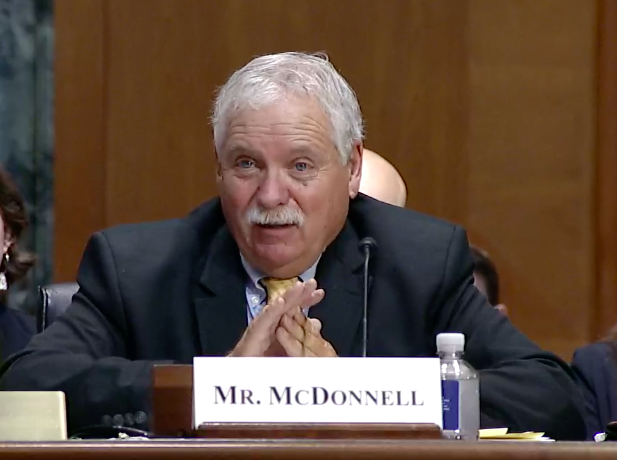
–The Hagstrom Report and USCA Director Leo McDonnell testimony