South 40 Beef, Mott, ND closed for now

Connie Sieh Groop Follow
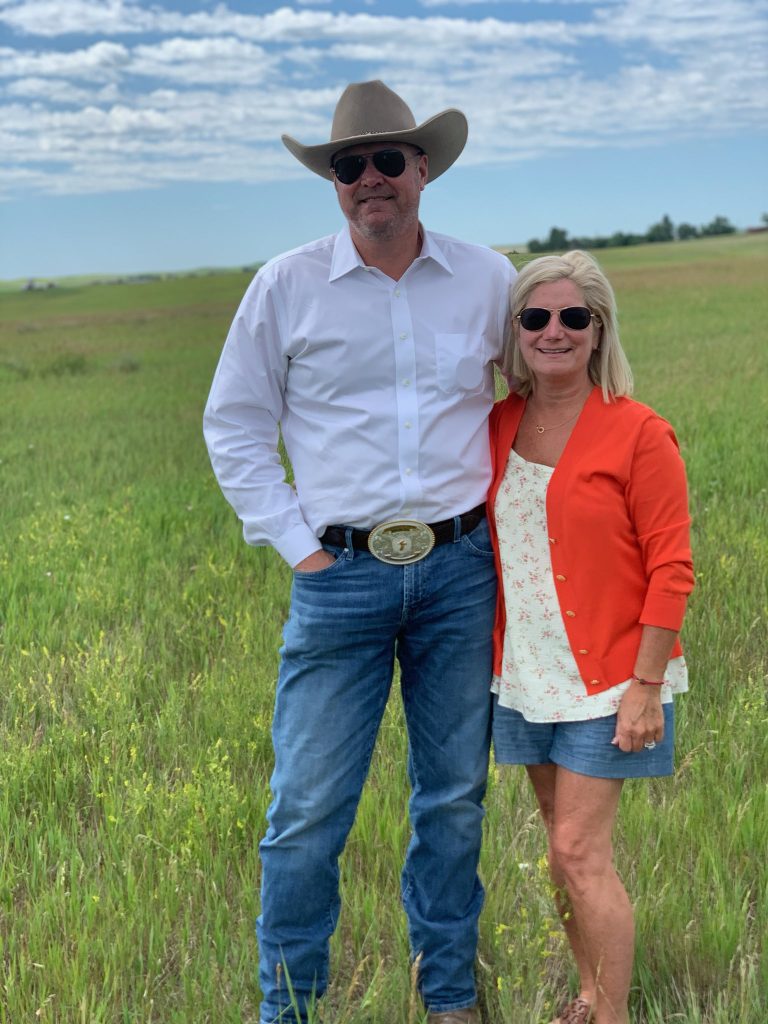
Owner looking at options for future
John Roswech admits that his lack of experience in several areas led to the shuttering of the South 40 Beef facility in Mott, ND. Reflecting on the last two years, John is analyzing the issues he faced before closing the doors on the plant. He’s also looking at ways that the business can start up again, either with the help of investors or by someone purchasing the business.
John is not walking away. For now, he is having multiple conversations with interested parties about reopening the plant. “The goal is to reopen. We are looking at different options between raising capital to get investors onboard to recalibrate and reopen South 40 Beef and we are also talking to potential buyers.”
The scope of the business will change. “The original business model was to sell beef through ecommerce,” John said. “My background is obviously not in ranching, but in sales and marketing and building software for retailers. The vision of my wife Kimberly and I was not to sell beef locally, but to sell North Dakota beef to those on the coasts who had more discretionary income in places like New York and California.”
The original plan was not to sell locally, but to sell directly to consumers on the east and west coasts. “In shipping beef from April 2021 to September 2021, I found that in that time frame, there were too many hops. We drove the beef from Mott to Dickinson by 4 p.m., and it had to be on a Monday or Tuesday. From there, it went on a plane to Fargo. Then it went on another plane to Nashville and shipped out through that hub to various locations.”
John said, “Shame on me for not realizing there were too many hops and too many things could go wrong with that many plane rides. We ended up with people with thawed meat or lost packages, and it didn’t work. Our premise to sell this great local beef produced in North Dakota to consumers ended up with me losing a lot of money.”
At that point, John said they pivoted to sell local beef to area restaurants and schools. “The schools were absolutely unbelievable to work with. We had a fantastic response from those in the North Dakota school system. We had contracts with Minot, Dickinson, Bismarck and 20 to 30 local schools. It was a profitable piece of the business. In this business, it’s about moving hamburger. Anyone can sell the middle of the cow; it’s how you sell the front and back. The schools allowed us to do that.”
Getting that beef to population centers provided another costly hurdle.
“North Dakota is a huge state; it’s 350 miles from Fargo to Beach. Finding reliable drivers was challenging, with a lot of miles put on the trucks every single day. To get to the population centers, you had to drive a lot. A round trip from Mott to Bismarck was 200 miles; from Mott to Fargo was 600 miles. We were trying to distribute beef locally, but it’s a sparsely populated state. I’d have to spend $1,000 to sell $10,000 worth of beef in Fargo. Traveling that many miles made it hard to make a profit in a business where there isn’t a lot of margin. With fuel costs sky high, the wear and tear on the trucks and an unreliable labor force, any profit was gone. Realizing that, I couldn’t find a reasonable way to distribute beef profitably in North Dakota or to places like Rapid City.”
He continued, “Another mistake I made, which I squarely own, is that I’m a sales and marketing guy. I’ve sold a lot of beef but I’m not an operations person. We had live cattle coming in and steaks going out. What goes on in between is all about manufacturing, it’s all about production. I was not used to managing manufacturing workers. I didn’t know how to get the most out of people in a 7 ½ hour day. That was the first and biggest mistake I made. On day one, I should have hired someone with a manufacturing and beef production background. In this type of operation, it’s all about yield with slim margins. If you waste two percent of the meat on an animal, that quickly adds up to a loss of $10,000 in yields and production. That’s your margin of error. If you don’t watch your yields and your production, it’s a recipe to go out of business like I did. That’s why we shuttered the doors on May 17.”
At South 40 Beef, the plant had 22 workers who processed 200 to 250 animals a month. All the equipment for meat processing remains in the building. When the facility reopens, there are some people willing to come back to work. John said they had a good local labor force who enjoyed working at South 40 Beef.
The ranching community has been phenomenal. He said, “They are very supportive, and I continue to have them reach out to me. The beef they raise is some of the best in the country. It’s a shame that we can’t get the plant to work out to export that great beef.”
Local input is welcome. “I want people to know that we are trying hard to reopen the plant. If folks are interested or have ideas, reach out to me. People can call or text 701-209-0204 or email john@south40beef.com.”
John is optimistic that things will come together so he can reopen the plant, even if it has another name. “We were trying to do too many things. We were servicing restaurants, schools, consumers and even exporting to China. I should know better. I need to concentrate on doing one thing well, not doing three or four things. When South 40 Beef reopens, it will focus on one thing. I’m not ready to share today what that might be.”