Homeland Spring 2024 | Flyover Whiskey

Ruth Nicolaus Follow
Nebraska farmer turns home-grown corn into whiskey
Customers can provide their own corn, if they have it, or Knobbe can provide it. Often customers request corn from a state where they have family ties. “They don’t always have their own corn but they would still like a custom batch from a local farmer.”
– Joe Knobbe
Nebraska is known for growing corn and beef.
And if Joe Knobbe has his way, it’ll be known for whiskey, too.
The thirty-two-year-old farmer is owner of Flyover Whiskey, a distillery located in tiny Monterey, Nebraska, just southwest of West Point.
A farmer and cattle producer, he raises corn and soybeans and runs a feedlot with his dad, Don Knobbe.
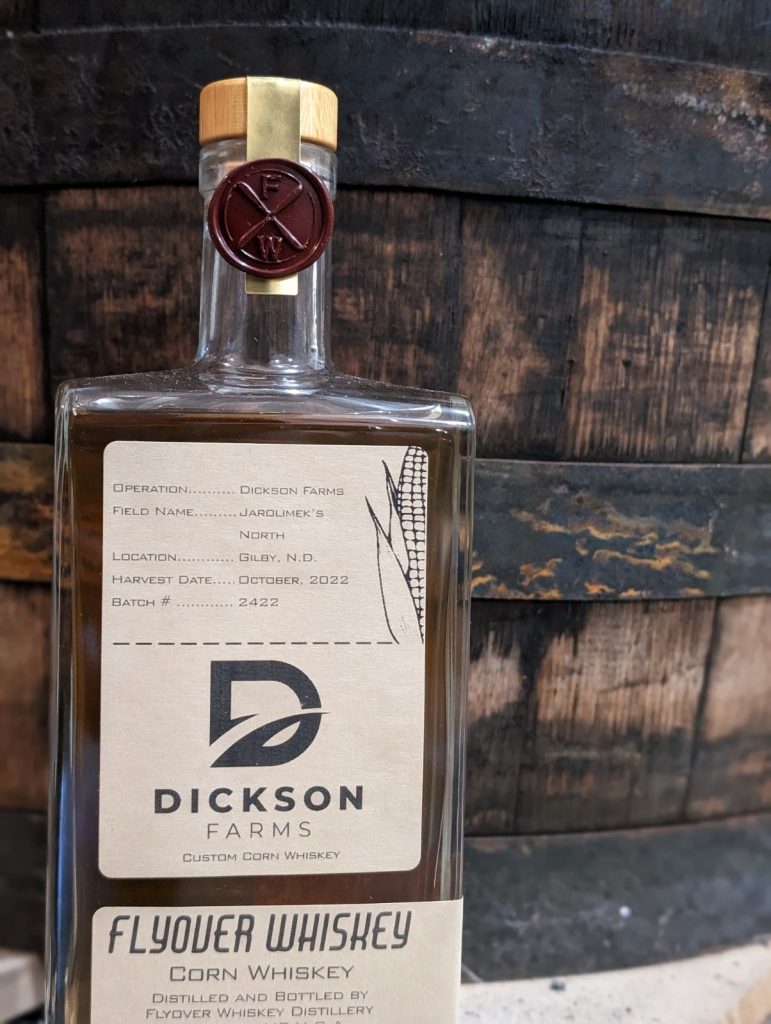
And he’s been making whiskey from corn raised in the Midwest for the past four years.
It all started when Knobbe, who loves to cook, threw some home-grown steaks on the grill and served them to his four siblings and parents, along with some whiskey he’d made, just for fun, at a holiday get-together.
“This is kind of good,” the siblings told Joe, of the whiskey. “You should make more of this.”
When his brother-in-law created a label with “Knobbe Farm” for one of the bottles, his interest was piqued.
“I thought ‘this is the coolest thing in the whole world to have our name on,'” he said. “Neighbors and other farmers would say, ‘you should use our corn,’ or ‘we have a cool farm picture you should use on the label,'” and the brainstorming began.
He learned as much as he could about distilling whiskey, got licensed, bought the equipment, and began his business.
The distillery and offices are in a repurposed 23 by 60 foot farrowing barn his mom used twenty years ago. His best friend, Devon Birchem, is official distiller, and Joe works on the business as well as the farming and feedlot operation.
The process is simple: Customers put in an order online. Flyover Whiskey mails them a bag for their corn (ten to twelve pounds is needed). The customer mails the corn to the distillery, and Knobbe provides the customer with the template to personalize the label.
Customers can provide their own corn, if they have it, or Knobbe can provide it. Often customers request corn from a state where they have family ties. “They don’t always have their own corn but they would still like a custom batch from a local farmer,” he said.
All sales are online; the whiskey is not sold in stores, and the entire operation is located on the farm. Flyover Whiskey ships anywhere in the nation through a third party shipper.
It takes two to three months to make a batch of whiskey, Knobbe said, but he notes that orders placed now will be fulfilled in eight to nine months, because of the waiting list.
Whiskey is often aged from two to four years for the big producers, but because of the small batch sizes at Flyover Whiskey, with smaller barrels, it ages much quicker. Knobbe and Birchem are better able to control quality because of the smaller amounts they make. “We’re not concerned about high quantity.”
The name comes from the what-seems derogatory term the rest of the country calls the Midwest and Great Plains. For Joe, the name is a snub for the people who don’t appreciate where he lives.
“We don’t mind being flyover country. We like it here. It’s good here.”
People often bring grains other than corn to have whiskey made. Knobbe has made whiskey from hard red winter wheat, milo, rye, “and every different corn you can think of: red, white, blue; every variety.”
The whiskey leads to stories, he said. “I like working with farmers. I am one. I get to meet people from all over the country. They want to take the trip (to Monterey, Nebraska) to bring corn or pick up whiskey.
“My dad, who is 74, is very hard working, very industrious, but he will stop and talk to everyone who comes to the farm. He loves it. It’s the coolest thing.”
-
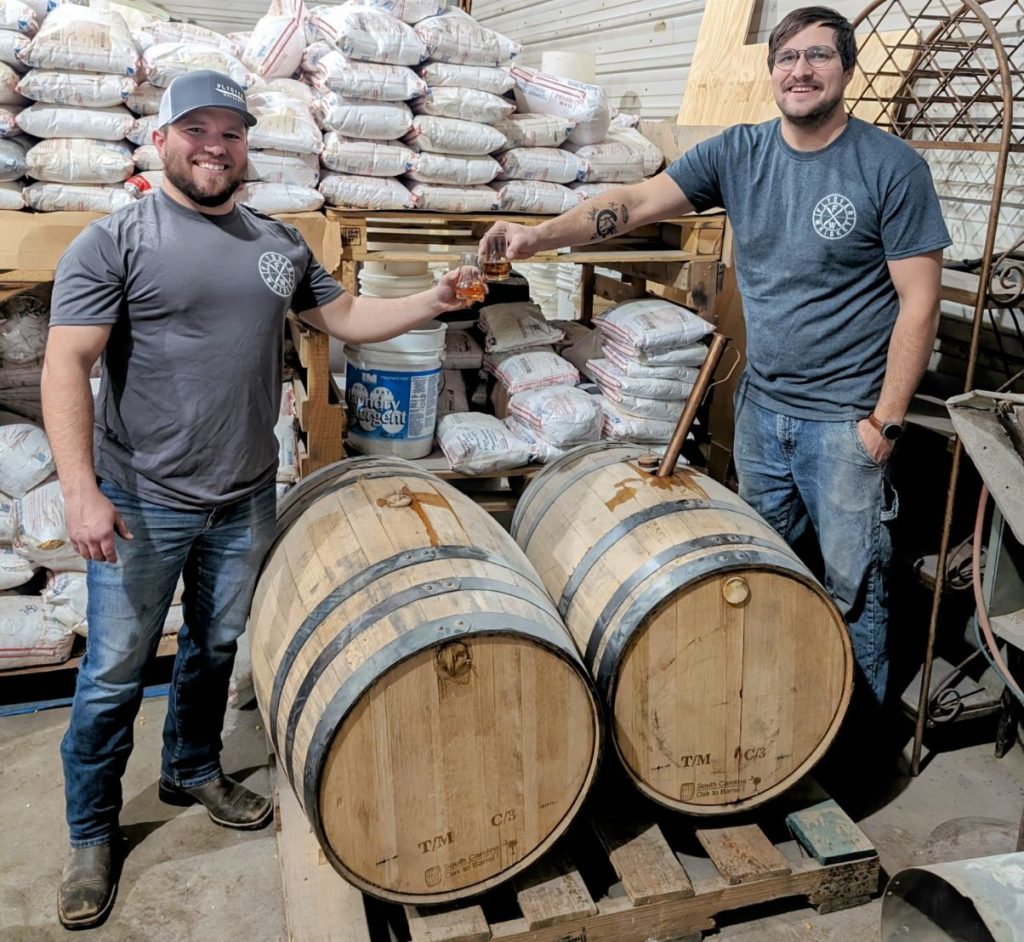
Joe Knobbe (on the left) and Devon Birchem sample their Flyover Whiskey. Photo courtesy Joe Knobbe.
-
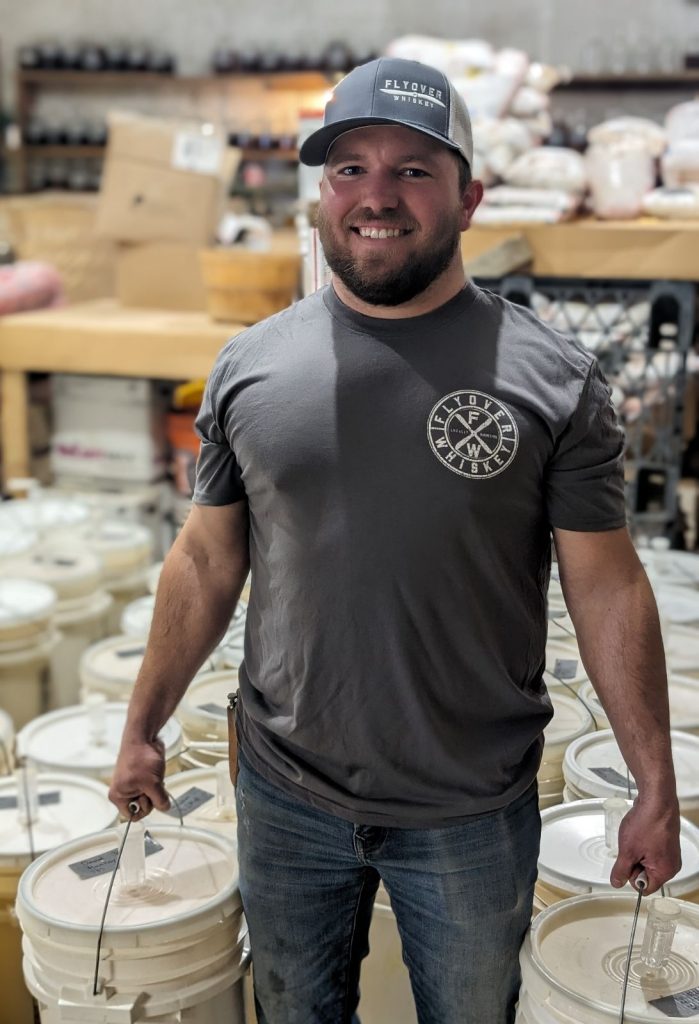
Knobbe at his distillery, located on the farm where he farms with his parents, Don and Dee. Photo courtesy Joe Knobbe.
-
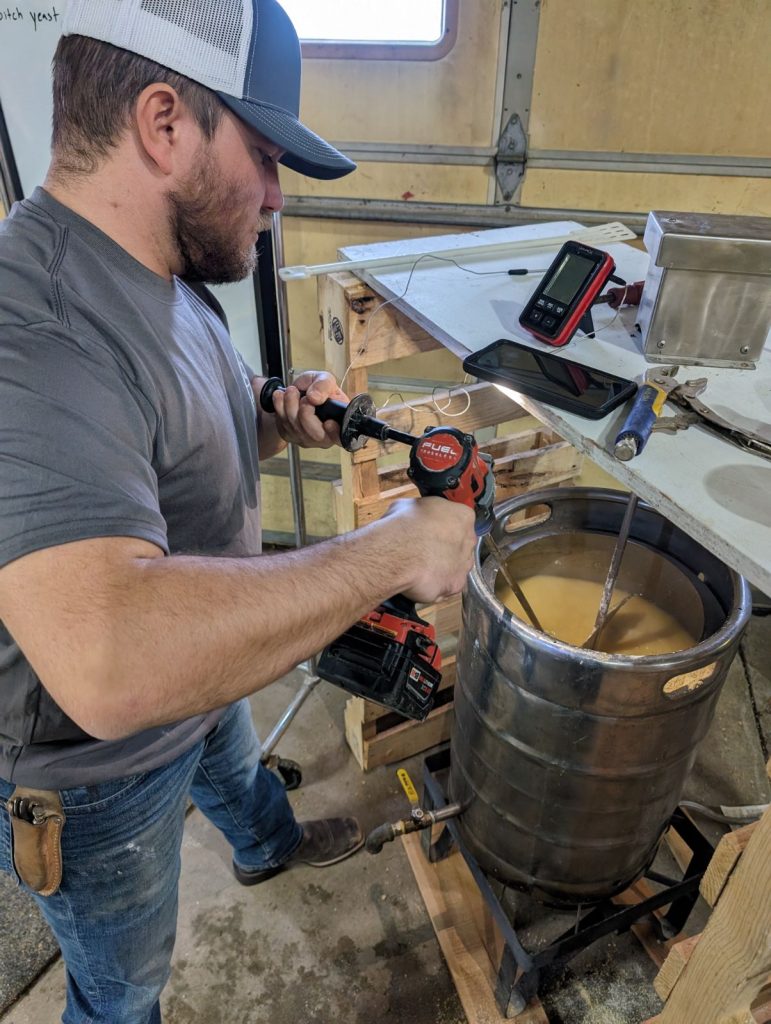
Knobbe stirs the heated corn mash as part of the mashing process. Photo courtesy Joe Knobbe.
-
-
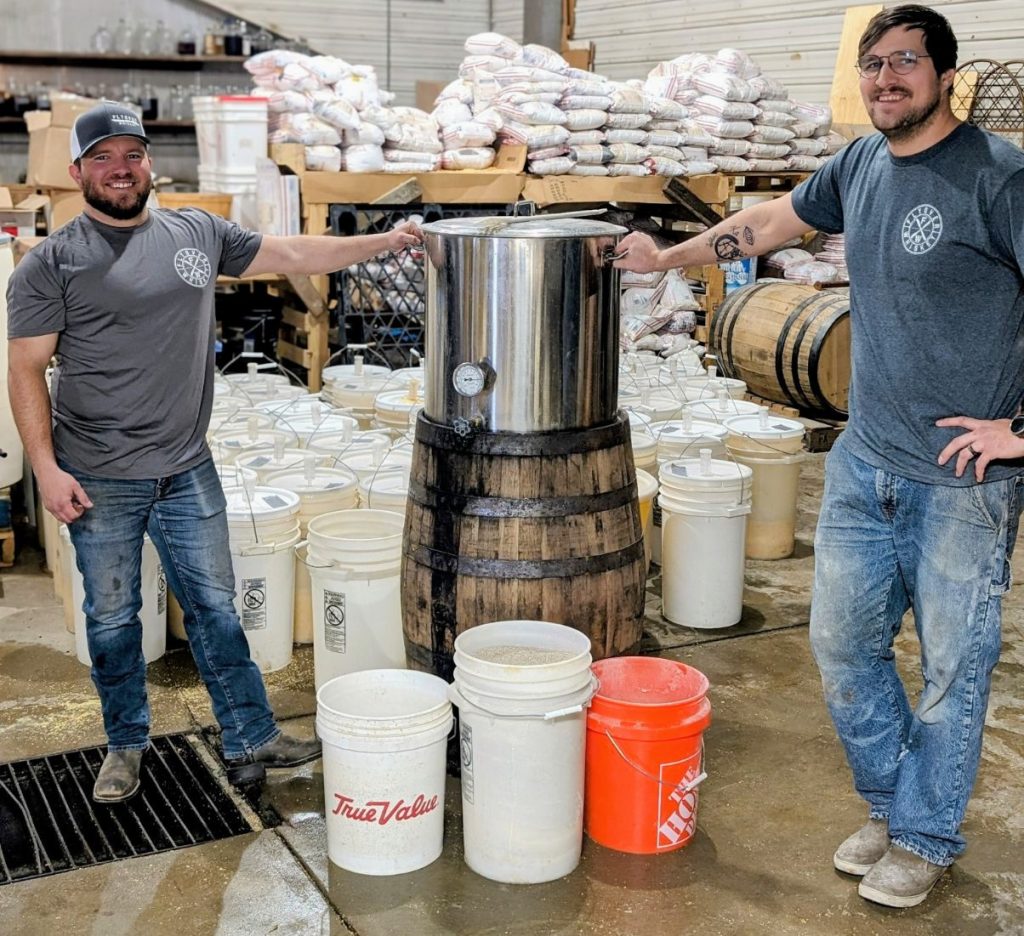
Joe (on the left) and Devon preparing to put the cooled mash into a fermentation bucket, also called a mash tun.
-
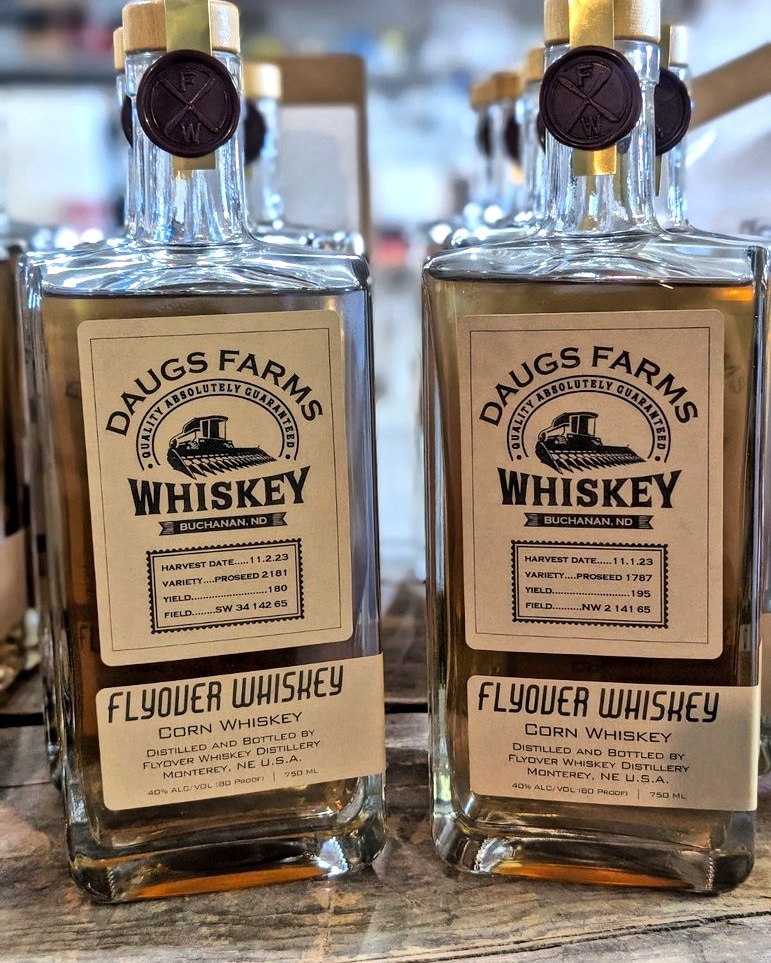
Flyover Whiskey is “more special than you can imagine,” said Joe Knobbe, owner. It’s a way to remember special times. Photo courtesy Joe Knobbe.
-
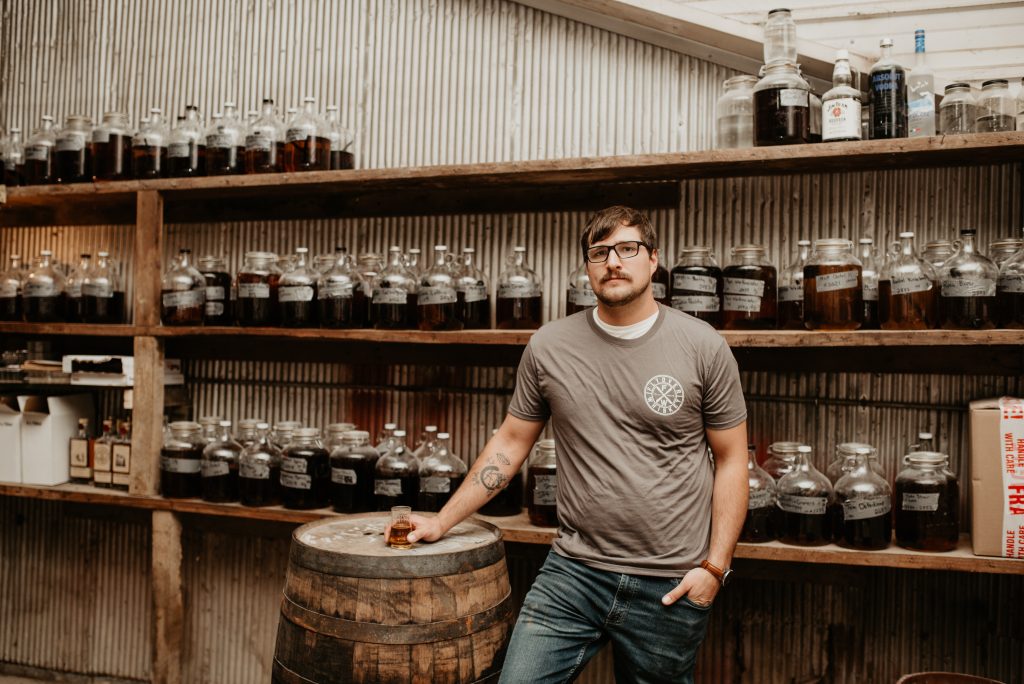
Devon at the distillery, which is on the Knobbe farm in a repurposed farrowing shed. Photo courtesy Joe Knobbe.
-
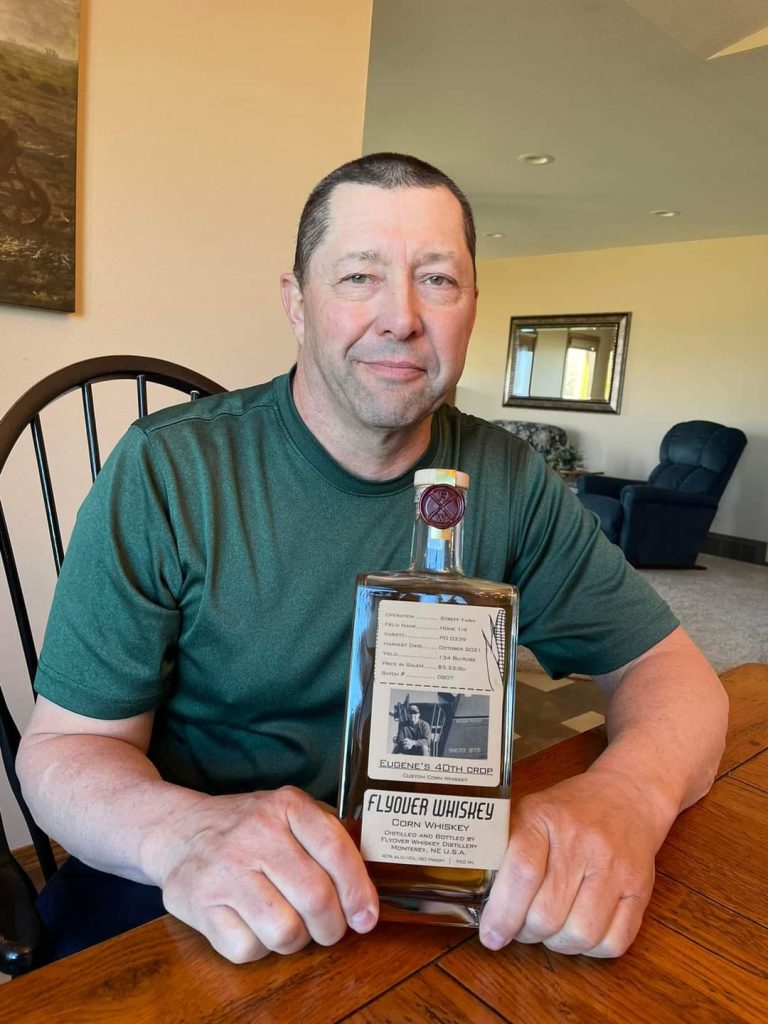
A customer celebrating forty years of farming with Flyover Whiskey grown from corn on the first ground he farmed when he started. Photo courtesy Joe Knobbe.
-
A satisfied customer with a bottle of Flyover Whiskey, made with corn from the Vossler Farm in Fillmore County, Nebraska. Photo courtesy R. Nicolaus
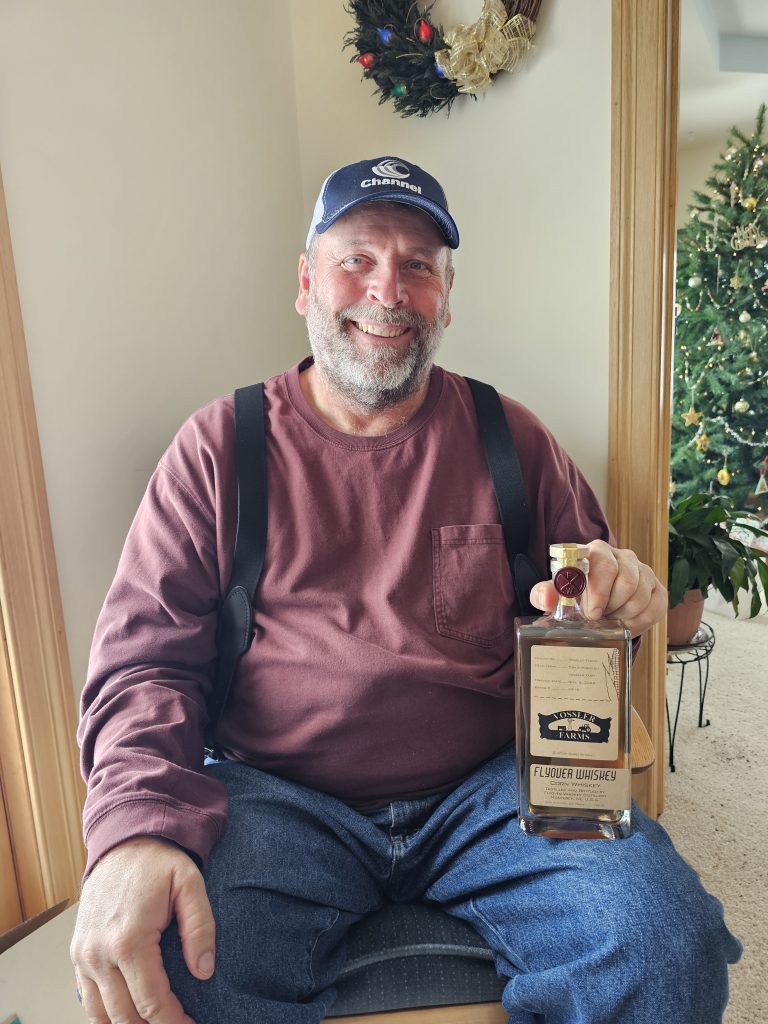
The finished product, with the farm name on the label, a logo or brand, and even a description of what field the corn was harvested in, can be a powerful thing, he said.
The whiskey “is definitely a testament to hard work, and wanting to share that harvest, something you made, with the people you love, with friends and family.”
The whiskey “is way more special than you can imagine,” Knobbe said. “It’s evolved into something more, something you can give as a gift, or put on your mantel, or celebrate a good year, or remember grandpa’s last harvest.
“It’s a lot more heartfelt than just whiskey.”