The Blizzard of ’66
-
Cattle in the Mobridge, South Dakota area, following the Blizzard of March 2-5, 1966. Thompson family | courtesy photo
Scott_thompson_cattle_blizzard_3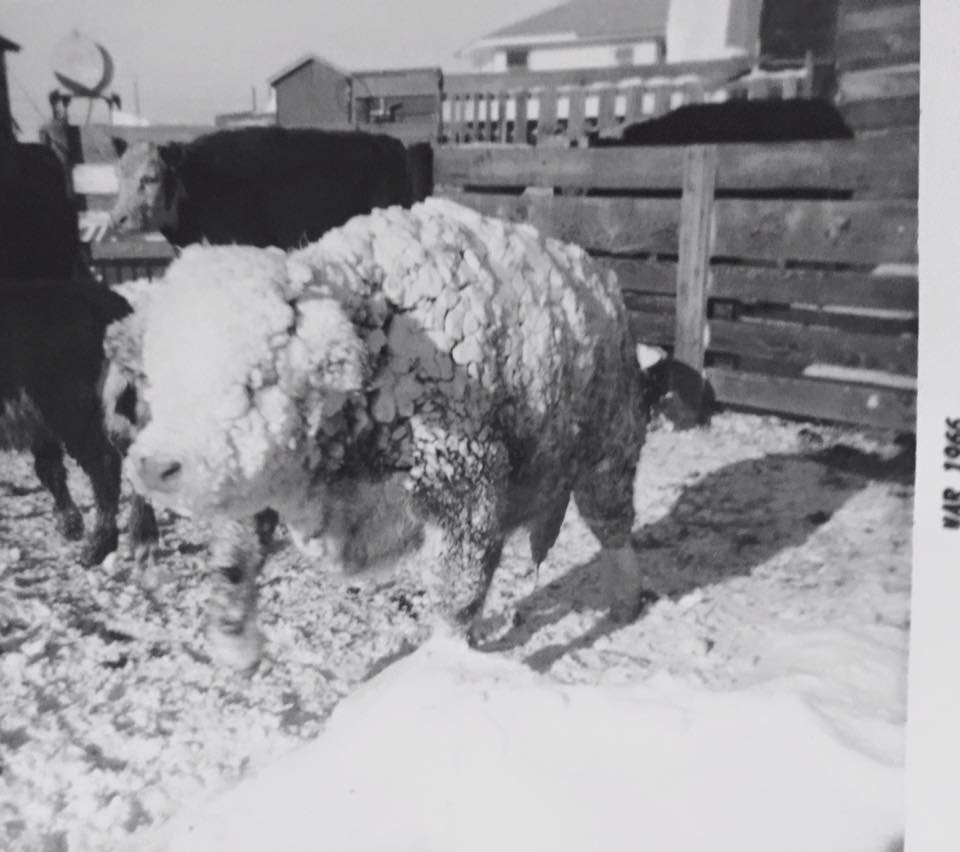
-
Cattle in the Mobridge, South Dakota area, following the Blizzard of March 2-5, 1966. Thompson family | courtesy photo
Scott_Thompson_cattle_blizzard_2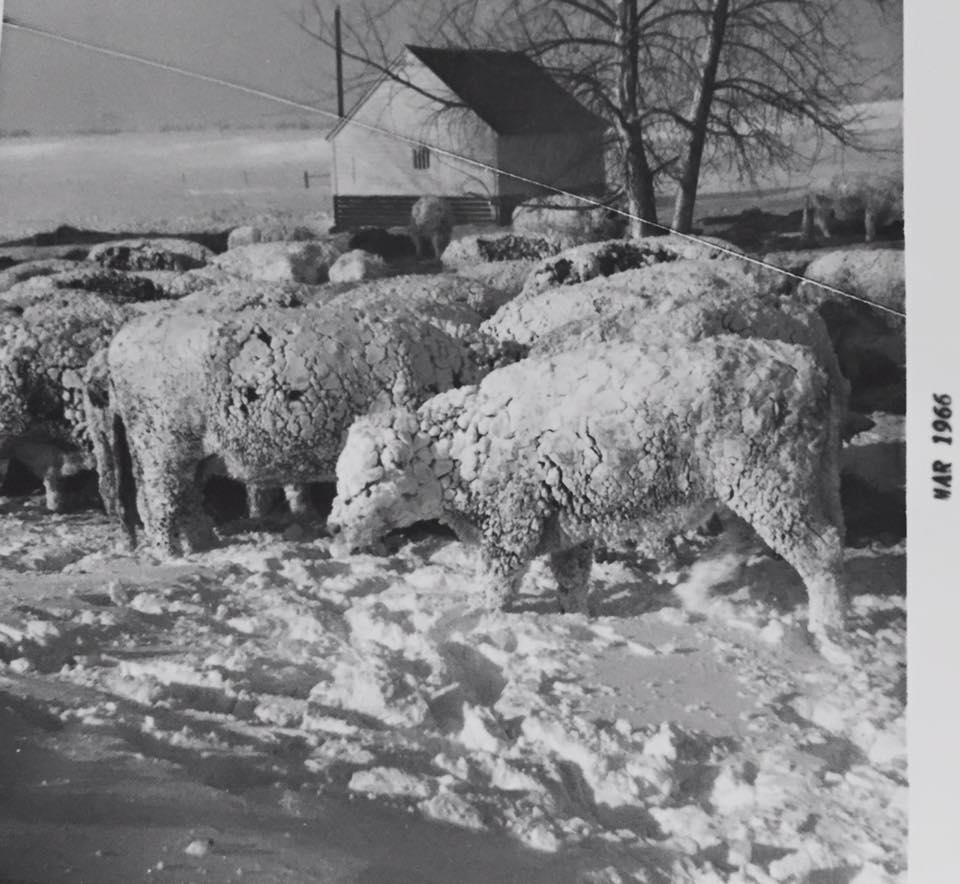
-
Cattle in the Mobridge, South Dakota area, following the Blizzard of March 2-5, 1966. Thompson family | courtesy photo
Scott_Thompson_cattle_blizzard_1966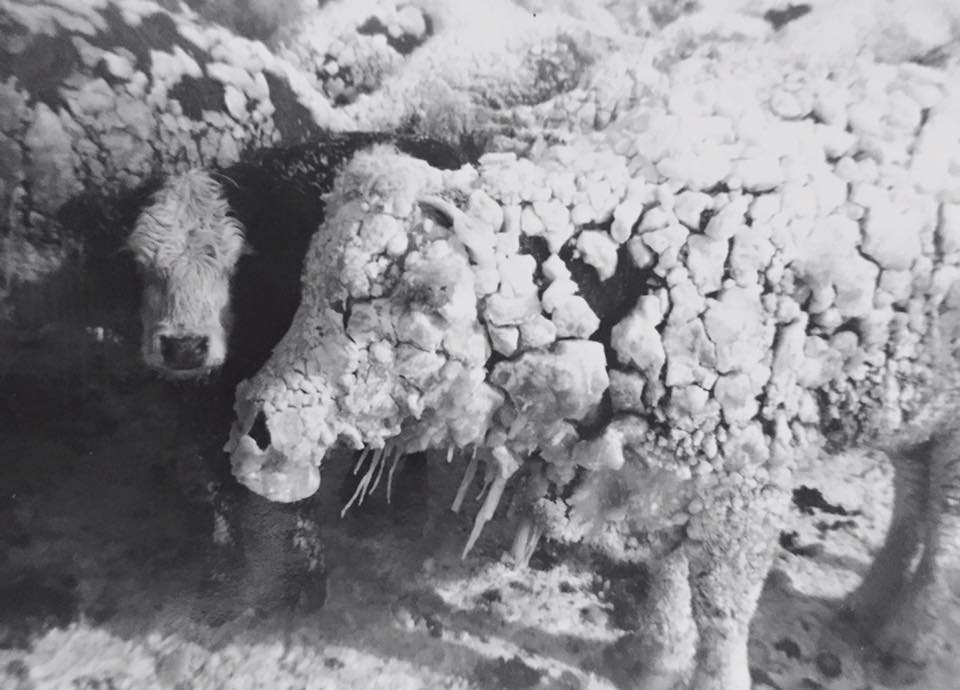
-
-
Dead cattle in the Mobridge, South Dakota area, following the Blizzard of March 2-5, 1966. The storm remains one of the deadliest in area history. Thompson family | courtesy photo
Scott_Thompson_cattle_blizzard_4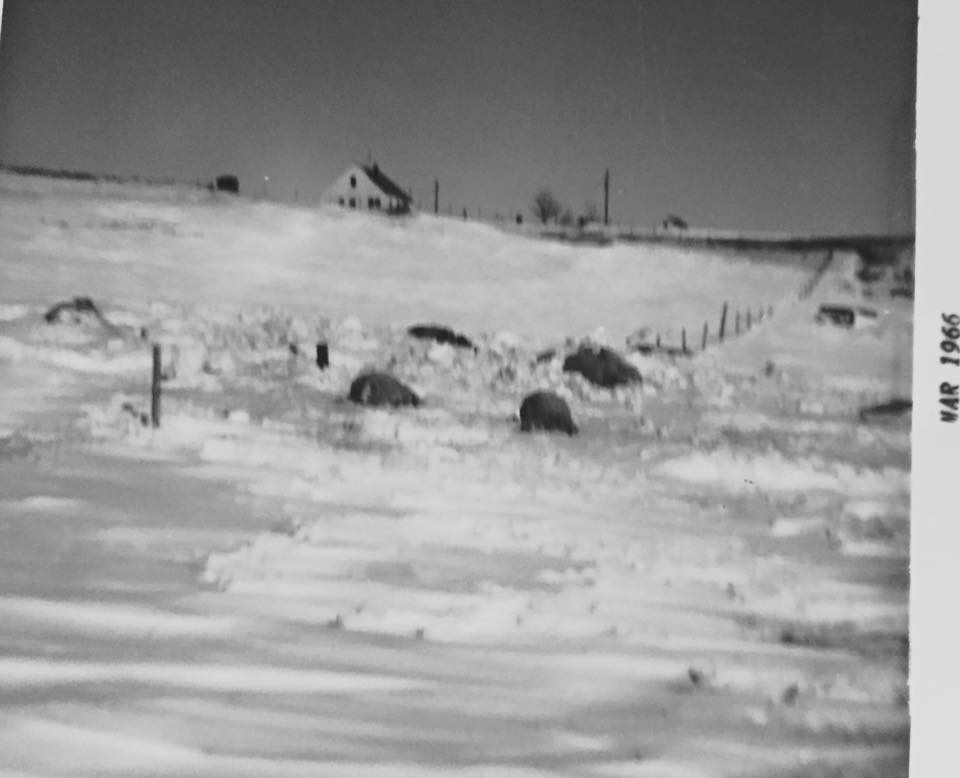
-
The iconic photo of North Dakota DOT employee, Bill Koch, standing next to a set of power lines, was taken by fellow ND DOT employee Ernest Feland on 9 March 1966. This photo and many others which were taken by Bill and Ernest in the days following the storm are available in the North Dakota State Historical Society and NOAA/NWS archives. NOAA/NWS | courtesy photo
wea0095817654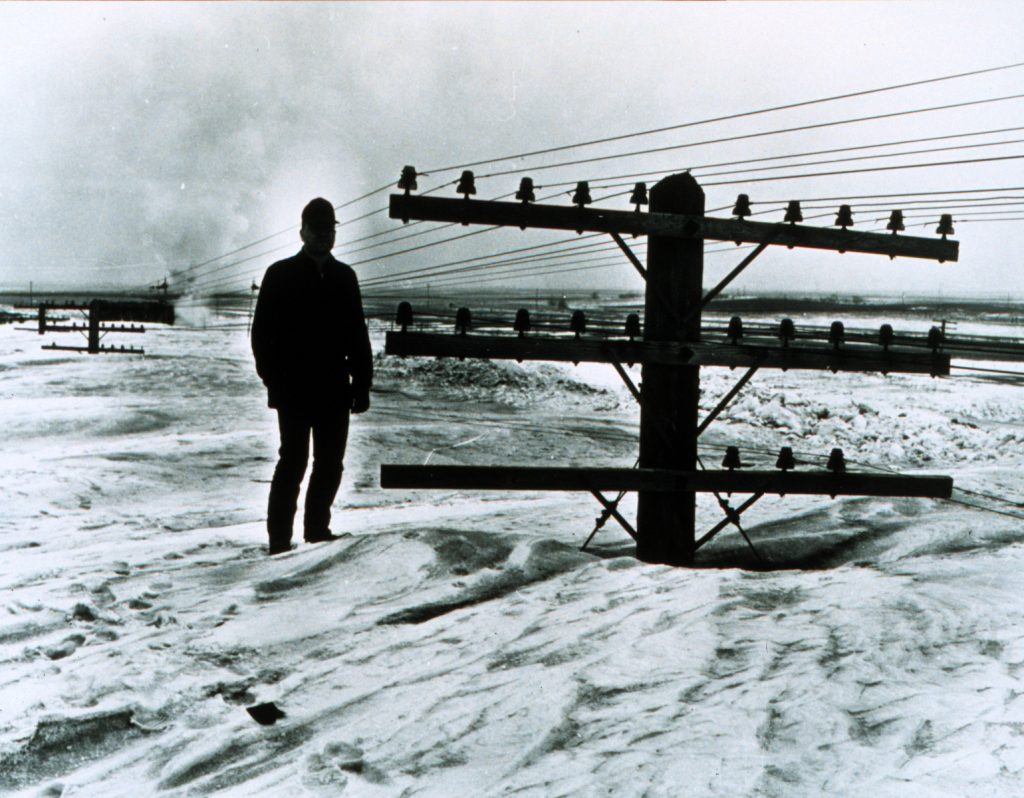
-
sfcmap_12AM_4Mar66_large_meteorological_map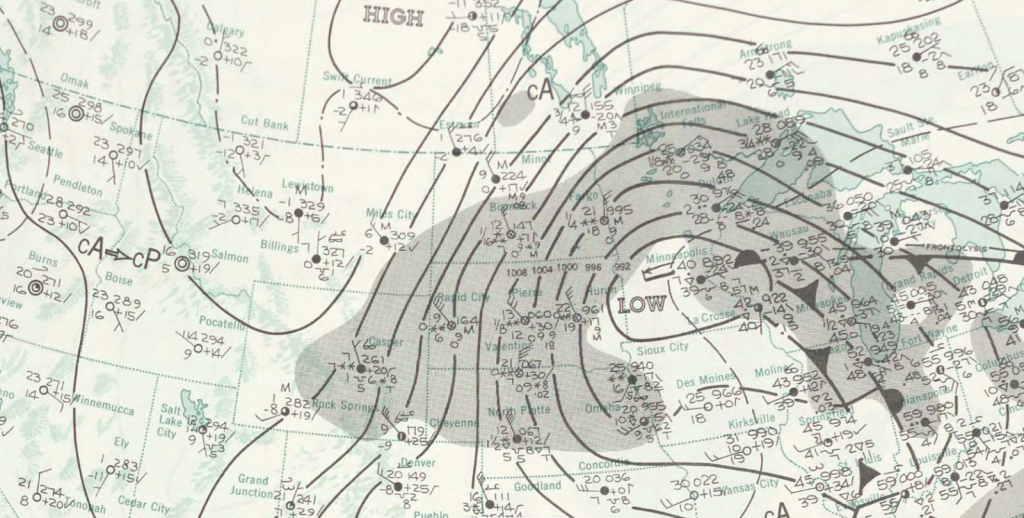
-
Snowfall totals across the Dakotas and Minnesota from the March 2-5, 1966. NOAA/NWS | courtesy image
NWS_blizzard_of_66_snowfall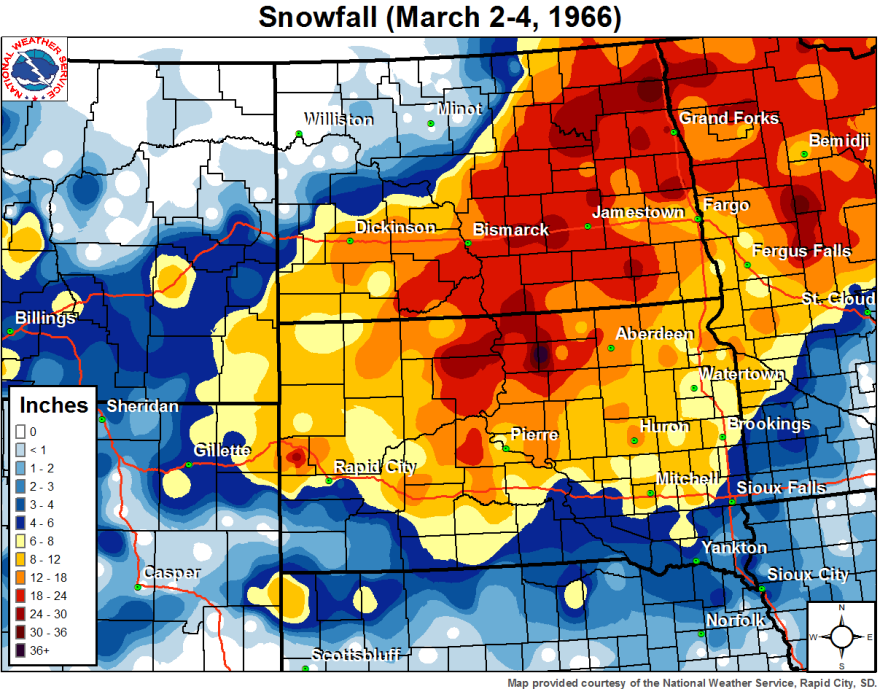
-
Thompson family | courtesy photo
49342276_2167019910011115_5423270245634670592_n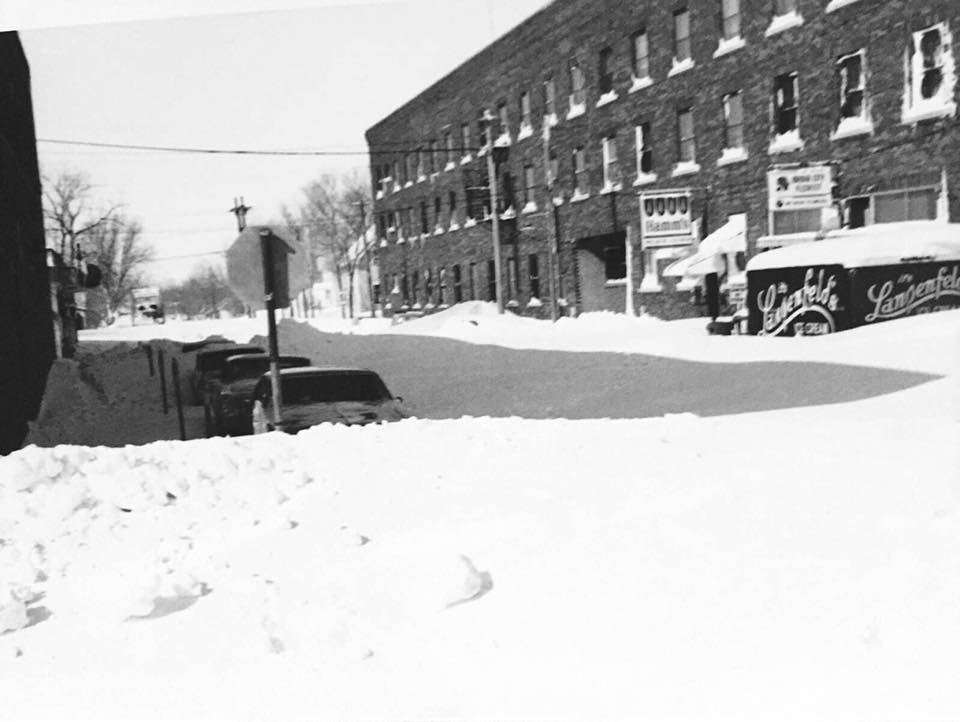
-
Thompson family | courtesy photo
49145514_2167019896677783_9109271922784337920_n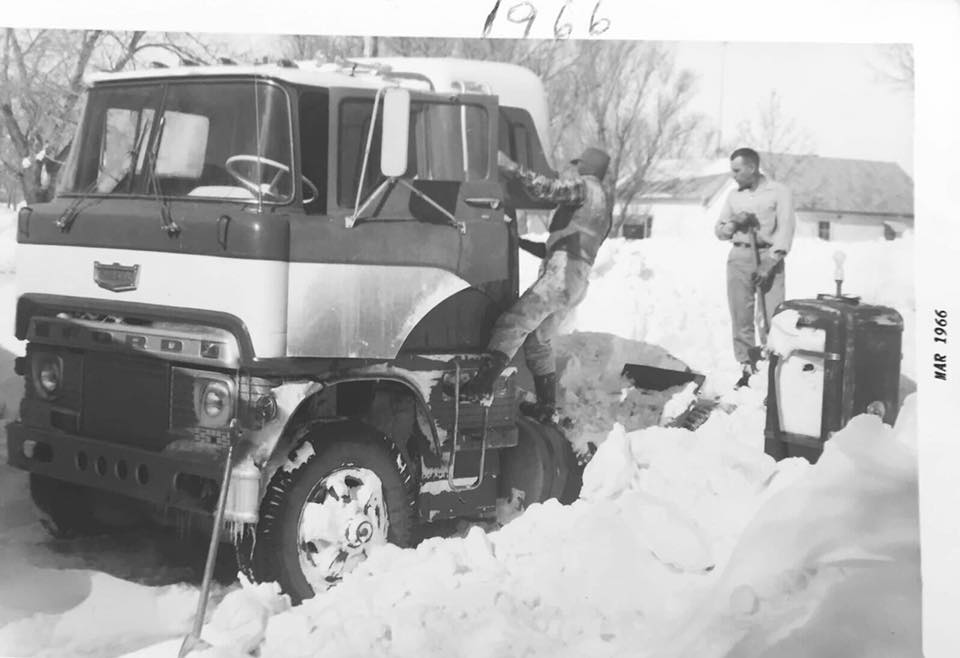
-
Thompson family | courtesy photo
49319496_2167019850011121_6931173219617472512_n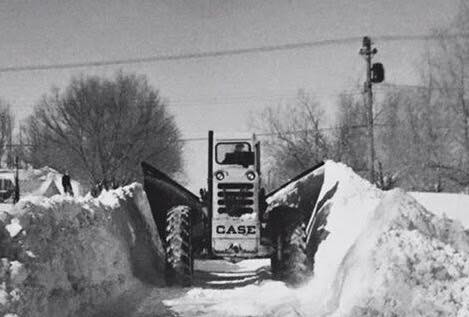
-
Thompson family | courtesy photo
49203473_2167019866677786_3353251602742902784_n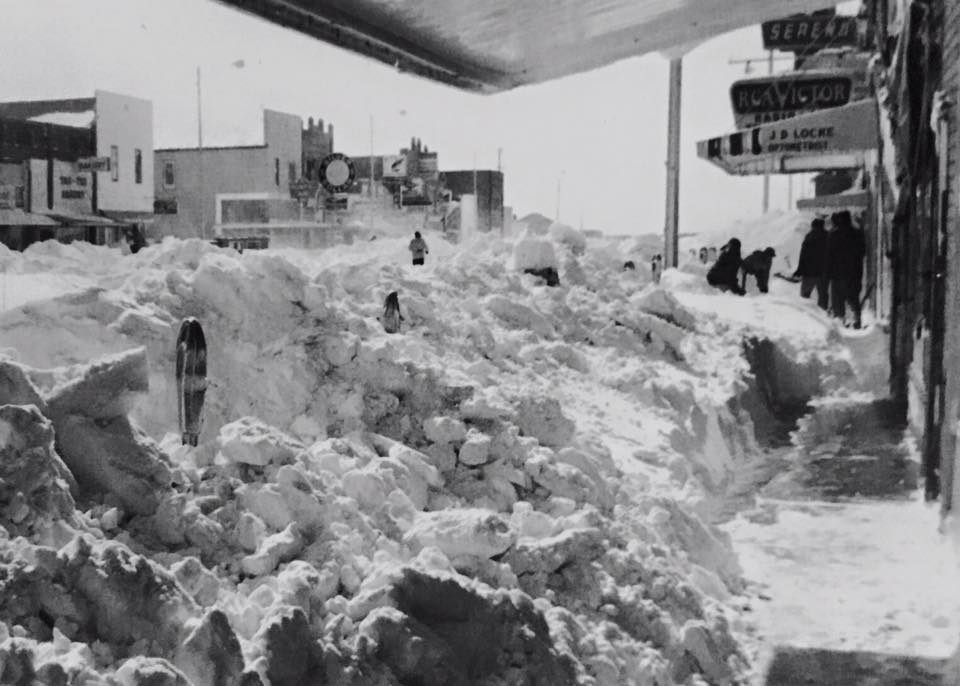
“Snow too deep, wind too strong to measure.”
This was the official weather report for Selby, South Dakota, written across three days: March 2-5, 1966, by weather recorder Albert Hoven. This year marks the 60th anniversary of one of the worst winter storms in local history: the “Blizzard of ’66.”
Time and memory are strange companions. Passing time places a growing distance between us and the past, yet a memory can seem to take us back in time in the blink of an eye, the sound of a voice, transported by a smell, a song, a place, a photograph. And a story? A story well- told can take us back in time and make real to us events beyond the limits of our lifetimes.
Many of my Grandpa Milton’s stories about the “good old days” were actually stories about some “not so good days” – most involving weather-related disasters. Surrounded by a couch full of grandkids, he made real to us in vivid detail the dust storms of the “dirty thirties.” His collection of tornado stories became family legend. And Grandpa’s tale of the “Blizzard of ’66” was an epic of survival, right up there with Laura Ingalls Wilder’s The Long Winter.
According to the National Weather Service, “March 2-5, 1966, is remembered as one of the worst winter storms ever documented in South Dakota.
“A large winter storm system slowly tracked across South Dakota, starting the 2nd and ending on the 5th, leaving many areas in utter disarray. The largest snow depth measured was 39 inches at Bowdle. Strong winds of 40-55 mph, with gusts over 70 mph, caused blowing snow, which reduced visibility to near-zero in some areas. Snow drifts of 30 ft were reported in sheltered areas, while open fields lay nearly bare. Livestock losses were heavy, including 50,000 cattle, 46,000 sheep, and 1,800 hogs. The largest livestock losses took place in the central and north-central part of the state. Heavy snow collapsed some structures and blocked many roads. The blizzard was rated as one of the most severe the state of South Dakota had ever seen.”
North Dakota and Minnesota were also hammered by the blizzard.
“Snow began in southern North Dakota during the morning of March 2, and spread northward into March 3. At Fargo, the visibility remained one quarter mile or less for over 30 consecutive hours from March 3-5, coinciding with strong northerly winds gusting frequently over 40 or 50 mph.
“Unlike many of the ‘killer blizzards’ which had previously occurred in the Northern Plains [Schoolhouse Blizzard, 11-12 Jan 1888; Armistice Day Blizzard, 11 Nov 1940; and Ides of March Blizzard, 14-15 Mar 1941], temperatures were relatively mild during much of this blizzard. At Fargo, temperatures held steady in the 20s during the start of the blizzard, falling into the teens during the height of the blizzard, when winds were strongest and visibility lowest. By the time the blizzard was winding down, temperatures had dropped into the single digits.
“At Grand Forks, 27.8 inches of snow was measured, with the heaviest snow falling on March 4, when 17.0 inches fell. For Grand Forks, the 17.0 inches on March 4 set a record for most snowfall during one calendar day, while the 27.8 inches for the blizzard as a whole still remains the heaviest event total snowfall on record in Grand Forks.
“Nine people were killed across North Dakota (5) and Minnesota (4) on account of the blizzard, another 10 people died in South Dakota. A few of the fatalities were from overexertion from shoveling snow, while other deaths occurred as a result of becoming disoriented while out in the treacherous blizzard conditions. In addition, tens of thousands of livestock perished in the storm.
“Transportation became impossible, with schools and businesses shut down across the area, and power and telephone service outages which lasted for many days.”
From a meteorological standpoint, “An intense ‘Colorado Low’ weather system lifted into eastern South Dakota early on March 3, 1966, and slowly progressed into central Minnesota on March 4. These type of weather systems are capable of producing very heavy precipitation, as abundant moisture can be transported northward ahead of the strong low pressure systems. With cold enough temperatures, heavy snow and very strong winds often occur to the northwest of the track of the low pressure system, as was the case with this blizzard,” states the National Weather Service.
I was not yet born in 1966. My dad and his brothers were still in grade school. My grandparents were building a house in Selby that year, but it was unfinished. When the storm rolled in, they were working on the new house. By late afternoon, the visibility was zero and drifts were piling up. It was difficult even to go the few blocks across town to get home in the storm. They got the car stuck in the process.
My grandparents, my dad and my two uncles, along with my great-grandparents weathered the blast. My great-grandpa, Ed Bossert, worked as the school janitor, and stayed at the school through the storm to keep the furnace going and prevent the water pipes from freezing and bursting.
After the power went out on March 3, food was warmed on the gas heater in the house. Grandpa warned us about the dangers of botulism from eating canned goods that had not been properly heated. In my mind’s eye, I am with them in that tiny house, in a small town, being buried in the snow driven by the fierce winds.
It seemed real to me as a child when I heard the story again and again. “Grandpa, tell us a story!” was a frequent request. Now that I have lived through a few blizzards, does my own memory mix with the recollection of Grandpa’s story? I have watched drifts pile high outside my house. I have paced the floor and thought of the cattle I could not get to, day after day, as Grandpa did for those three days sixty years ago.
When the storm passed, Grandpa walked to the farm. Two miles is not so far, but a two-mile walk into the wind, growing colder in the wake of a winter storm? That is not for the fainthearted. The drifts in town were as high as the houses, shelterbelts were filled to the treetops. The fields were bare, and blowing dirt had combined with the blowing snow.
The cattle had found shelter in the big North Barn and had survived the storm. But the drift had built up in front of the barn so high they could not get to feed and water.
“They had chewed the hair off each other’s tails,” Grandpa told us. “When cattle don’t have feed for several days, their stomachs shut down. If you feed them too much right away, or too rich feed, they will die.”
Grandpa gave the calves some of the poorest hay he had, little by little, once he got them dug out of the barn. And he pulled them through.
“Thousands of cattle died. They drifted into dams and drowned. They piled up in fence corners and died. The snow covered their faces and the steam from their breath turned to ice, and they suffocated from their own breath freezing over their nostrils,” Grandpa told us.
“It looked like the drifts were part of the roof of the elementary school,” my Uncle John said. “We walked up the drift [on the south side] to the roof and it was the same on the north side going down.”
“Dad walked out to the farm after the storm subsided,” Uncle Jerry said. “I remember him coming back into town with the tractor, telling us ‘all the fields are completely clear.’ He went back and forth to the farm with the loader for a number of days.”
School was closed for a week or more. Drifts on the streets were 15 feet high.
“It was unbelievable: loaders would drive by and you couldn’t see them,” Uncle Jerry said.
“The school was buried: you could start walking at the street and walk right over the top of the elementary building. Grandpa Bossert was the custodian and he had to go up there to keep things running. Everyone else got time off to play, but we – John and Jim and I – had to go to school and help Grandpa. We didn’t get a break. After the snow melted we had to go help him mop up the water that ran into the school.”
“The big question was, how much did it snow? The wind was so strong and the drifts were so high it was hard to tell,” my Uncle Jerry said.
“When Dad took over the weather observer job from Albert Hoven, he was always curious as to what Mr. Hoven wrote in the books about the Blizzard of ’66. Eventually he found the record: for three days, all he saw written across the page was ‘snow too deep, wind too strong to measure.'”
This is the record written across the span of several states, driven home by 70 mile per hour winds, killing livestock, claiming human lives, and decimating buildings, barns and infrastructure. And this is my story, not because I experienced it firsthand, but because it was given to me by my Grandpa, Milton Stiegelmeier. Am I remembering it exactly as he told it? Probably not, as now my memory has been enhanced by my own experience and also blurred by passing time. But as I reach back into the recesses of remembrance, of this I am certain: when Grandpa shared his stories, he shared himself with us. The memory of his story of the Blizzard of ’66 is strong. But even stronger than the image of blinding snow and impassable drifts is the memory of how it felt to be there beside him, safe and sound and loved. And this knowledge will carry a person through even the worst of storms life and this wild land can turn loose on us.