Weishaar family’s legacy spans ranching, rodeo, and the sale ring
Lynn Weishaar’s interest in auctioneering started early. He recalls, “I was always pretty intrigued with auctioneering, and you know, as a small boy, I’d go down to the barn and tie my dog in the hay mow and auction calves off to it.” That old dog was the first in a long line of buyers.
As a teenager, Lynn worked at Lemmon Livestock in Lemmon, South Dakota, with World-Champion Auctioneer Bob Schnell. Lynn said, “I was dinking around auctioneering out back, and Bob Schnell came out and said, ‘Who was doing that?’ and everybody pointed at me. Pretty soon, he said, ‘Well, let’s do something about that.'” And do something they did.
Lynn made his way to auctioneering school in Billings, Mont., and got his start back in Lemmon selling hogs. Lynn said, “One thing led to the next, and a friend of mine, Dr. Ron Ford and Roger Hirsch had a horse sale, and they decided to hire me.” The rest is history. Since then, Lynn has become a trusted friend and auctioneer for countless producers.
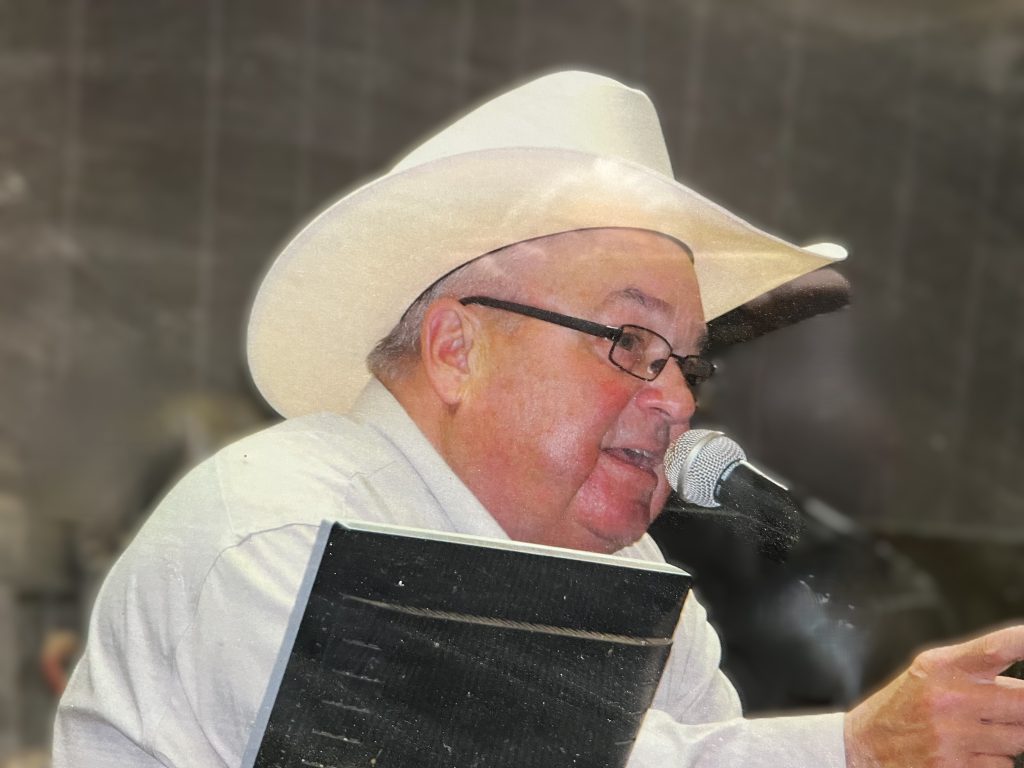
For almost 60 years, Lynn could be found on the block in a sale barn somewhere. At the peak of his career, he was selling up to 300 sales a year. Lynn said, “I’ve sold a sale basically in every state west of the Mississippi, except New Mexico and Washington, and a couple in Canada.”
Lynn was hired by the Black Hills Stock Show to sell bulls and later took on the horse sale with his Pedigree Man, John Johnson, as well. Lynn has always enjoyed the Stock Show, primarily for the people. He said, “It’s just really been a highlight to get to meet so many different folks.” The way the market has changed over the years has been something to witness. He said, “It’s just amazing how things have progressed as far as money.” Lynn recalls, “The one year we hit a $2,000 average on the horses, and people said that’s impossible. Now they’re averaging 17, 18, 19, $20,000.”
Over the years, Lynn has ridden the highs and lows of the livestock markets. He recalls, “When I first started auctioneering, I sold a lot of feeder calves, and I’m talking quite a lot of them, from 18 to 30 cents a pound. So we’ve seen quite a turnaround there.” It hasn’t just been the feeder cattle that have soared to new heights either. Lynn said, “I can remember at the Stock Show in Rapid City, I sold a Grand Champion Hereford bull for $975, and the owner was just elatedly happy.” With the market the way it is now, that seems hard to fathom.
Lynn has been a pioneer in the industry in many ways. Years ago, he started a consignment horse sale in McIntosh, South Dakota — one of the first of its kind. At the time, he thought, “People have to see these horses work and perform.” To Lynn, it was “something that needed to be done with the industry.” Lynn’s wife, Connie, said, “It was something where people could sit there and watch [the horses] and trust what they saw.”
In the past couple of years, Lynn has started to slow down a bit, stepping down from most of the Stock Show sales and the sale barns. He said, “I miss that a lot. There are several sales I’ve sold for four generations for the same family. . . When you look back and say you sold for the same person for basically 50 years plus, it’s something.”
Lynn can still be found selling bull sales and quite a few horses, as well as the Hereford sale at the Stock Show. In May and June, he looks forward to making three trips to Cody, Wyo., for three different types of sales that are “really unique and fun,” one of them being a mule sale. Despite “slowing down,” he still has plenty to do and enjoys every minute of it.
Lynn knows that his success wouldn’t have been possible if not for Connie, who tended the cattle and their kids, Seth and Jodi, while he was away from the ranch. He said, “This would have been totally impossible if it wouldn’t have been for family and especially Connie. You don’t understand how hard she’s worked at this.”
Connie, who Lynn says, “pulled her share of calves, fed a lot of cows, and spent a lot of cold days in the saddle,” was born into a ranching family, so to her, “it was kind of second nature.” Sharing the ranch life with her children was not without its share of hard work and early mornings, but they bonded over the work they shared. Connie laughs as she recalls, “A couple of times the kids and I got to town a little bit late, and the principal wasn’t really happy with us, but if something was wrong, we had to get that figured out before we left for school.”
Connie, too, made her rounds through the industry, serving as a director on the Black Hills Stock Show and Central States Fair board for several years and being chosen to judge the Miss Rodeo America Pageant in 1999. Quite literally, she and Lynn always had many irons in the fire. The two are ranchers to their core — never shirking a task or shying away from difficult work. Living four miles down a dirt road, the Weishaars would sometimes find their road impassable, so Lynn would park his car at the neighbors, ride his horse to the car, and be off to work, while Connie kept the ranch going at home — rain, snow, wind, or shine. The pair’s passion for ranching and strong work ethic were passed on to their children from an early age.
Their daughter, Jodi, moved to Texas after a successful college rodeo career at South Dakota State University, to work as a marketing assistant for Equibrand and later as the marketing manager for Western Horseman. She also launched the first online magazine for cowgirls called Fringe before putting the project on the back burner to deal with an unexpected health issue. Jodi inherited her mother’s tenacity, battling Lyme disease for eight years, while also being a wife to husband Rob and mom to their two daughters, before pursuing additional professional opportunities. Combining her love for fashion and the ranching and rodeo lifestyle, Fringe Scarves was born. The company’s motto — “Stick your neck out and tie one on” — is a reminder to live every day fearlessly, enjoying all life’s adventures.
Lynn and Connie’s eldest, Seth, inevitably grew up around livestock sales. At the time, it wasn’t necessarily his passion, as he recalls many times when he “probably would rather have been anywhere else than a sale barn,” but he always had an interest in ranching, roping, and training horses. He attended Dickinson State and South Dakota State University, studying Ag Business and Commercial Economics and competing on the rodeo team, winning the team roping at the College National Finals Rodeo one year.
Midway through college, Seth decided to go to auctioneering school and got started doing ring service, which he really enjoyed. He began selling here and there at sale barns throughout western South Dakota and decided to pursue auctioneering fulltime. He said, “Eventually I just thought, you know, I’m going to take that leap and see how that goes.” These days, Seth is one of the premier auctioneers in the Midwest, selling at countless bull and horse sales, the Black Hills Stock Show, and also being a co-owner of Bowman Livestock Marketing in Bowman, North Dakota.
For Seth, being able to sell both horses and cattle threads the needle between two of his passions. He said, “I think there’s two passions. There’s a season for everything, and I’m really excited for the bull sale season, especially when the market is as good as it is now. It’s just exciting to see agriculture flourish the way it has. . . Agriculture is getting its due right now.”
Seth knows his way around good cattle and good horses, which is often to his customers’ benefit. Seth said, “One helps the other. Once in a while you visit with some of these guys at horse sales that say ‘Hey, we sell our calves. We’re looking for where to buy some bulls,’ and vice versa. Some guys that sell bulls go, ‘We could really use a good ranch horse.'”
To Seth, auctioneering is hardly work — it’s a passion. The burdensome part has always been leaving his wife, Nicole, and their three children to do it. He said, “They don’t pay me to auctioneer. They basically pay me to leave my family. From the time I’m there doing the sales, I love it. I’d do it for nothing just because you love what you do.”
Echoing his father, when asked the best part about what he does, without any hesitation, he said, “Oh, it’s the people.” As the years have gone on, he said, “I’ve kind of grown with their family. I started working for their dad, and then they’ve taken over, and I’m working with them now, and they’ve got kids that are coming up that I can see starting to work with some of them. As an auctioneer, I get to see several generations in some of these families come and bring new ideas. It’s neat to see.”
Seth’s wife, Nicole, is a ranch wife extraordinaire. For over 20 years, she has been keeping things together at home while Seth is on the road. Seth said, “My wife’s really resilient. . . I couldn’t be doing what I’m doing without my wife. She’s been a great mother and [has gotten] all the balance of everything done.” Their three children have also taken to the lifestyle, having great success in the rodeo arena.
For a young kid who sometimes wanted to be “anywhere else than a sale barn,” it is hard to imagine him making his living any other way. Seth knows that his parent’s example has shaped him. Of his father, he said, “I’m super proud of him,” recognizing the work he put in to serve his customers and his family well. Seth said, “It’s humbling, you know, because when you’re working so hard, it’s tough to get everything done, and he tried to get everything done and not only be a good auctioneer, but a good dad. And that’s tough to do because there’s a lot of give and take.” Similarly, when asked about what it means to share a profession with his son, Lynn said, “Oh, it’s everything.”
For the Weishaar family, auctioneering, ranching, and rodeo have been threads woven through generations. From Lynn’s first mock auctions as a boy to Seth carrying the chant into sale rings across the Midwest, their story is one of commitment to people as much as to livestock. Markets rise and fall, miles are logged, and seasons change, but the values that built the Weishaar legacy are steady. In an industry defined by relationships, the Weishaars have proven that the strongest legacy isn’t measured in record prices or number of sales, but in the generations of families they’ve served and the friendships they’ve made along the way.
-
Dan,Jerry, Lynn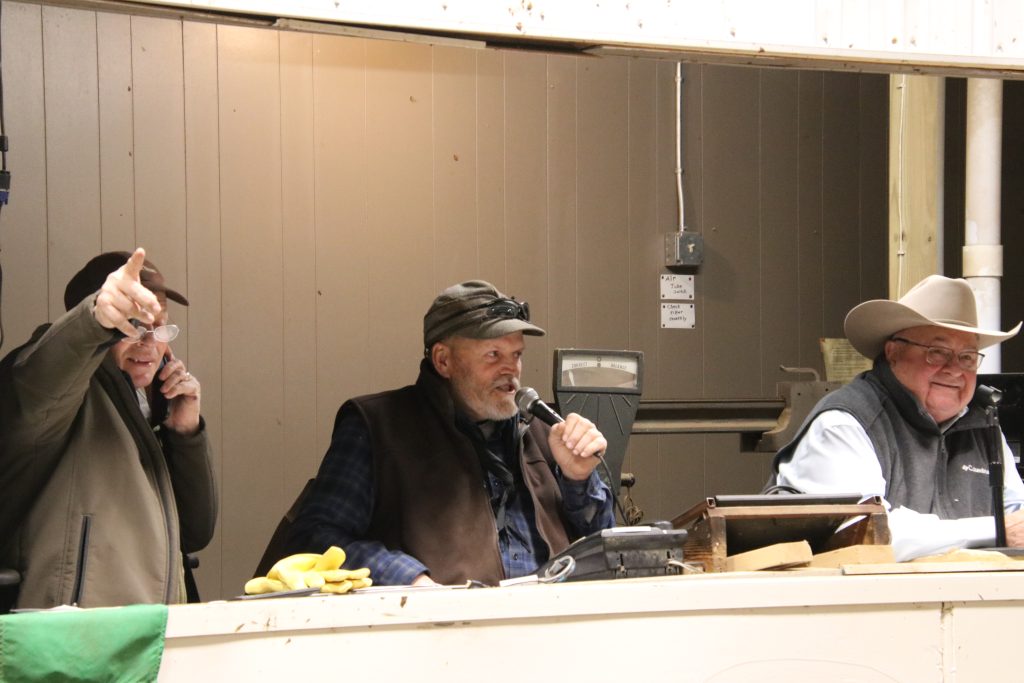
-
Lynn & Rodney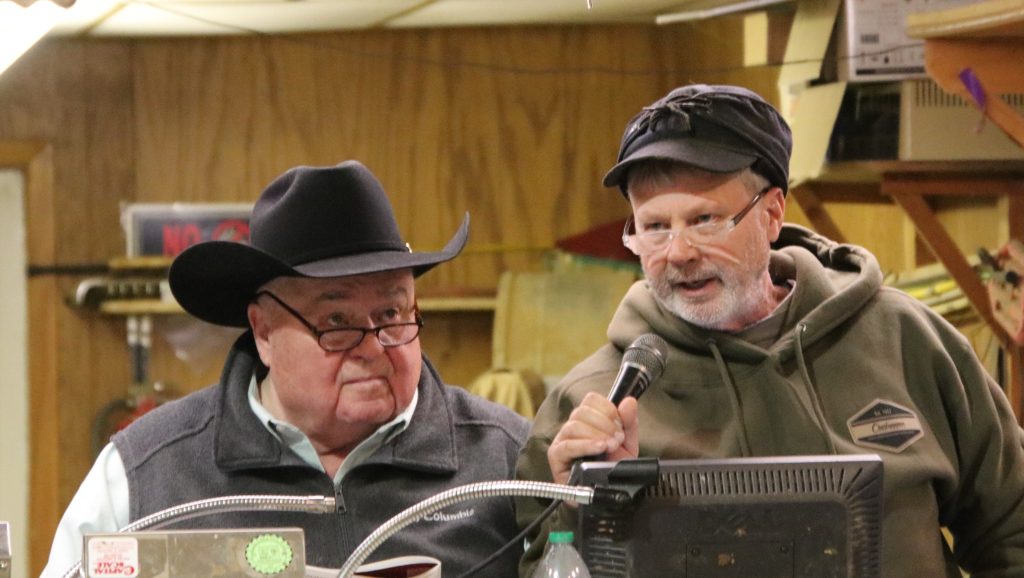
-
_MG_1279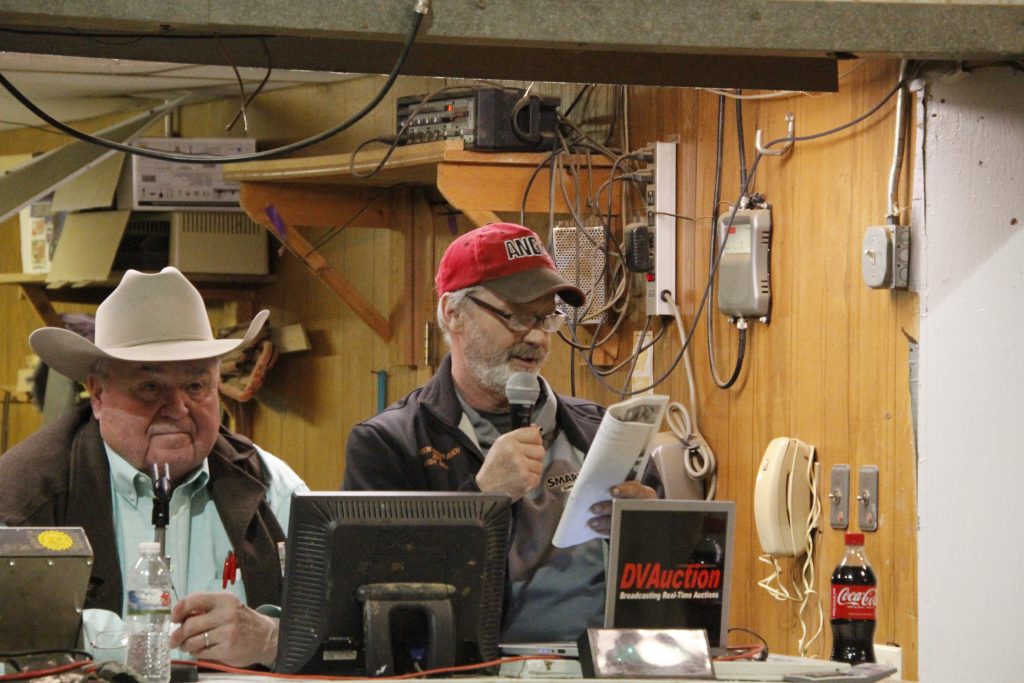
-
-
Lynn, Connie, Lou Mel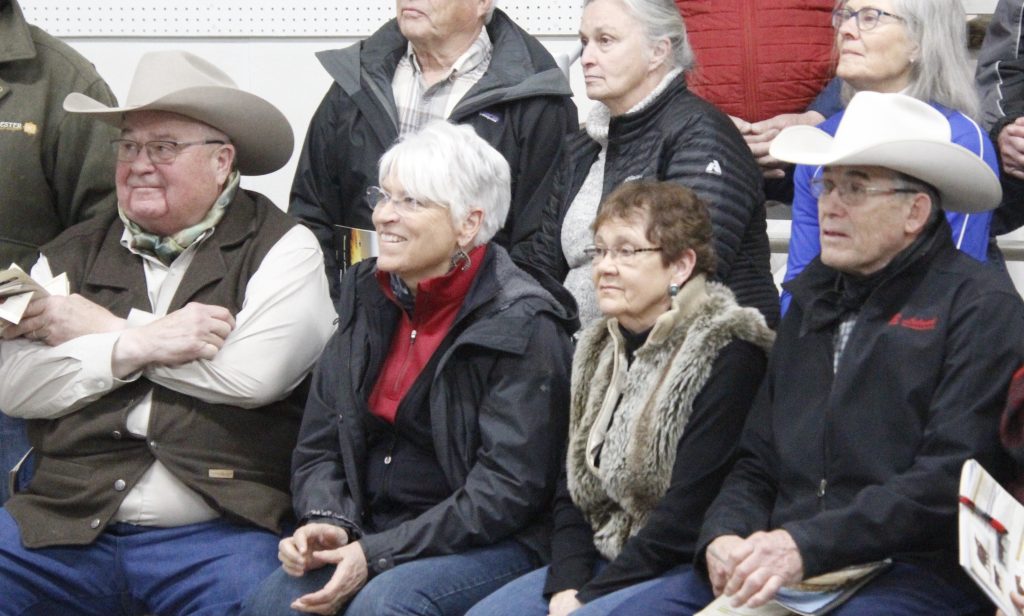
-
Steve & Lynn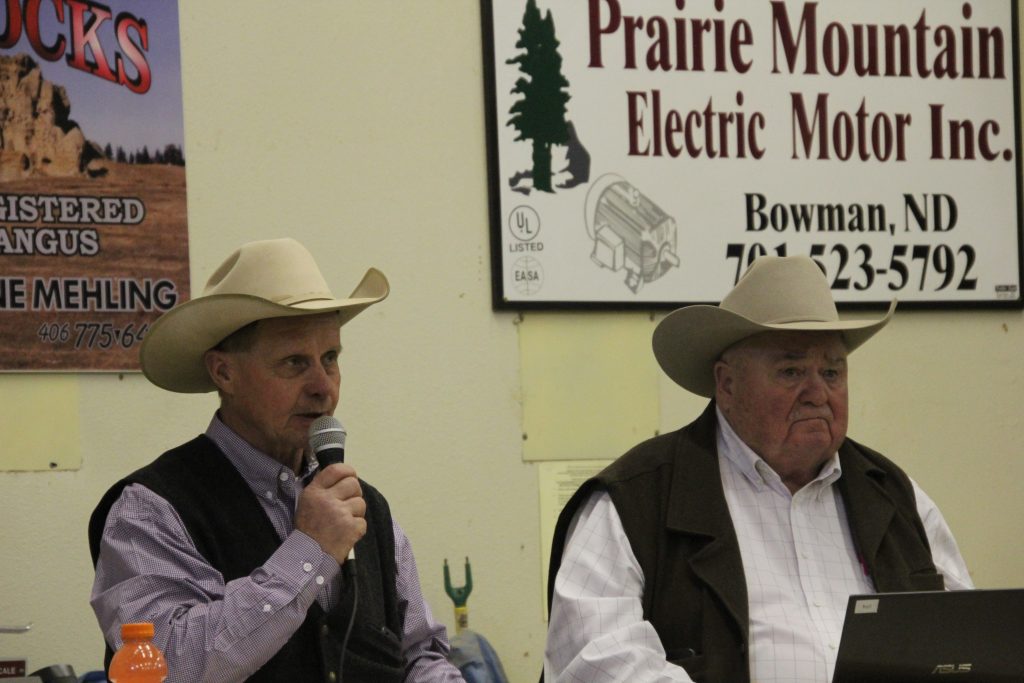
-
Cory & Lynn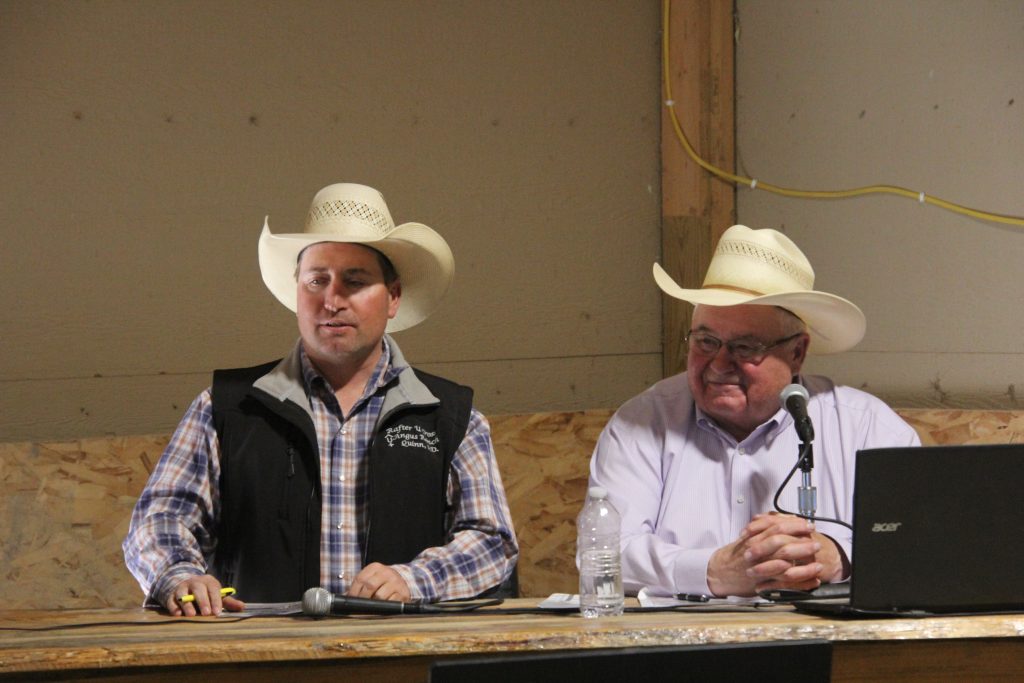
-
Lynn Weishaar, right, a longtime auctioneer and rancher, sits with his wife, Connie, who helped manage the ranch and raise their family while he worked sales across the country. | Courtesy photo
Weishaar1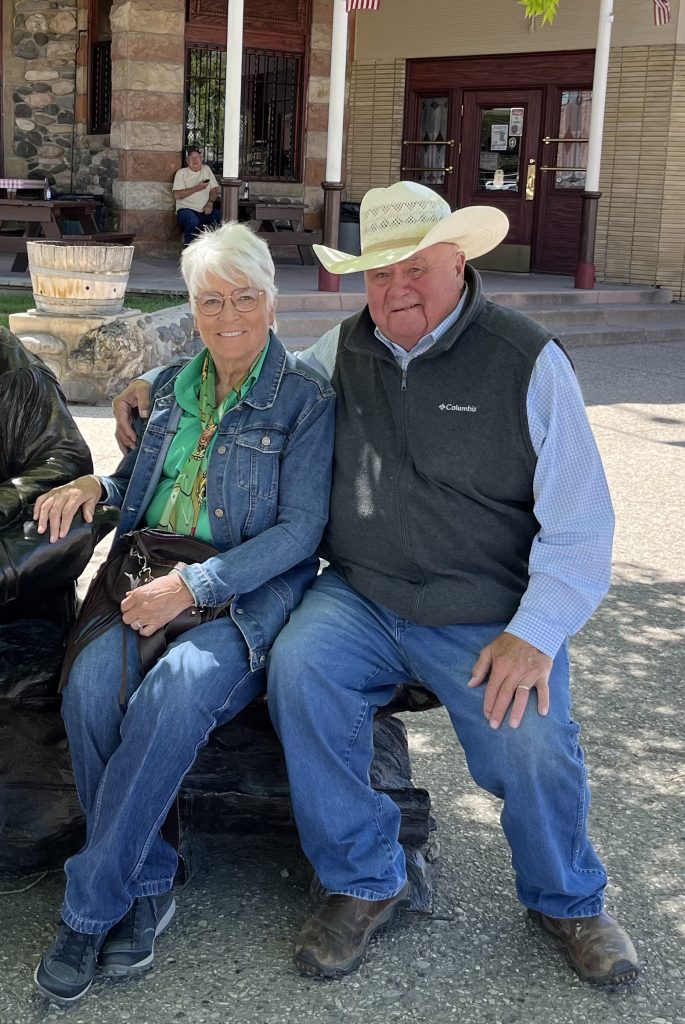
-
There were very few days when Connie could not be found horseback, seeing to it that the ranch work was done. | courtesy photo
Weishaar3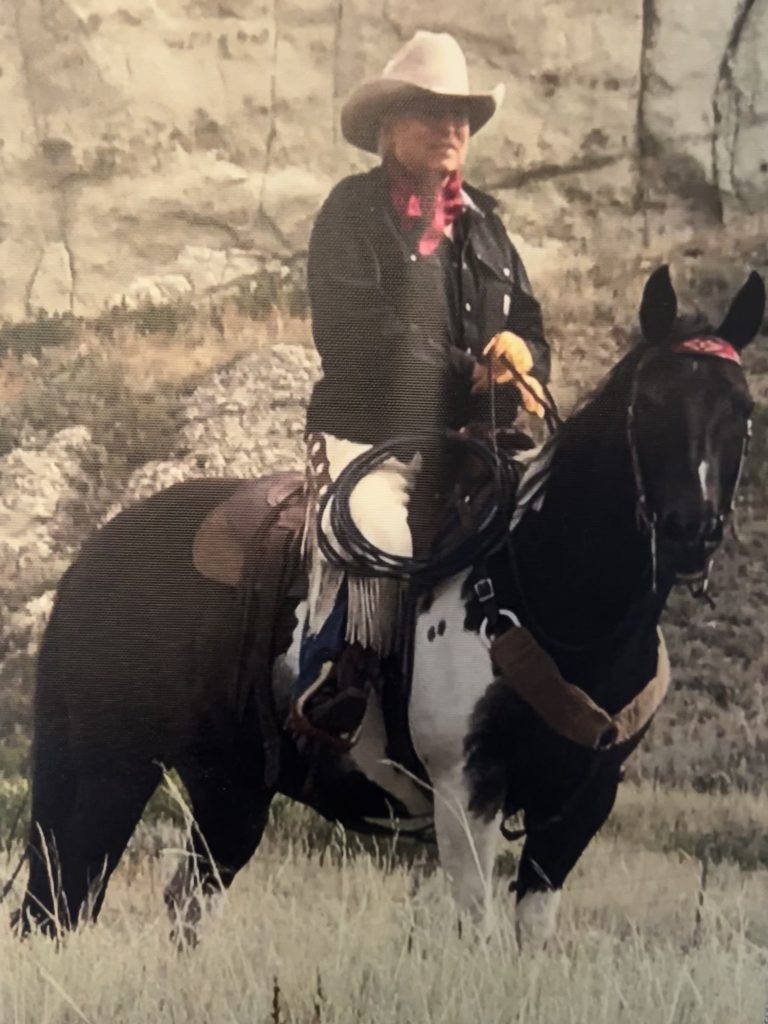
-
From January to May, Seth Weishaar is likely to be found on the block at a bull sale somewhere. | PC Rainy Butte Photography, Jess Johnson
Weishaar4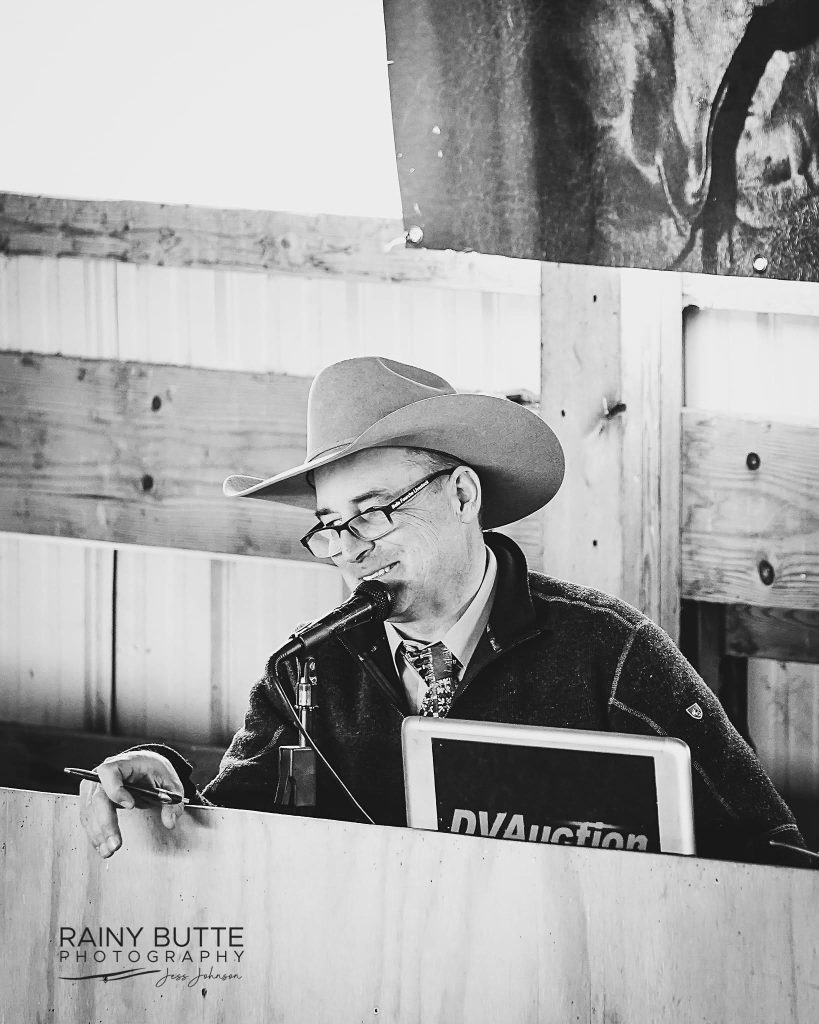
-
Lynn and Connie Weishaar are very proud of their children and grandchildren. | courtesy photo
Weishaar5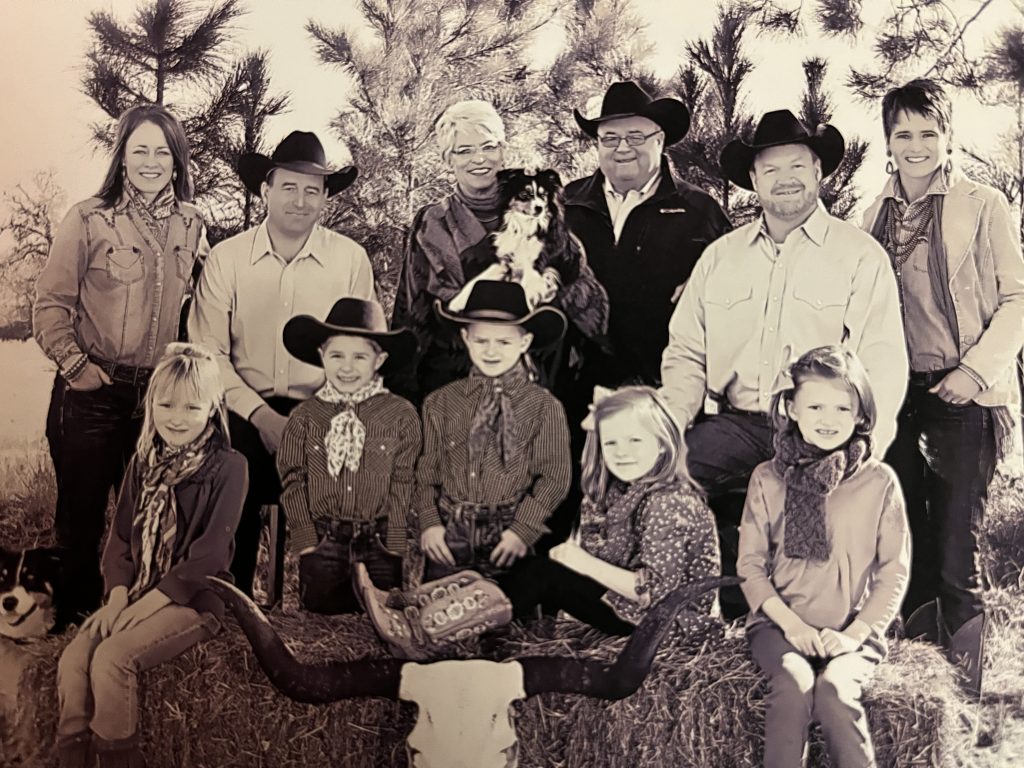
-
Weishaar2 a 2