Wool prices may be on the uptick
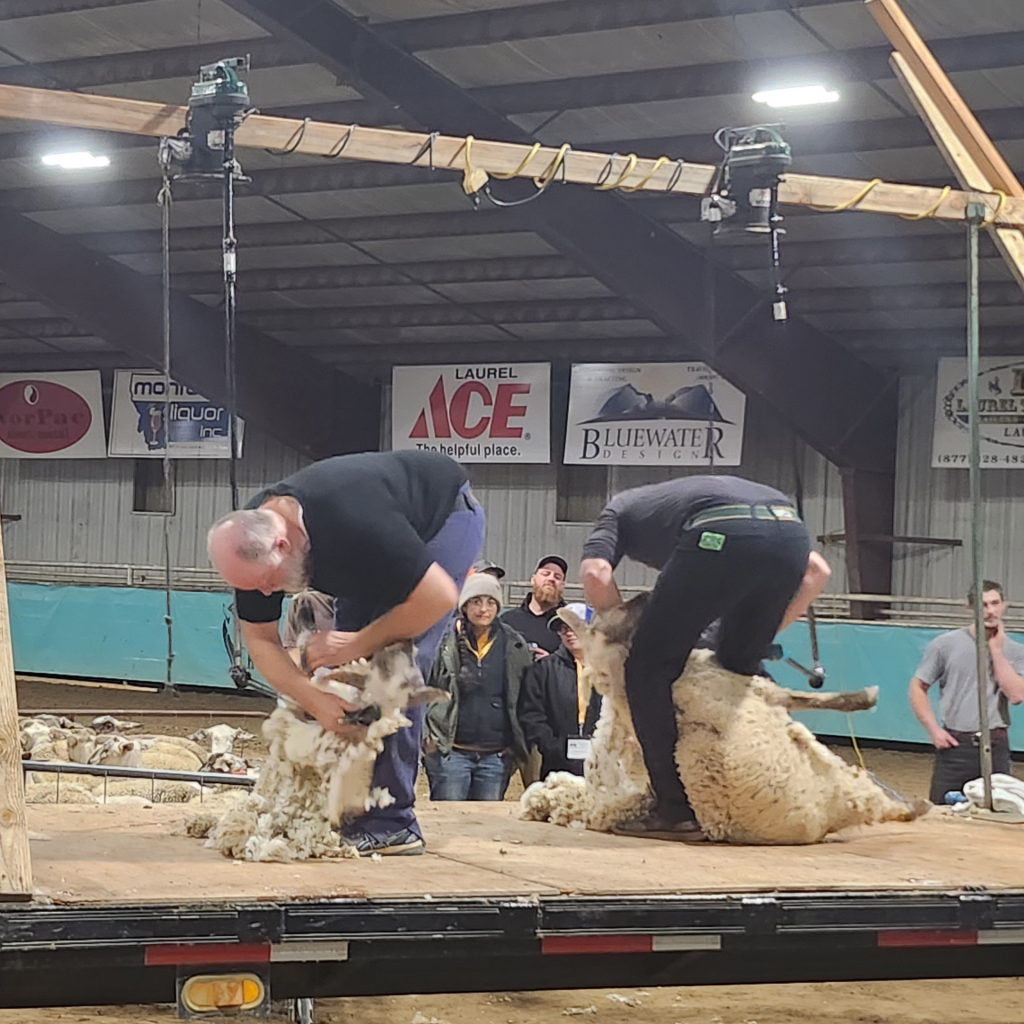
Wool prices in the U.S. have been on the uptick this year, modestly recovering from a five year slump. The current prices range from $1.30 to $1.70 per pound for upper end medium grade wool (21-22 microns) and holiday demand has pushed some wool types over $2 per pound.
Recent changes in the global wool market also mean there will soon be a greater demand for wool, according to Scott Lammers of Center of the Nation Wool.
“There has been uncertainty for all of 2025 and wool prices have been impacted by things like inflation and our country being faced with debt,” he said. “But there have also been international changes. Two top wool processing companies, Modiano and Schneider, have merged and reports say that Australia is going to shear their lowest number of sheep in 100 years.”
The U.S., by contrast, saw a 0.4 percent increase in the sheep inventory in 2025, logging in at 5.05 million head.
The increased demand for wool is good news for people like Ralph McWilliams, a sheep shearer who has been working in Montana since the 1980s.
“I’ve been running shearing crews for my entire livelihood,” he said. “When I started we charged $1 per head with another .25 cents to the plant boss and wool help might get paid 6 or 7 cents per fleece. Now, the cost really depends on the crew. The average cost is around $3-$4 per head with $1 to the crew boss and .40 or .50 cents per fleece to wool help. A few places pay by the hour, but it’s usually by the fleece.”
At the total cost of $6 to $7 per head for shearing in Montana, producers need to be able to make at least .75 cents to $1 per pound to cover the cost of shearing, McWilliams noted.
However, shearing costs can vary widely depending on a producer’s location in the U.S. and how big the flock is.
“In places like Illinois or Iowa, they might be paying $6 to $10 a head for shearing but in Colorado, maybe only $2,” he said. “A guy also needs at least 100 head to make it work commercially.”
There are parts of the U.S. where wool has little to no value, especially if the wool is coarse wool or mixed with hair sheep. Wool values are mostly determined by how fine (or how many microns) the wool is, with finer wool like Merino being more valuable and coarse wool (also known as carpet wool) being less valuable. Contaminants like vegetable matter or twine can also decrease wool’s value to a buyer.
“In states like Minnesota, their coarse wool is only worth about 2 cents a pound. In the Midwest they are also crossbreeding with hair sheep creating wool no one wants,” McWilliams shared. “At that point, you just bury it or stuff it in bags to use as insulation in the barn.”
Wool prices have taken a wild ride since their heyday in the 1950s. Competition with imports, as well as the introduction of synthetics depressed the demand for U.S. wool. In 2023, for example, the U.S. imported 8.5 billion pounds of synthetic fabric and the U.S. uses 25 pounds of synthetic fabric per capita, according to official reports.
“In the 1950s, people paid off ranches with their wool checks,” McWilliams noted. “The price they were getting then is equivalent to $25 a pound today.”
While the recent recovery of wool prices is a positive, McWilliams said shearing costs are unlikely to stay static, as the travel and equipment costs for shearers are rising.
“The equipment has gotten better, but the price of equipment has gone up considerably and all of the equipment we buy is from another country,” McWilliams said. “A handpiece that used to be $65 is now closer to $650 with the tariffs. You also have to drive a lot further for shearing. The sheep numbers have dropped so much that travel is horrible. You might start out in Jordan, Montana and then have to drive to Dillon or Rapelje or then to Baggs, Wyoming.”