A Life in Rhythm: The Legacy of Armon Wolff
-
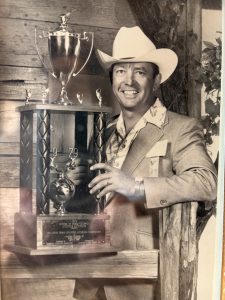
Armon accepting an award at the World Livestock Auctioneering Championship in 1979.
Wolff3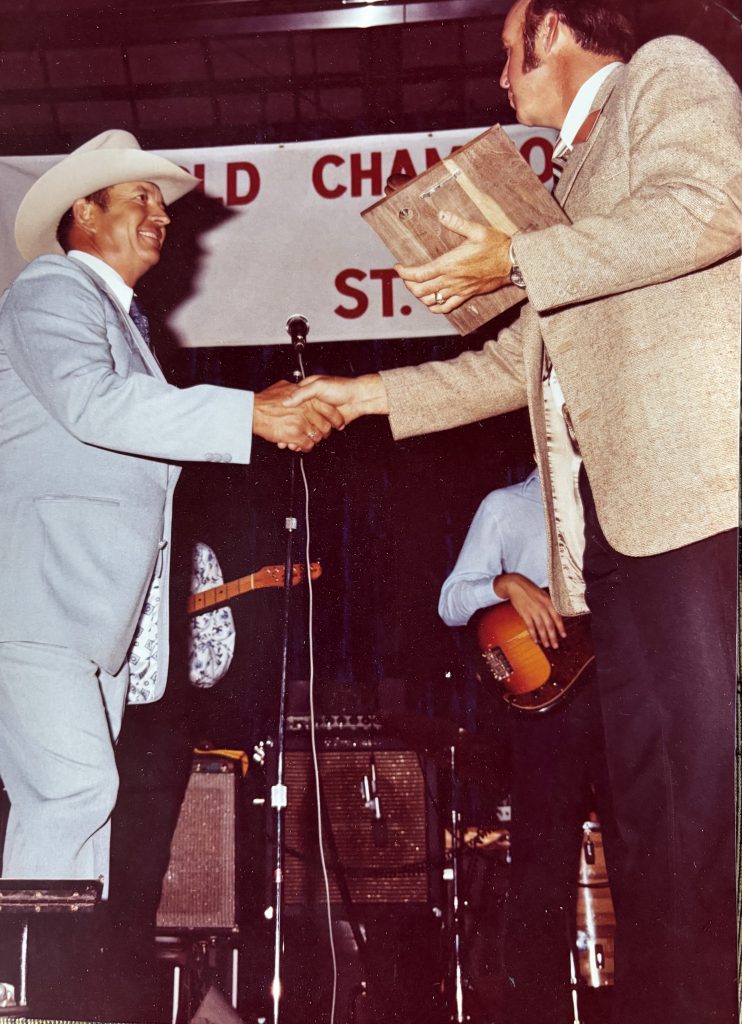
-
Armon won several awards throughout his years of competition, including Reserve Champion at the World Livestock Auctioneering Championship in 1979.
Wolff4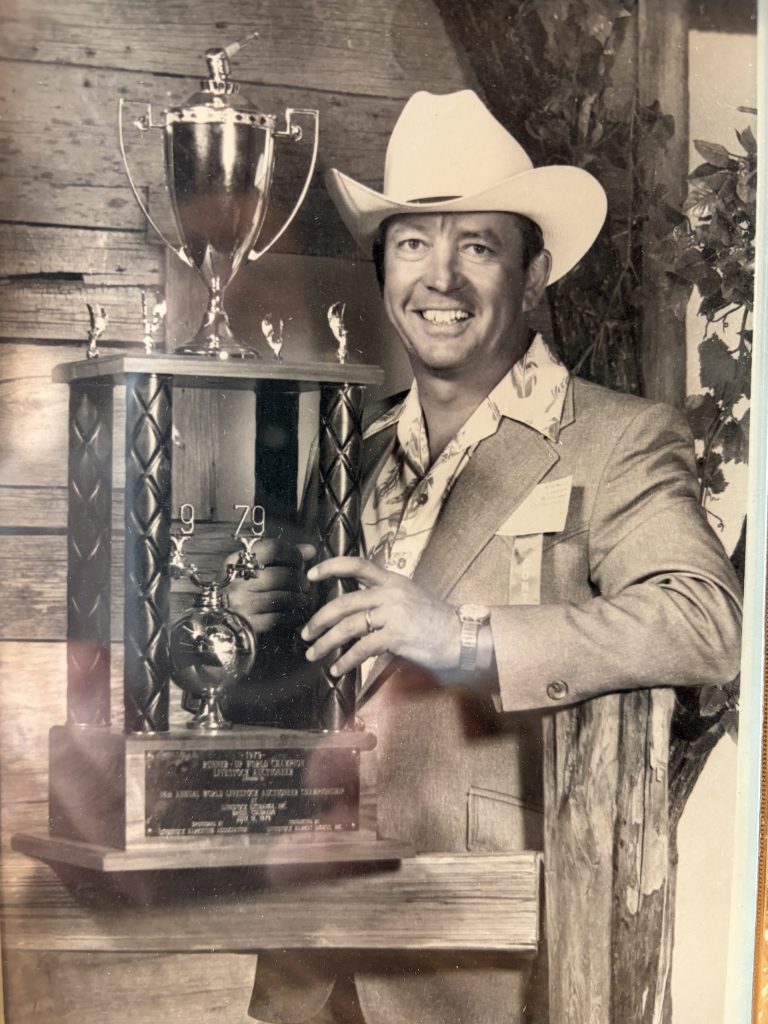
-
Shane and Armon worked together for many years, running Wolff Auctioneers, the 2nd oldest auctioneering business in the state of North Dakota.
Wolff6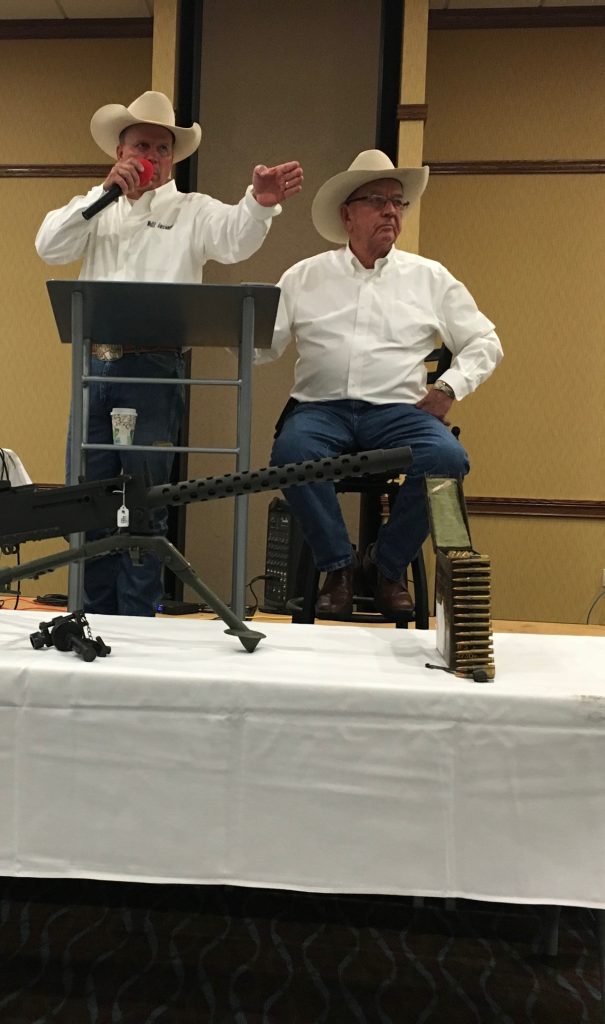
-
-
The Wolff Family – Peggy and Armon (front) and their children Kathy, Scott, Pat, Tammy, and Shane (back, left to right)
Wolff1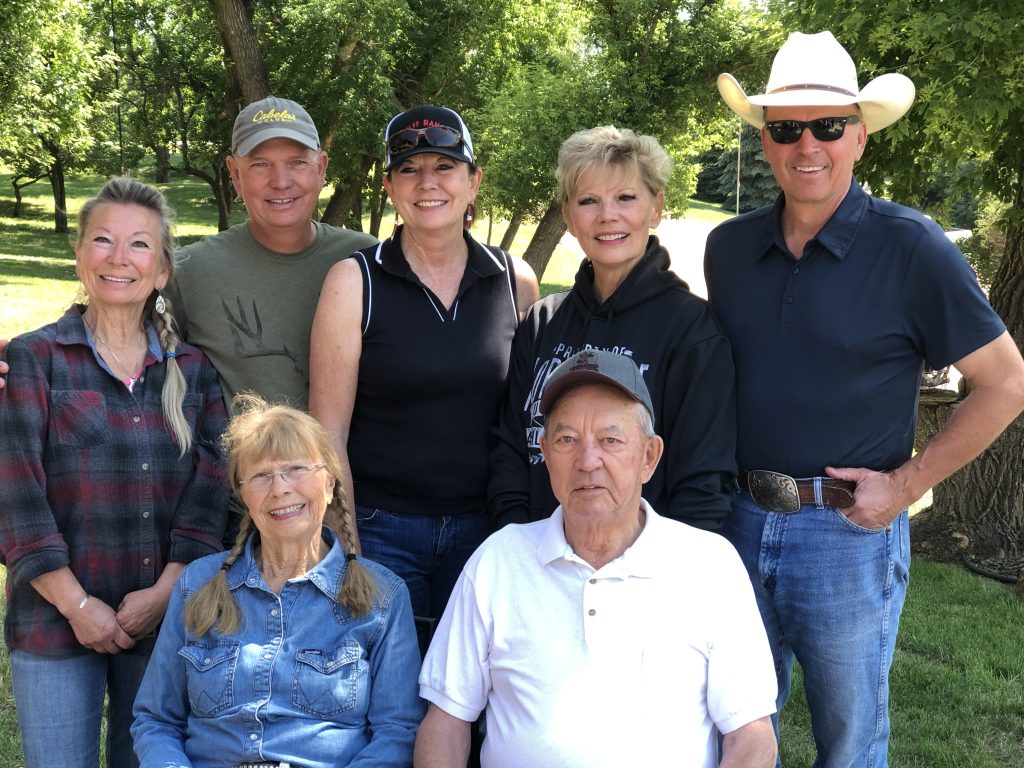
-
Armon and Peggy celebrated 70 years of marriage in 2025. Here they are at their 50th Anniversary in 2005.
Wolff2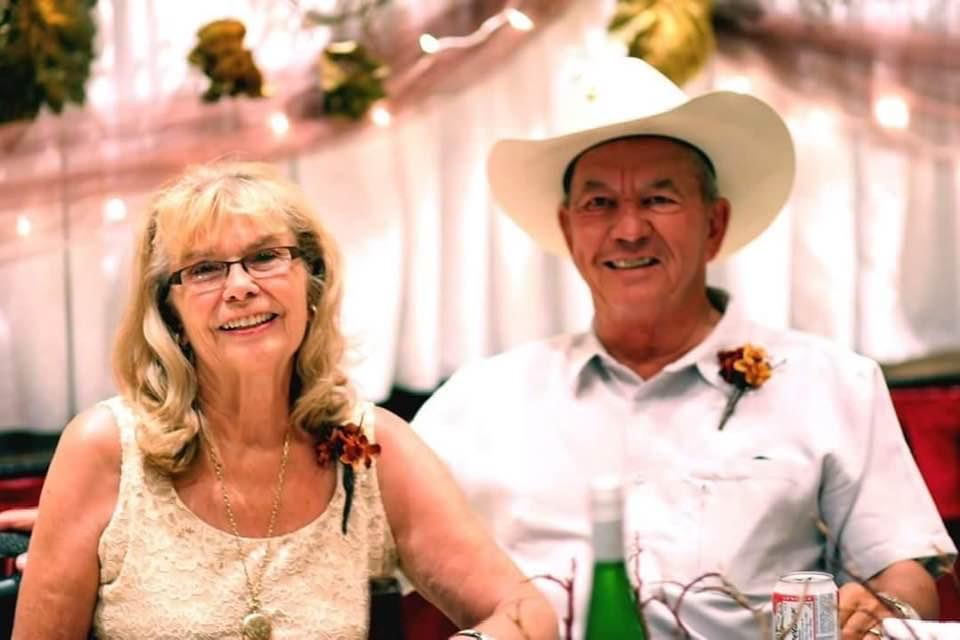
-
Armon and Peggy enjoy moving cattle and taking Ranger rides around the ranch.
Wolff5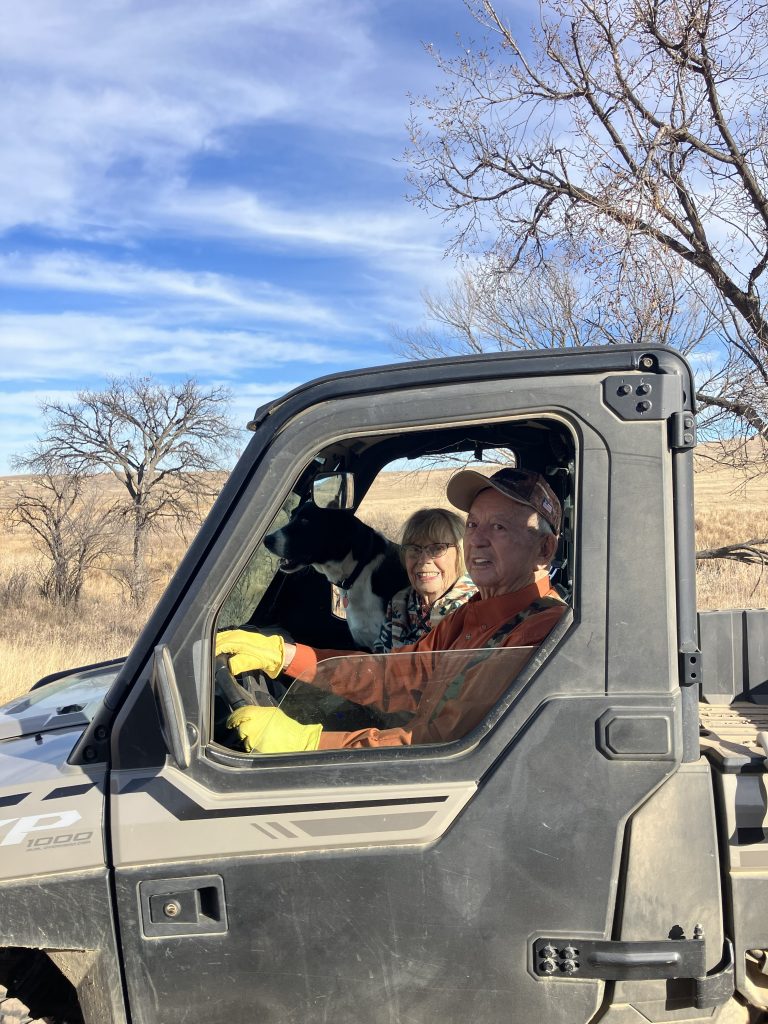
Some people are known for their sense of humor, others for their distinct style. Armon Wolff’s hallmark is his baritone voice and impeccable rhythm that resounded across auction blocks for over 60 years.
Armon was born on the family ranch in 1936 near Golden Valley, North Dakota, and has never left. Before the place was a ranch, it was Bronco, North Dakota – a post office before there were any towns in the area. The foundation of one of those stone buildings still stands on the ranch today, a reminder of days gone by.
Armon was always interested in the ranch, especially the livestock. Armon’s older brother, Paul, was an auctioneer, selling farm and household sales. Paul invited Armon to help him with his sales, but Armon insisted he had better go to auctioneering school first. Unfortunately, Armon never got the opportunity to sell with Paul, as he tragically passed away before Armon had the chance to go.
In 1964, Armon’s wife, Peggy, handed him a newspaper clipping of an advertisement for Western College of Auctioneering in Billings, Montana. Armon went to see the local banker for a loan to attend the school. The banker saw something in Armon – likely his drive and integrity – telling him, “I think you’re going to amount to something, Armon,” giving him an extra $300 to make the trip.
To say Armon amounted to something would be an understatement. After returning from school, he started selling household sales. Before long, he got the opportunity to sell livestock at Missouri Slope Livestock Exchange in Bismarck, North Dakota. At that time, he was partnered up with an older auctioneer, Frank Fitzgerald. Armon recalls one year around Christmastime when Frank told him, “I’m going on a trip. If you do alright while I’m gone, I just won’t come back.” Armon must have done alright because in no time, he was selling multiple days a week at barns across the region.
At one time, Armon was putting on nearly 800 miles per week for livestock sales. He laughs as he recalls, “I went through several vehicles in those years.” He was also making the trip back to Billings a few times a year to be an instructor at Western College of Auctioneering. After decades traveling the region for livestock, farm and household sales, and benefit auctions, it is no surprise to hear Armon say, “Wherever I go, somebody says, ‘Hi Armon.'”
After selling for Schnell Livestock Auction in Dickinson, North Dakota, for several years, Armon was given the opportunity to buy-in and became part owner of what is now Stockmen’s Livestock Exchange. Armon was also a fierce competitor, winning several awards at livestock auctioneering contests. He had always admired Ronald Woodward, the 1971 World Champion Auctioneer from Broken Bow, Neb., and competed to become a World Champion himself. In 1979, Armon won the title of Reserve Champion at the World Livestock Auctioneering Championship, a feat he calls a “highlight” of his career.
All the while Armon was on the road, Peggy kept the ranch going with help from the hired hands and their five children: Kathy, Pat, Tammy, Scott, and Shane. Peggy, too, was born into a ranching family, and her father ran a livestock market. She said, “I was raised on a horse pretty much,” so she was well-suited to her role as a rancher’s wife. To this day, she helps out where she can on the ranch. She said, “I don’t know any different.”
Armon and Peggy’s youngest son, Shane, sings his mother’s praises, knowing that she was instrumental in keeping the ranch going while Armon built his business. He said, “Without her, probably none of that would have happened.” Shane recalls the way his mother seamlessly balanced feeding the hired hands, raising five children, bottle feeding calves during storms, and any other task ranching and homemaking asked of her. On top of that, Shane said, she “always had Dad’s back,” clerking for him for over 40 years. Armon and Peggy’s example spoke for itself, but even so, they were always quick to remind their children of two important things: “You can do anything you set your mind to doing,” and “You all have eyes and can see what needs to be done.”
To Armon, all the years he spent auctioneering “just came and went,” but the memories have stuck around. He said, “I sold a lot of good sales for a lot of good people.” He made his rounds to most of the major livestock markets in the area and sold countless other sales and benefits, making memories at each mile. He said, “Wherever I drive now, it’s some place where I already sold farm auctions.”
Shane was only two years old when his father left for auctioneering school, but he remembers attending sales with him once in a while as a child. Shane recalls, “Pretty soon, dad got so busy that he was always on the road. You could always smell his hat when he came home.” In 1982, Shane decided to follow in his father’s footsteps and attend Western College of Auctioneering. He laughs as he recalls an old instructor that would rattle off a tongue twister while keeping the beat with his cane. Shane said, “He said, ‘Can anybody repeat that?’ And nobody said anything. I could since I was a little kid. And anyway, they knew Armon Wolff’s son was there, but they didn’t know which one it was, you know. And then [the instructor] came over and stared right into my eyes, and I did say it. I got it all true. And he said, ‘Are you Armon Wolff’s son?'”
All of Armon’s children could repeat his tongue twisters about Betty Botter or Theophilus Thistle. Armon’s eldest daughter, Kathy, even won $100 when an auctioneer in Alberta challenged the crowd to repeat one back to him. Aside from the tongue twisters, Shane picked up quite a few things from his father, primarily what it takes to make a good auctioneer. Armon always stressed, “You’ve got to be able to understand an auctioneer.” His message of “be plain and clear and honest” sticks with Shane to this day. Shane said, “People really trusted us,” and that is largely due to the foundation of trust that Armon built with anyone and everyone he ever worked for.
Armon always had a no-nonsense approach to his work — a man that got the job done and got it done well. Armon recalls many times when he’d get on the block at 1 o’clock, and “by 5 o’clock or so, I might have a couple thousand head of cattle sold.” Shane said, “I think smoke rolled out of that auction block when he sold . . . The gates were really swinging when he was selling.”
Armon wasn’t just quick; he was catchy, too. Armon said a good auctioneer must have a good rhythm: “something you can tap your toe to.” Over the years, he’s had people doing more than tapping their toes. Peggy remembers an old cattle buyer in Bismarck that “got up and danced because [Armon] had such a good rhythm.”
Shane also recalls an old competitor of Armon’s telling him, “We couldn’t beat Armon [when it came to his bid calling or his chant], so we had to figure out other ways to beat Armon,” — be it their dress, their smiles, or their opening speeches at the auctioneering contests. Shane was even asked for a copy of a tape of his father so that a competitor could use it to practice his rhythm.
After Shane finished school, Armon and his partner, Delmar Erickson, helped him get his start. Shane said he started “at the bottom of the totem pole,” working flatbeds and in the ring for Armon. He laughs as he recalls, “[Dad] didn’t have to work in the ring as much as me. I can tell you that. He never had to,” joking that unlike his father, it took him “20 years to sound decent.” Shane said that he was “lucky to have such a good mentor” in both his father and Delmar. Their instruction and encouragement was instrumental in his success selling livestock for 20 years and qualifying for the World Livestock Auctioneering Championship a couple of times.
Armon said that getting to sell with Shane for several years was “great.” Around 2016, Armon retired from auctioneering, with Shane taking over Wolff Auctioneers with his wife, Marsha, and their daughter, Paula Jo Wanner. Shane and his older brother, Scott, also ranched with Armon their whole lives, beginning to take over the ranch in the mid 80s. Shane said, “Some of our kids and little grandkids are running cattle on the ranch, and oh boy, everybody’s happy.” In 2019, Armon got to come out of retirement for a day to sell a tractor for Shane for a lifelong friend, Stanley Jaeger. These days, he and Peggy still live at the ranch, enjoying their kids, grandkids, and great-grandkids, and helping out where they can.
The ranch turns 104 this year, and Armon turns 90 this month. Shane said that looking back over the legacy that Peggy and Armon have created is “the proudest feeling you could ever have because there’s been a lot of tough years.” Armon has ridden the markets for decades, once selling butcher cows for 9 to 12 dollars a hundred weight, laughing about how “we almost gave cattle away then.” Shane recalls years where he, his mother, and his siblings weathered the storms— both literally and figuratively — to keep the ranch going while Armon was on the road.
It will never be lost on Shane how “people having faith in you and giving you a chance” can change the course of someone’s life. Looking back over the Wolff family’s story, one can see this ring true— be it brother Paul or the banker that saw the potential in Armon, Peggy who nudged him to head off to school, or the two of them together that handed over the reins to the next generation on the ranch. Armon said, “It comes natural. You’re selling, and it goes up and down, and you go with it.” He may have been talking about the markets, but this is also true about life itself. Together, Armon and Peggy have set an example for generations that the only way to preserve something that matters is to keep the faith and ride the ups and downs.