Bane or boon? Counties divide over proposed CAFOs
Residents of Edmunds and Tripp counties in South Dakota are facing two separate proposed CAFOs. Riverview, LLP’s Belle Dairy was recently approved for a 25,000 cow dairy to be built near Mina Lake in Edmunds County. Pipestone Management is in the permitting process for a proposed 13,500 sow facility near Winner in Tripp County.
No zoning
Winner area resident Rick Shippy said he believes Tripp County is one of only nine counties in South Dakota without zoning laws of any kind.
“We were trying to look at being able to zone big corporate entities from outside the area,” Shippy said. “We don’t want to restrict local farmers or ranchers, or even a group of local producers if they would go together to do something.”
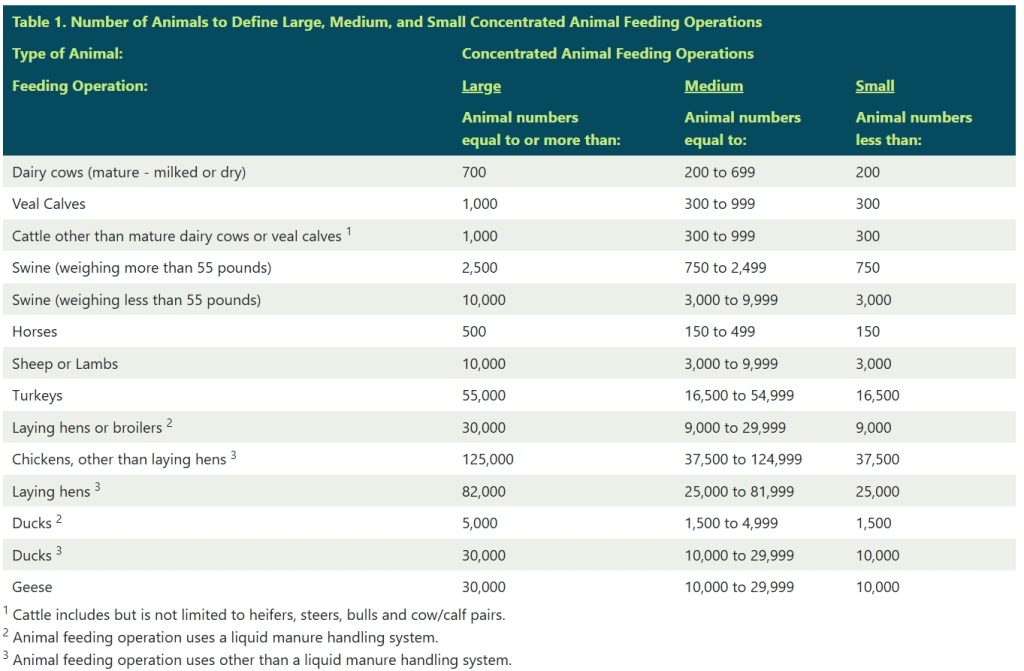
Shippy said the state of South Dakota considers a “large” CAFO for hogs over 55 pounds to be 2500 head.
“This one is supposed to be 13,000 head,” he said. “We just feel like the county has not been informing us properly and feel like we need some type of protection put in place. We have asked the county commission to put temporary zoning in place for up to 12 months while studies are done on water, roads and air quality.”
Ruth Galbraith, Winner, South Dakota Nurse Practitioner and landowner, believes commissioners have diverted questions from herself and other concerned citizens who have attended meetings to discuss the proposed Pipestone sow facility.
“We are asking the commissioners to take a step back, get input from the community and we have asked for some temporary zoning to take a look at the issue. An operation of this size is going to have an impact on the economy, the environment, health, safety, roads and water,” Galbraith said.
With no zoning in place in Tripp county, Pipestone does not have to submit a plan to the county commissioners, Galbraith said.
“Their permit application goes directly to the DANR, and there is absolutely no input from the community in which it’s going to be placed,” she said.
Galbraith and others are concerned about water and air quality, whether or not Pipestone can contract sufficient acres on which to spread manure, pollution from manure spillage, possible disease spread, the possibility of depleting the aquifer, and whether or not the taxes that come into the county from the proposed business will be sufficient to offset maintenance costs for roads that will be more heavily used.
“Tripp County is the wild west, we have basically no rules,” she said. “We are asking the commissioners to look at the bigger entities we are not interested in having here, such as data centers, solar farms, wind turbines or large industrial livestock confinements. Every county can set these stipulations. We’re asking the commissioners to form a zoning committee to get some regulations in place.”
It’s not about micromanaging what individuals do on their own farm or ranch, she said, but about making a plan for safety and development. Temporary zoning could put the Pipestone permit on hold for up to a year.
Tripp County Commission chair Cody Jorgensen said that at the August commissioners’ meeting, a motion was made to start the process of enacting a temporary zoning ordinance, but the motion failed due to a lack of a second, Jorgenson said. All members of the commission were present at that meeting.
“The commission was not voting for or against the hog farm but acting on a motion for a temporary zoning ordinance,” he said. “I don’t know why someone didn’t second the motion; without a second we did not get to have any discussion or a vote.”
A representative of Pipestone, LLC, attended a commissioners’ meeting and answered questions, Jorgensen said.
Jorgensen said the state regulations governing CAFO permits have strong protections for people and the environment in place.
“CAFOs are regulated fairly heavily by the South Dakota DANR,” Jorgensen said. “For example, we have a CAFO as part of our personal operation. As part of manure management, we have to take soil tests and make sure not to put too much on. We are required to have a manure management plan which is regulated by the state and we are checked every year. They also evaluate water usage and make sure that we’re not taking somebody else’s water. CAFOs are regulated more than most people actually know.”
Whether someone is pro-zoning or against zoning, Jorgensen explained that zoning is designed to keep people and places in the same place.
“Most cities in rural areas do have some type of zoning in the city; you have to get a building permit to add on to your house, for instance. No feedlots can be built in town. Zoning is protecting people in the city. I don’t know if zoning would be fair or unfair to production ag in Tripp County, I’m not going to comment on that. Property rights should be important to everyone. The thought of being regulated on what you can or cannot do on your own property weighs me down.”
CAFO regulations apply to more than just the proposed sow facility, Jorgensen said.
“You can’t just pick and choose who you want to zone,” he said. “We can’t just zone a dairy or swine operation and NOT zone a beef feedyard.”
Pipestone has reached out to landowners within the area of the proposed sow facility in order to secure manure easements.
“If they don’t have enough acres, they fall out of the regulatory parameters set by DANR,” Jorgensen said.
South Dakota DANR
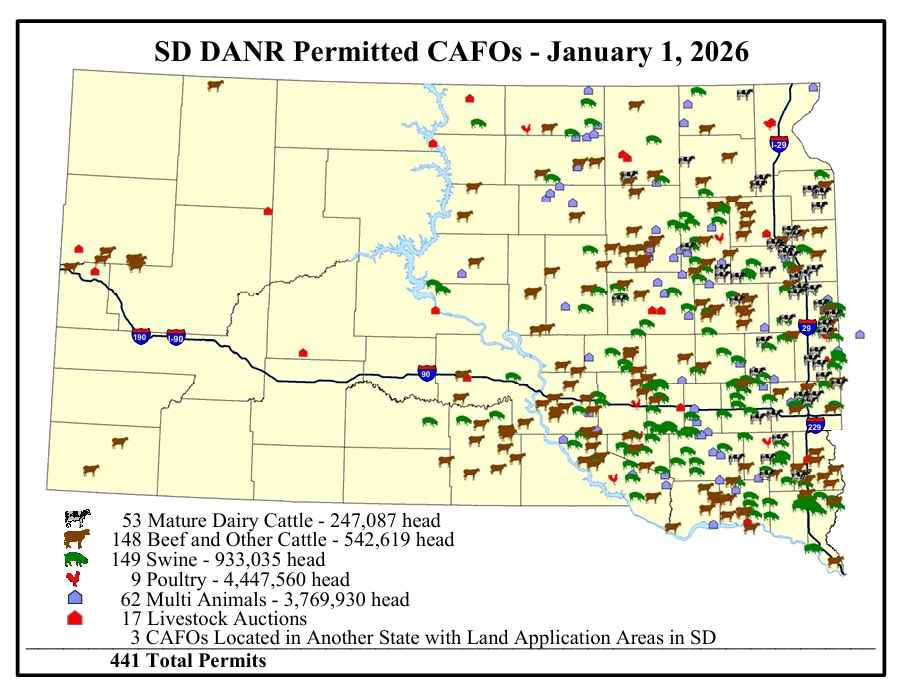
According to the South Dakota Department of Agriculture and Natural Resources, multiple CAFOs already exist in both Edmunds and Tripp counties.
The DANR website states that a general permit for a CAFO in the state of South Dakota has specifications that must be met for planning requirements, collection and storage of manure, protection of surface and ground water, and manure management. Other state permits may be required in addition under some circumstances. DANR also states that “As required by state regulation, DANR will inspect these operations as follows:
- Construction Inspections – DANR will inspect each new operation applying for coverage under the general permit at least once during construction.
- Operational Inspections – DANR will inspect the larger operations at least once per year, while the other feeding operations will be inspected at least once every three years. All new operations will be inspected at least once during the first 18 months of operation.
- Complaint Inspections – DANR will respond to complaints made in accordance with the SD Complaint Law.”
CAFOs in South Dakota must meet state permitting and inspection rules as well as meeting EPA standards, according to the DANR.
Belle Dairy
Edmunds County commissioners approved Belle Dairy’s permit a year ago. The state approved their permit in August, 2026.
“This is an important step forward for Belle Dairy, and we appreciate the thorough review conducted by the state,” David Yost of Riverview told the Ipswich Tribune. “Our goal from the beginning has been to develop a dairy that creates opportunities for local farmers, coworkers, and businesses while being a responsible neighbor and steward of the land.”
But area residents don’t see the proposed $180 million facility in the same way.
Julie Burgod and her family are grain and livestock farmers in the Ipswich, South Dakota area. Burgod works in crop insurance, but is also active on the farm, helping work cattle, running the combine, or doing field work.
Burgod has been outspoken against the proposed Belle Dairy, and has expressed concerns over several things in the application for the state permit. Her biggest concern lies with the projected amount of manure to be produced at the dairy and the projected acreage legally needed on which to distribute that manure.
“They list 25,000 cows at 1,000 pounds and claim each cow will produce 80 pounds of manure a day 365 days a year,” Burgod said.
A Jersey cow may only weigh 900 pounds, but a Holstein can weigh up to 1,700 pounds, she said. If the cows are larger animals and weigh over 1000 pounds, the manure produced will likely be 120-150 pounds per head per day. Edmunds County ordinance, Burgod said, states a 1.43 animal ratio for mature dairy cow.
“That means their estimated total of two million pounds of manure a day may very possibly be over 3.3 million,” Burgod said. “The manure volume tied to the available acres was significantly lower than the manure volume calculated for the proposed lagoon size.”
Burgod estimates that Belle Dairy will need more than the approximately 16,000 acres they have manure agreements on. There are limits to how much manure can be spread per acre, and nitrate and phosphorous levels must be monitored as well. Burgod and other landowners put together a list of over 60,000 acres combined on which the landowners would refuse to sign a manure agreement with Belle Dairy.
“The rock I’ll stand on is acreage,” Burgod said.
Burgod is concerned about how the proposed dairy will change the community, agricultural and economic landscape of her area.
“If we had 100 farmers in the same room 50 some years ago, and said that in 50 years, there will only be 10 of us left, how would we have answered the question of which ones it would be?” Burgod asked. “I don’t want to take the remaining 10 farmers now and ask which two will exist 50 years from now. I don’t want to be extinct. This dairy will take at minimum 25,000 acres of land annually, to feed the cows and to put manure on.”
Investigation
Burgod received a visit from an agent with the Division of Criminal Investigation on July 30, which she believes stemmed from her opposition to the Belle Dairy.
“The DCI complaint was that I used my rural address to file a complaint with the county for alleged violations in the Belle Dairy permit application, but my voter registration uses my Mina Lake address,” she said. “Is that a problem? I own both properties and pay taxes on both properties.”
All nine individuals who signed Burgod’s petition to get on the ballot to run for a seat on the Edmunds County commission were also visited by DCI, she said.
According to the office of South Dakota Attorney General Marty Jackley, the Division of Criminal Investigation (DCI) conducted a review into discrepancies involving Juliane Burgod’s nominating petition for county commission in Edmunds County and her owner-occupied tax status.
“DCI’s role was to determine whether a false or forged document may have been filed in connection with an election. The findings from that review have been forwarded to the South Dakota Department of Revenue for its consideration regarding the owner‑occupied status of one of the listed addresses,” states the release.
“The matter was referred to the Attorney General’s Office by Edmunds County State’s Attorney Vaughn Beck, who reported that the candidate’s petition address appeared to conflict with the address listed for her owner‑occupied tax status.”
South Dakota Codified Law 7-8-2 requires that county commissioners be registered to vote within the district in which they are nominated.
Beck requested DCI’s involvement because of a conflict of interest related to Burgod’s potential position as a county commissioner.
Attorney General Jackley emphasized that DCI’s review was limited solely to the potential filing of a false or forged document as it pertained to an election and was unrelated to any agricultural project or policy issue. After completing its review, DCI transferred the materials to the Department of Revenue for further examination under South Dakota’s Owner-Occupied tax classification laws, according to the press release.
“As Attorney General, I remain committed to ensuring the integrity of our elections,” said Attorney General Jackley. “To categorize DCI’s involvement in this matter as anything other than preserving the legitimacy of our elections is simply untrue.”
According to the press release, neither the Attorney General’s Office nor DCI has any pending action involving Ms. Burgod. Because the issue appears to be one of owner-occupied tax status rather than election fraud it has been referred to the Department of Revenue that maintains that jurisdiction.
The Attorney General’s letter to Ms. Burgod can be found here:
https://atg.sd.gov/docs/Edmonds%20County%20Investigation%209.10.2026.pdf