From the Sorting pens by John O’Dea: Grass
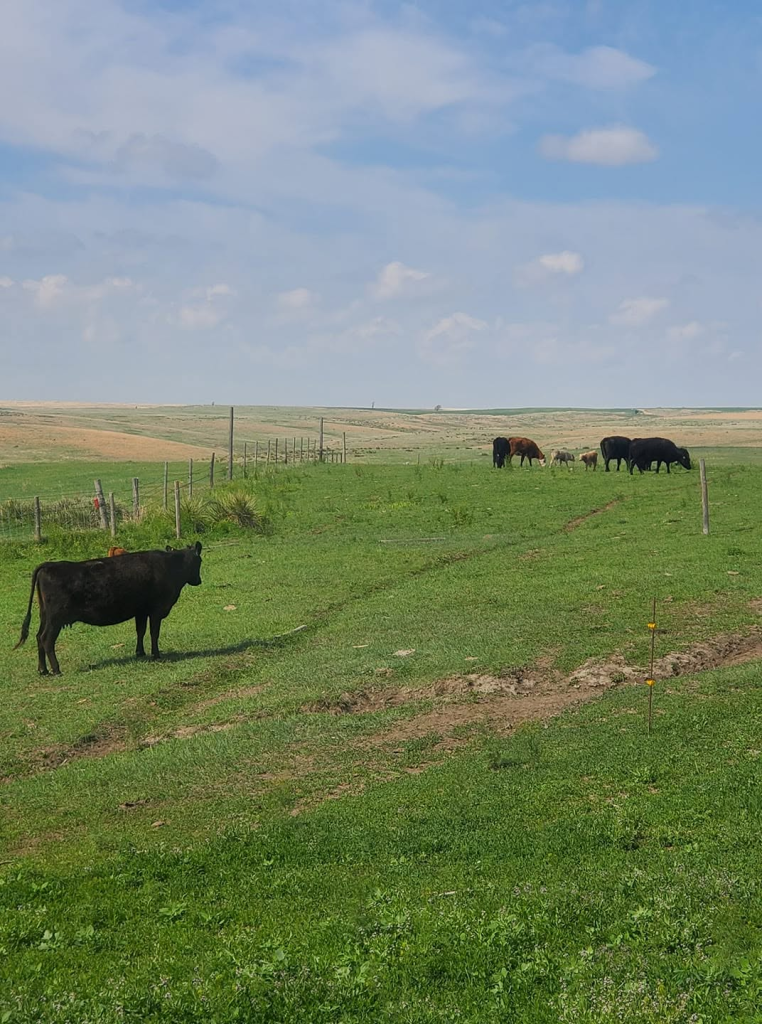
Editor’s note: This editorial and the accompanying photo are from 2021 archives. John’s part of the state is experiencing devastating drought this year, 2026.
This weeks beef column is about GRASS.
We are fortunate to raise cattle in a part of the world that has excellent GRASS and productive farm ground.
About 85 percent of our land is in permanent grazing land. 46 years ago when Dad bought the place in this picture, almost half of it was tilled. It shouldn’t have been. He worked to get it all planted back to GRASS.
Eighteen years ago when I bought it from Mom and Dad, I worked on cross fencing and we installed water systems to make more efficient use of the GRASS.
Plain and simple, people don’t eat GRASS. But cows do. We work to try and grow the most grass we can so we have the most feed we can for our cowherd. This means pasture rotation, strategic supplemental feeding and water development to prevent cows from traveling long distances to water and achieving even grazing.
Now, the more GRASS we grow, the more CO2 we remove from the atmosphere. The more GRASS we grow, the less wind and water erosion we have.
The more GRASS we grow, the more wildlife habitat we have.
Grass and crop aftermath are two major feed resources that we utilize that people can’t. We also use distillers co products, cottonseed, and grains that are not good enough quality for human food. Beef production is all about up cycling. The humble cow has been developed over centuries to be the ultimate “green” food production machine. Since they were first domesticated, cattle were fed brewers grain and bran from the flour that wasn’t suitable for making bread.
When managed GRASS is added to the picture, beef is a win for the consumer and the environment.