International Year of Rangelands and Pastoralists: Celebrating grassland ecosystems
The U.S. House and Senate have expressed bipartisan support for resolutions designating 2026 as the International Year of Rangelands and Pastoralists. Senators Lummis (R-WY) and Luján (D-NM) and Representatives Maloy (R-UT) and Costa (D-CA) provided leadership on the resolutions.
The Society for Range Management believes pastoralists and ranchers play a critical role as land stewards, applying generational knowledge and science-based grazing to sustain healthy, resilient rangeland ecosystems. Rangelands cover nearly one-third of the United States, providing food and fiber, wildlife habitat, water resources, carbon storage, recreation, and energy, while anchoring rural economies and cultures.
President John Walker stated: “The 2026 designation as the International Year of Rangelands is a global milestone in what SRM has always known—that the impact rangelands, ranchers, and pastoralists alike have on this world is indispensable and undeniable. Not only is this a moment to be celebrated throughout 2026 and beyond, but an invitation to educate, connect, and ensure rangeland science shapes the conversations that shape these landscapes for generations to come.”
As of May 8, 2026, 102 countries and 427 organizations have expressed official support for the IYRP.
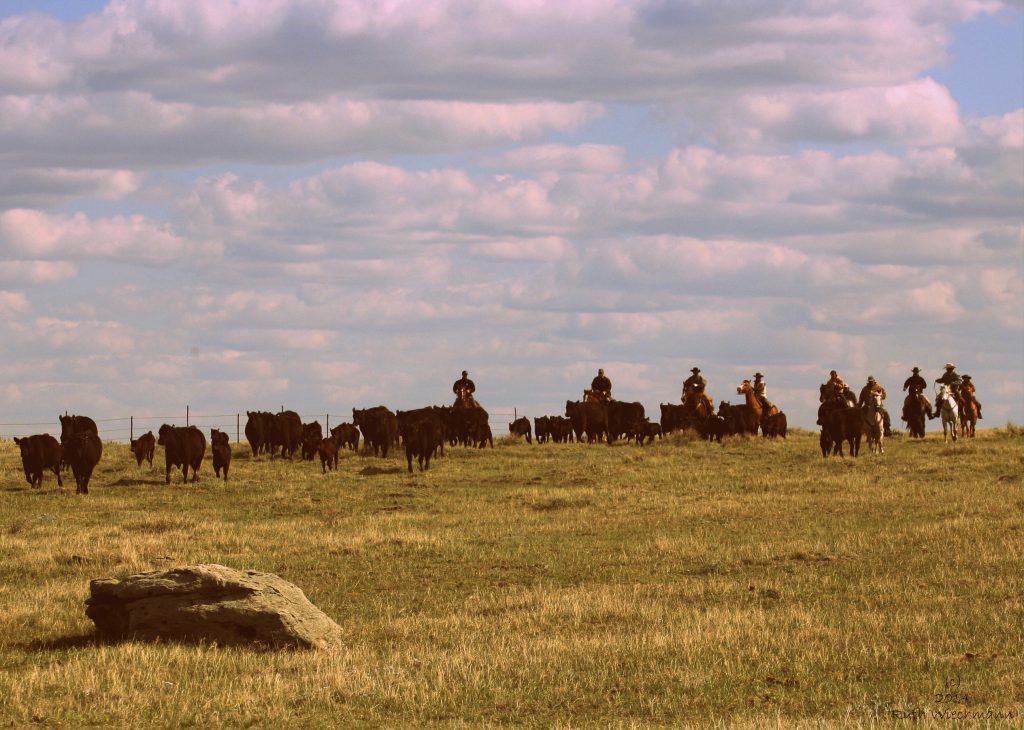
“In the U.S. we tend to associate range management with ranching and cowboy culture,” said Jenna Stanton, Society for Range Management Director of Federal Policy and Public Affairs.
In other parts of the world, range management may look very different, with graziers and herders living a nomadic lifestyle, yet rangelands and the people and animals who call them home are part of the landscape of every continent.
Efforts began several years ago in the U.N. to designate 2026 as the International Year of Rangelands and Pastoralists.
“What is beautiful about the IYRP, especially in North America, is all the people coming together to help celebrate this from all facets,” Stanton said. “We have people in education, cowboys, ranchers, range ecologists, conservationists, foresters and our government officials as well as long-standing ‘boots on the ground’ agency folks who are all coming together. IYRP is something we can all get behind. It sets us up to talk about global awareness, what range resilience looks like, and the resilience of grazing ecosystems.”
Being part of something on a global scale is a unique opportunity for range managers.
“IYRP sets us up for a global roundtable, for education campaigns, and raising global awareness,” Stanton said. “There is so much more work we get to do. It’s important for us to have causes to celebrate. We can cheer for each other when things go right.
Rangelands and grazing animals are a piece of every culture in history, Stanton said.
“Rangelands are deeply integrated into cultural roots on every continent. Every place has a different flavor.”
Stanton works in Washington D.C. and has been involved with getting the IYRP resolutions before congress, as well as working to improve regulations to prioritize range management.
“We’re trying to make key changes easier and the jobs of the folks that live and work on the land easier,” she said. “It is a long process and requires a continued effort. We also want to work for more transparency in agencies such as the USDA and USFS.”
Academic research is important, but the best range managers are those who have a working relationship with the land.
“IYRP is very future focused and very optimistic,” Staton said. “When we take a look at our next generation of producers and think about the future of our rangelands, we believe our best bet for the future is the people who will be on it the longest.”
No one knows the land better than the people who cultivate a relationship with it, Stanton said.
“Our producers are the best conservationists out there,” she said. “Actual operations on the land are healthy for the land. 10-15 years ago there was a different rhetoric. We are looking to change that, to push that needle and educate people about the research being done in agriculture, environmental, conservation and natural resources.”
Range management is an art, said North Dakota rancher Shawn Weishaar.
“Native prairie is very special and we need to keep it diversified,” Weishaar told TSLN. “For me, it is always great to go out in the spring and see grouse dancing while checking cows. We have a lot of birds coming through in the spring, and a lot of diversity in the birds and wildlife on the ranch. Cattle operations protect that. Not a lot of people realize how important livestock are to protecting wildlife of all kinds.”
Dealing with drought is always an issue when managing rangelands, and one drought-related issue often leads to more problems.
“We can always look for ways to be more drought resistant,” Weishaar said. “We have drought plans in place and try to give ourselves a cushion to minimize problems.”
Weishaar enjoys being his own boss and the variety of work that fills the changing seasons on the ranch.
“Every season brings something new, and every year brings different challenges,” he said.
A long-time member of the Society of Range Management, Weishaar is grateful for the organization’s work at the state level, as well as NRCS and state extension range specialists who work in his area.
“Rangelands are out of sight and out of mind for many people; as with everything in ag, we need to do a better job of educating the public and ourselves,” he said. “The main thing is not to abuse this resource. We need to strive to keep rangeland diverse and protect it.”
Many events are planned throughout 2026 to celebrate IYRP and provide education and resources for range managers, industry partners as well as the public.
South Dakota State University Department of Natural Resource Management held a 2026 International Year of Rangeland and Pastoralists seminar on April 17 in Brookings, South Dakota as part of the annual Ag Week celebration and ongoing efforts to recognize the importance of healthy rangelands to the state of South Dakota.
“The International Year of Rangelands and Pastoralists is a chance to recognize that rangelands are not empty or unused spaces but working landscapes that support livestock production, wildlife, healthy soils and rural communities,” said Sean Di Stefano, assistant professor of rangeland ecology and management in a press release. “In South Dakota and across the Northern Great Plains, these lands are part of everyday life, which can make their importance easy to overlook.”
Di Stefano hoped that attendees would gain knowledge about how rangeland systems function, why they matter to the state, and what is being done to protect them.
“Rangelands are central to South Dakota,” she said. “Much of the state is grassland, supporting a strong livestock industry while also providing critical wildlife habitat, protecting soil and helping regulate water. How these lands are managed has direct impacts on both the environment and the state’s economy.”