Picking up what you’re putting down: Two generations pickup together in the arena

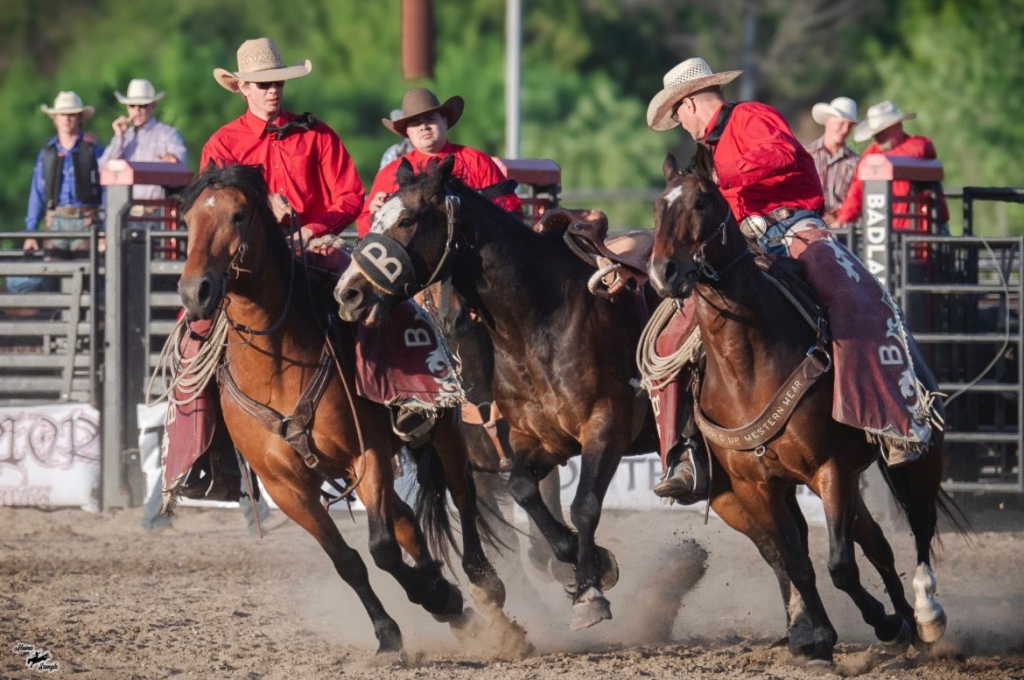
Fathers work with sons as pickup men in the rodeo world
Often dads hand down their way of living to their sons, with careers continuing from one generation to the next.
And that’s what is happening with three local father-son duos in rodeo, all pickup men.
Lance Heikel, Nebraska; Ryan Hanna, North Dakota; and Duane Gilbert, Wyoming, are all pickup men whose sons have started their work in the same line: Cinch Heikel, Hayes Hanna, and Kagan Gilbert.
Being a pickup man isn’t the most common job in the world; there’s only about a couple hundred in the nation.
And it requires a unique skill set, including excellent horsemanship and stockmanship abilities, the ability to “read” horses or bulls to have an idea of what they might do next, to pluck a cowboy off the back of a bucking horse, while riding full speed alongside the horse, and to keep oneself and one’s horse safe in situations that can turn into wrecks if not navigated correctly.
For the men, their sons grew up watching them pick up at rodeos, and absorbed a lot of knowledge before they got their chance in the arena.
All three young men started in the arena with their dads when they were in their early teens.
For Cinch Heikel, Arcadia, Nebraska he began to work alongside his dad Lance when Cinch was 14.
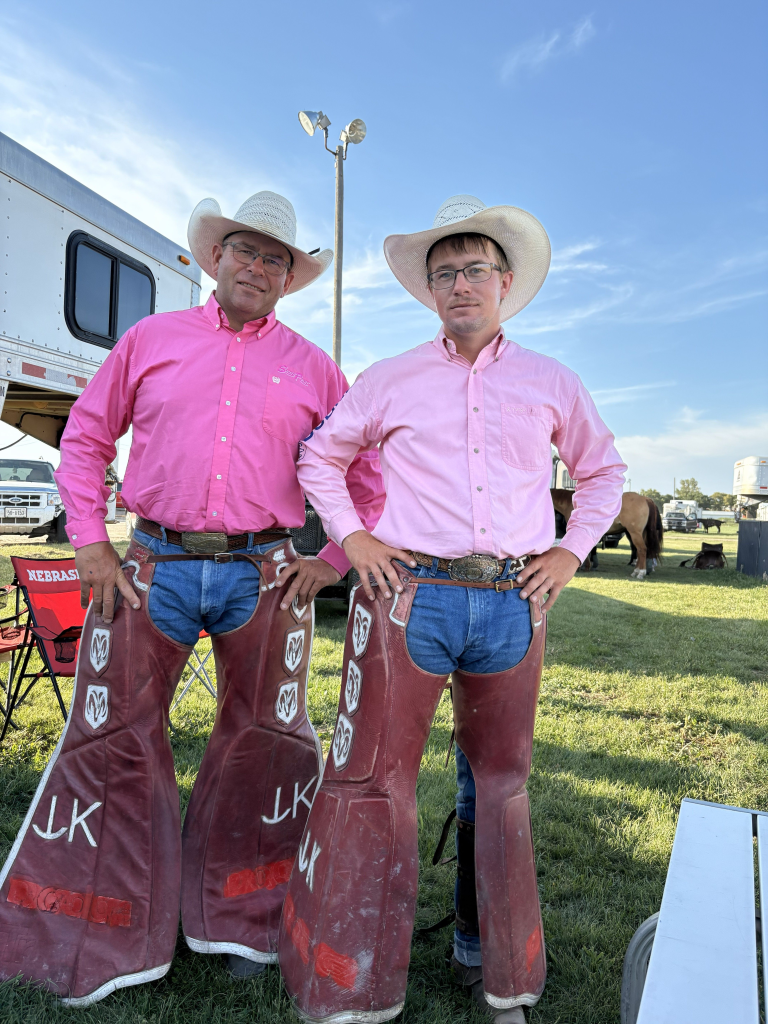
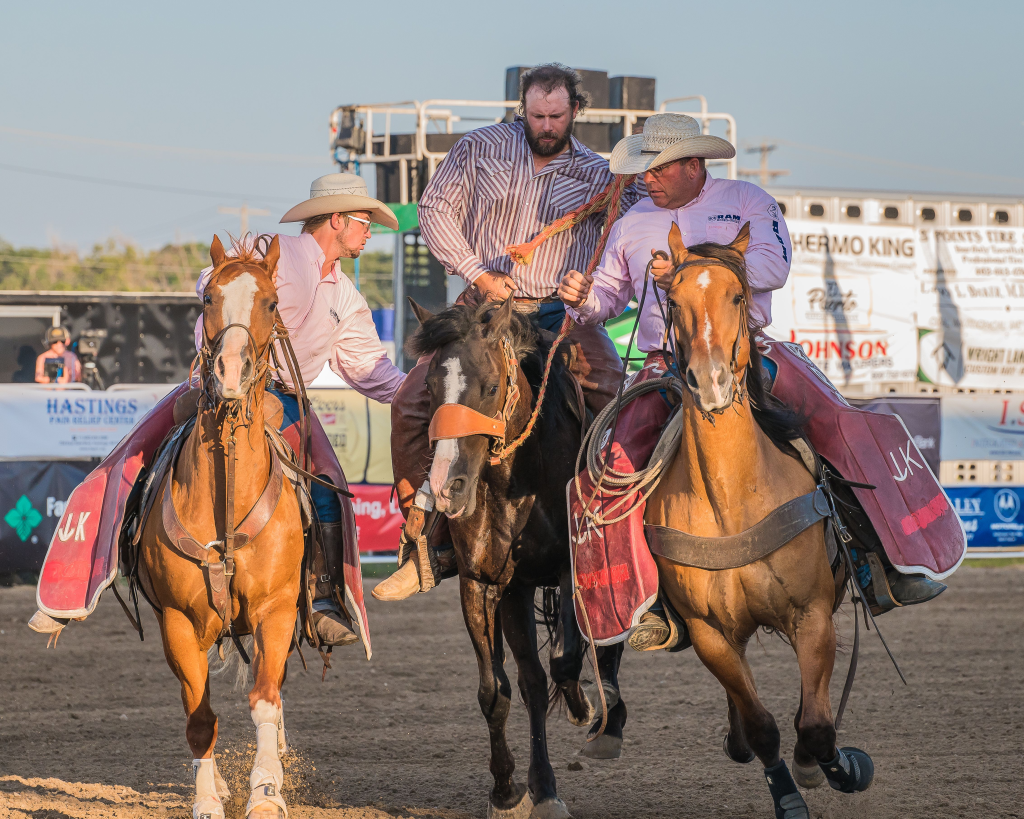
“Ever since I was little, I always wanted to do it,” he said.
Ryan, Berthold, North Dakota, knew his boy had been observing him as he grew up. “Like any pickup man’s son, he’s been watching me do it for most of his life, and he had a pretty good handle on it.”
All three fathers made sure their kids, when starting out, were on good, solid, dependable mounts.
“I put him on good horses,” Lance said, “and that’s a big thing about being a pickup man. If you’re riding good horses, it makes it twice as easy.”
Hanna was the same. Son Hayes started picking up at a rodeo school at age 13, and Ryan put him on one “of my good old horses, and he trailed around and started getting some flanks and cinches off the saddle broncs,” he said.
For Duane, of Encampment, Wyoming, as Kagan got more experience, Duane occasionally took jobs with him at rodeos that weren’t favorable for younger or inexperienced pickup men, due to young stock or big arenas. “There were rodeos that I’ve picked up with him, because I felt it was a better chance for him,” he said. “We know our horses so well and we’ve worked together enough that it’s an easier route. I just wanted him to perform as good as he could.”
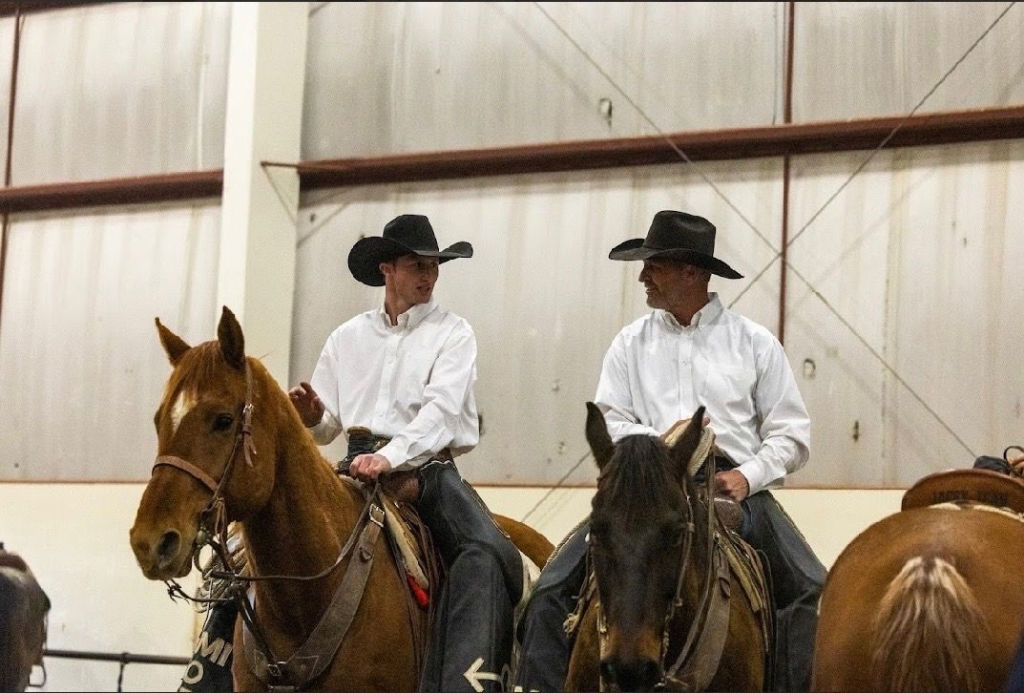
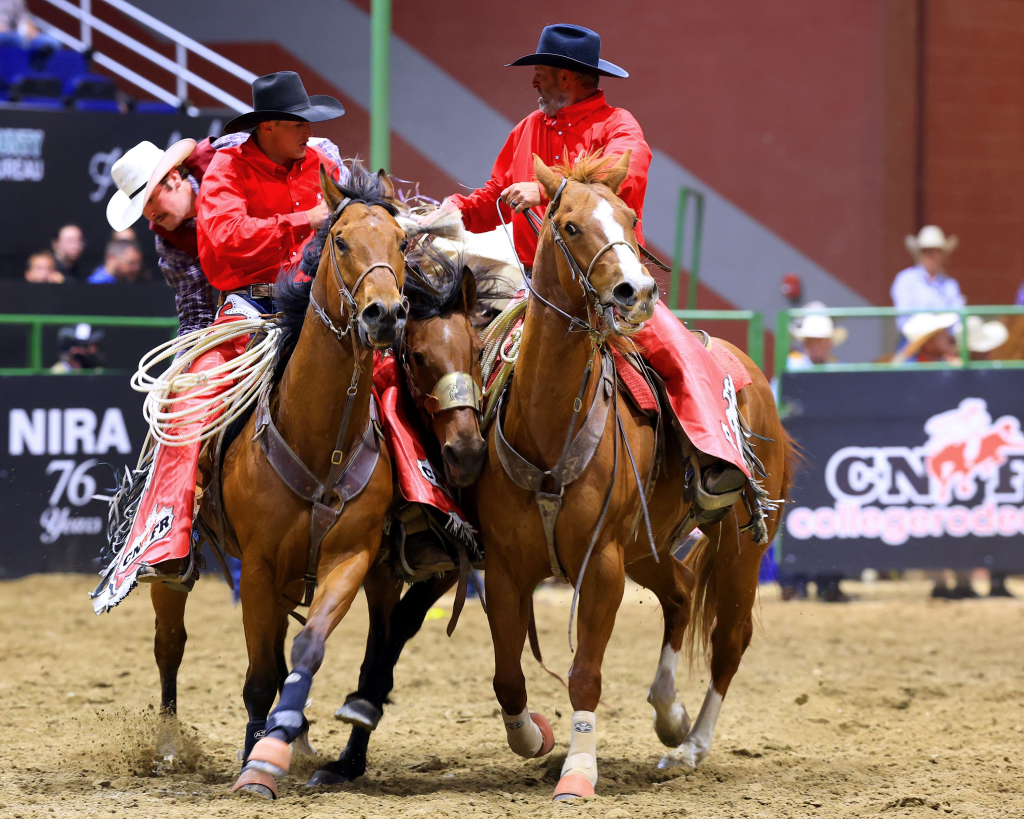
Picking up can be a dangerous job. Bucking horses are moving at a fast pace, and the average horse doesn’t want to ride up next to a horse that’s bucking. “It can be anything from a green colt (as a bucking horse), to bareback hangups, to adverse weather and freak accidents,” Ryan said. (But he is quick to point out that “more people die from sitting in recliners too long, than being a pickup man.”)
The men, being good dads, worried about their sons’ safety in the arena, “to a point,” Ryan said. Hayes “had a good grasp about how it worked, and places to be in and not to be in. He’s dang sure been kicked like we all have, and nobody likes to get kicked. But as long as your horse is listening to you, you can generally avoid those situations, for the most part.”
Lance could see when Cinch was in the wrong spot in the arena and might get kicked.
“When you see (Cinch) out of position, and you think, he’s going to get kicked, I worried some, but I’m no mother hen, and he’d get kicked once in a while.”
He didn’t give much advice while he and Cinch were working, when Cinch first started out.
“I don’t like to say much in the arena,” he said. “What little you do talk, you talk about between the bareback riding and the saddle broncs, or on the way home.”
All three men continue to pick up with their sons, working high school and college rodeos, the amateurs and the pros.
The Heikels pick up at Nebraska State Rodeo Association and Mid-States Rodeo events, at high school rodeos, and a few pro rodeos, for a total of about 20 events.
The Hannas do about ten pro rodeos a year, with both men working other rodeos with other people.
The Gilberts work together on about ten pro rodeos. In 2025, together they picked up the College National Finals Rodeo and have worked together at Cheyenne Frontier Days.
Being a pickup man isn’t a lucrative job. All the men have other jobs: Lance at a sale barn, Ryan and Duane as ranchers. The young men do, too. Cinch shoes horses, dayworks and rides colts. Hayes makes bits and spurs, and Kagan, a student at the University of Wyoming, cares for the college rodeo team’s livestock and dayworks.
When they were young, the young men rode their dad’s horses. Now they have their own strings.
“To start with, I gave him my best horses,” Duane said. “When Kagan went to college, he started building his own herd. Now he has his own string of nine horses, and a lot of them I’ve never ridden. It’s evolved, from me giving him my good ones, to someday I might have to borrow his good ones.”
For the Hannas, it’s the same.
“He’s been having to make some of his own horses,” Ryan said, of Hayes.
The men are pleased to help their sons get started.
“People think that these kids are lucky, (to get a start from their dads), but it’s like a quarterback in pro football,” Duane said. “Sure, Peyton Manning’s dad was a quarterback, but Peyton still had to learn how to throw a ball. (The younger generation) gets to learn from someone who has already made mistakes.”
Duane and Lance were first generation pickup men; Ryan’s dad and uncles were pickup men and had a stock contracting company.
“When I started, I had zero clue how to do it,” Duane said. “I made a lot of mistakes learning how to be a pickup man, and I help Kagan learn how to avoid those mistakes.”
Now that all three young men have been at their craft for ten years or more, the advice from their fathers changes, Duane said.
“For the longest time, you have the father role of telling them what to do and what not to do and this is why you screwed up,” he said. “For me, there was that point where Kagan was his own man and now when we pick up together, I’m not telling him what I told him when he was fourteen. We’re partners now.”
The three young men have grown into the job and become good pickup men themselves.
Hayes is “doing real good,” Ryan said. “You can see his confidence growing a little more every time, and you can see him getting more comfortable with every performance.”
Ryan is pleased to watch his son continue the family tradition.
“I like having him take an interest in something I’ve always liked to do. I like watching him grow and get better at something our family enjoys.”
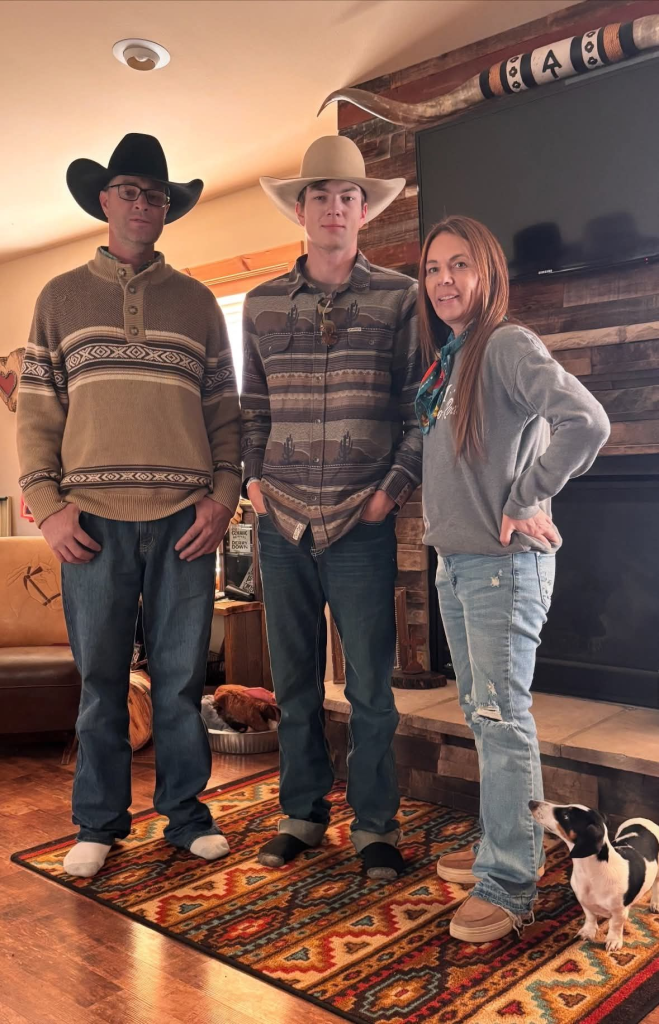
For Duane, the best part of working alongside his son is knowing him so well. “We always know what each other is thinking. We’re on the same page. And it’s fun to see him live out his dreams. He works so hard, and he gets to do what he wanted to do in life.”
The younger generation loves it, too.
Cinch said picking up with his dad, “is just fun. It’s second nature to him, and he makes sure everything rolls. He’s fun to pick up with. I’d rather pick up with him than anybody else.”
“It’s definitely a privilege,” Hayes said, of working with his dad. “He’s one of the greats. I’ve learned a lot from him, and I get ordered around a little bit, but that’s not always a bad thing, coming from my dad. We have our system down, and I’ve picked up with him more than anyone, and it’s always good.”
For Kagan, he loves working with his dad. “The best part of the job is he’s my dad, and not a lot of people get to work with their dad. It’s amazing, a true blessing.”
“It’s been quite the adventure,” Duane said.
Three other father/son pickup teams are at work at rodeos across the country: Jeff Dees and his son Jake, in Oklahoma; Tommy Pettit and his son Jake in Tennessee; and JT French and his son Jaret in New Mexico.