Salt of the earth, pride of a nation
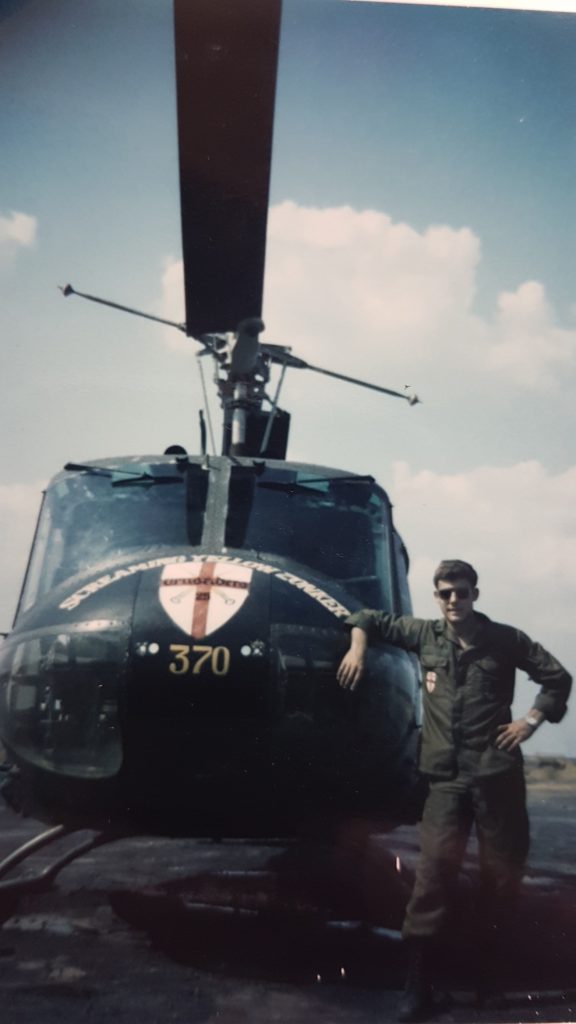
A Vietnam veteran remembers his service from the family ranch in the Nebraska Sandhills
The year was 1970, and, rather than waiting to be drafted as he surely would, a young man by the name of Benj Simpson from the Nebraska Sandhills had gone ahead and enlisted.
Simpson wanted to fly.
1968 had been an especially deadly year for American troops, but 1970 was distinguishing itself as a year of passionate protest and national division as students across America’s campuses challenged the status quo that America belonged in the war.
All the protesting was only noise to Simpson who was ready to serve his country.
BASIC TRAINING AND MORE
Simpson, now 75 and happily ranching back in Nebraska, recalls graduating from Hyannis High School in 1968 and immediately going off to college where, as a student, he was fairly safe from being called overseas.
Studying at Chadron State College in Chadron, Nebraska, Simpson had completed his first year when he changed his mind and quit his studies. Because if Simpson was honest with himself, college was not for him, not even if college meant avoiding combat.
“My draft status went from 4-S to 1-A just like that,” Simpson says.
1-A, in military terms, means enjoying a front row seat in the action.
As long as that was the case, Simpson reasoned, he might as well enlist in order to influence his military assignment.
With the help of the local Army Recruiter, Simpson signed up and was soon off to Army Aviation Maintenance School in Fort Rucker, Alabama. He completed Basic Training in Fort Lewis, WA in March of 1970 and by May, Simpson was learning new skills as a helicopter crew chief and maintenance tech.
IN-COUNTRY AT THE INFAMOUS CU CHI
Just as anybody would, Simpson had “in-country” training to complete once he shipped.
Simpson’s training took place at none other than Cu Chi, South Vietnam, where the U.S. had a major military base and the Viet Cong had constructed a network of tunnels, all near Saigon, now Ho Chi Minh City.
Simpson was at the U.S. military base to master escape and evasion techniques and jungle survival; to inoculate himself with malaria pills; and to entertain the prospect of being shot down and taken prisoner, before he had served his first day in combat.
ON TO TAY NINH
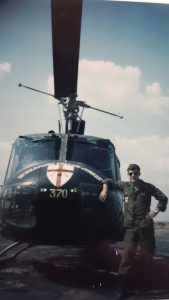
Initially stationed at Tay Ninh, South Vietnam, Simpson served with the 187th Assault Helicopter Company. The 187th consisted of two platoons going about in Huey Helicopters, protected by another platoon of Cobra attack gunships, augmented by maintenance and support units and finally a medical detachment unit.
The Hueys, they were known as “lift platoons” and it was the job of lift platoons to deliver infantry directly into combat zones, to conduct emergency extractions, and to handle combat resupply and medical evacuations.
Simpson remembers supporting infantry units in the field. He remembers moving troops “to better confront and engage” the enemy. He remembers medi-vacing the wounded and the dead to hospitals and other medical facilities. Recalls resupplying infantry and field support bases with both food and ammunition.
Flying reconnaissance missions was also part of the company’s duties. Recon missions were used to gather intelligence about enemy troop strengths and movements as well as enemy resupply routes and possible enemy command posts.
As a helicopter crewman, Simpson says, he was privy to many beautiful sights as seen from the air.
Buddhist temples, sprawling rubber plantations, and every season.
Monsoon season would pour buckets of rain and the dry season meant contending with flying dirt kicked up by helicopter blades churning.
There were jungle fires that filled the air with smoke.
Simpson won his freedom from combat service in Vietnam in September of 1971. His new orders were for Fort Hood, Texas, where he served out the rest of his military career.
In January of 1973, Simpson was discharged from active duty, heading home to Nebraska to fulfill a promise.
HISTORIC MILESTONES DOT SIMPSON’S SERVICE
Just as Simpson had been busy completing Basic Training and more in 1970, a year considered by historians to be the peak year of protests, the year of Simpson’s discharge is also of note.
The Paris Peace Accords – a diplomatic agreement endorsed by representatives from the United States, South Vietnam, North Vietnam, and the Viet Cong – were signed on January 27, 1973, the same month and year that Simpson returned to the grass and dunes of his upbringing.
The Paris treaty established a ceasefire and prompted the complete withdrawal of remaining U.S. troops from Vietnam, secured the release of American prisoners of war.
PROMISE FULFILLED
With national events as the backdrop, Simpson had a personal promise to fulfill, one made to his girl back home.
Janice, whom Simpson had dated before deploying, had faithfully sent letters to Simpson during the war, waiting for her sweetheart to return.
“We talked about getting married before I left but I said no, not now. If I make it back, we’ll get married. I made it back and we got married.”
The couple has been married 54 years, raising children and ranching in the Whitman and Hyannis area where they run a cow-calf operation.
“I have been on this ranch since 1976. I got out of the military in ’73 and came back to ranch with my father-in-law.”
RANCHING AS REFUGE
Ranching gave Simpson purpose and a sense of normalcy.
“Coming back to the ranch was a saving grace. It was almost like brain therapy. The ranch was my psychologist from all of the things that affect you as a combat veteran. PTSD, nightmares. I came back and just went to work. I tried to remember the good, too, because I saw many beautiful things from the air. I saw a lot of bad things, too, of course, but I tried not to dwell on it. Working with animals, ranch work, it provided the brain therapy that allowed me time to adjust.”
While Simpson may have been one of the many veterans who enjoyed a less than perfect welcome home, Simpson says public sentiment has mellowed over the years, even from some who opposed the war.
“Some of the people who demonstrated against the war, as they matured, they learned that they could hate the war and not hate the warrior. I saw this happen around the 1980s.”
COMING FULL CIRCLE
That ranching would be part of Simpson’s therapy after the war seems fitting, because it was ranching after all that helped to ready Simpson for battle.
“Ranch life prepared me for the military and for the war in terms of dedication to a work ethic, and in terms of taking responsibility. It also helped me with having a sense of patriotism. Another one would be the ability to overcome adversity emotionally, especially as a combat soldier.”
Simpson goes on to explain:
“On the ranch we see blood and death from all kinds of things. We are exposed to all of that. Keeping cattle, horses, ranch life. Things happen because of Mother Nature or a blizzard or whatever.”
War tests a man in much the same way, Simpson says.
“In a war, there is death, and you have to learn to put that in some place where you can continue the work. Ranch life is just like that, and it’s what helped me in my experience as a combat soldier.”
Simpson will assert that, while serving, he observed a difference between soldiers who came from a ranching or farming background and soldiers who did not. Simpson is generalizing, of course, but he is ready to make his point with conviction.
“Between 1968 and 1972, there was a lot of anti-war sentiment back home. This was the time of Woodstock and what-have-you. It wasn’t all people, but there were a good many people on drugs and so forth and I think that caused a numbness and a sort of defiance of authority and even of responsibility, I guess you could say. I saw all of that (among the people that he served with) in the military and if you came from a farming or ranching background, it helped you to deal with all of it.”
STILL FLYING TODAY
Simpson bought himself a plane when he returned from the war.
He used that plane religiously for many years and still flies occasionally – checking pastures, scrutinizing fence, inspecting windmills, stock tanks, hay, minerals.
“You can do all that in less than an hour and be back and flying also gives you (a superior) perspective. You see things from the air that you might not from the ground.”
He pilots a Piper Tri-Pacer.
CELEBRATING 250 YEARS OF FREEDOM
How will Simpson spend the nation’s 250th birthday?
He’ll spend it proud and enthusiastic.
“Our birthday. Two hundred and fifty years. Isn’t that exciting?”
And if you knew where to look, you might just find Simpson camping and fishing on the fourth.
“That’s certainly a strong possibility.”
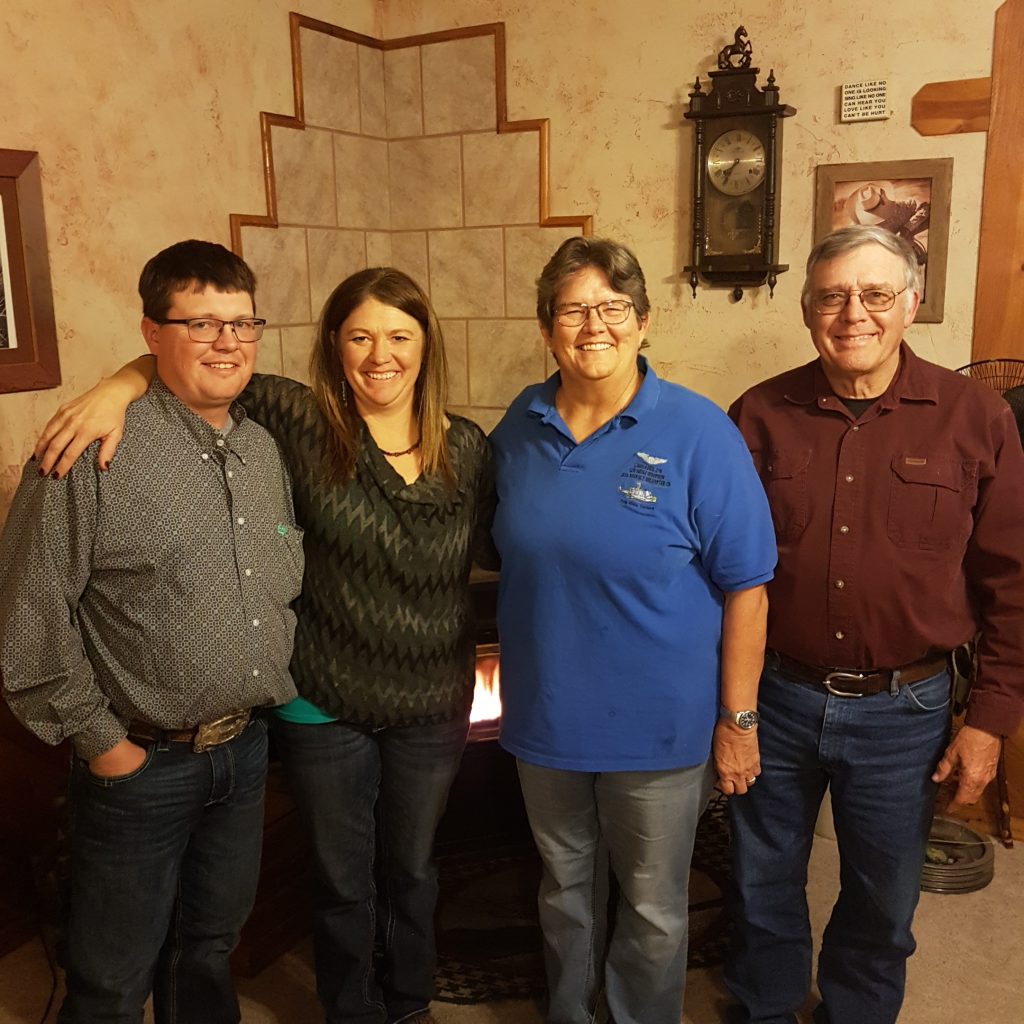
country honorably in Vietnam. Benj Simpson | Courtesy photos