Screwworm Detected in Tamaulipas, Sterile Flies Key to Combat Pest
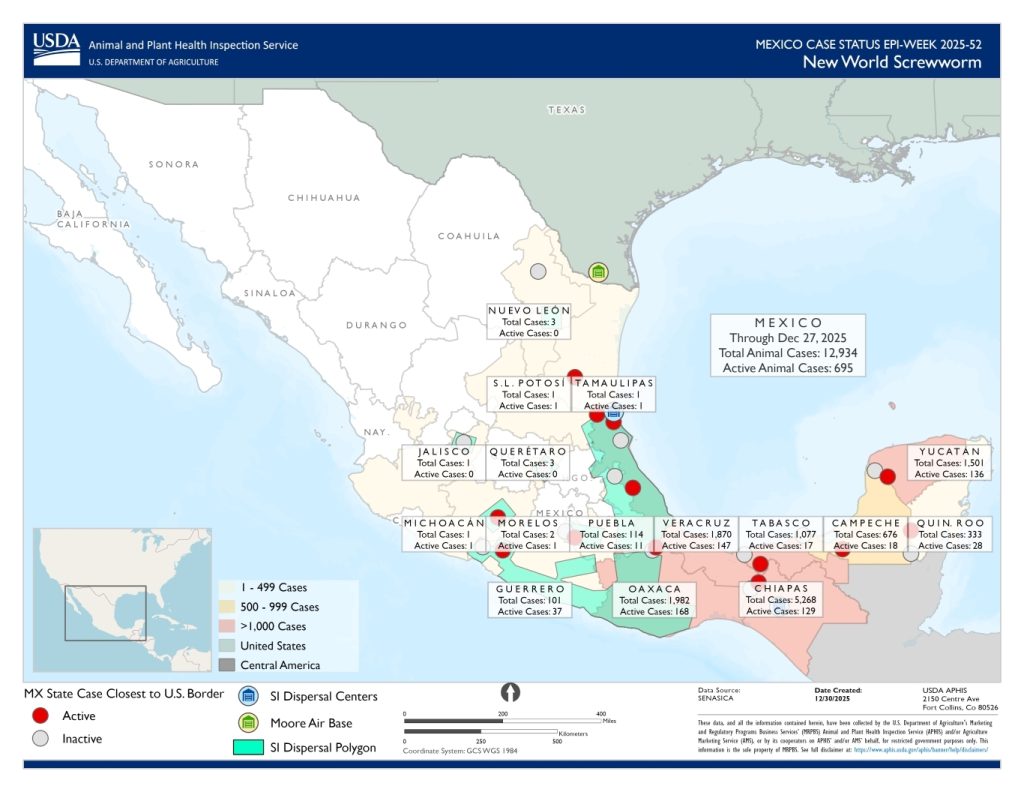
On Dec. 26, 2025, a case of New World Screwworm (NWS) was identified in a six-day-old calf located approximately 197 miles from the U.S./Mexico border in the Mexican state of Tamaulipas, near Llera. Mexico’s National Service of Agro-Alimentary Public Health, Safety, and Quality (SENASICA) confirmed the case, which is the first reported case in the state, and one of the northernmost detections to date.
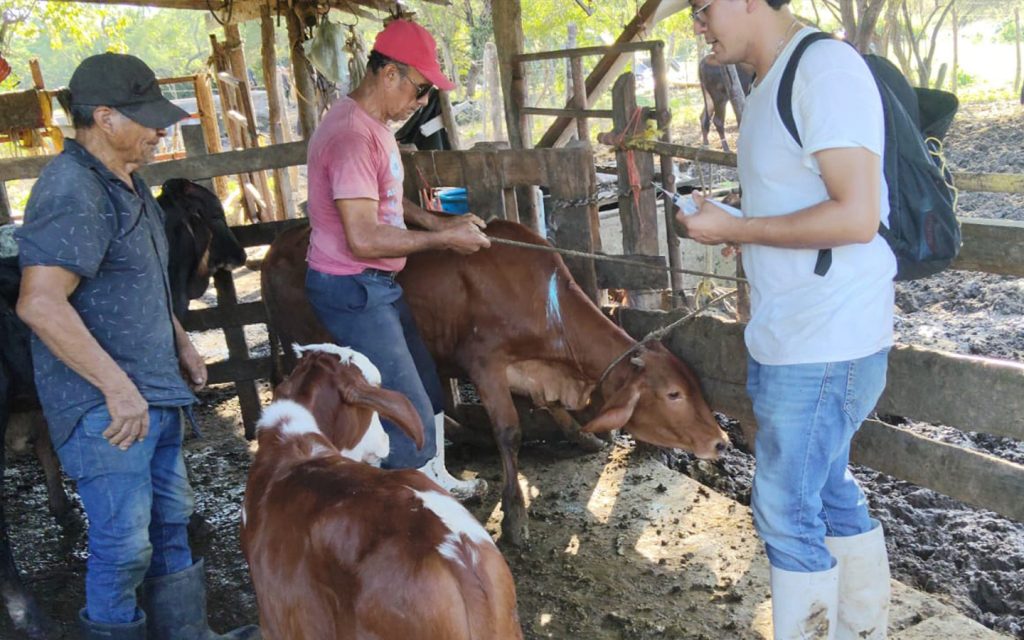
According to a press release, SENASICA was notified “by a zootechnical veterinarian in the free exercise of his profession” of a six-day-old calf that presented a myiasis due to screwworm of cattle in the navel. SENASICA personnel went to the property, where 21 cattle of mixed ages were located, and found no other animals affected by NWS.
To inactivate the case as soon as possible, SENASICA immediately deployed specialized technical personnel to strengthen surveillance in the area and carried out the following actions:
-Epidemiological tracing and active search for suspected cases was carried out in coordination with personnel of the Government of the State of Tamaulipas.
-10 production units have been visited around the case, in which 325 cattle, sheep, goats, poultry, horses, pigs, canines, felines and hares were inspected, no new positive cases of GBG were found, wounds of 20 animals were treated.
-Informational talks and training are provided to local ranchers on recognition and early notification of NWS injuries.
-Fly trapping was reinforced, through the installation of new strategic traps in the detection area. No NWS flies have been detected in the traps installed in the region.
SENASICA continues to coordinate with APHIS-USDA to release sterile flies in the region.
According to the U.S. Department of Agriculture, Mexico has confirmed a total of 12,934 animal cases of NWS through Dec. 27, 2025. As of this date, 695 are considered active cases. The majority of these cases are located in the southern states of Mexico.
Several cases of NWS have been confirmed within 400 miles of the U.S./Mexico border since July, 2025.
“Isolated detections outside of the known affected areas in Mexico are not unexpected, and the fact that they have been identified and addressed quickly show that our collaborative efforts with Mexico to implement the NWS Action Plan are working,” the USDA states on their website.
“USDA continues to disperse 100 million sterile insects per week in Mexico and closely evaluates the location and circumstances of each new case to adjust sterile insect release efforts and locations as needed.”
Texas Agricultural Commissioner Sid Miller issued the following statement, calling for vigilance and increased sterile fly production to combat NWS.
“The continued detections of New World screwworm near the Texas border are grim reminders of the serious threat this pest poses to our state. Thanks to the efforts of USDA Secretary Brooke Rollins and APHIS working in coordination with Mexico, its northward spread has been halted, and this recent case promises to be a one-off, for now. But to fully eradicate this threat, the bottom line remains unchanged: we need sterile flies. I said as much a year ago when I criticized the Biden Administration’s failed efforts to corral this pest—dollars don’t kill screwworms, sterile flies do.
“Under President Trump’s leadership, Secretary Rollins and the USDA have now committed to a historic, targeted response that will deliver real results. Earlier this year, I was proud to stand alongside Secretary Rollins in Edinburg, Texas, as she unveiled her comprehensive five-point plan, and again at the Texas Capitol as that plan was expanded. I will continue to support and advocate for federal efforts to expand sterile fly production and infrastructure, because this proven strategy is key to the long-term eradication of New World screwworm.”
In November 2025, USDA opened a sterile fly dispersal facility in Tampico, Mexico. This facility allows USDA to disperse sterile flies aerially across northeastern Mexico, where the latest detection occurred.
Planning is underway with the U.S. Army Corps of Engineers for construction of a domestic sterile fly production facility at Moore Air Base in Southern Texas. USDA projects the production capacity of this facility will be 300 million sterile flies per week. This will be the only U.S.-based sterile fly production facility and will work in tandem with facilities in Panama and Mexico to help eradicate NWS and protect American agriculture.
For updates and information regarding NWS, producers are encouraged to monitor official communications from the Texas Department of Agriculture and USDA APHIS. For more information on NWS cases, sterile fly dispersal, and the USDA’s plan to combat NWS, please visit http://www.screwworm.gov.