Born to rope, built to serve: Dr. Chance Henderson embodies rodeo and military spirit
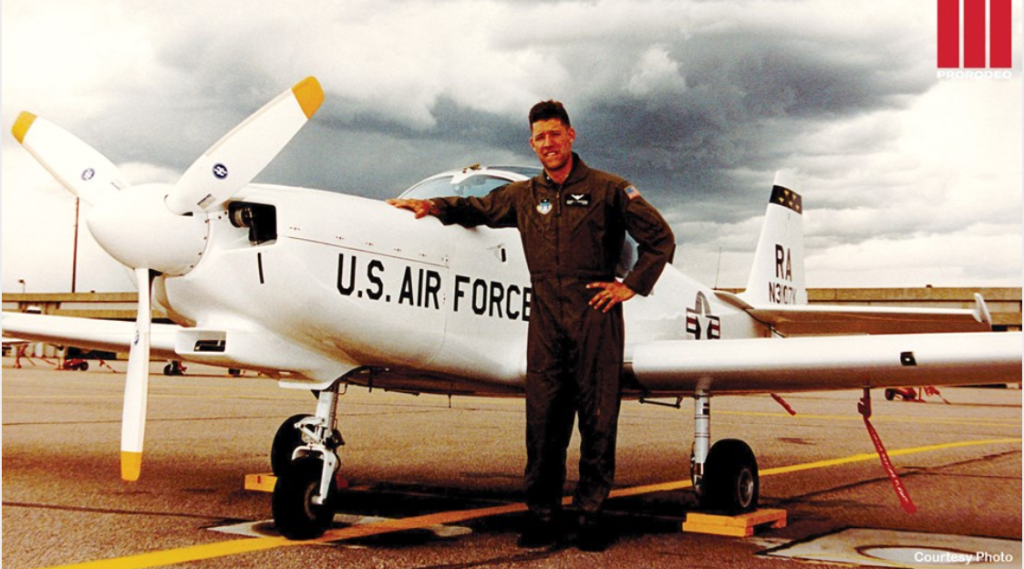
This month, we celebrate the 250th anniversary of our country, the beautiful United States of America, and all for which she stands. The cowboy way of life truly embraces the freedom offered in the Home of the Brave, upholding the well-worn values of patriotism, hard work, and grit. It is not an easy way of life, but it is worth it.
For United States Air Force veteran and former tie-down roper Dr. Chance Henderson, the worlds of military service and rodeo not only share values; his identity is enveloped in both communities and cultures.
Henderson encompasses what it means to be, in his words, a “cowboy warrior”; someone who “does whatever it takes to get the job done.” Throughout his life, Henderson has proven to be exactly that.
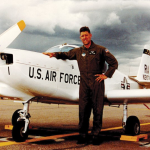
Originally from Paris, Texas, Henderson began his roping career at nine years old. After graduating high school, he enlisted in the Air Force to live out his Top Gun dreams. Henderson served his contracted year and then enrolled in the United States Air Force Academy in Colorado Springs, Colo. He walked on to the Academy’s football team, which took up most of his time at the USAFA.
After two years of classes and practices, Henderson left the service academy and rodeod for a summer.
“And man, I just started winning everything,” Henderson said. He tasted success that summer but ultimately found himself at Texas A&M University that fall. After graduating from Texas A&M, the Academy reached out, asking him to return. Henderson decided to “finish what (he’d) started” but upon his return he was told he was no longer eligible to play football. Not to be deterred, Henderson turned to rodeo and helped pioneer the Academy’s rodeo club.
“And shoot, I made the College National Finals,” Henderson stated.
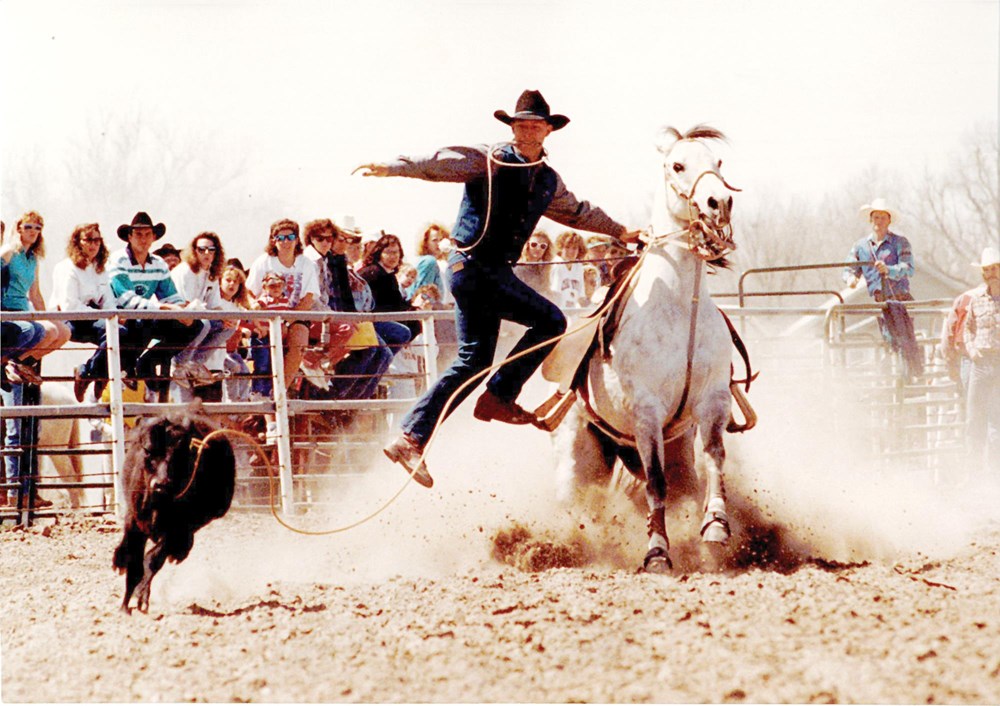
Henderson didn’t just make the CNFR – he was the 1996 National Intercollegiate Rodeo Association reserve champion calf roper. But doing it all came at a price; balancing rodeo, military life, and school was exceptionally demanding.
“There were times when I showed up in BDU (Battle Dress Uniform) bottoms and threw on a Western shirt and rode,” Henderson said. “I’ve roped in combat boots; I’ve done it all. It took a community of people saying, ‘Yeah, this is one of us. Let’s give him a little grace.’ And then, on the military side, it took the military guys going, ‘Hey, he’s going to miss a formation or two, but he’s representing the Air Force Academy, so let him go.'”
After graduating from the Academy, the Air Force allowed Henderson to defer pilot training and focus on roping, with hopes of making the National Finals Rodeo. He finished in the top 30 in the 1996 world standings, but duty called.
From the arena to the cockpit, Henderson eventually completed pilot training in Wichita Falls and flew fighter jets for four years. Seeking yet another challenge, he then followed in his father’s footsteps and attended medical school. He graduated from medical school at the University of Texas Southwestern in 2006, completed a five-year residency in orthopedic surgery, and finally completed a fellowship in San Antonio to become a subspecialist in upper extremities (hands, fingers, elbows, and shoulders). With his medical training complete, Henderson returned to the Air Force to fly the F-22, the newest jet at the time.
Lieutenant Colonel Henderson retired after 31 years in the Air Force in 2021. He credits his cowboy upbringing for preparing him for a career in the military.
“My dad had to turn out many calves for me to be skilled at becoming a competitive rodeo cowboy, but in the end, once I nod my head, it’s just me on my horse, and I have to be able to execute effectively – all alone – in order to win,” Henderson explained. “That same skillset of having to deliver when the chips are down was helpful as a fighter pilot and later on as a surgeon in the operating room.”
Today, Henderson spends his time giving back to the two communities that have always supported him as an orthopedic surgeon at the Colorado Center of Orthopedic Excellence in Colorado Springs. He estimates that about half of his patients are in the military, and the other half are rodeo athletes.
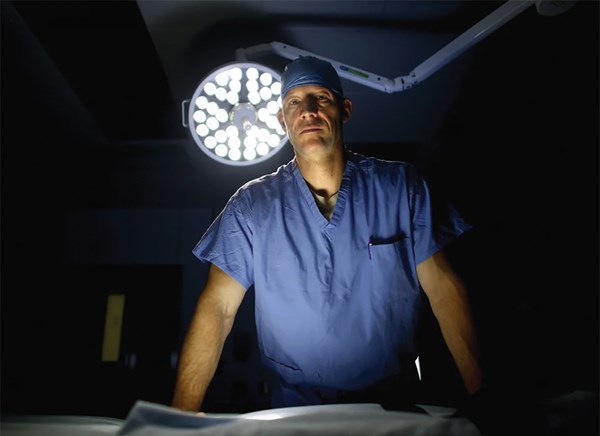
“It’s such a blessing,” Henderson said.
Although he’s no longer roping, Henderson has felt “re-embraced” and like he’s part of the team. It doesn’t hurt that he’s treated ProRodeo Hall of Famers like Trevor Brazile, Roy Cooper, Rich Skelton, and Joe Beaver.
For Henderson, the rodeo and patriotism go hand-in-hand.
“You go to the rodeo, and you can be nine or 90, but the first thing you’re doing is pulling your hat off and singing the national anthem,” Henderson said. “They’re not just giving a little service – those guys believe it.
“America. Mom. Apple pie. Rodeo cowboys and the U.S. military. All the same spirit, I think.”
-PRCA