Country Christmas 2026 | Meeteetse Chocolatier: Wyoming shop makes world-class chocolates
Sarah Hill Follow
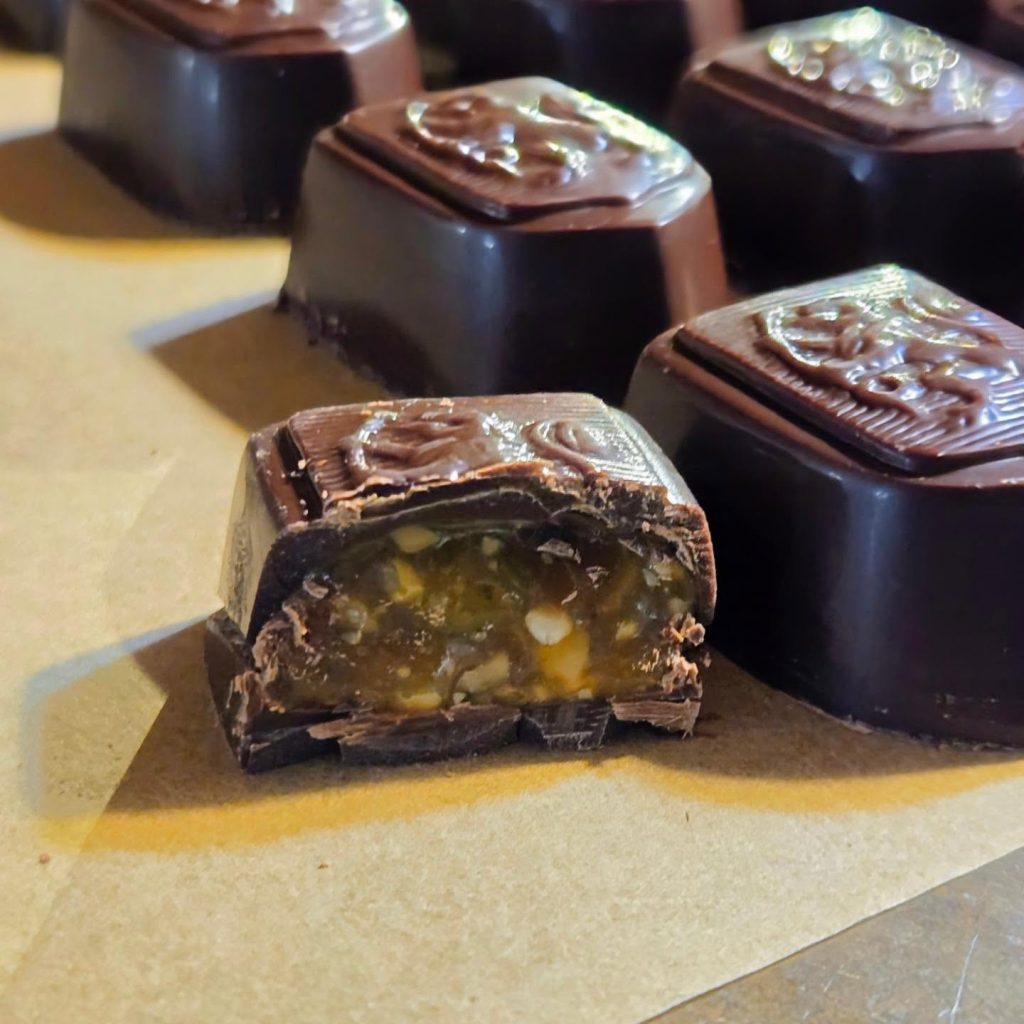
Pumpkin_Praline
Nestled in the downtown shops of Meeteetse, Wyo., is a chocolate lover’s dream. Meeteetse Chocolatier, owned and operated by Tim Kellogg, is built on Kellogg’s agricultural roots and produces high-quality chocolates and desserts for local residents and tourists. Kellogg also teaches customers about the in-depth process of growing cacao and what it takes to produce chocolate.
Funding a Rodeo Habit
Kellogg moved to the Meeteetse area in 2001 when he landed a job on a local ranch. Kellogg’s interest in making chocolate was actually launched by his desire to compete in rodeo in 2004. He was looking to raise funds for a new bronc saddle and competition fees.
“My mom suggested that I make chocolates to sell at a local event, but I wasn’t convinced,” he said. “It was the Fourth of July weekend and I wanted to spend time with my friends, and it was going to be a lot of work.”
Kellogg’s rodeo coach encouraged the idea as well, reminding Kellogg that rodeo is a pay to play sport. Kellogg finally relented, thinking that he could prove everyone wrong that selling chocolates wasn’t a good idea.
“I sold chocolates for a craft fair during the Cody Stampede and sold out every day, and it helped me to pay for rodeo,” Kellogg said. “I figured that people were buying from me for a lark, since I don’t look like your stereotypical cook or baker. I wondered if customers would come back.”
After selling more chocolates at local craft fairs and farmers’ markets, Kellogg noticed that customers were returning and asking for specific products he’d previously made. His phone started ringing with customers asking for special chocolates to gift friends and family for birthdays, anniversaries and other special occasions.
“That’s really what made me think there might be something to building a small business out of making chocolate,” he said.
Natural, Organic Chocolate
Meeteetse Chocolatier produces and sells high-quality, organic and natural chocolates. That approach is by design. Kellogg said he prefers the taste and texture of chocolates without additives and preservatives.
“At first, I couldn’t afford those extra ingredients, and I didn’t know how to use or work with them,” he said. “I run a small shop, so I make everything fresh every day. I don’t need a massive back stock of product. Every chocolatier has to do what’s best for them.”
Kellogg grows his own herbs that he uses in the kitchen, such as sage, rosemary, mint, basil and thyme. Using fresh herbs gives his chocolates a more savory, unique flavor, more like a fine wine with notes of different flavors.
“With some chocolates, the mint flavor is almost so strong that it tastes like toothpaste,” he said. “My mint truffle made with fresh mint tastes earthy, not like a candy cane. With a dark chocolate, I prefer that savory, unexpected flavor that customers don’t expect. I want customers to taste the premium chocolate first and then detect hints of other flavors—like mint, Bailey’s Irish cream or champagne. It shouldn’t mask the flavor of the chocolate.”
The chocolatier uses giant slabs of cocoa butter from Belize and organic cane sugar to make his products. Kellogg said he’s tried sourcing beet sugar locally, but none of the local sugarbeet processing facilities sell to consumers. All of the flour used in pastries and other baked goods is sourced from Wyoming Heritage Grains, Powell, Wyo., which Kellogg said has upped the texture and taste of his baked products. The chocolate shop is tree nut free. Organic peanut butter is used in a few items. Chocolates are gluten free, and Kellogg said that because the flour he uses isn’t overly processed, some customers with gluten sensitivities can enjoy his pastries.
“I tell any customers with celiac disease to be very careful,” he said. “There shouldn’t be any gluten around, but I can be a sloppy cook, so there may be flour around. Sometimes, it’s like a cartoon kitchen.”
Finding a Community
Kellogg was a self-taught chocolatier at first, with much of his learning coming from YouTube videos and the Food Network.
“If you’re only making chocolates once a year, it’s not a positive experience,” he said. “You’re basically relearning how to do it every year. At first, it took me two to three days to make something edible, and the chocolates were pretty good for my skill level at the time.”
With no desire to leave the ranch—and still building his chocolate-making skills—Kellog opened Meeteetse Chocolatier one day a week. His ranching work ethic kicked in and he would make chocolates all night on Friday night, selling them on Saturday. Any earnings would go back into buying ingredients for the following week.
In the meantime, Kellogg was working as the night calver on the ranch, and when he wasn’t working with the cattle, he’d spend his time reading Food & Wine magazine and other cooking magazines and websites to learn more about his craft. But he was struggling to find guidance on making high-quality chocolates and desserts.
“I realized that I was struggling to evolve,” he said. “My chocolates were getting better, but I wasn’t able to diversify my products because I wasn’t adding sugar, preservatives or other additives. I was going for texture as opposed to shelf life and durability, using fresh fruit and herbs instead of extracts and flavorings. Artisan chocolatiers weren’t really a thing in the U.S., outside the really big cities like New York or Chicago.”
One evening, Kellogg read an article in The London Times about a chocolatier in London who was succeeding at making chocolates without added sugar, preservatives or other additives and coming up with unusual pairings—exactly what Kellogg was striving for.
“I found that other chocolatiers in London were doing interesting and vibrant flavor combinations, focusing on flavor and taste,” he said. “I knew that something was going on in London, and I needed to get there to see it.”
Kellogg discovered a culinary school that catered to working professionals, but he couldn’t afford to attend a two-year course, nor did he want to take other courses that were unrelated to his area of interest. He finally found intensive courses that were two to five days long that focused on chocolate. After applying to those courses, the school officials responded by gently redirecting Kellogg to U.S.-based culinary schools.
“I can be a bit stubborn sometimes,” he said. “I didn’t want to waste my time learning how to bone or smoke a chicken or anything else. I responded that what they’re doing with chocolate making isn’t happening anywhere else, and I would really benefit from attending.”
The persistence paid off. The London culinary school accepted Kellogg’s application, and before he knew it, he was on a train to the school. Doubts and nerves began creeping in.
“I was very nervous and quite hard on myself,” he said. “I was never nervous when I get on a bronc or on the ranch, but what was I doing there?”
Kellogg’s nerves quickly melted away as soon as he got into the kitchen and started learning. The instructors were very hands-on in their teaching method, which was a perfect fit for Kellogg. He quickly built working relationships with the instructors and other chocolatiers and returns once or twice a year for more training.
“They bring in very influential chocolatiers for short courses on making caramel, snacking bars, and more,” he said. “Sometimes, classes will pop up and I’ll email them, asking them to hold a spot for me, even though I don’t have a plane ticket booked yet!”
His experiences at the culinary school have really helped Kellogg to advance his skills without spending a fortune or taking years to hone his craft.
“At one course, the instructor was really trying to push us outside traditional culinary boundaries with chocolate, and we made a rosemary chocolate mole sauce to go on a smoked chicken breast. I had a laugh at myself because I did need to know how to roast a chicken after all,” he said.
Kellogg has also worked with a chocolatier outside of London that has his own production facility. That experience has helped Kellogg gain ideas on how to operate his own shop, such as organizing the kitchen, how they produce food items and more. He takes many photos and notes to use when he returns to Wyoming.
“I’ve learned so much from them,” he said. “Some of it is wildly simple, but it’s always a fun part of the experience to have those light bulb moments.”
These lessons have encouraged Kellogg to become more creative in his product offerings, which has been very successful.
“I developed a raspberry snacking bar, which is a long, narrow bar of dark chocolate filled with a layer of raspberry puree, a layer of raspberry ganache and sea salt caramel enrobed in a Belgian dark chocolate. I was really nervous about selling it, because it’s so complex, even though it looks simple,” he said. “It was all beauty on the inside, with layers and textures. When I tried one, I thought it was the greatest thing I’ve ever made. Customers went nuts for them, so I was thrilled.”
Finding the Source
Kellogg uses a variety of chocolate including Belgian and French chocolate. The last six or seven years, he’s expanded his horizons by going to Belize and buying cacao directly from cacao farms. He then grinds the beans himself to make his own single-origin chocolates.
“Around 2018, I was having a conversation with a chocolatier who insisted that you could only be a true chocolatier if you were making it from cacao beans all the way to the case,” he said. “I realized that while I was tempering the chocolate, filling the molds and making all of the ganaches, fillings and extracts myself, I didn’t really know where my chocolate was coming from.”
Cacao beans are grown in Central and South America, South Africa, Madagascar, and some Asian countries. Hawaii is the only U.S. state with the right climate to raise cacao beans. Kellogg said he’s looking to visit Hawaii in the next few years to build relationships with cacao farmers there, in hopes to make an American chocolate. However, because Hawaii is such a small state with few cacao farms, they don’t have the capacity to sell cacao beans in bulk, so 99 percent of cacao has to be imported.
After some research, Kellogg selected Belize as his destination, because every cacao farm is locally owned and organic. He hired a cultural anthropologist who specialized in taking tourists to farms where indigenous foods were grown.
“When I left Meeteetse, it was -40°F. When I got to Belize, it was 88°F with 84 percent humidity,” he said. “Everything was so green and lush, it was mind blowing.”
On his annual trips to Belize, Kellogg has learned about the process of farming cacao—picking, drying and roasting the pods. He takes hundreds of photos a day. Like grapes being grown for wine, differences in geography, humidity, heat and soil affect the flavor of cacao, so beans from two different farms are never the same. How the cacao beans are fermented and roasted brings out their flavors, with notes of cherry, leather, dried fruit, moss and flowers. The fields of large, old cacao trees do best when they have a 60/40 split of sun and shade.
Kellogg buys his cacao beans from six different cacao farms and a cooperative. He said that buying directly from the farm families means that they get all of the money, whereas if he bought cacao beans from a grocery store or wholesaler, what the farmers would get would be diluted.
“There is no way of mechanized harvest for cacao pods, so on the same tree, you can have a day-old bud to a fully ripened fruit,” he said. “Each tree has to be harvested by hand with a sharp machete. That leaves a lot of opportunities for exploitation on farms—there’s a very unsavory side to the cacao industry.”
Sharing the story of those cacao farming families is a joy for Kellogg. He posts lots of photos and videos to his social media feeds when he’s in Belize, helping to educate consumers on where their food comes from.
“Mass chocolate makers source cacao beans from all over the globe and blend it so it’s a homogenized product, because home cooks don’t want any surprises,” he said. “The cacao beans from Belize are like magic, with notes of star anise, cinnamon and ginger.”
Kellogg jokes that he’s probably the only guy who can spend two weeks in the jungle in Belize and come home with good smelling luggage. He said he sometimes gets odd looks from the customs officials but hasn’t ever had any issues importing cacao beans.
“I was leaving Belize with eight duffel bags of cacao beans, flying through Houston. It was hot and humid, so I was sweating and anxious because I’d had flight delays and a tight connection,” he said. “Along came a sniffer dog, and I thought that because I looked suspicious, the dog and his handler might get me. But they walked right on by.”
Kellogg recalls another strange encounter coming back into the U.S. with pounds of cacao beans.
“The customs agent working the scanner kept looking back and forth at my bags and me, and finally asked, ‘What’s in the bag?’ When I told him it was a couple hundred pounds of raw chocolate and cacao, and he was free to open the bags and look, that satisfied him.”
Back at Meeteetse Chocolatier, Kellogg has a chocolate tasting menu that allows his customers to experience the full spectrum of chocolate flavors, which surprises his customers.
“They will say that they just thought chocolate was chocolate, and there wasn’t any diversity of flavor,” he said.
The shop also has a display with dried cacao pods for consumers to learn about cacao farming. One cacao pod usually has 32 beans, which will produce one ounce of dark chocolate.
“When you think about the millions of pounds of chocolate that we eat in the U.S., it’s fascinating to think about the billions of cacao pods needed to produce that chocolate—and all picked by hand,” he said.
Zero-Waste Business
Kellogg’s work ethic is unmatched. He works in the kitchen all night and sells the chocolates in his shop every day, usually selling out by early afternoon. After taking October off for some much-needed relaxation, Kellogg is back in the kitchen in November, sometimes putting in 18 to 22 hour days leading up to Christmas.
“By Christmas, I’m exhausted and ready for a break,” he said. “I take January off, since no one wants to eat more chocolate and spend money after the holiday season. I go down to the National Western Stock Show in Denver and take in the cattle shows and sales before going to Belize for the cacao harvest. Customers buying for Valentine’s Day are usually panic shopping the week of Valentine’s Day.”
Kellogg also supports the Meeteetse community that patronizes the shop, donating to and supporting local groups including 4-H, FFA, Cody Stampede, Justin Cowboy Crisis Fund, Northwest College Rodeo team and many more.
Another unique aspect of Meeteetse Chocolatier is that Kellogg is working to make the shop a zero-waste business. Kellogg tries to recycle or reuse everything he can, taking recycling to the local recycling center in Meeteetse. Anything that can’t be recycled in Meeteetse is taken to the recycling center in Jackson when Kellogg makes monthly trips to a distributor. He estimates that the shop only produces one bag of garbage every seven to 10 days.
“I’m just trying to do my part to help offset my environmental impact,” he said.
-
Over time, Kellogg has become more creative in his product offerings, which has been very successful. He developed a raspberry snacking bar, which is a long, narrow bar of dark chocolate filled with a layer of raspberry puree, a layer of raspberry ganache and sea salt caramel enrobed in a Belgian dark chocolate (pictured). Photo courtesy of Tim Kellogg.
Raspberry_Snacking_Bar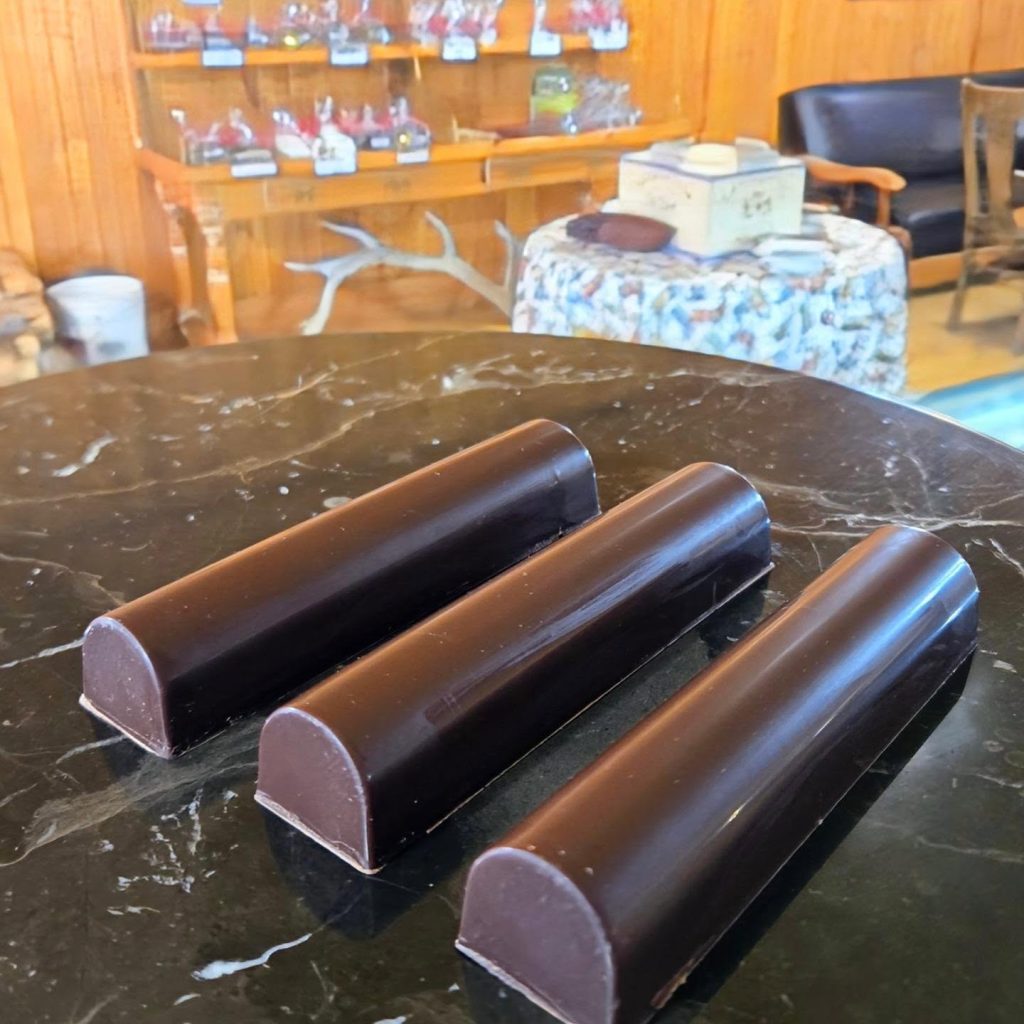
-
Kellogg grows his own herbs that he uses in the kitchen, such as sage, rosemary, mint, basil and thyme. Using fresh herbs gives his chocolates a more savory, unique flavor, like a fine wine with notes of different flavors. Photo courtesy of Tim Kellogg.
Pumpkin_Praline
-
Meeteetse Chocolatier produces and sells high-quality, organic and natural chocolates without additives and preservatives. Pictured is owner and chocolatier Tim Kellogg.
Kellogg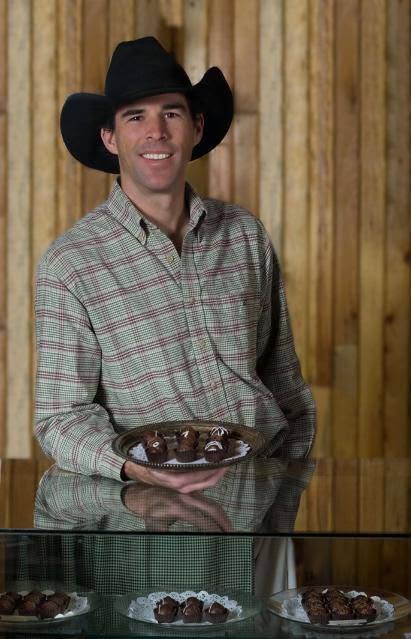
-
-
The last six or seven years, Kellogg has expanded his horizons by going to Belize and buying cacao directly from cacao farms. Photo courtesy of Tim Kellogg.
Cacao_Tree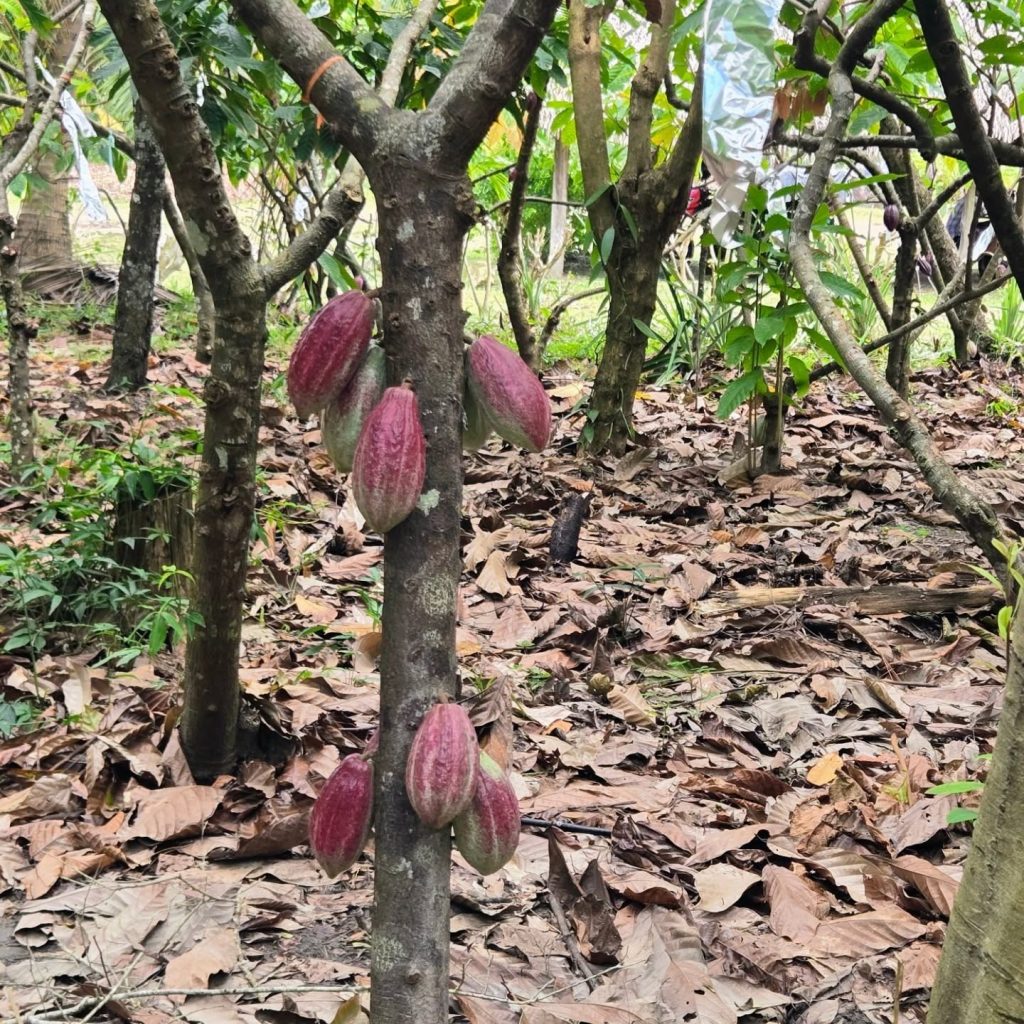
-
Kellogg discovered a culinary school in England that offers short, intensive courses on chocolate making. He has built working relationships with the instructors and other chocolatiers, and returns once or twice a year for more training. Photo courtesy of Tim Kellogg.
Belgian_Chocolatier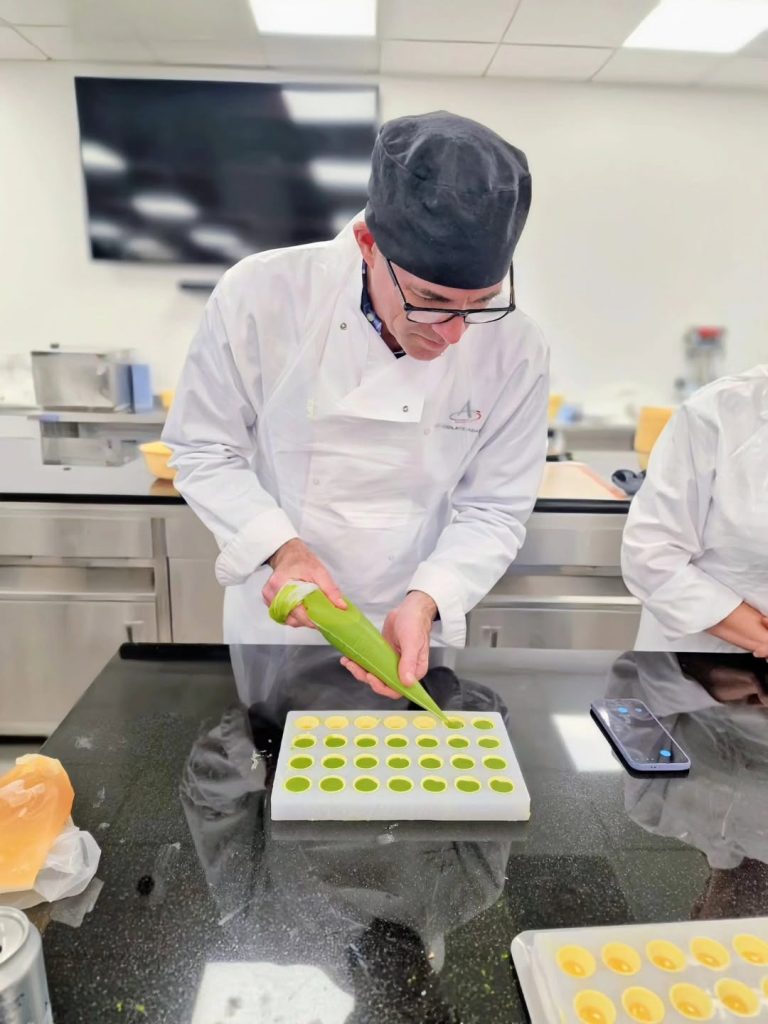
-
After selling chocolates at local craft fairs and farmers markets, Kellogg noticed that customers were returning and asking for specific products he’d previously made. Photo courtesy of Tim Kellogg.
Truffles