Driving innovation: Partnership brings autonomous truck “smart feeding” to University of Nebraska
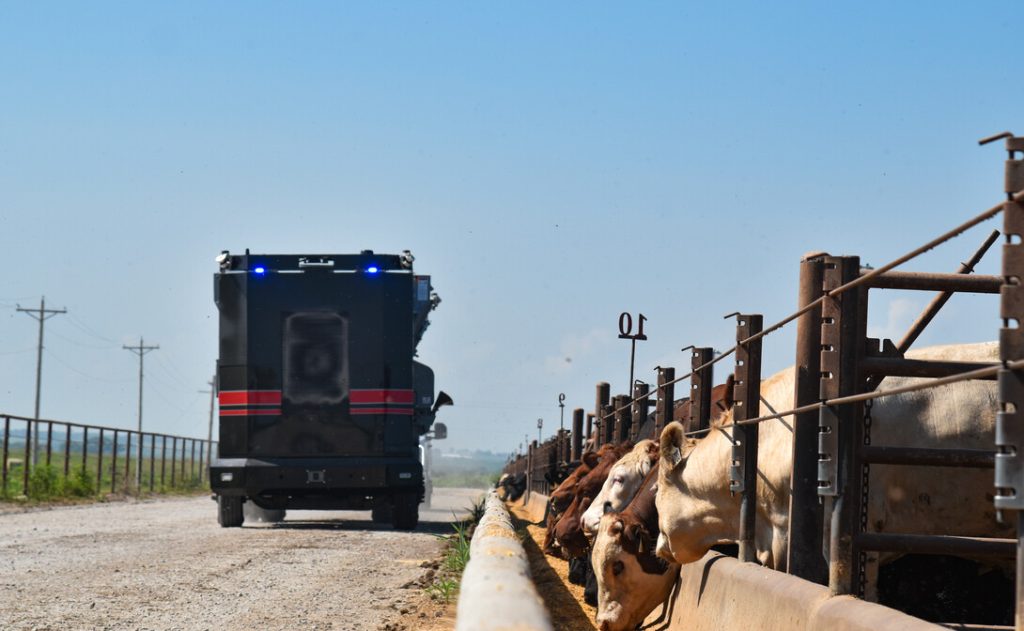
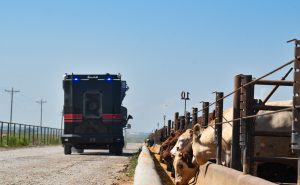
A recent partnership with ALA Engineering brought “smart feeding” to the Klostermann Feedlot Innovation Center (KFIC) at the University of Nebraska Eastern Nebraska Research, Extension and Education Center (ENREEC) near Mead. Through collaboration with the Nebraska-based company ALA Engineering, the university integrated of autonomous feeding truck use into the feedlot. The technology aims at boosting feeding efficiency and tackling the issue of a limited workforce.
Autonomous trucks and other upcoming technologies were demonstrated at ENREEC in conjunction with the AgTech Connect conference. Organized by The Combine, Nebraska’s ag tech incubator and accelerator (based at Nebraska Innovation Campus in Lincoln), the conference brought together founders, investors, producers and industry partners for live technology demonstrations, expert-led roundtables, keynote speakers and startup showcases.
The conference provided the opportunity to see cutting-edge ag technology operating in a real-world setting. Attendees also had the chance to see autonomous trucks, learn about UNL’s advanced feedlot technologies, and also hear brief talks on current and emerging challenges/technology in the beef industry.
An ongoing challenge for feedyards is delivery of consistent rations. The other challenge is finding experienced labor. ALA Engineering identified the need for more than incremental fixes to existing equipment. This led to the development of autonomous feed truck technology to enhance reliability and efficiency.
Jacob Hansen, CEO and co-founder of ALA Engineering, said that the goal of the autonomous feed truck is to augment, not replace, skilled labor and make feedyard operations more efficient. Hansen said, “The goal is to enhance the lives of both the livestock and the operators by enabling operators to engage in higher-value tasks.”
Drawing on his family’s experience in the industry, Austin Aulick, ALA CFO and co-founder, said, “Feed trucks and finding feed truck drivers are two crucial points cattle feeders depend on, and also two things that keep them up at night.”
The partnership with ALA Engineering is pivotal in demonstrating advancements beyond traditional feedyard feeding methods. ENREEC Director Doug Zalesky noted, “At ENREEC, we are just beginning to understand the use of autonomous feeding and what it might mean for the future. Demonstrating this new technology in an educational setting is crucial because it allows for unbiased comparisons. As part of our mission, we partner with industry leaders like ALA Engineering to learn about and advance new technology.”
Galen Erickson, University of Nebraska cattle industry professor of animal science and beef feedlot Extension specialist, noted that utilizing the autonomous trucks is a perfect tie-in with the mission of the KFIC in demonstrating technologies and innovations. Erickson said, “The facility serves as a testbed for showcasing data needed by the industry to make sound technology adoption decisions. We are working with ALA and monitoring equipment on our regular trucks to observe how they are driven and operated. We look forward to being able to evaluate technologies like autonomous feeding in the future. Another reason to test new approaches relates to student education, allowing students to learn how to use these technologies.”
Zalesky agreed that student experience is vital to prepare students for the workforce with industry-relevant information. He said, “Early access to technology significantly enhances the students’ experience.”
Zalesky noted that robotics and advanced technologies are utilized for various tasks at ENREEC and by producers, such as weed management and planting, along with technologies designed for the autonomous monitoring of animal health.
Erickson said, “I’m excited because, just like the industry, I think this has some application for operations that want to improve efficiency and improve accuracy. But more importantly, if you have trouble finding people, this may be a solution that will help ease that burden.”
Looking to the future, autonomous technologies are expected to have a notable impact on agriculture. Hansen noted that vision systems are making a huge impact, and over the next decade he anticipates seeing more niche solutions, like autonomous feed trucks, making big impacts.
-University of Nebraska-Lincoln