Hollenbeck: You and your heritage
Some folks believe in reincarnation or evolution, while others believe that we inherit traits from our ancestors. Perhaps since the beginning of time, there have been studies. At this very moment, researchers are studying transgenerational inheritance. What is fascinating, to me anyway, is while working on genealogy one uncovers traits and stories about ancestors that reflect on us directly. Then too, medical science has discovered an ancestral link between generations regarding various diseases and medical conditions. Some families have a high incidence of diabetes, heart issues, mental illness, even cancer. That is why, when visiting a medical establishment, you are required to fill out questionnaires regarding family medical history.
In my immediate family, my mother, I, one sister, and nearly all my grandchildren have big feet. These are known as “Kayton feet. My mother was a Kayton and nearly all of her Kayton relatives had large feet. Another “Kayton trait” was a short temper, better known as a “Kayton temper.” Although my mother was mild-mannered, many of her Kayton family, especially the menfolk, had what was known as short tempers. Besides being short-tempered, a strong Kayton trait was an extremely hard work ethic, making them generally successful in whatever they endeavored. Reading obituaries and historical stories, this work ethic was prevalent for generations and has seemed to follow through even to my grandson who has established a farm/ranch operation and who we often quip as having a work ethic on steroids, rarely ever taking a break.
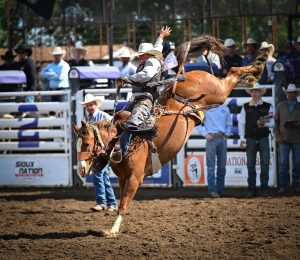
My husband loves animals, especially horses, and has a knack for breaking and training horses that has followed him through most of his 84 years. To this day, my husband is horseback nearly every day; it is his passion and in his blood, so to say. I have also worked on his genealogy records and have discovered countless ancestors and shirt-tail relatives, all with Hollenbeck DNA, that are involved with horses so apparently it is indeed “in his blood.”
This brings me to a poem I was commissioned to write for the Tri-State Livestock News called “Happy 250th Birthday, America.” Whenever I think about the 250th birthday of our nation, I immediately think about my patriot ancestral grandfathers who fought in the American Revolution. In my research, it was easy to learn about them as I have a number of ancestors that made a mark on early American history. The Kaytons were offspring of Andrew Steele, whose daughter Jean married Barnard Kayton and thus began that lineage. Andrew Steele’s father and his brothers came to America from Ireland “to fight the British!” They settled in the Shenandoah Valley of Virginia, established a road house/tavern called “Steele’s Tavern” which is the name of the village to this day. The brothers and their sons all fought in the Revolutionary War. I dedicated the poem to those Steele boys.
Fast forward to the Kaytons. After arriving in America in the 1600s, the name was Caton, as it was in England. The patriarch father was Jewish, wealthy, had a plantation, owned 19 slaves, and when the war broke out he pledged his allegiance to the crown. Two of his sons, William and John, had an issue with their father, left home and went to Virginia where they joined the Virginia Militia. It was there that their surname was changed from Caton to Kayton. They also became Presbyterian/Christians, so I’m sure they were considered outcasts by their wealthy father. To make matters worse, the Kayton boys ended up in Indiana and Iowa, and all of their offspring fought (some died) for the Union in the Civil War. I don’t know if they too had big feet, but I’m sure their temperament might have entered into the picture.
My dad used to caution me about digging too deep into family history. He said, “You might get far enough back in the family tree to where they swing by their tails.” It is indeed interesting to learn about the connections between yourself and your heritage.