Nebraska Ranch Practicum spreads research, resources to region’s producers
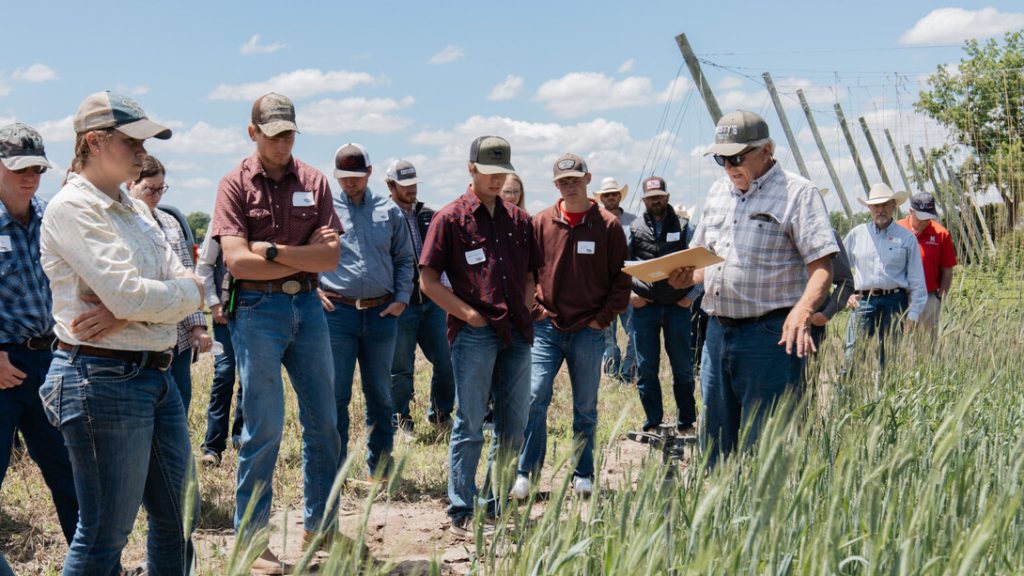
Lincoln, Nebraska, July 7, 2026 — A University of Nebraska–Lincoln program brings the newest agricultural research and hands-on education to ranching professionals, bolstering one of the region’s major industries in the process.
The Nebraska Ranch Practicum, run by Nebraska Extension, takes a systemic approach to help ranchers from across the region build their knowledge of the industry. Troy Walz, extension livestock systems educator and coordinator of the practicum, said it has provided programming on all aspects of ranching for more than 25 years, in the classroom and in the field, helping people make the best choices for their businesses.
“We want to strengthen their economics, sustainability and efficiency of their livestock operation,” Walz said. “We want them to learn how to make decisions and think through how that’s going to affect everything else in their operation.”
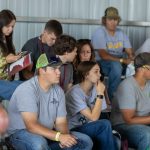
The practicum is held in eight sessions over an entire growing season and production cycle, from June through January, at the West Central Research, Extension and Education Center in North Platte and its Gudmundsen Sandhills Laboratory. Enrollment typically begins in January. Sessions cover topics like pasture grasses, calving and reproduction practices, and cattle body condition scoring, from the beginning of the season to the end, including presentations by university researchers.
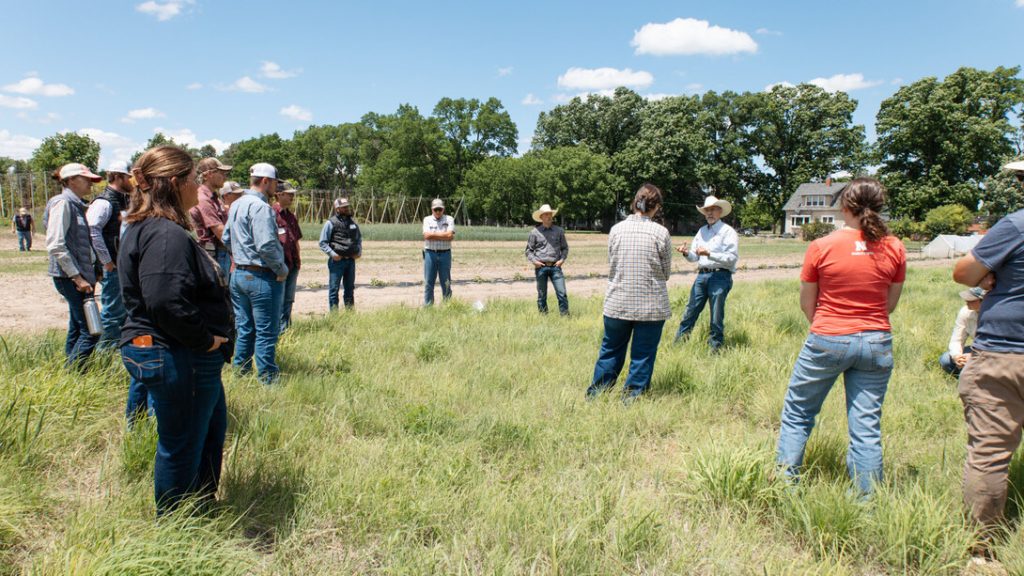
Walz said tracing development through the seasons helps participants relate the content to their operations and allows the curriculum to incorporate information about dealing with drought or wildfires.
“What a plant looks like in June is different than what a plant looks like in September,” he said. “They can understand how the grasses change in that time as they ID them.”
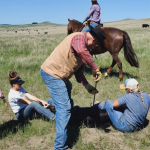
Addressing all areas of ranch management helps participants see how they influence one another, Walz said. Participants hear from university researchers on new research in the industry. They get their hands dirty with both pastures and cattle, as well as exploring decision support tools and other technology that can help with their operation.
“We look at the cattle and the grass and the economics as a system, and when you think about it that way, if you change one thing, it’s going to affect your whole system,” Walz said. “If you’re going to change the month when you have your cows calve, how is that going to affect how much you have to feed them over the winter?”
Jerry Volesky, professor of agronomy and horticulture, extension range and forest specialist and a researcher who presents at the practicum, said this approach helps ranchers fill in gaps they might have in their background and enhance skills in those areas.
“We’ve had people who were pretty good on the range and grazing management side of things but their skills in animal nutrition, for example, may have been lacking,” Volesky said. “Or somebody that may have had a really strong animal science background but may not have the skills related to the economics. Our objective is to put all three of those together.”
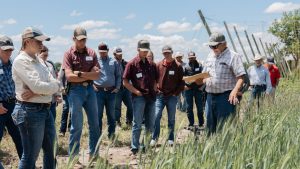
At the practicum, Volesky works with participants on plant identification and pasture management. He discusses topics like how grass responds to grazing and pasture rotation practices. He said the practicum demonstrates to ranchers how to evaluate their pasture and record useful data for their operation.
“We’ll have a close look out in the field how the grasses look compared to a month ago,” Volesky said. “We’ll also spend the time teaching the participants about good range health, what makes rangeland healthy and how you assess the condition of that pasture. If you have your records and you use those records, it’s a useful tool for planning your next year’s grazing. You can build yourself a personal database for your particular ranch or pasture you manage and get a good sense of what to expect.”
Blake Ferris, a distance student in the Master of Applied Science program at Nebraska, runs a ranch in northeastern Colorado with his wife, Emma, who is also taking the practicum this year, and his father. Ferris was especially interested in learning more about grazing management strategies and reproductive management techniques. He said the seasonal nature helps participants think more carefully about the individual steps of how a ranch progresses through the year.
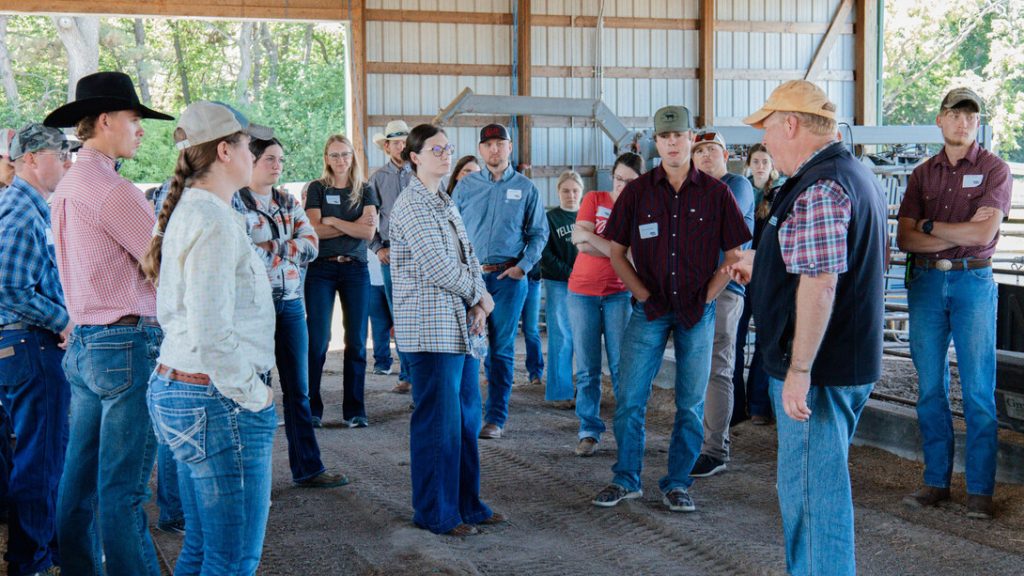
“Developing a level of comfort and proper understanding of these skills is essential,” Ferris said. “It’ll be fascinating to see how individual grass species and the pastures as a whole have evolved with the season.”
Walz said while the practicum does involve a classroom component, putting the attendees in front of a real functioning ranch makes clearer the distinctions between different types of grass, for example, and the changes from one stage of development to the next.
“They can see what the end product is going to look like,” Walz said. “You’re out there seeing the real thing rather than a slide on a screen. When we go out and look at the plants, we will show the different aspects to see what the blade looks like, see some of the differences in the characteristics, and having it in your hands and being able to observe it is very good for visual learning.”
They also have the opportunity to meet and develop relationships with university researchers and other ranchers. Some even call researchers later to ask questions and receive advice, Walz said.
For Ferris, seeing the plants and cattle up close added a useful visual element to the lessons in the practicum, pairing well with the classroom discussion.
“We were able to run the cows through the chute and get our hands on them and get an idea of what they like to look for,” Ferris said.
Ferris found particularly insightful a discussion about how to catch up late-calving cows with the rest of the herd. He said he is also looking forward to implementing some of what he has learned about grazing considerations on the land in his operation.
“It’s another tool in the toolbox for future years,” Ferris said. “We drive by and see grass every day, but it’s probably not as often that we stop and really evaluate and see how the growth has really progressed.”
Spreading the information to ranching practitioners can help them streamline processes at their ranches, creating a more robust industry in the region.
“The challenges facing ranchers are constantly changing, and so are the opportunities,” Walz said. “We want to sustain our natural resources through good range management practices and a sound understanding of grazing systems. At the same time, we want to ensure the long-term sustainability of ranching families and their operations by helping them become more efficient and achieve their goals.”
-University of Nebraska-Lincoln