New World Screwworm again detected within 120 miles of U.S./Mexico border
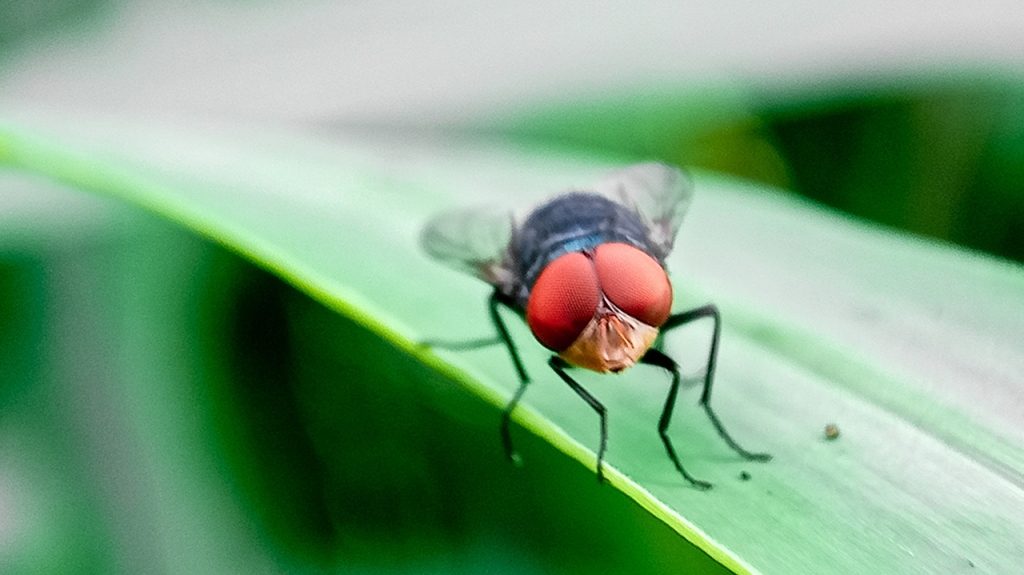
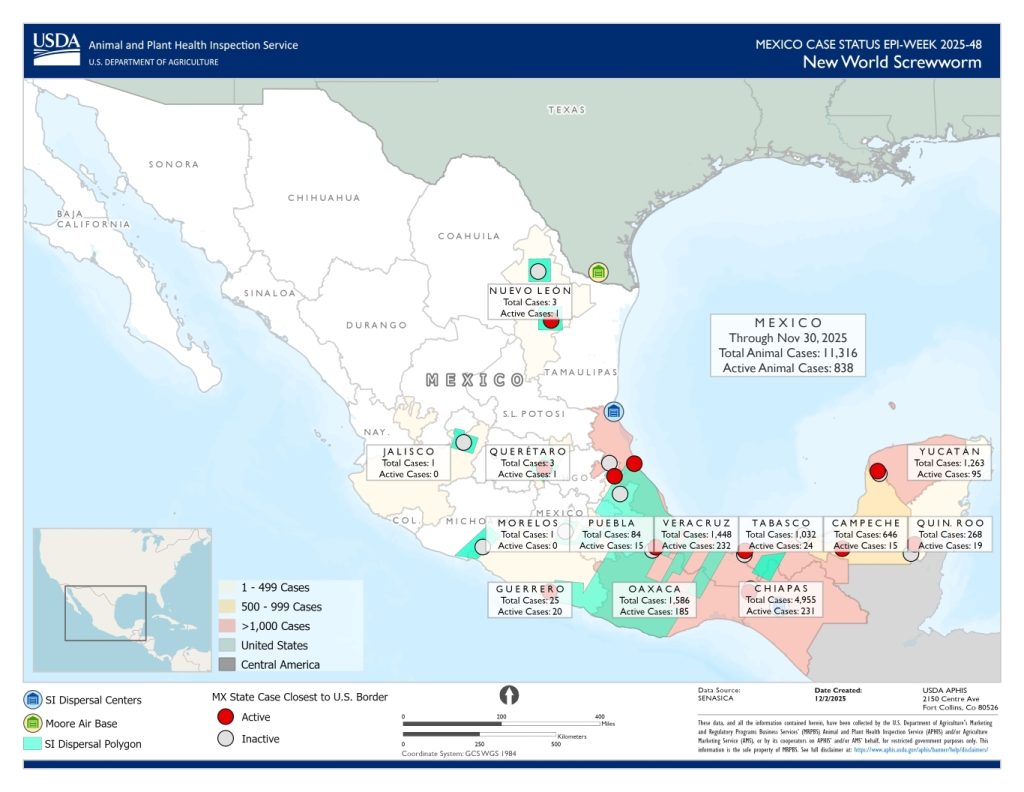
On Dec. 3, 2025, the Texas Department of Agriculture reported in a press release that the U.S. Department of Agriculture had notified them of a new detection of the New World Screwworm (NWS) in Montemorelos, Nuevo León, Mexico, approximately 120 miles south of the Texas border. USDA’s Animal and Plant Health Inspection Service (APHIS) confirmed the case in a 22-month-old bovine transported from Veracruz to a feedlot in Nuevo León.
According to the Texas Department of Agriculture, this detection marks the northernmost active case currently found in Mexico. It is also the second detection at the same Nuevo León feedlot since October. No additional cases were linked to the October detection, and both events appear tied to livestock movements from southern Mexico.
“The New World screwworm is one of the most devastating livestock pests ever encountered in North America,” Commissioner Miller said. “We have beaten it before with resolve and science, and we’ll do it again, but Texas must stay vigilant.”
Commissioner Miller emphasized that Texas remains free from detection, but that state officials and agriculture leaders cannot be complacent.
“Texas ranchers are the backbone of American agriculture. Our cattle herds help feed the nation and the world are just too important to risk,” Miller said. “We will keep working shoulder to shoulder with USDA, Mexican animal health authorities, and our own state agency partners to defend our border and Texans from this dangerous threat. We will protect our livestock, safeguard our economy, and do everything possible to keep the New World screwworm at bay.”
Commissioner Miller also encouraged Texas producers to remain watchful for suspicious wounds, unhealed tissue, or maggot activity in livestock, wildlife, and pets, particularly in locations near the border. Producers who suspect NWS should immediately contact their local veterinarian and state authorities. Early detection, strict livestock movement controls, screwworm fly suppression, and rapid response are the best tools to combat this serious threat.
USDA
On Nov. 21, the USDA launched Screwworm.gov as a centralized access point for NWS information.
“The Trump Administration is leading a whole of government effort to protect our nation’s cattle industry from the New World Screwworm. To ensure timely and effective communications, this new unified website will be a one stop shop for all screwworm related information and will help our stakeholders be better informed as new information comes available,” said Secretary Brooke Rollins in a press release. “We are grateful for the robust interagency collaboration, and we continue to work every day with our state and industry partners to implement our screwworm plan. This is a national security priority and it has the full attention of our team.”
According to the website, since July, Mexico has confirmed a number of cases of animals infested with NWS within 400 miles of the U.S./Mexico border.
“Isolated detections outside of the known affected areas in Mexico are not unexpected, and the fact that they have been identified and addressed quickly show that our collaborative efforts with Mexico to implement the NWS Action Plan are working.
“USDA continues to disperse 100 million sterile insects per week in Mexico and closely evaluates the location and circumstances of each new case to adjust sterile insect release efforts and locations as needed.”
USDA reports seven cases of NWS as currently active within 400 miles of the United States, including the 22-month bovine in Nuevo León, four additional bovine cases, a porcine case and an equine case.
Mexico’s National Service of Health, Food Safety, and Quality (SENASICA) defines a case as active at the time of diagnosis. After 15 days, the case is revisited and becomes inactive if personnel verify absence of new wounds or larvae.
Reports indicate this NWS infestation was found in a bovine transported approximately 500 miles from Veracruz, in southern Mexico, to a feedlot in Nuevo León. Both cases were likewise found in bovines transported northward from southern Mexico.
R-CALF
R-CALF USA CEO Bill Bullard issued the following statement in response to this latest reported detection of NWS in close proximity to the U.S.-Mexico border:
“We commend Secretary Rollins’ ongoing actions to prevent the introduction of NWS into the United States. Those actions include closing U.S. ports to imports of cattle, bison and horses from Mexico; maximizing the United States’ readiness through emergency management plans; expediting the production of sterile NWS flies to reduce the pests’ population in Mexico and to push it south of Panama; and supporting innovative research to further enhance eradication efforts.
“It is obvious that Mexico’s ongoing practice of moving cattle from its southern region, where NWS cases remain active, to its northern region increases the United States’ risk of the pests’ introduction.
“It is equally obvious that Mexico is not adequately enforcing restrictions on the northward movement of cattle within its borders.
“We urge the USDA to take steps to convince Mexico to halt all northward cattle movement within its borders and to fully investigate the earlier reports of illegal cattle trafficking from Central America into Mexico.
“Mexico’s ongoing outbreaks of NWS are a serious threat to U.S. livestock and wildlife, and the U.S. should continue prohibiting the importation of cattle, bison and horses from Mexico until Mexico can demonstrate that it has eradicated this devastating pest from within its borders.”
NCBA
The National Cattlemen’s Beef Association has previously stated appreciation for Secretary Rollins’ response to the NWS situation and concern over NWS detection near the U.S./Mexico border.
“It is extremely concerning for the American cattle industry that New World screwworm has moved so far north in Mexico,” said NCBA CEO Colin Woodall in a press release.
“NCBA appreciates all the resources Secretary of Agriculture Brooke Rollins has invested in protecting American agriculture from the New World screwworm. Designating funds for a domestic sterile fly facility, exploring new technologies for sterilizing flies, enhancing fly surveillance, and coordinating with other departments across the U.S. government are all important steps for safeguarding the U.S. cattle industry.”
Sterile fly production and dispersal
Sterile fly production and dispersal efforts are part of the USDA’s five point plan to combat the NWS and are critical to an effective New World screwworm eradication program. According to the USDA, “Sterile flies are one of the most important tools we have for eradicating screwworm. USDA is investing heavily in new and existing sterile fly infrastructure to ramp up production and expand our domestic response capacity.
“With these investments, production will approach approximately 500 million sterile flies per week – the same amount we used to eradicate NWS from the United States decades ago.”
USDA and Panama’s Ministry of Agriculture Development jointly manage and fund the NWS sterile fly production facility in Pacora, Panama. This is the sole production facility currently in operation in North America. The facility produces and disperses approximately 100 million sterile flies per week.
USDA is investing $21 million to help renovate and convert an existing fruit fly facility in Metapa, Mexico, into a second sterile NWS production facility. Once complete, the facility is expected to produce an additional 60–100 million sterile NWS flies per week. With continued support from APHIS technical experts, Mexico expects production to begin as early as summer 2026.
Planning is underway with the U.S. Army Corps of Engineers for construction of a domestic sterile fly production facility at Moore Air Base in Southern Texas. USDA projects the production capacity of this facility will be 300 million sterile flies per week. This will be the only U.S.-based sterile fly production facility and will work in tandem with facilities in Panama and Mexico to help eradicate the pest and protect American agriculture.
In November 2025, USDA opened a sterile fly dispersal facility in Tampico, Mexico. This facility allows USDA to disperse sterile flies aerially across northeastern Mexico, including in Nuevo Leon.
Construction is underway on a sterile fly dispersal facility at Moore Air Force Base in Edinburg, Texas. This $8.5 million facility, expected to be substantially complete by the end of 2025, will be capable of dispersing up to 100 million sterile flies per week.
For information from USDA on NWS detection and response, visit Screwworm.gov.

UPDATED DAILY: 2025 Wrangler NFR Round Results and Averages
Daily results from each round of the 2025 Wrangler National Finals Rodeo held at the Thomas & Mack Center in Las Vegas, NV | December 4-13, 2025.