2026 Fall Homeland | What a ‘succa’

Ruth Nicolaus Follow
4a_sedeveria_blue_burrito
Succulents make excellent landscaping, interior plants
The term “succulent” covers a wide variety of plants.
It is defined as “any plant with thick, fleshy leaves, stems or roots that store water,” according to Wikipedia.
One’s thoughts turn to cactus, like prickly pear or aloe vera, but succulents are more than that. All cactus are succulents, but not all succulents are cactuses.
They include hens and chicks, sedum, purslane (a common weed), and even hoyas, an old-fashioned houseplant.
Succulents can make good outdoor and indoor plants for several reasons, said Nick Volesky, South Dakota State University Extension Horticulture and Specialty Crop Field Specialist.
“They are relatively low maintenance,” he said, “due to their strong survivability and minimal irrigation needs.”
Outdoors, succulents can tolerate the heat well, Volesky said, and their appearance and size usually will not change too much, “allowing for uniformity throughout the season. Some species may flower, but they stay steady and green throughout the season.”
Their textures are appealing as well. From prickly skin to smooth, glossy leaves, succulents have “cool textures,” he said, “compared to other herbaceous plants.”
At Jolly Lane Greenhouse in Rapid City, South Dakota, one of the more popular succulents is the sedum ‘Spectacular,” said Kelli Radi, employee at the greenhouse.
It isn’t more than 18 inches tall and has a big pink flower.
Sedum can informally be categorized in two groups: the upright tall plant, which can grow as tall as two feet, and the low-growing groundcover. It is drought tolerant, “takes our climate well,” Radi said, “and is minimum maintenance.”
Its foliage is thick and fleshy, characteristic of succulents, and can range from deep green to chartreuse. The upright tall sedum flowers in late summer, with colors ranging from yellow to pink to red. The groundcover sedum flowers in the spring with colors that are yellow, pink, white or red.
The upright tall sedum gets top-heavy when the flower blooms in late summer. To remedy that, Radi suggests cutting them back in early June. She cuts them to an inch above the ground. “The new growth comes from the roots,” she said, and they will bloom the same time as normal.” Upright tall sedum is a long-lasting cut flower that doesn’t need much water and stays nice for several weeks.
Hens and chicks are also a popular succulent that is low maintenance.
Jolly Lane Greenhouse has about eight varieties of them, and Radi noted that some are perennials and some are annuals.
They come in a variety of colors: red, purple, green, gray, and some with webbing, fine, silver hairs that look like cobwebs and grow between the tips, Radi said.
Their color can change, based on the temperatures. “In the spring, the purple ones are dark, almost black-purple,” she said. “As the temperature rises and the sun increases, they go green, and in the fall, they go back to purple.”
In Elm Creek, Nebraska, Jan Gunderson is the unofficial “Queen of Succulents.”
The long-time gardener “grew up on a farm and loves to grow things,” she said. “I’m kind of a collector, maybe a hoarder of plants and succulents.” Most of her succulents are cacti. Again, all cactuses are succulents, but not all succulents are cactuses.
In the winter, she has 200 plants in her house, overtaking her and husband Jim’s grown daughters’ former bedrooms, and creating a jungle of sorts in Jan’s piano room, where she gives lessons.
In the summer, many of them go outside to the backyard, which borders the creek.
She has lots of succulents in pots, placed around the backyard: elephant plant, jade plant, different kinds of aloe, haworthia (it looks like an aloe vera but has small white bumps and is smaller); echeveria (which looks very similar to hens and chicks); starfish echeveria, snake plants, and more.
One reason Gunderson loves them is because they are easy to propagate. “You take a leaf, put it in the soil, and it builds a new plant, which is a miracle,” she said.
The biggest mistake people make with them is overwatering, she said. “You have to be careful to not overwater. I’ve gone through that stage in my life where I loved them too much and overwatered, and they wilt. They are good on neglect.”
Radi has 1,000 house plants, most under grow lights.
“I have a problem,” she jokes.
She says the best way to water cactuses is to wait till they are completely dry, all the way through. Radi grows her cactuses in clear plastic nursery pots, placed in decorative pots, and she pulls the clear pot out to check when they’re dry.
Then she completely saturates them. “That follows their natural cycle in the desert,” she said. “They are completely dry, then they get a downpour, and then they are dry for a month again.”
Gunderson uses groundcover sedum to keep the weeds down. It grows on berms and in the rocks and blooms. When it spreads, she pulls it out of the grass.
Gunderson and Radi both have hoya plants, which are not cactuses but are succulents. The plant will send out a vine and blossoms, but only when conditions are ideal, which is rare. Radi said the plant will bloom when the vines are well supported. “The shoots are looking for a good home,” she said. “And when it says, ‘I’m in a good place,’ it will flower.” One of Gunderson’s hoyas has vined along a hand rail, and it blooms because it has good support. The blooms can be white, pink or purple, and sometimes smell like chocolate.
In the fall, before a freeze, Gunderson brings in her potted plants.
It’s a big job.
“When my youngest daughter was still living at home, she would call her friends the night before a freeze and ask them for their help in bringing in the pots to the garage,” she said.
Before she brings plants in, she treats them for any insects that might be on the plant or in the dirt, so she doesn’t introduce bugs to her indoor plants.
Gunderson uses Systemic, a granular that she mixes into the soil. She also sprays them with Neem oil. For her hanging plants, she will soak them in the utility sink with warm water and Neem oil for 15 minutes, then let them hang to dry.
The Systemic should be applied regularly throughout the winter. “I sprinkle it on top of the soil and mix it in,” she said. “And I water it in.”
Gunderson has also sprayed 70 percent isopropyl alcohol on succulents that appear to have insects. She’s careful to not spray it on the soil or roots.
Her gardening extends beyond succulents. She grows pineapples, although they take a long time to fruit and need to be brought indoors over the winter. They’re delicious, she says.
She has a special garden area dedicated to her parents, Charles (who passed away) and Julene Margritz, who farmed. And she has an area for her sister, Mary Ice, who passed away from cancer, including ice plants.
Gunderson does two or three workshops each year. At the spring workshop, attendees bring big containers they want to use for outdoor plants, and Gunderson gives them a pair of scissors. “They walk around my yard and my deck and take whatever succulent they want to.”
Her garden is her “therapy,” she said.
The best part is the “sharing, and watching things grow and flourish under your care, and sharing what you’ve learned.”
As a current piano teacher and former first grade teacher, “I love growing knowledge,” she said.
-
Autumn Joy sedum blooms start as pink and get darker red as the fall progresses.
21_autumn_joy_sedum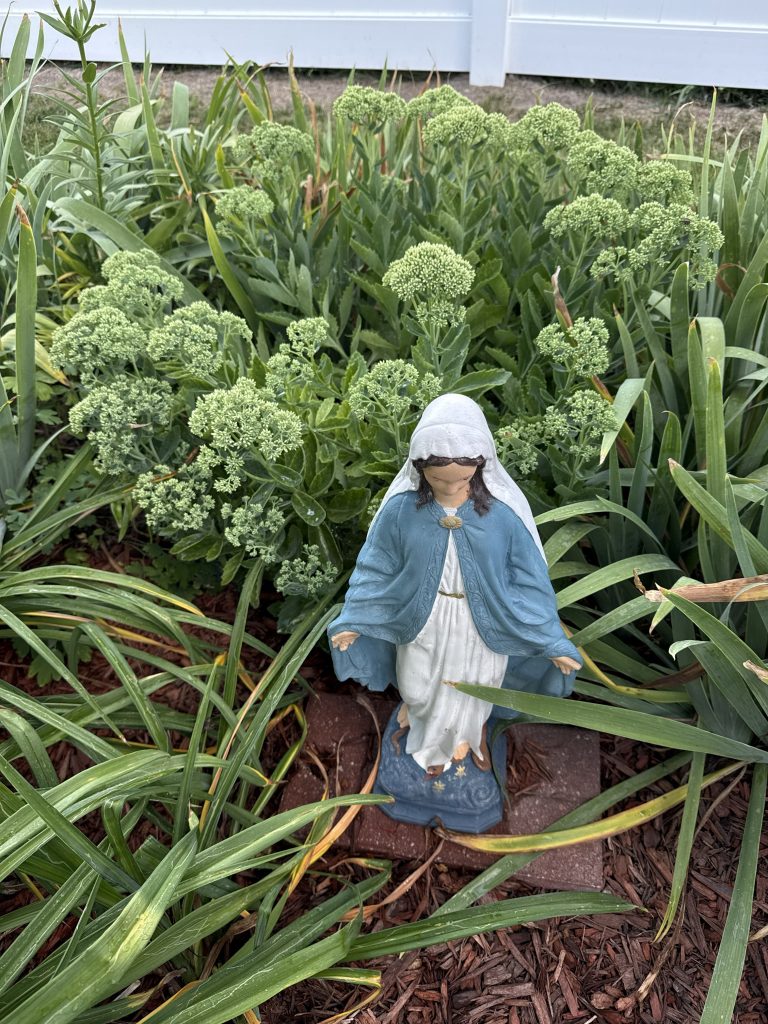
-
In her garden she has an area dedicated to her parents, Charles and Julene Margritz, who were farmers. Charles passed away ten years ago; Julene is still living.
22_her_parent’s_area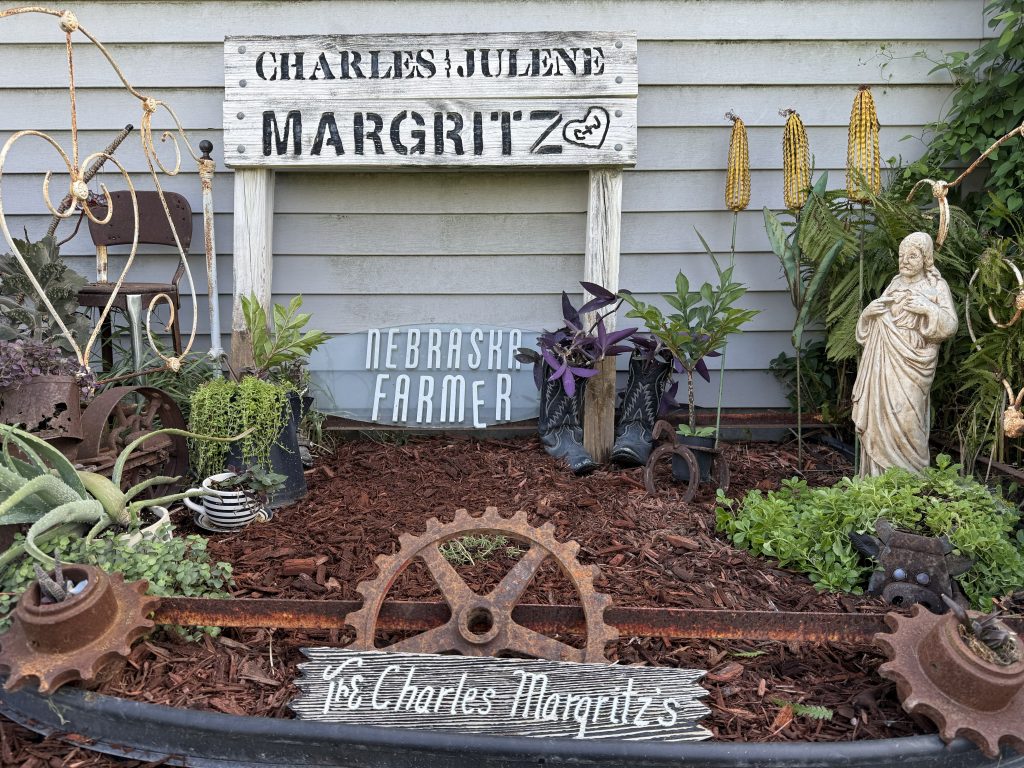
-
Sweet Autumn clematis covers a piano in Gunderson’s yard. The piano was the first one she gave lessons on.
23_piano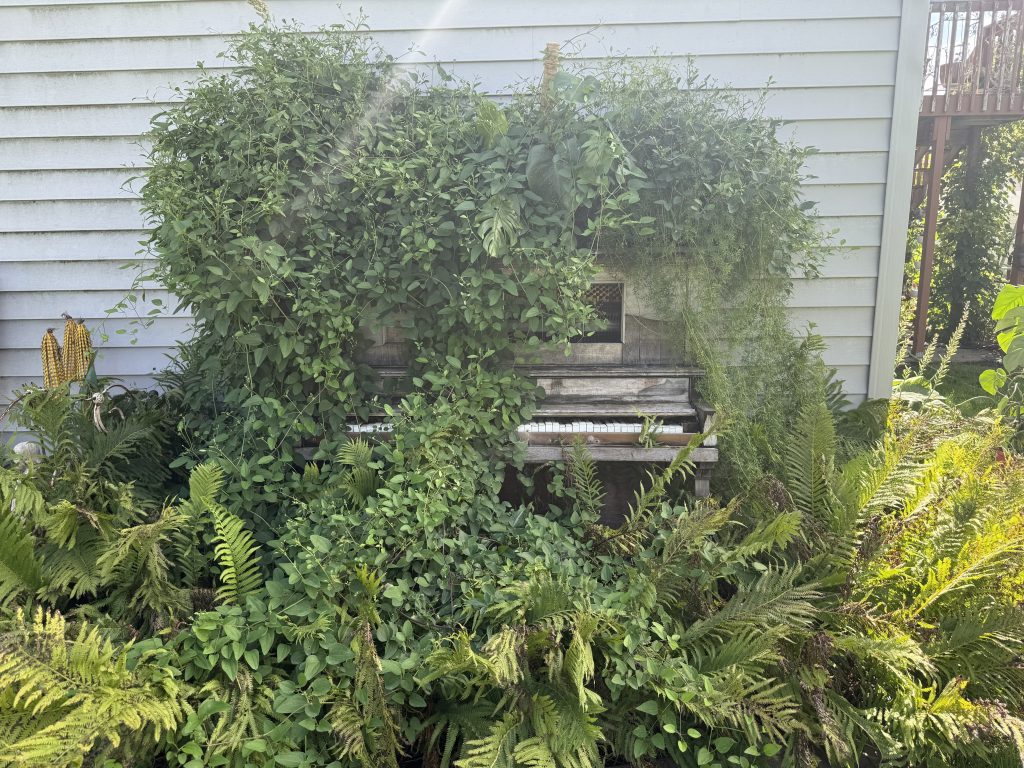
-
-
Echeveria ‘party dress’ is one of Gunderson’s favorite plants.
2_echeveria_’party_dress’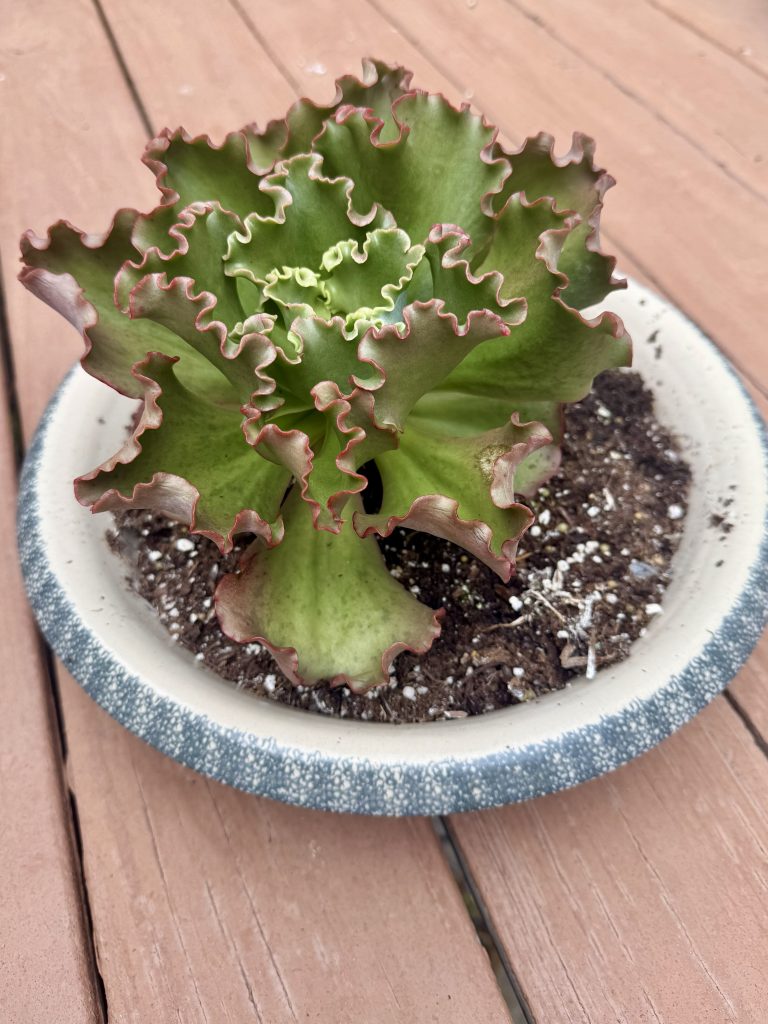
-
The succulent ‘lantern flowers’ has spiky arms.
3_lantern_flowers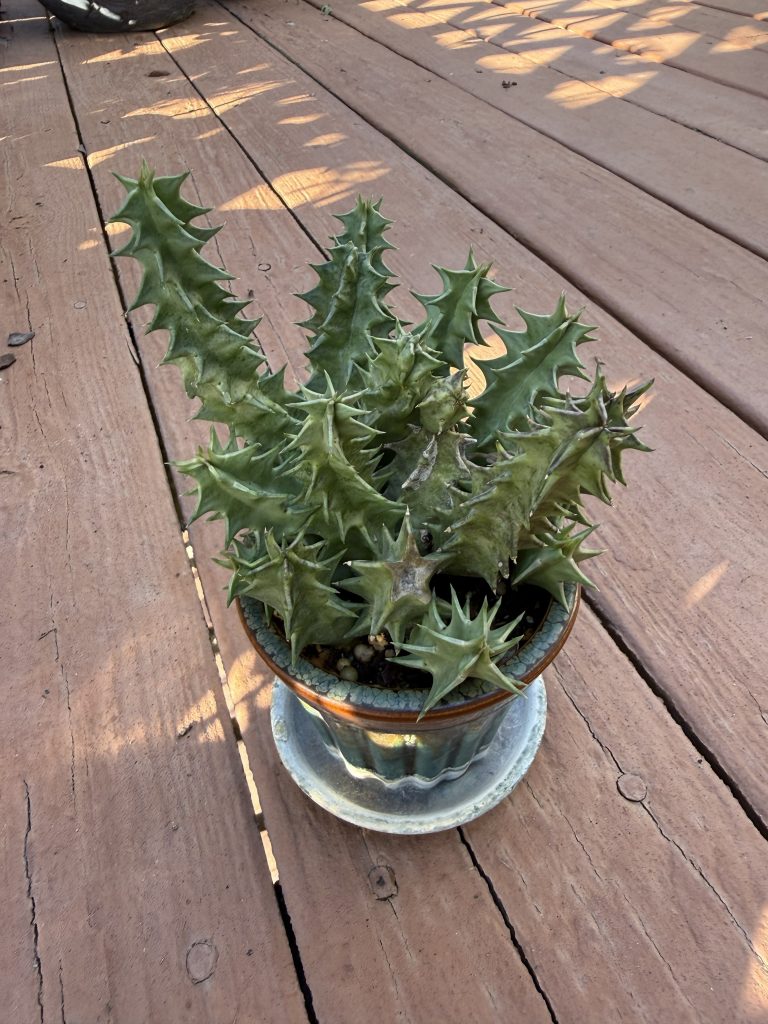
-
Orpine is a purple perennial succulent with a pinkish-purple bloom.
4_orpine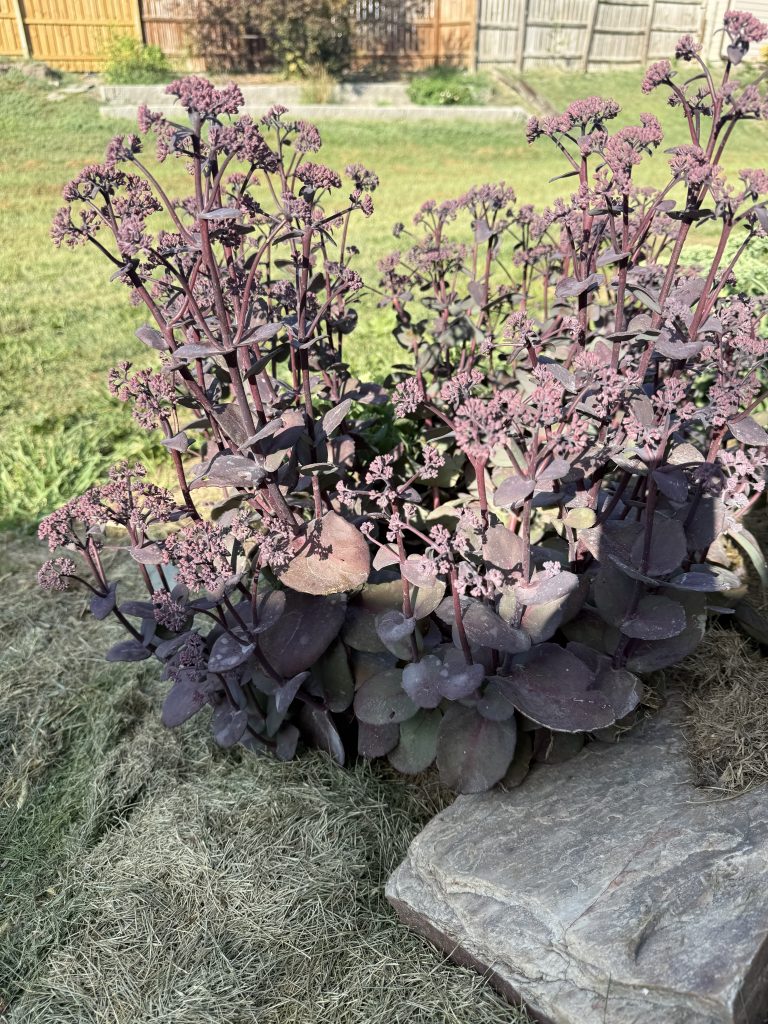
-
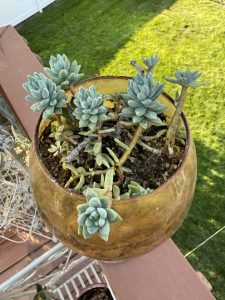
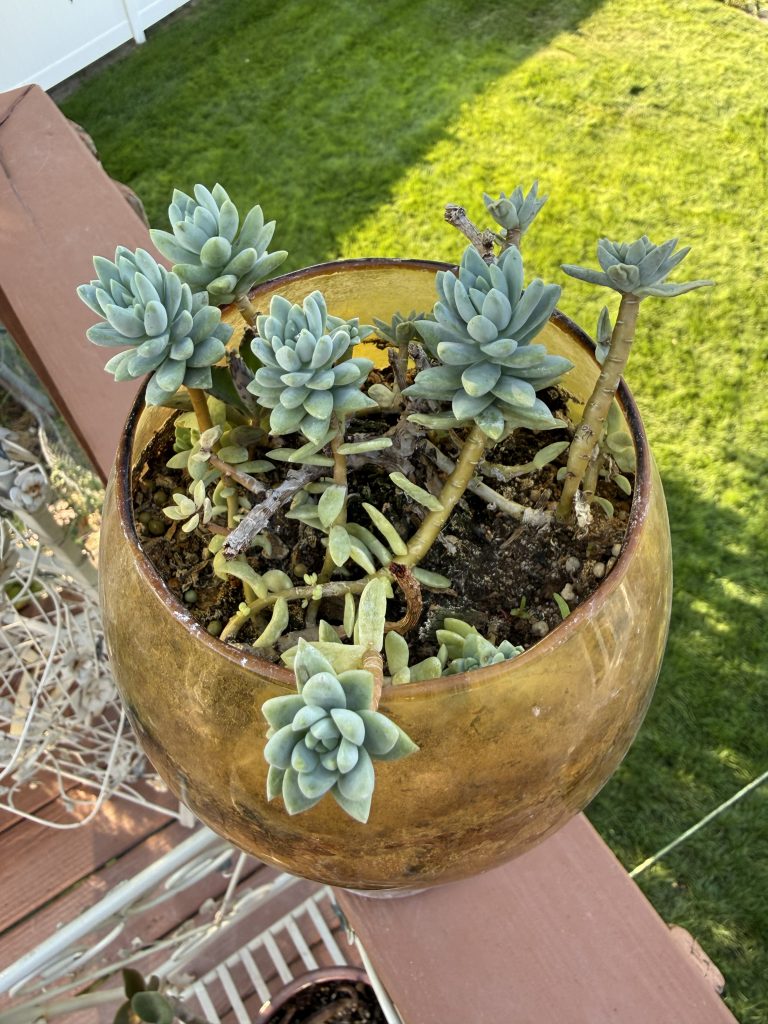
The blue-green leaves of the Sedeveria ‘Blue Burrito’ fall off and propagate very easily.
4a_sedeveria_blue_burrito
-
Another sedum in Gunderson’s garden. A common name for sedum is stonecrop.
5_showy_stone_crop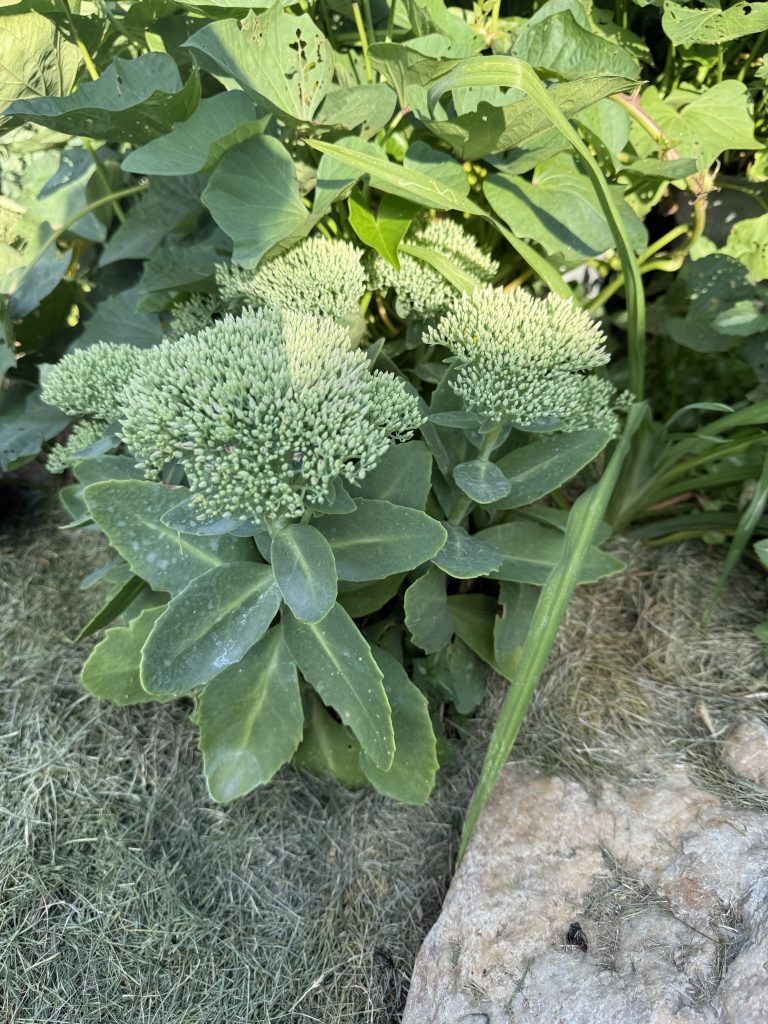
-
Gunderson’s garden boasts four or five different types of aloe vera, including this tiger aloe.
6_tiger_aloe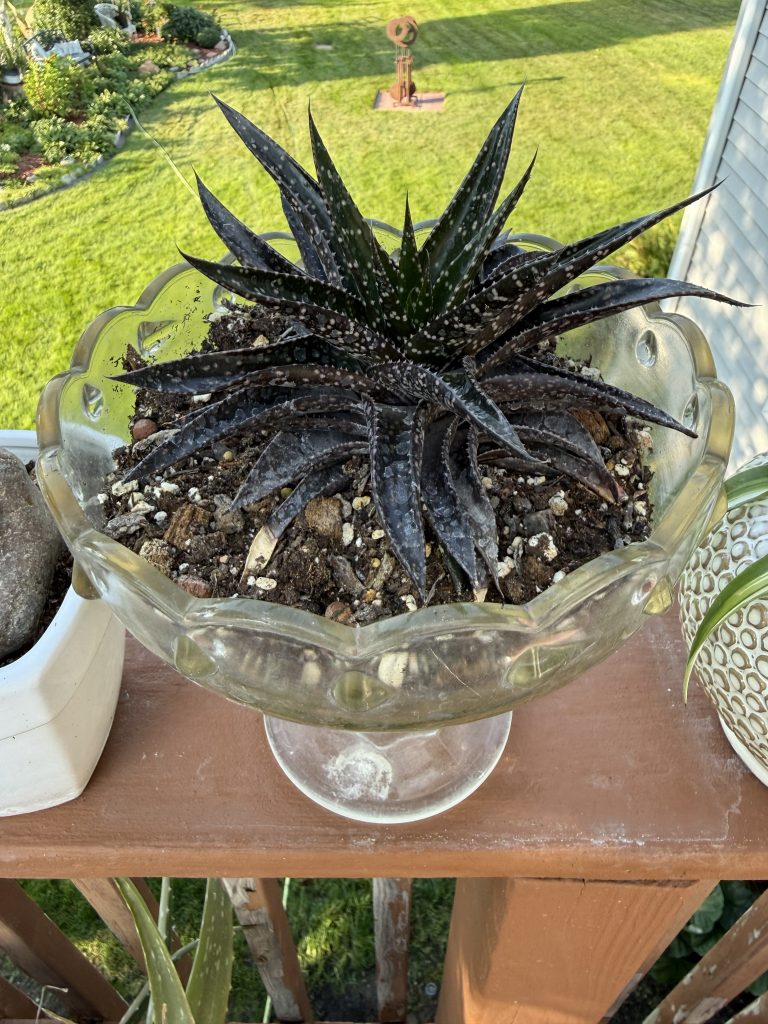
-
These elephant bushes are a type of jade bush.
7_elephant_bush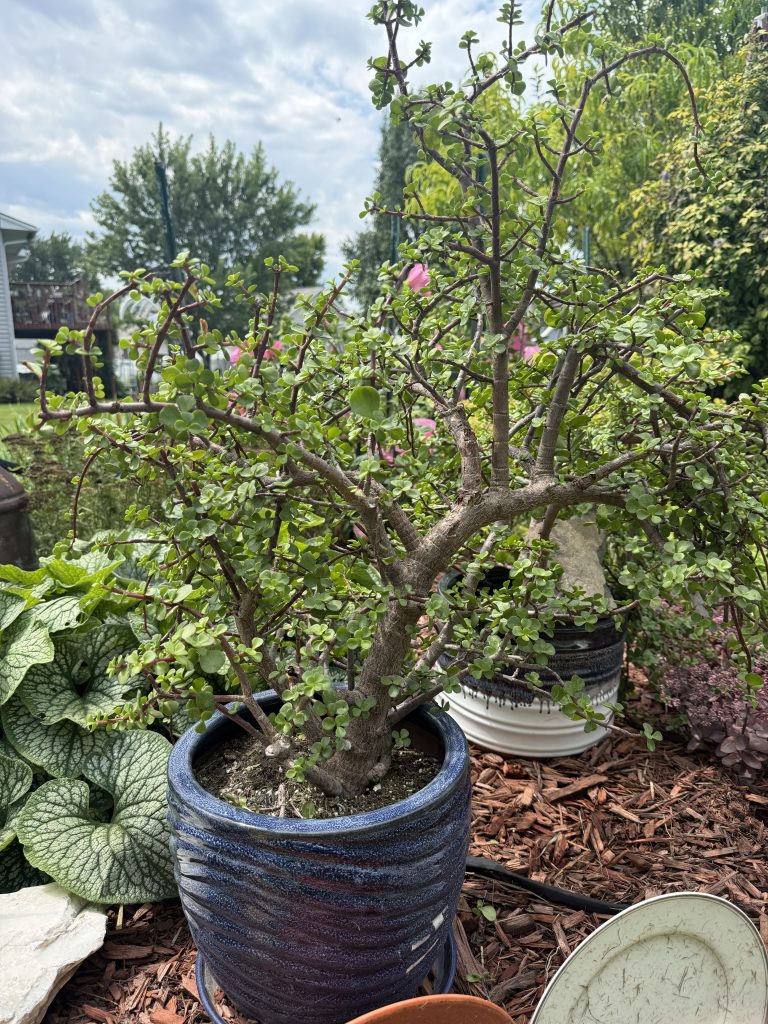
-
The fang felt bush has fuzzy leaves and can get tall (this one is two feet tall.) When the leaves fall off, they propagate. In the summer, the colors liven up; it gets a black tinge around the edges. In the winter, they are green.
8_fang_felt_bush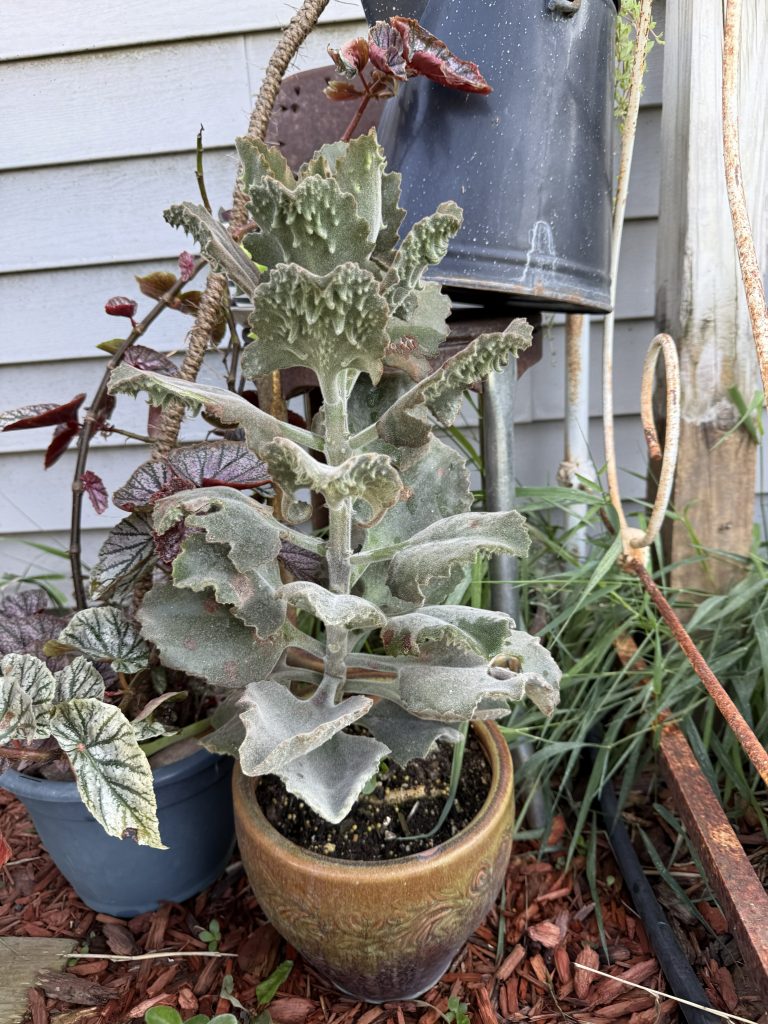
-
The chocolate soldier kalanchoe has fuzzy leaves with black edges.
9_chocolate_soldier_kalanchoe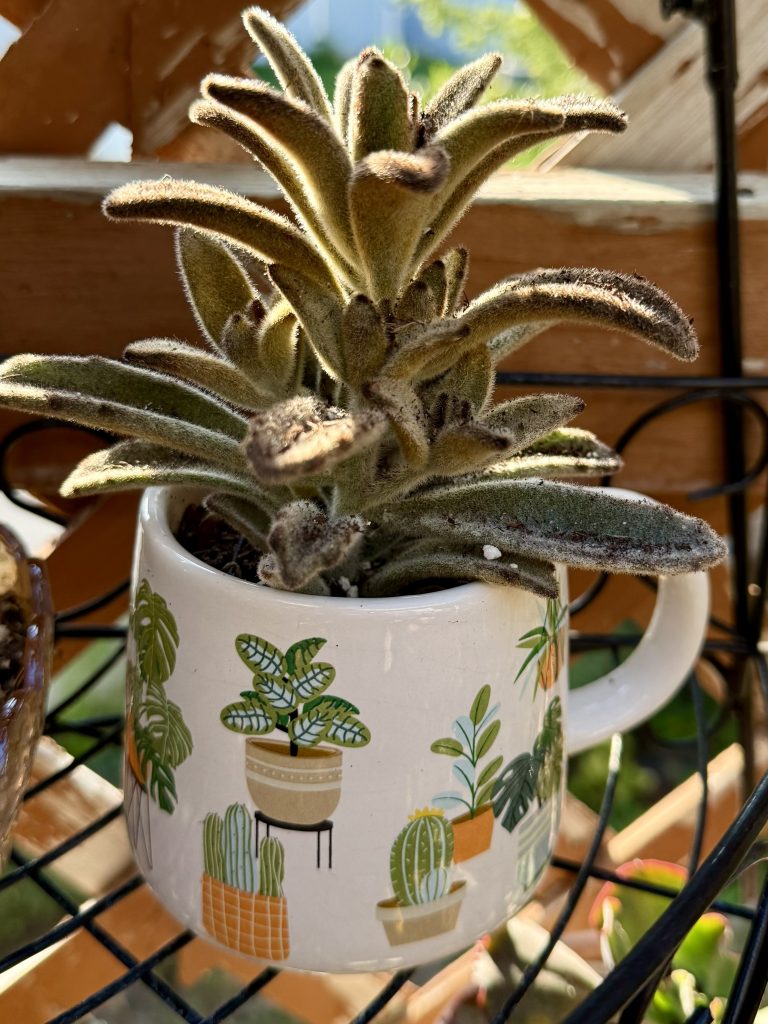
-
The leaves of the copper spoon plant have a leathery feel. In the summer, the leaves get an orange tint.
10_copper_plant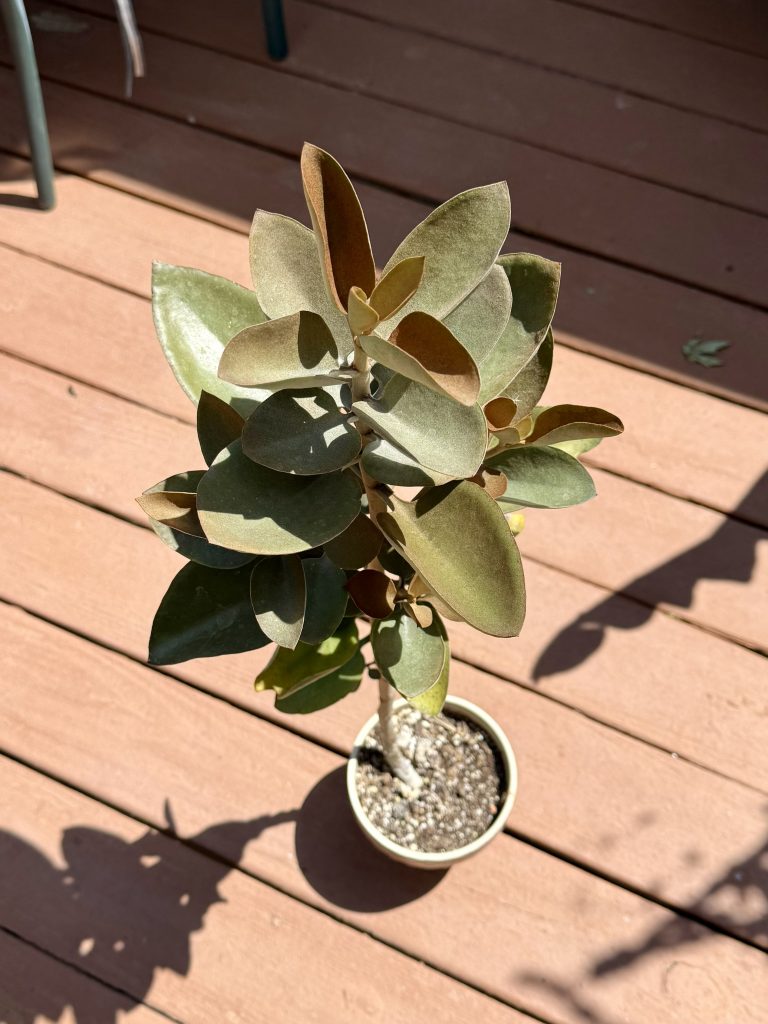
-
The ghost echeveria is known for its silvery-gray color and rosette shape.
11_ghost_echiveria_mexican_hens_and_chicks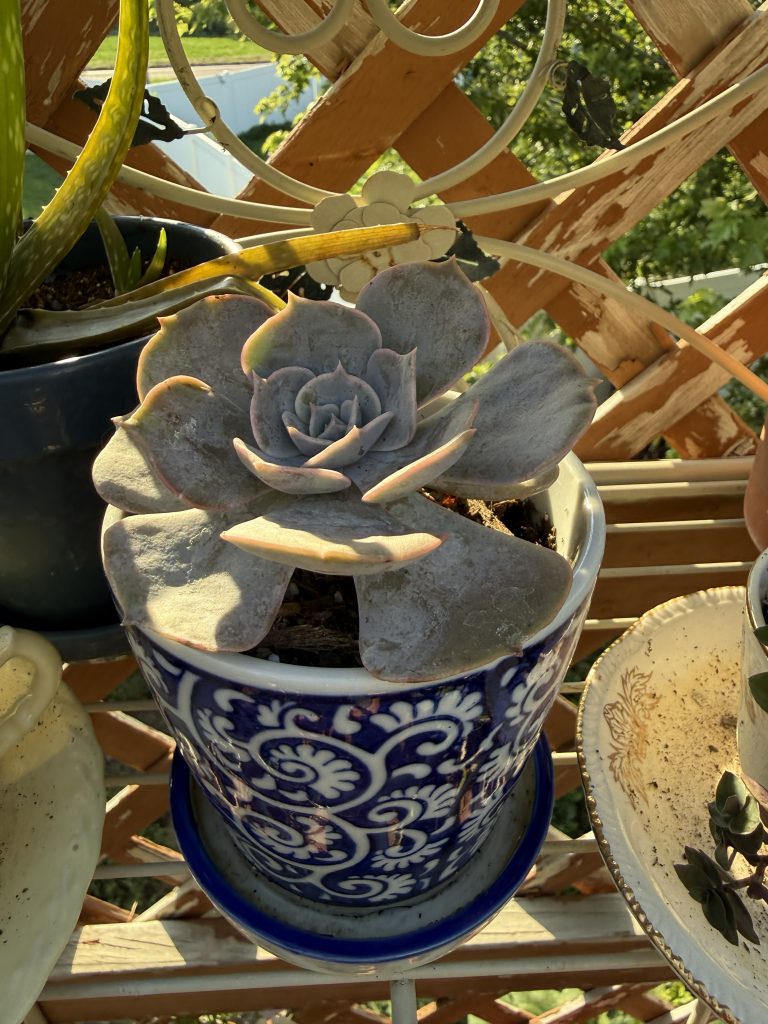
-
The paddle plant is one of many succulents in Gunderson’s garden.
12_paddle_plant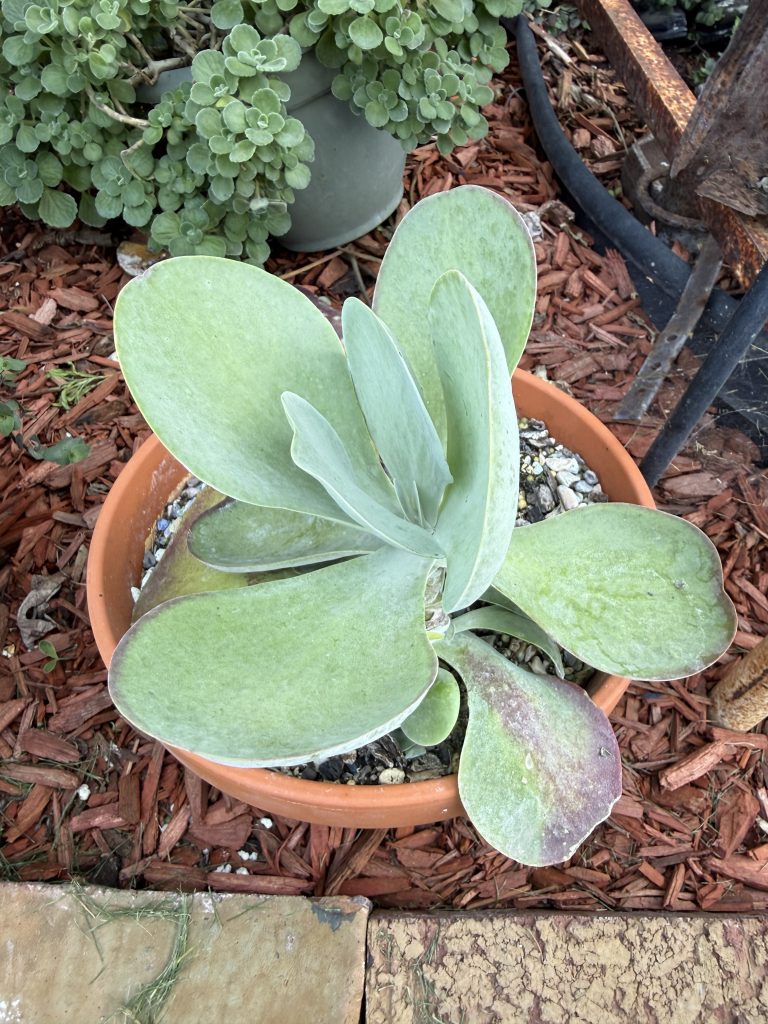
-
This miniature Joshua Tree is part of the sedum family. It looks like tiny leaves on woody stems.
13_miniature_joshua_tree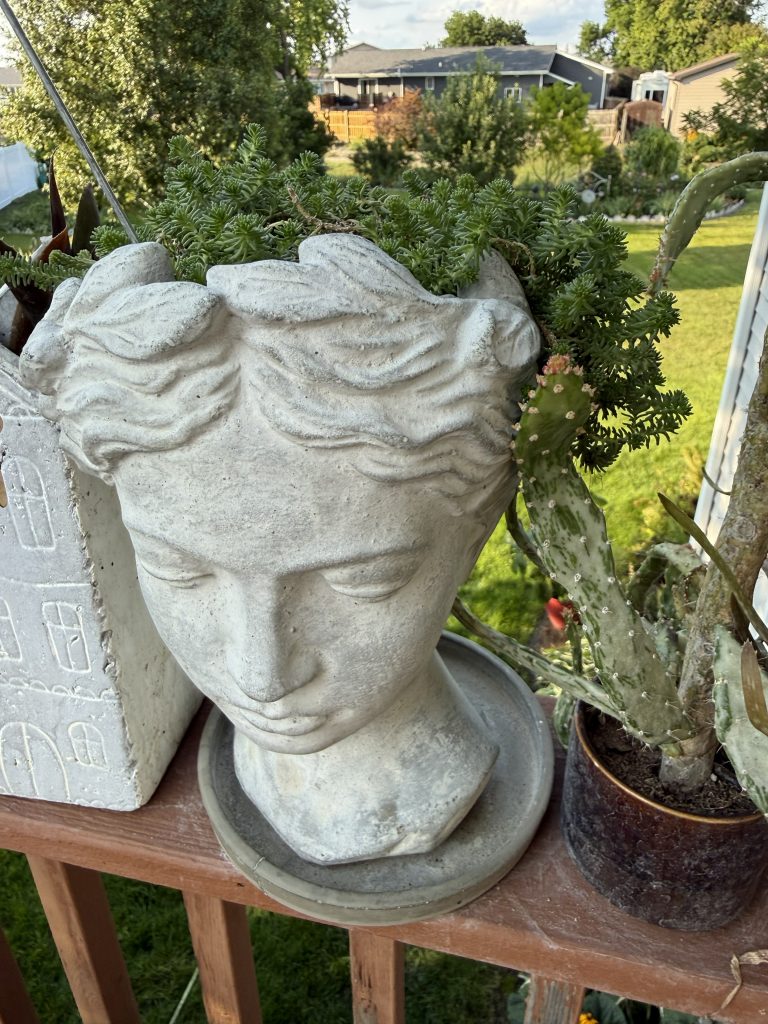
-
The cathedral window haworthia has leaves that are thick.
14_cathedral_window_haworthia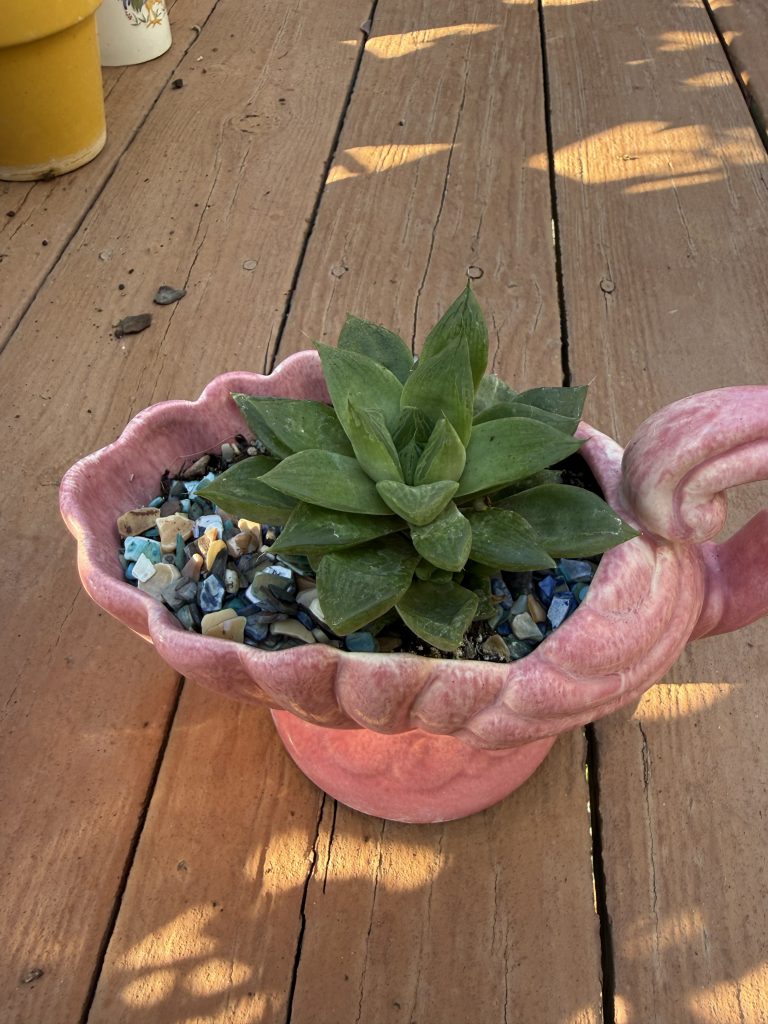
-
The fishbone cactus looks like the bones in a fish, hence, its name.
15_fishbone_cactus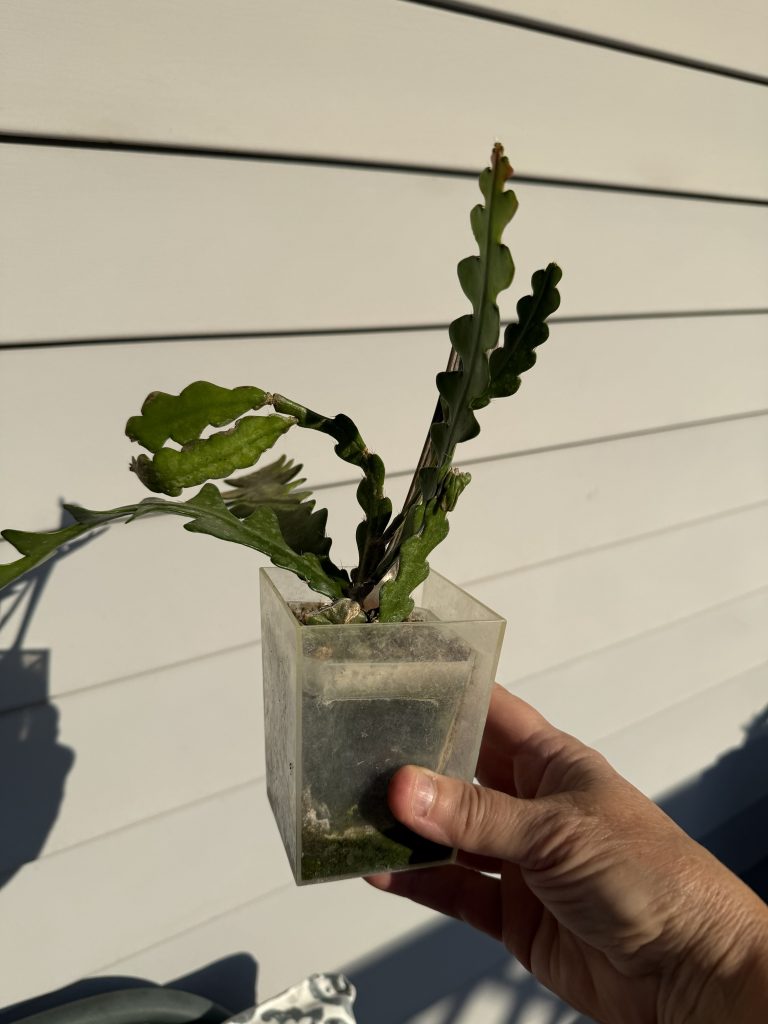
-
The Gollum Jade has tube-shaped leaves and is also called “Shrek Ears.” It can get up to two to three feet tall.
16_gollum_jade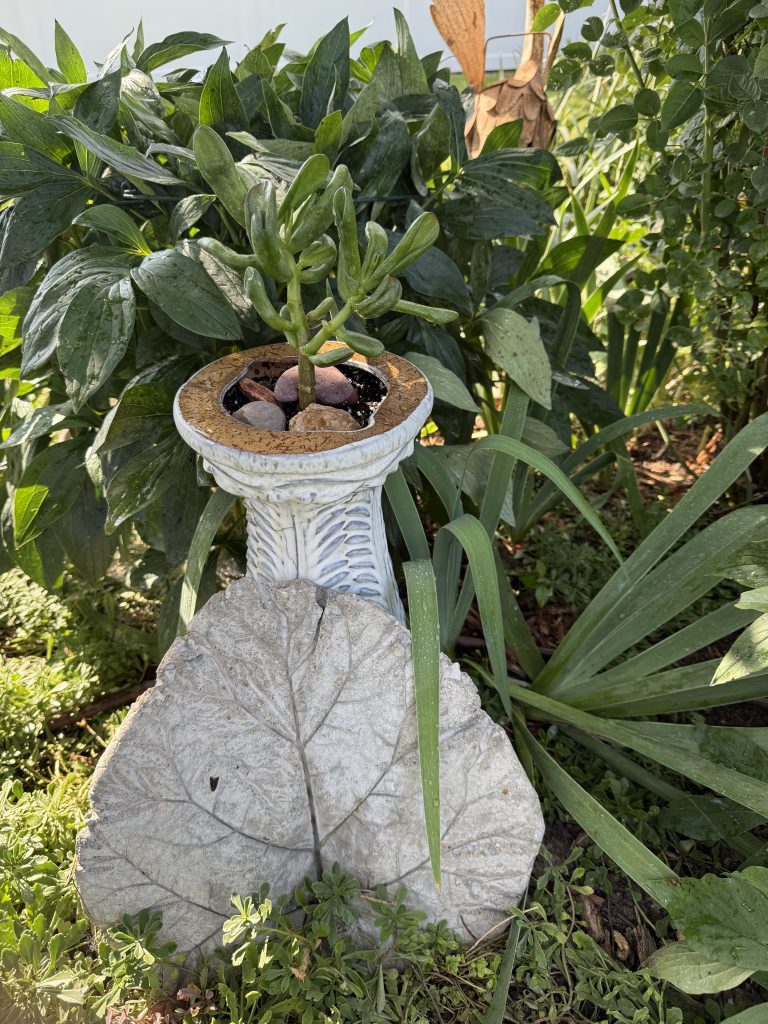
-
A paddle cactus in Gunderson’s garden.
17_prickly_pear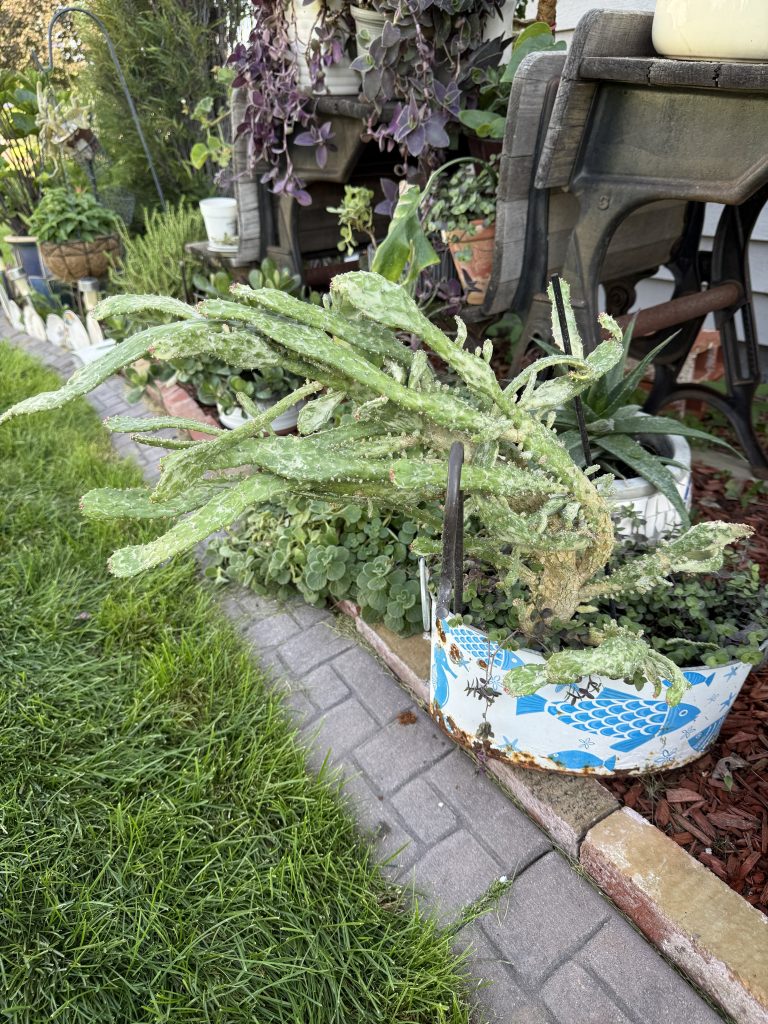
-
A round leafed naval wort. The leaves are smooth and thick.
18_round_leaf_naval_wort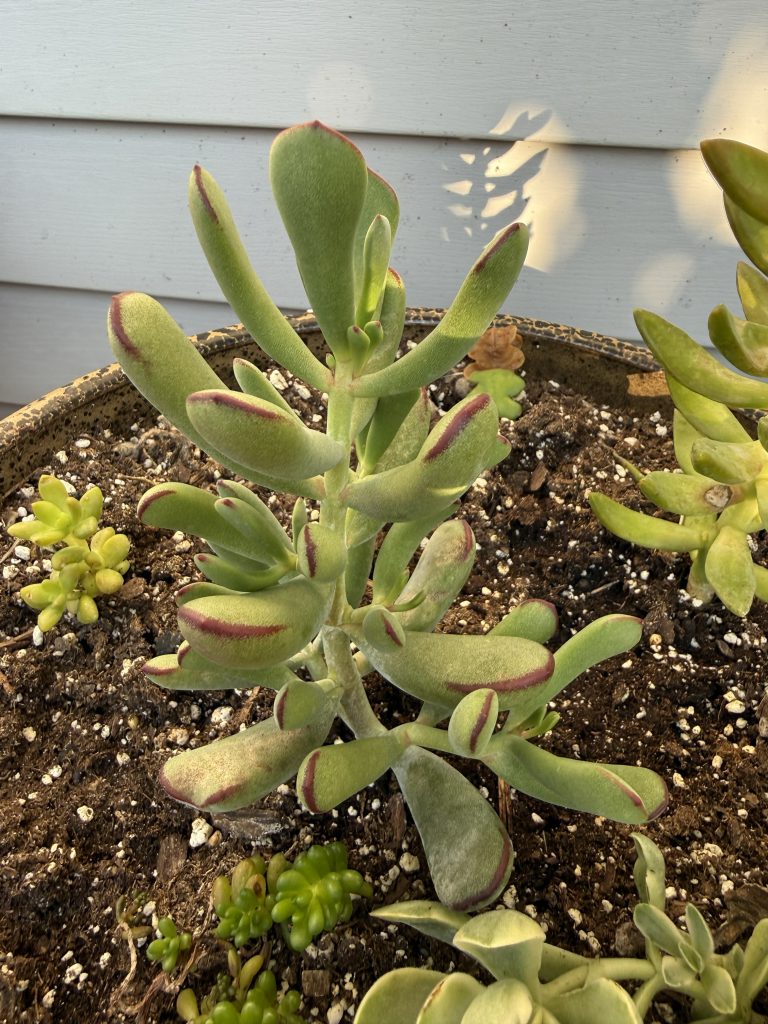
-
A string of watermelon plant. The translucent leaves look like watermelon rinds.
19_string_of_watermelons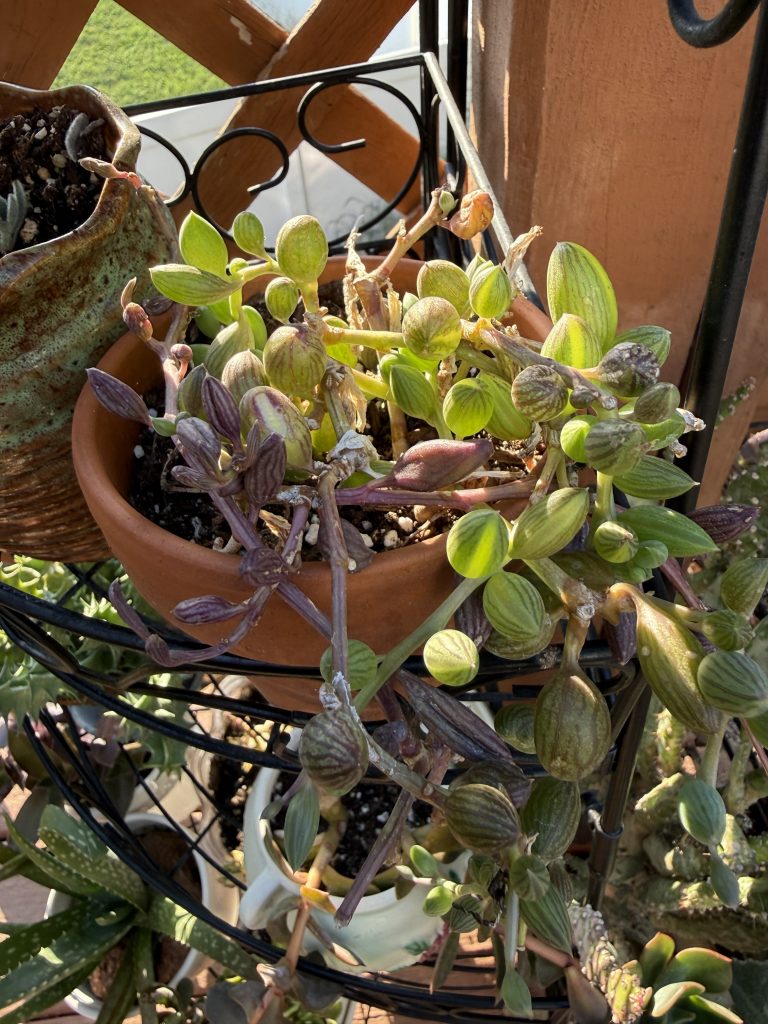
-
One of the many aloe vera Gunderson has in her garden.
20_aloe_vera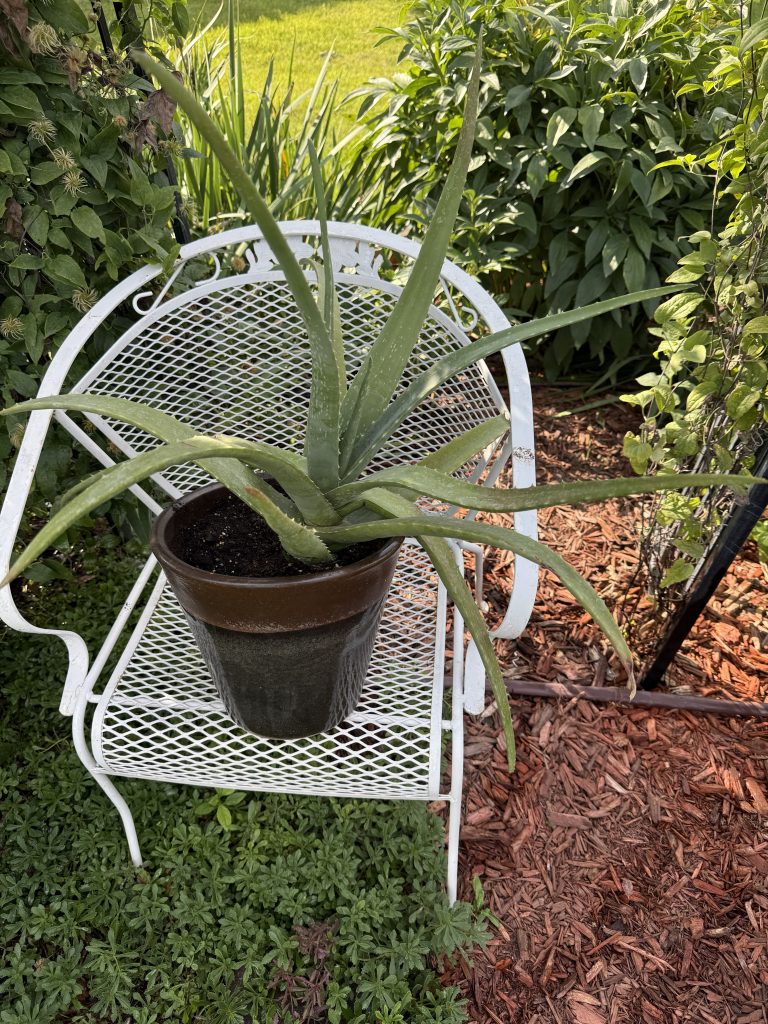
Jan Gunderson | Courtesy Photos