2026 Spring Homeland | Wyoming Orchard Heritage: A lost treasure rediscovered
-
Patten Greening apple blossoms.
Patten_Greening_bloom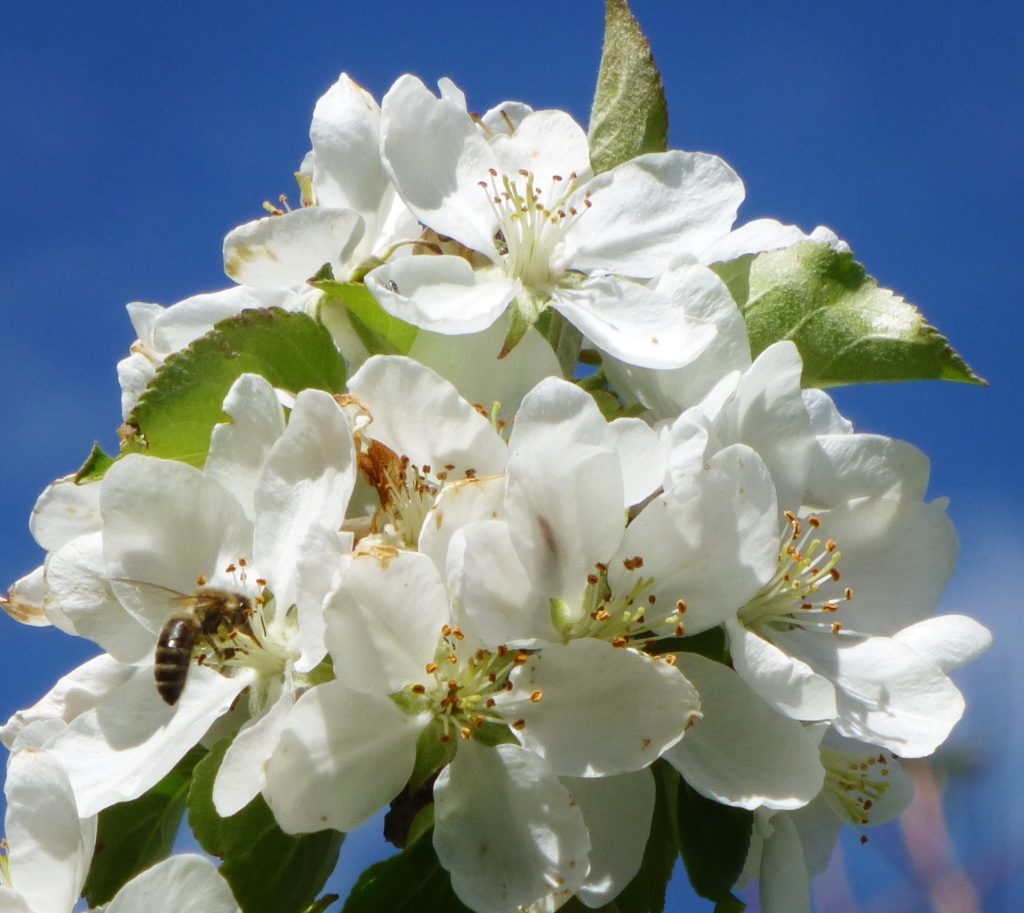
-
Lander Valley Farmer’s Market.
Lander_Valley_Famers_Market_booth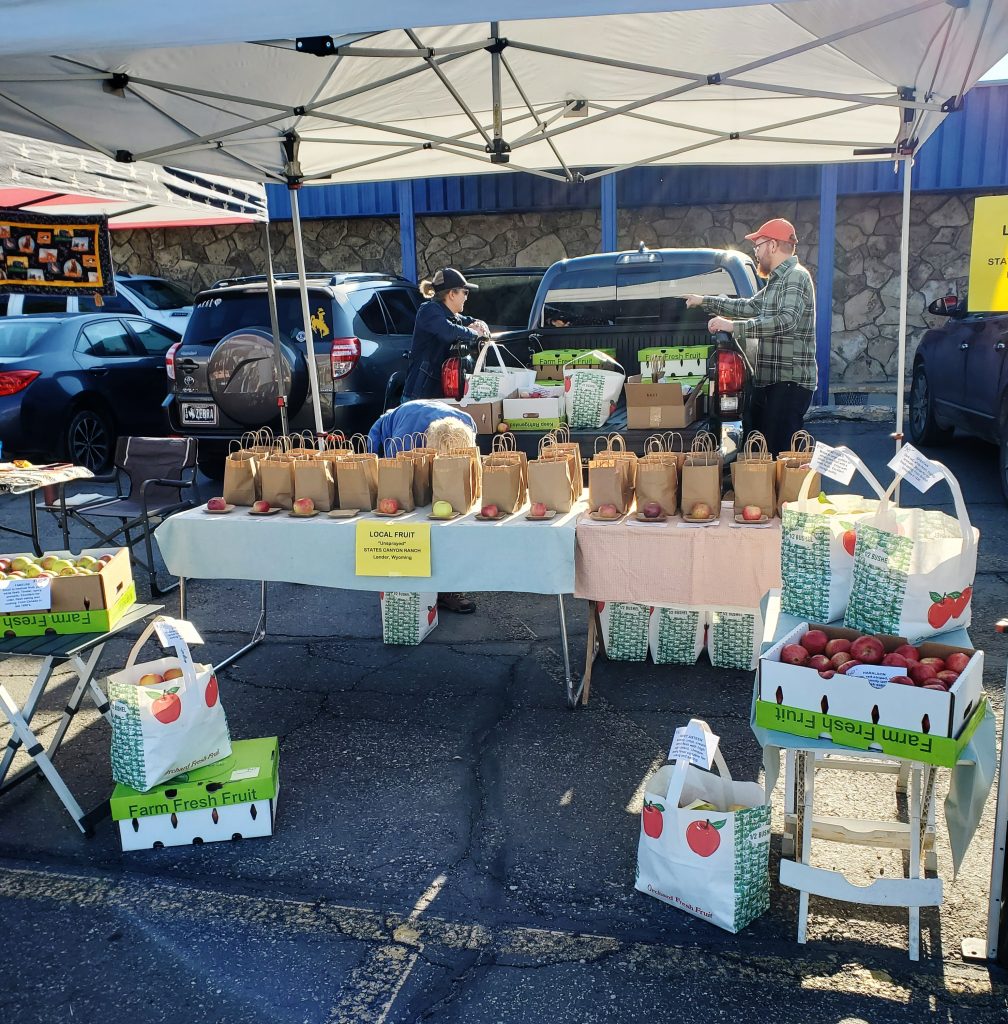
-
Fireside apples.
Fireside_(2)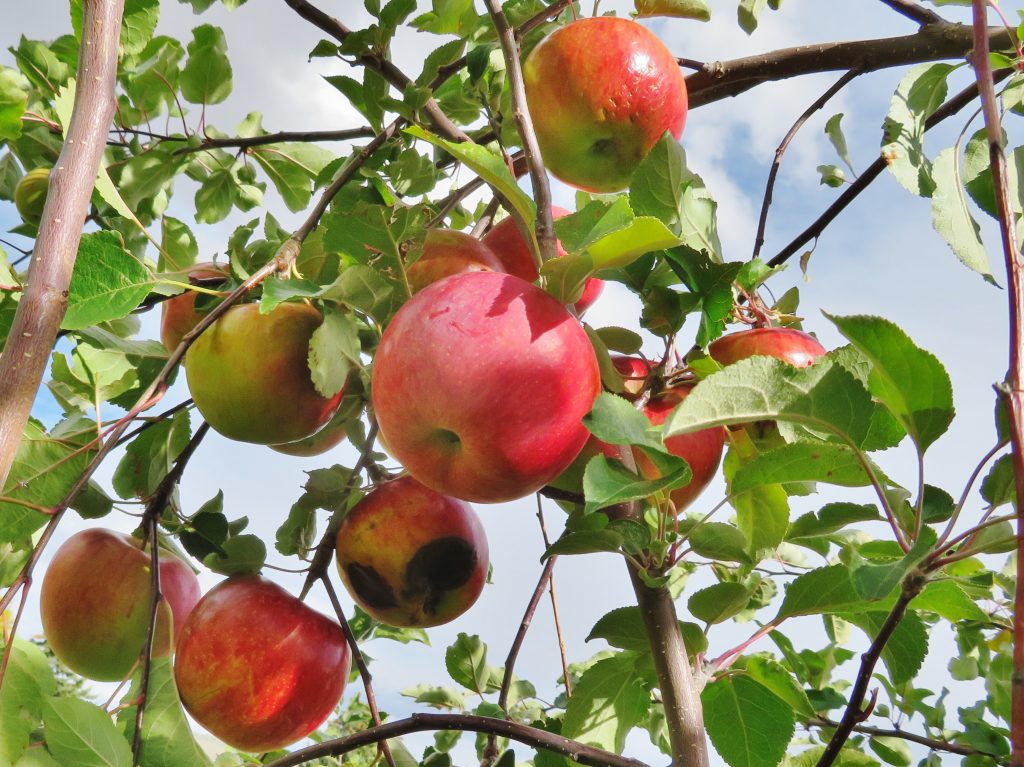
-
-
Whitney Number 20 crab apple tree.
Whitney_No_20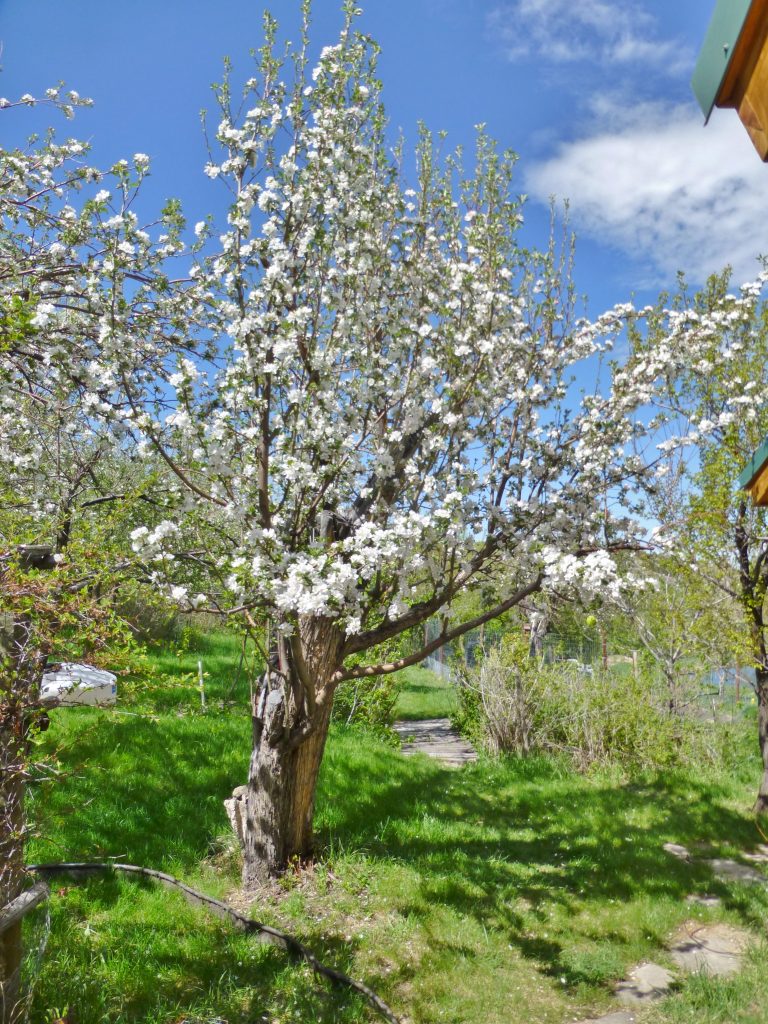
-
Maiden’s Blush apple.
Maidens_blush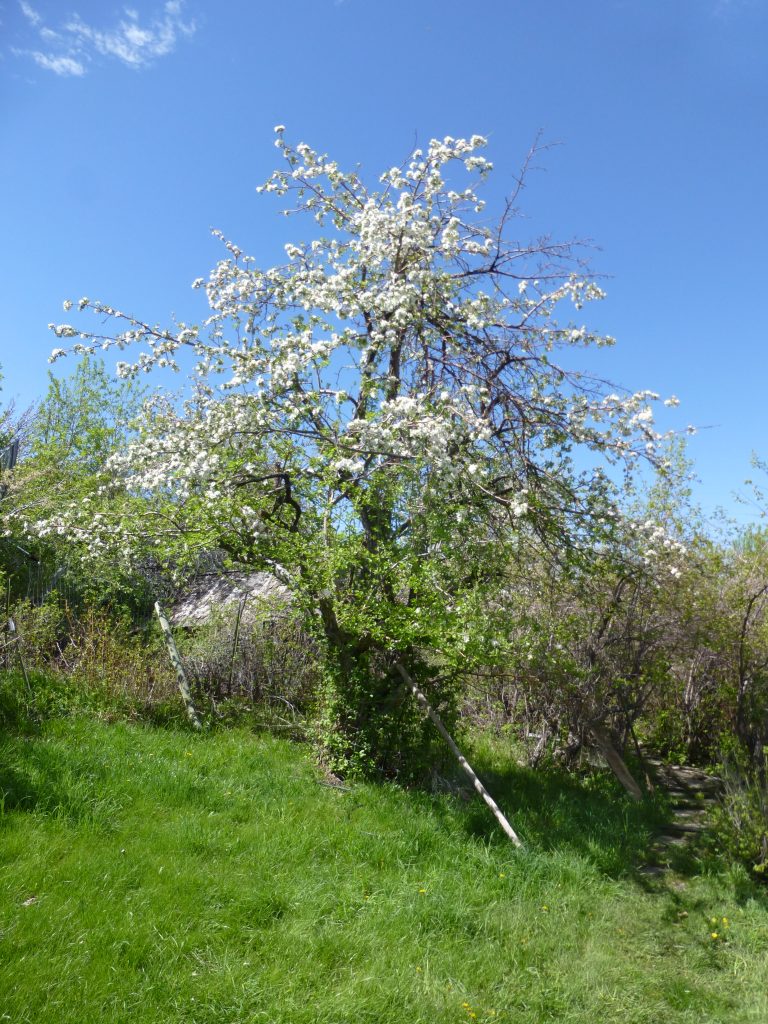
Cutlines: photos courtesy Jack and Diantha States
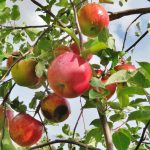
- Fireside Apples. Heirloom apple varieties are challenging to grow but bring vibrant flavor to the table.
- Maiden’s Blush apple tree. Jack and Diantha States maintain an orchard dating back to Jack’s great-grandparents. The first trees were planted before the turn of the 20th century.
- Patten Greening apple tree in bloom. Older apple varieties are often more susceptible to diseases and pests.
- Whitney No. 20 apple tree. This variety dates to the mid-1860s, when A.R. Whitney of Whitney Nursery, Franklin Grove, Illinois, grew this heritage crabapple from the seed of a Siberian crabapple. It is known as both Whitney No. 20 and Whitney Crab and is extremely cold hardy.
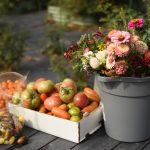
- Jack and Diantha States sell their organically grown apples at a local farmers’ market. Their customers love the diverse and mouthwatering flavors of the heirloom apples grown on the ranch.
Establishing and maintaining an orchard is a challenging project, but the rewards are sweet.
Jack and Diantha States returned to the Sink Canyon Ranch near Lander, Wyoming, 30 years ago and began restoring and preserving a piece of a bit of little-known Wyoming history: apple trees. Orchards may not be the first thing that comes to mind with the mention of the Cowboy State, but Wyoming’s unique climate and geography provided favorable locations for pioneer families to grow fruit trees.
“In 1903, the States family purchased a homestead property originally patented in 1883 by a fellow named Jack Gaylor who had an orchard of six apple trees obtained from an unknown source,” Jack said.
The trees were already mature and heavy bearing Wealthy and Wolf River apple varieties with Transcendent Crab and Siberian Crab trees for pollination.
Jack States’ great-grandparents came to Wyoming from a Nebraska farm where they had established fruit trees, including plums and apples. These were planted for their own use, not for commercial purposes.
“They must have been interested in planting more varieties of apples, which were recommended by their neighbors,” Jack said.
These neighbors were not just any neighbors.
“In the 1890s and into the 1900s, planting farm orchards had become quite popular. It was being promoted by a commercial orchardist by the name of Edward Young. Young had started an 80-tree apple orchard at the mouth of the Little Popo Agie River canyon around 1885. Also motivating was a newly established University of Wyoming Horticultural Experiment Station that was just beginning to recommend successful varieties out of over 50 well known apples across the U.S.,” Jack said.
Two successful orchards on the Meyer and Nicol ranches had been started in 1884 from Ohio and Utah nursery stock and there was also a newly established fruit tree nursery selling apple varieties recommended by the Experiment Station. All of these were located within six miles of States Canyon Ranch at the mouth of the Middle Fork of the Popo Agie River.
Jack and Diantha undertook a project to try to restore the aged trees still surviving on the family ranch. They also planted new trees of other varieties known to do well in the area.
“We have some advantage here because we are in the canyon,” Jack said. “Obviously it was a good place to grow apples if some of the original trees have survived for so long. But none of the varieties we grow survive without some kind of environmental impact. When you’re living in wild country you have to deal with nature.”
It should be noted that no one in the Lander Valley was truly a commercial orchardist except Mr. Young and even at that he supplemented his yearly income with a livestock business that filled his coffers during off years of poor or no fruit production.
By the late 1890’s Young was selling a limited number of grafted saplings from his trees but stopped to avoid competition by local nurseries.
“Ed did publish in the Lander newspapers guidelines for planting and maintaining farm orchards, along with an amusing sermon on the tangible and spiritual value of locally produced fruit,” Jack said. “Diantha and I have found his recommendations suitable for most environments in which the climate allowed their growth to maturity.”
The States orchard was not a significant part of the family’s livelihood, but eventually provided some supplemental income.
“When the trees matured, their production greatly exceeded personal use and attracted unwanted herbivores, etc.,” Jack said. “They sold apples at the ranch which provided supplemental income.”
In the late 1920s, Jack’s grandfather took up beekeeping at Canyon Ranch.
“The motivation for doing so was, of course, orchard pollination and honey,” he said.
The States family maintained Whitney #20, Wealthy, Wolf River, Patten Greening, Maiden’s Blush, Gano, Sops of Wine, Siberian and Transcendent crabs. Trees of all these varieties were still surviving when Jack and Diantha came back to the ranch. To get them healthy and keep them producing, the trees needed heavy pruning, insect and disease control. Fertilizer was not much help, Jack said, but amending the soil with iron was beneficial.
The orchard is at an elevation of 6000 feet. It is in a riparian environment on uneven sloped ground grading into pasture with a canyon wall and steep hill that serve as a windbreak to the west and southeast.
“We flood irrigate in spring and in later summer we irrigate with perforated pipe,” Jack said.
Jack and Diantha have added other varieties of apples to the orchard. Based on their experience, Jonathan and MacIntosh proved to be on the limits of their planting zones 4-5. Spartan and Cortland were better adapted but suffered from cold temperatures in spring and fall. Early maturing (summer) apples like State Fair and Lowland Raspberry were fire blight susceptible and the crop eaten by flocks of birds. Honeycrisp is a good apple for eating out of hand but a poor keeper. Zestar and Triumph have been good producers so far. Late summer to late fall apples varieties keep well, have good flavor, and are suitable for multiple uses. They include: Red Baron, Honeygold, Sweet Sixteen, Fireside, Patten and Northwest Greening. Keepsake, as the name implies, keeps well and gets better with age but it is often heavy bearing and produces small apples.
“University of Minnesota introduction varieties do best in our location,” Jack said. “Apart from susceptibility to disease and insect pests, any variety not well adapted for high elevation, cold spring and fall, and snow loads do not do well.”
Jack and Diantha started restoring the orchard with the goal to keep the heritage varieties growing there productive as long as possible in the face of fire blight susceptibility and codling moths. They did try propagating cuttings from some of the original trees, but the results were not particularly positive.
“Those that we successfully grafted did not do well, grew slowly, and were very susceptible to fire blight,” Jack said.
Apple seeds will sprout, but the result will be a cross between the two “parent” trees and not true to type. Apple propagation is done by grafting a cutting of scion wood from a parent tree onto a rootstock.
Root stocks are “foundational” to all kinds of propagation and control the eventual size of the tree, (i.e. dwarf, semi-dwarf, standard.) In today’s world the need to get fruit trees with disease and virus free root stock is essential. The hardiness of the rootstock will also impact the hardiness of the tree.
“Grafting is a topic worth a semester’s course offered by Agricultural colleges,” Jack and Diantha said. “Of the many kinds of grafts, we have found bud grafting the easiest and most successful when using our heritage apples as source.”
References and information for grafting are also available via the horticulture sections published on the internet by vendors (nurseries) of apple root stock and fruit trees. Websites of conservation districts and cooperative extension offices of universities also provide information on grafting techniques.
Professional and hobby level support for orchard culture is available online, through extension, university, orchard culture publications, heirloom apple groups, and other related resources. The internet is also a vast resource for connecting with other heirloom apple growers.
“There is no substitute for the extension, internet sites, videos and information that can be provided these days. AI can do the job!” Jack and Diantha said.
Nearly every mid-west and western state has extension information for orchard culture pertaining to that state.
“We find the University of Minnesota one of the best sources for growing apples in cold climate states,” Jack said.
If you want to plant apple trees, the first place to start is your local nursery.
“They can’t afford to sell stock that is not adapted for the grower’s locality,” Jack said. “Nursery websites are o.k. but sometimes, if you can’t see what you are getting, you may get something different for a variety of reasons- all theirs! We ordered a Fireside apple and got a Red Delicious apple instead and had to wait five years to find that out!”
When choosing a site to plant apple trees, look for well-drained soil like a sandy loam, around a neutral pH, air drainage to avoid frost pockets and pooling of irrigation water (slopes), windbreak and sunburn protection in full sun. Shelter belts and fences are good but avoid too much shading.
It takes a tremendous amount of patience to get apple trees established and to the point of production.
“It takes an increasing amount of time to bring dwarf, semi-dwarf, and standard trees into bearing because of the time needed to grow the root system. So beware, if a standard tree with a development time of five to eight years comes in a pot from the nursery, it may bear fruit the first year. When outplanted in the orchard it will revert to the normal five to eight years to bear. So don’t give up and then blame the nursery.”
Growing heirloom apple varieties is a worthy cause. They can bring genetic richness to new cultivar development. Preservation of historic genomes is valuable. Heirloom varieties bring novelty and a plethora of challenges to the grower inclined to experiment with them.
“We have an aging orchard of 100-plus-year-old trees,” Jack and Diantha said. “We like the unique flavors and multiple uses of these trees and since we are organically managing the orchard, they sell amazingly well at the farmers’ market and we are proud to provide them.”
Customers so enjoy States’ novel apples they want to grow them, but the couple recommends starting with climate adapted and disease resistant varieties.
“In present-day environmental conditions growing heirloom apples is a daunting enterprise and terribly time consuming,” Jack said.
But for those with patience and persistence they are worth the effort, and provide “some of the best tasting apple sauce, apple cider, and apple pies ever!”
Resources:
uwyo.edu/barnbackbackyards
Check out one particularly interesting article, Apple trees CAN grow in Wyoming: but you need to know the core facts.
Extension.unm.edu