Boss Cowman 2026: Dan and Gloria Maher
-
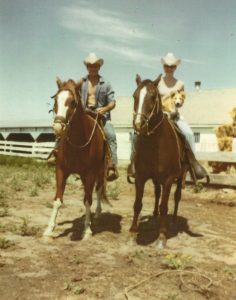
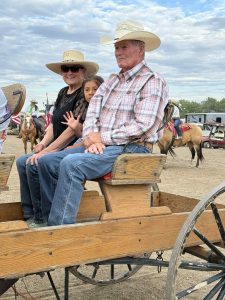
Dan and Gloria Maher, who ranch on the North Dakota side of the state line near Morristown, South Dakota, were named the 2026 Boss Cowman honorees.
Dan_Gloria_Danni_Craig_(1)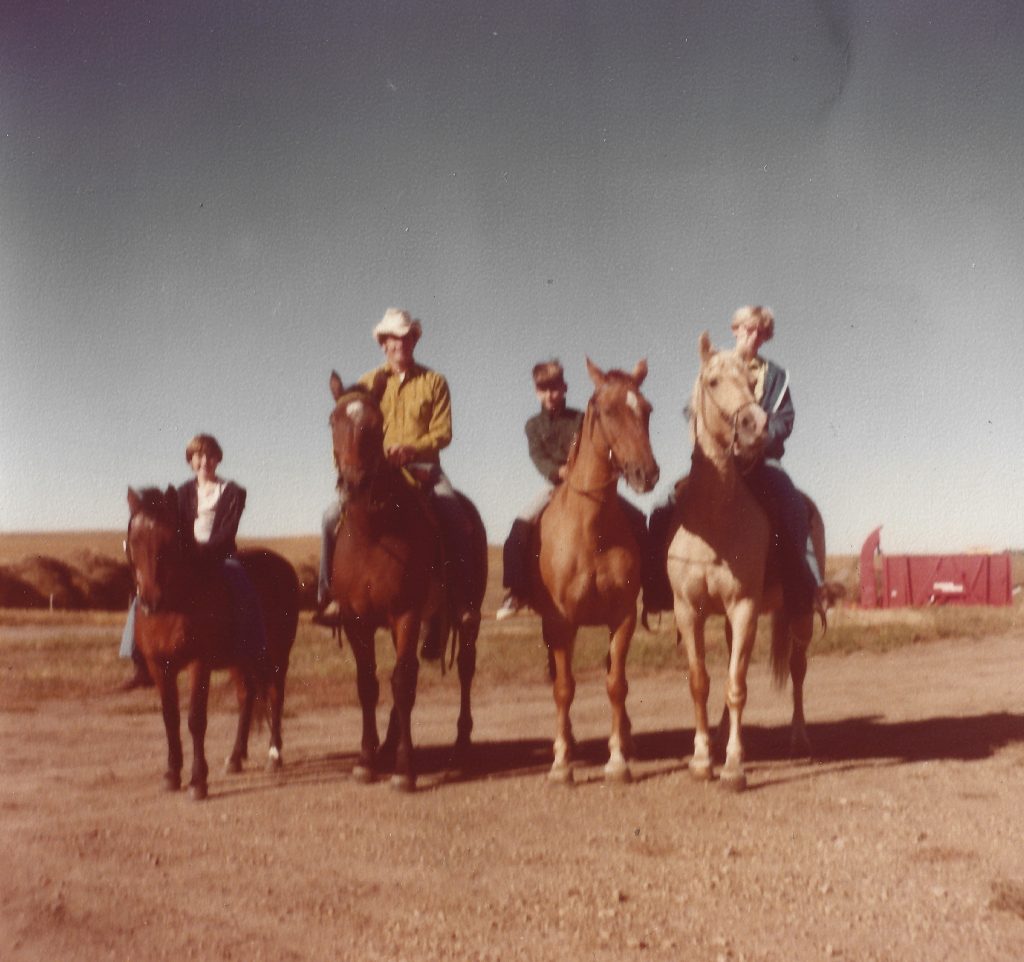
-
Boss Cowman honorees are chosen as people who embody the qualities of excellence in stockmanship, community involvement, and the cowboy spirit of those who, like Ed Lemmon, the original Boss Cowman. shaped the culture of western South Dakota.
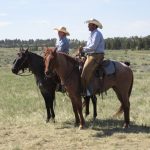
Dan_Gloria_and_Ralph_the_dog_on_horseback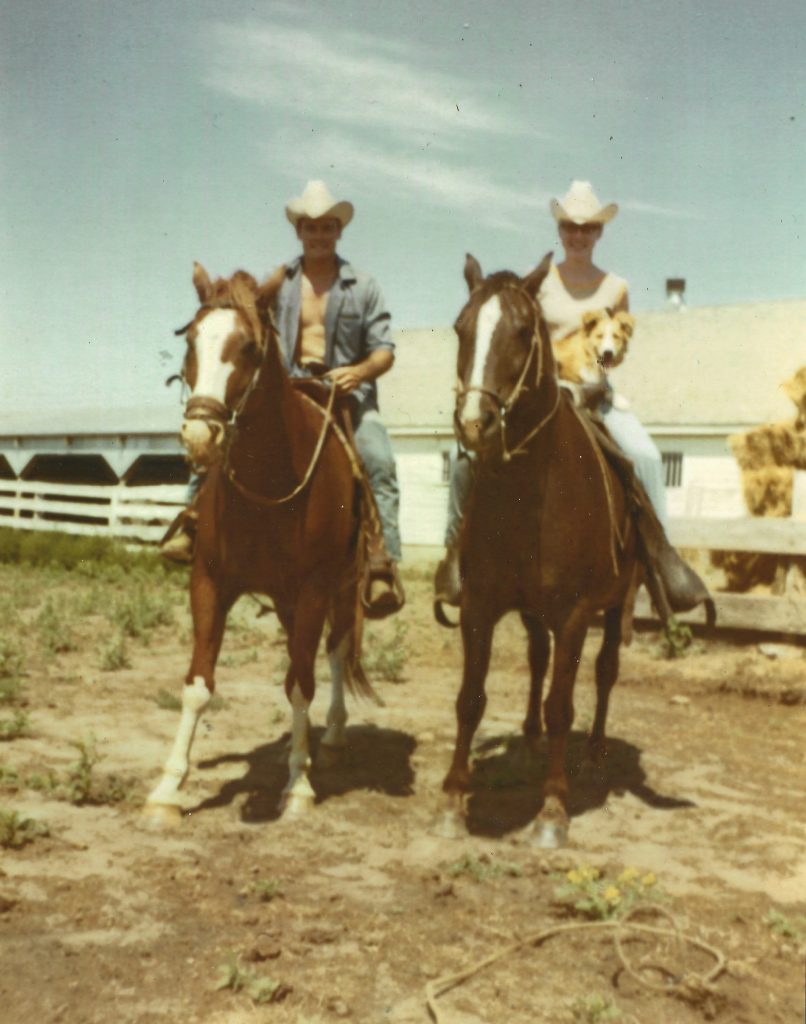
-
Dan showing at NDSU.
Dan_showing_at_NDSU_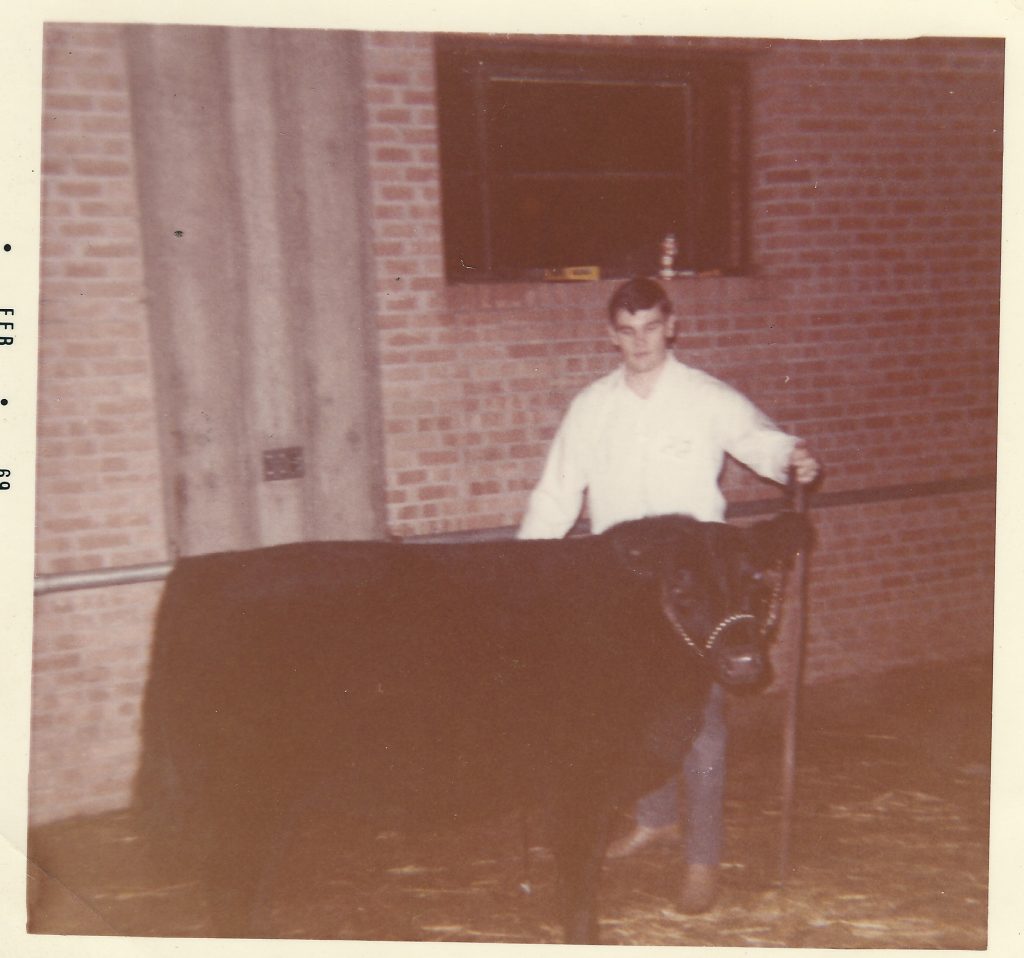
-
-
1986 Grand Champion bull, Corson County Fair.
1986_grand_champion_bull_Corson_County_fair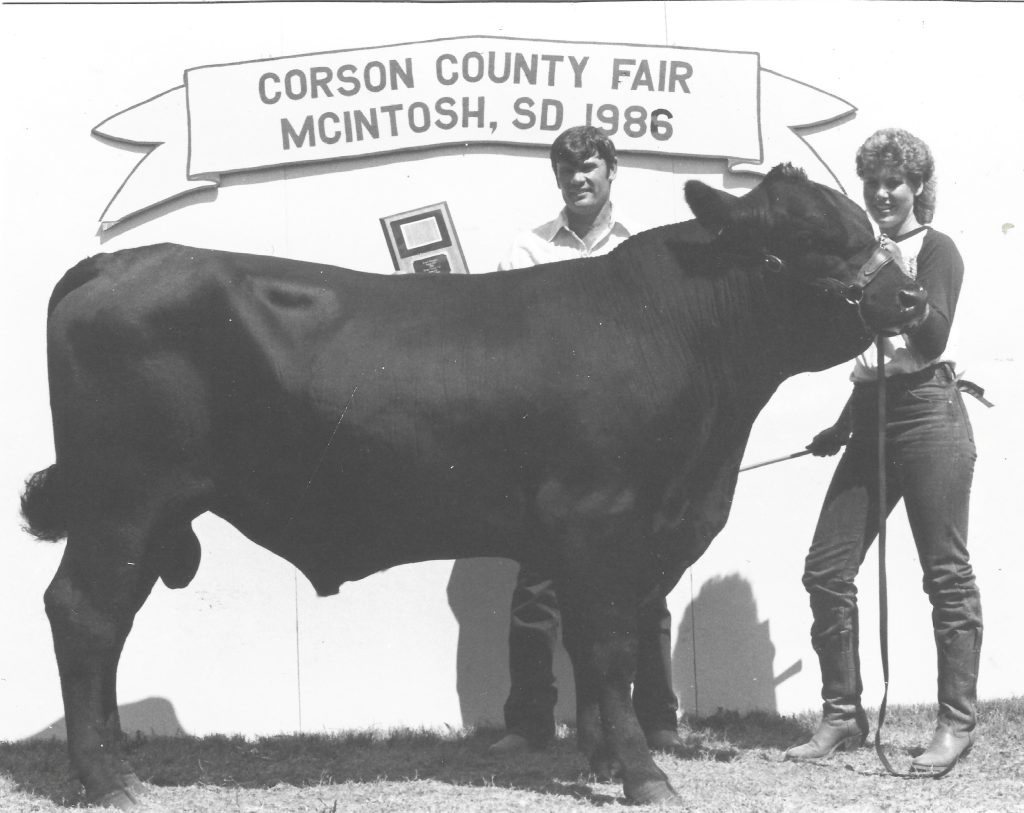
-
Dan and Gloria Maher.
Dan_and_Gloria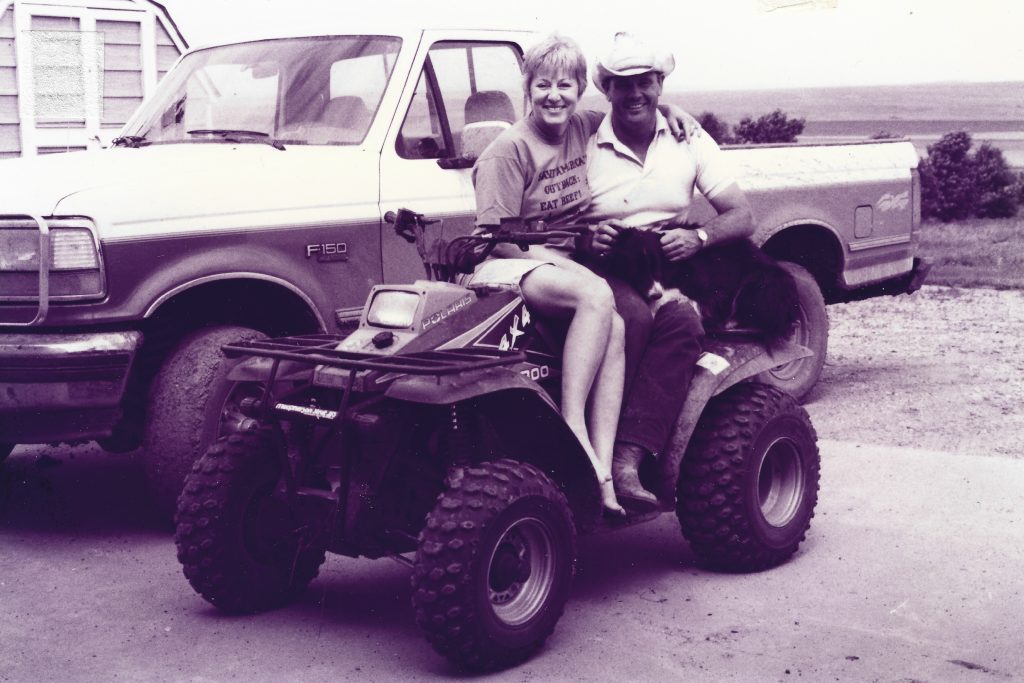
-
Dan showing at the Little International while attending NDSU.
Dan_Little_International_NDSU_1969_resized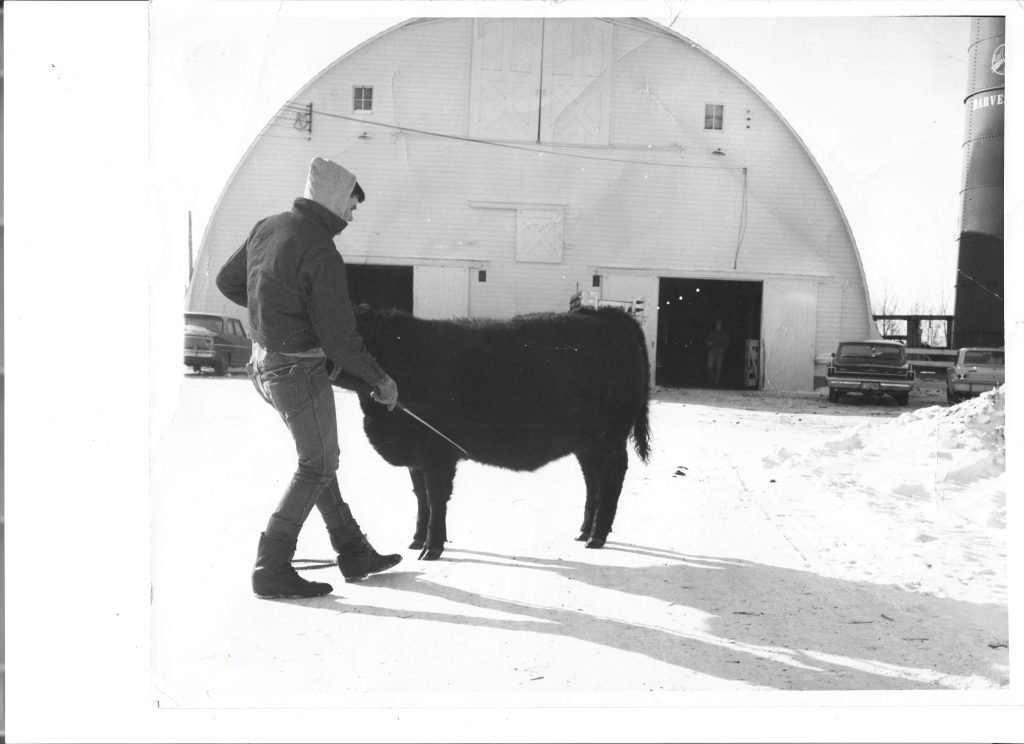
-
“I bought my first saddle at age 16 from Albert Maier for $75, with some additional items included to boot. I was riding bareback until this time, and it was the only saddle I rode for years. The stirrups were laced and tied for my leg length as saddles were at that time. In the late 1990s, I had Rich Maier doing some repairs on it in hi s saddle shop and it was discovered that one side was a full inch shorter than the other side. I had ridden that way all those years. While Rich was fixing the saddle he mentioned he wanted to sell his ranch and go to mortician school. After more discussio n Casey and I purchased his ranch. That is where Casey’s family lives and headquarters the ranch today. “My four children gave me a new saddle in 2012 when I retired from my part – time bank job. It is all I’ve rode in since. I think it’s the nicest gift I’ ve ever received, except of course, the gift of our four children and the grandchildren and great – grandchildren that followed.”
Dan_with_Saddles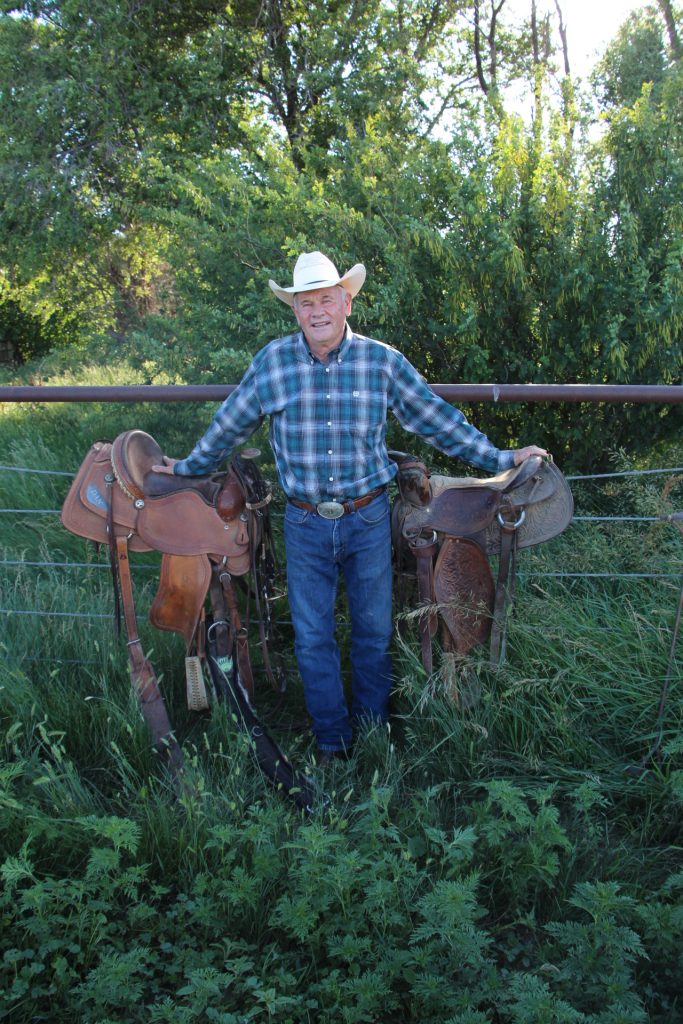
-
Dan gathering cattle with some grandkids.
Dan_gathering_cattle_with_grandkids_2014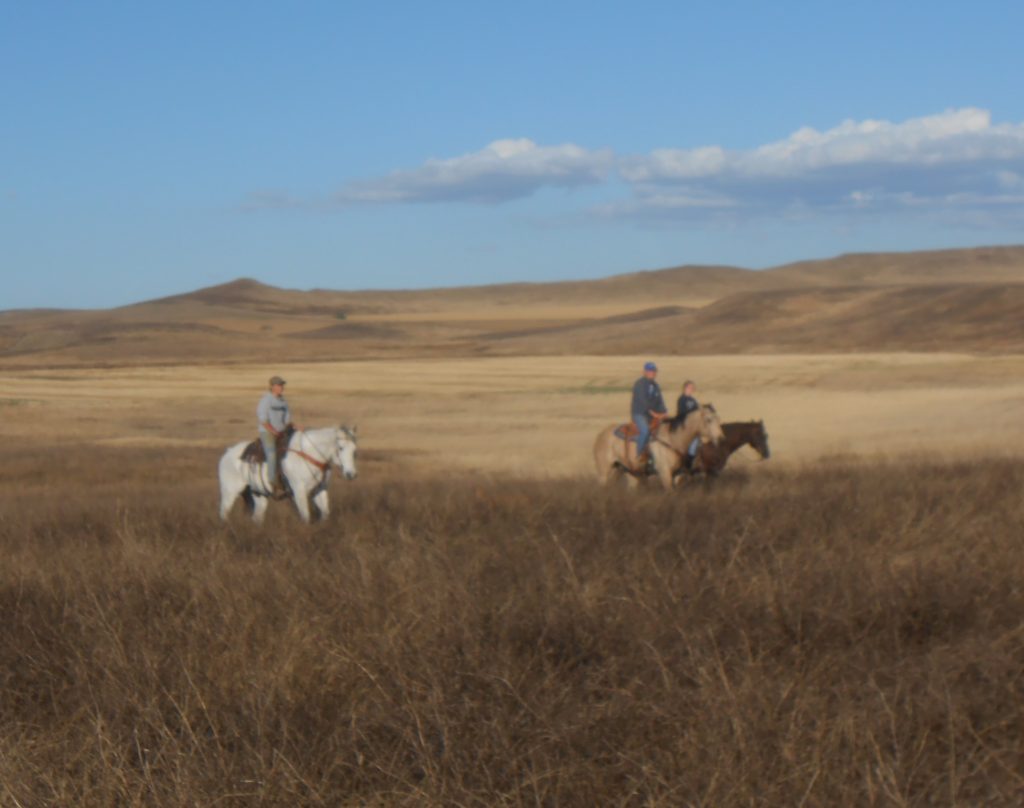
-
Maher family, 2025.
2025_family_photo_at_Shayna_&_Ethan_Wright_wedding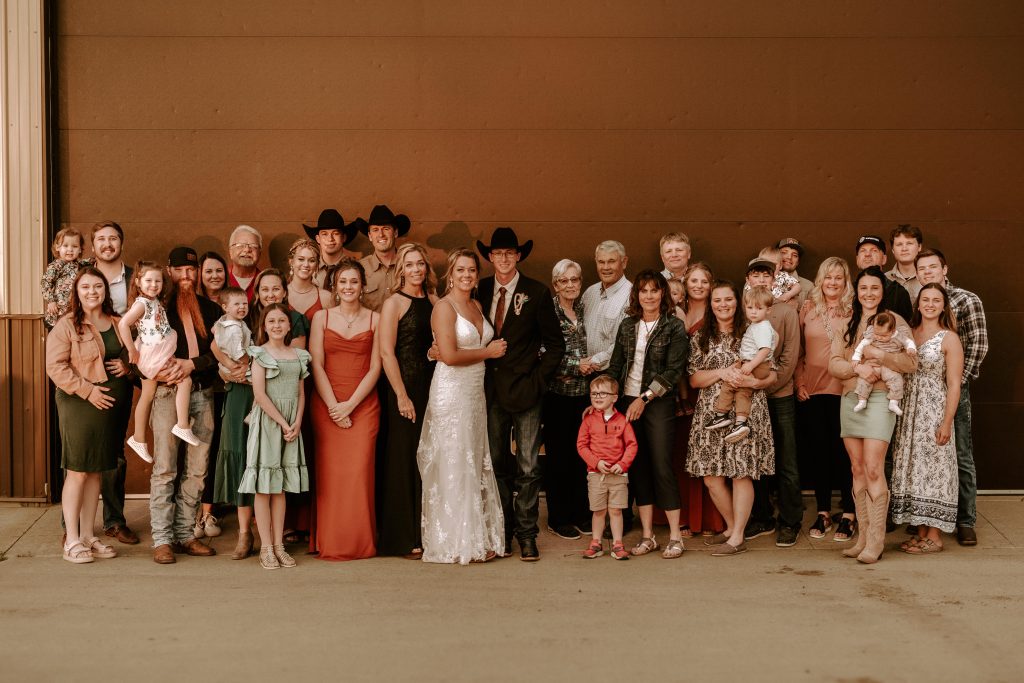
Photos courtesy Maher family.
For 56 years, Lemmon, South Dakota, has honored local ranchers and cattlemen with the designation of “Boss Cowman.” Dan and Gloria Maher, who ranch on the North Dakota side of the state line near Morristown, South Dakota, were named the 2026 Boss Cowman Honorees.
This symbolic title hearkens back to Lemmon’s namesake and founder, Ed Lemmon. While none of the honorees can say they fenced a pasture the size of Rhode Island, as Lemmon did, they are chosen as people who embody the qualities of excellence in stockmanship, community involvement, and the cowboy spirit of those who, like Lemmon, shaped the culture of western South Dakota.
“Ed is said to have ‘saddle handled’ more cattle than any man in like position,” wrote Ike Blasingame in Dakota Cowboy. “…He rode horseback and worked right with the roundups. His horses were fast, and so was he, and those of us young fellows who were a little on the ‘wild cowboy’ order enjoyed working with Ed Lemmon’s outfit. Everyone liked him… Ed Lemmon got the job done to the cowboy’s satisfaction, at least, and he was an easy man to work with.”
The youngest of John and Elsie Maher’s 11 surviving children, Dan Maher was born May 1, 1947.
John Maher came to North Dakota around 1916.
“He and his two brothers drug a boxcar out from Morristown and lived in it,” Dan said.
John’s family had previously settled in the Beresford, South Dakota, area after leaving Peoria, Illinois.
“His father worked at a smelting plant and developed lung problems, so a doctor told him he had to get out to cleaner air,” Dan said. John’s father died shortly after the family moved. Nicholas Spielmann, a neighbor who would eventually become John’s father-in-law, took the boys under his wing. The family still has a letter John wrote to Nicholas after the move to Morristown:
“Well, we made it out here. We’re not at Alaska yet, but I think I can see it from here.”
Mahers also have some letters John and Elsie wrote to each other.
“Dad was 10 years older than mom,” Dan said. “All I know about their romance was a memory mom shared of her dad and my dad picking her and some other kids up with the wagon one day when she was in grade school. She was sitting in back and dad was driving; her dad was sitting on the seat beside him. She looked up at him and there was snoose running down both sides of his mouth. ‘If you cleaned him up a little bit he might not be too bad,’ she thought.”
When the United States declared war on Germany in 1918, John Maher volunteered to serve his country.
“Somebody in the family had to go,” Dan said. John and Jim were the oldest boys in the family, their mother said, “John, you’d better go, Jim will stick his head up at the wrong time and get it shot off. You have the best chance of coming back.”
John was wounded in action, receiving shrapnel wounds in his head. Eventually this led to his passing after a series of strokes, three months before Dan was born.
“This left my mother with 11 children, 20 years old and under,” Dan said. “She managed to hang on to the ranch through the good times and bad. When I think about my mom raising all us kids, I understand that with a lot of faith and prayers she was truly a saint in everyone’s eyes, including mine.”
Elsie Maher was a mother to many, including a few neighbor kids who didn’t have a mother.
By the time John Maher died, he had brought Angus cattle to the ranch.
“It was still a ‘Duke’s mixture’ but that was his goal,” Dan said.
Although each of her children was involved in helping to run the farm as they grew up, Elsie held the reins.
“Black Angus cattle were always in the Maher blood,” Dan said. “Eight of nine boys had cattle at some point during their adult lives, and many grandchildren and great-grandchildren are still involved with cattle.”
As the youngest child in a big family, Dan “felt a lot of love and had many teachers” when he was young.
“I was a very happy child until I started school,” he said. “I attended St. Gertrude boarding school for first through fourth grades. It was a public school run and taught by nuns. I would have been ok except I had to eat the food. Rice, tapioca and beans were not classified as food to me. I had to devise ways to get rid of it. In the dining room, we all sat at long tables and had tall tin cups of milk. If the milk wasn’t too chunky, I would chock it down and turn the cup upside down and stuff the food under it. If the food wasn’t too runny, I could throw it down the row under someone else. Those days were the worst days of my life!”
Things improved after Dan began attending school in Morristown, particularly in seventh grade when a new girl named Gloria Gordon started coming to school. Gloria was born at Regent, North Dakota, the oldest of George and Leona Gordon’s eight children. George managed the O & M Elevator in Morristown.
Four of Gloria’s younger siblings were born in the six years they lived in Morristown.
“There must have been something in the water,” Dan joked.
Gloria was very involved in helping raise the younger kids, even to the point of being asked to name several of them!
“My mother didn’t ‘work,’ but she WORKED,” Gloria said. “We didn’t have a dryer so laundry meant hanging clothes on the clothesline; in the winter they would freeze. We used cloth diapers. Dad was not home much so I tried to help keep my siblings under control.”
When Gloria’s dad said, “You name the baby,” she was surprised, because she was just a teenager, but decided “If you really want me to, I will.” You may recognize the names of popular singers in her selections: Ricky (Dean), Gail (Allen), Paul (named after Pope Paul VI), and Annette (Funicello, one of the original Mouseketeers).
Dan and Gloria both attended McIntosh high school.
“It wasn’t until our senior year that we noticed each other and figured out ‘this was the one,'” they said.
Following Gloria’s graduation, her father moved his family to New England to manage the elevator there.
Dan, undeterred, visited her every two weeks, spending his weekends with her family after he started college in Dickinson that fall. After one day in a Social Studies major, he had enough.
“I went to my first class and the professor started talking and I thought, ‘What am I doing here?’ I got up and walked out, and knew I was going to change my major to animal science.”
The next year, Dan transferred to North Dakota State University. Gloria also moved to Fargo where she attended Dakota Business College.
“When I registered with a South Dakota address, they charged me out of state tuition,” he recalled. “It took about three months to prove I lived in North Dakota, and I got a $280 refund. I knew I would spend it for something, so I opened a savings account in Fargo and it sat there for two years until I decided to buy an engagement ring.”
Dickinson didn’t have any ag classes, so Dan focused on getting his other classes out of the way while he was there. When he got to Fargo, he was able to take quite a few ag courses, including one involving livestock judging.
“I really liked it and tried to get on the junior team but didn’t make it,” he said. “The next year I made the senior team and got to go to Chicago and the Ft. Worth Stock Show and many other places. We saw some really good cattle, hogs, sheep and horses. You learned to place a set of cattle or other animals and tell why you did it. If you could justify why you did what you did, your score was higher and if you placed them correctly it was a lot higher. That was the best deal for me in college: you learned to back up what your thinking was. Sometimes you got it wrong according to the judges but you still learned from it.”
Dan and Gloria were married August 31, 1968, at Sacred Heart Catholic Church in Morristown. Dan was completing his senior year and Gloria worked at the Ag. Engineering department to help pay the way.
“Upon graduation we were asked to return to the ranch where I grew up and start a partnership with an older brother,” Dan said. “We were able to buy my mother’s share of the cows and land.”
Life quickly got busy. Dan and Gloria bought a $1700 house in Morristown where they lived for five years as they started their family and worked on the ranch. Danni (Beer) and Wendy (Hauck) joined the crew during this time.
Building a herd of registered Angus cattle was the goal. One challenge Mahers faced in the late 1960s and early 1970s was that Angus cattle had been selected to the point of being too short and small.
“This was a time when other breeds of cattle were being imported,” Dan said. “Prior to this it was almost all Angus and Hereford, with some Shorthorn cattle. Then exotic breeds started coming: Charolais, Simmental Limousin and eventually Gelbvieh. The first bulls imported were just the opposite of the American Angus cattle: height with too much muscle to the point they were double muscled. Most were too tough to calve, and they didn’t have much milk in some of their offspring.”
Mahers tried one new breed but quickly realized the black Angus cow was the best fit for them, they just had to make them bigger.
Although it was a hard sell with his older brother, Dan took what he had learned showing and judging livestock at NDSU and sorted the cows when he came home to the ranch.
“I took the bigger cows to breed to Angus bulls and the smaller cows were bred to Hereford bulls. Later we switched from Hereford to Charolais on the smaller cows. We always maintained a purebred Angus breeding herd,” he said.
Dan began keeping production records when he came home in 1969 and also went to AI school that fall.
“Back then the semen was in glass ampules. You thawed them in ice water and then would scrib-etch a groove in them and pop the top off with the other end of the tool. Then you would suck the semen up the straw. French straws revolutionized AI. It is much easier and better today with semen in straws, thawed in warm water and placed in a reusable gun.”
Dan’s livestock judging skills impacted his decision making when he came home to the ranch.
“You learned to know what you were looking at,” he said. “You learned to see faults and good points and what you needed. That’s how I sorted the cows at home to get to the cows we really wanted and still use the other ones to provide income. We couldn’t just ditch them and go find other ones.”
When ranchers started crossing exotic breeds on their cow herds, they could move the needle “up immensely,” Dan said. But within the Angus breed, it was harder.
“It took me 15 years to accomplish what they could get in one cross. I had to find the right animals. And with AI, if you didn’t go see the bulls, sometimes you got a shock when you saw the calves next spring.”
Mahers had purchased some bulls from the S & W herd in Nebraska, and were able to buy nine registered cows bred to Bar Heart Winton when the S & W had a dispersion sale in the early 1970s.
“My goal was to have a productive cowherd, and he was big enough to be competitive,” Dan said. “We wanted cattle that would be fairly efficient, have good weaning weights and grow up to hang a good carcass: cattle that would make people some money.”
As Mahers built their cow herd, they also built a home on the ranch and welcomed daughter Christa (Wagner) and son Casey.
“1977 was a memorable winter with the birth of Casey and winter that started earlier and lasted until late spring,” Dan said.
Mahers had been selling commercial Angus bulls for a few years, but that spring things weren’t going so well. Dan happened to meet up with his college friend, Lynn Weishaar.
“I told him we had not sold a bull yet that year,” Dan said. “Lynn was a man with the right answer at the right time. He said, ‘Have a sale!'”
Lynn auctioned Mahers bulls at Lemmon Livestock in 1977 where they averaged $750 per bull.
“We were happy,” Dan said. “We had been selling them private treaty at home for $500-$700 and thought we were doing ok.”
Mahers owe their success to the many great people they have met through the bull sale over the years. 2027 will be their 50th sale.
Lynn Weishaar also provided the connection between Mahers and long-time customer, Roy Roseth. Just prior to the 1977 sale, Lynn and Roy were visiting and Roy mentioned he was wanting a couple of black Angus bulls. Lynn said, “I am selling the best bulls there are tomorrow.” Two bulls went to the Roseth ranch from that first sale, and the following year Roy purchased five bulls.
“He came to every sale after that until and ice storm prevented him from coming,” Dan said. “Roy called me and said, ‘buy me three bulls.’ So I did. The next year, when he came, he said maybe the same guy who bought his bulls last year should do it again. The Roseth family has been at every sale since, with the third generation currently attending sales.”
Even though Gloria was a “town girl,” she rode horseback and was involved in helping on the ranch whenever needed. She particularly enjoyed calving season.
After the kids were older, she was still busy helping, spent time gardening, planted, hoed and watered trees to coax them into growing around the home they built on the ranch. Together, Dan and Gloria knew they wanted Gloria at home to raise their children. Dan took on some side jobs including preg-checking cows and brand inspecting at the local weigh station in Watauga. He also served on the Sioux County, North Dakota ASCS board. In the early 1970s, Dan was asked to be on the board of directors for the First Security Bank of Morristown and McIntosh. While on the board, Dan was asked to review loans as a board member, and this evolved into managing both the McIntosh and Morristown branchers part time.
“I got to work with some of the best people in the world in banking, with our employees and with farmers and ranchers as customers,” Dan said. “I always looked forward to my farm and ranch visits which I did about once a year.”
The banks grew and changed names over the years, but still exist as the First Interstate Bank today.
“Along the way I was asked to advance my banking career, but I said I like my cows and ranching too much to do that,” Dan said. “My boss said, ‘I figured you’d say that,’ and he understood.”
Dan retired after 30 years as a part time banker, and his children surprised him with a brand new saddle.
“I told them ‘it was the best present I’d ever got besides you four children,'” Dan recalled. “I became a full-time rancher, and loved every minute of it. There is no better place than ranching and raising a family in the Dakotas.
There were good years, and there were tough years.
“Once we sold calves at 625 pounds for 22 cents per pound,” Dan said. “Our calves topped the sale that day, definitely a little different compared to today’s market.”
Danni was in 100 percent on everything that needed to be done on the ranch.
“She was the first person I called on,” Dan said.
“I just liked everything,” Danni said. “There were memories made in the saddle, as well as going down the highway with a semen tank and us kids in the back seat – the semen tank was buckled in, but we weren’t!”
“Growing up with two great parents who teach you to like working on the ranch made you enjoy it,” Casey said.
As the Maher kids started leaving the nest, Gloria started a Mary Kay business.
“Their motto was God first, family second and career third,” Dan said. “This was a rule Gloria and I tried to live by as well.”
Gloria also invested herself and her time in Teens Encounter Christ (TEC) and aided in growing this ministry in the area. She worked with TEC for over 20 years. Gloria enjoyed working with the kids who came to the TEC retreats, and saw many teens change when they encountered Christ. She was also a board member of Three Rivers Mental Health and Chemical Dependency Center for 29 years.
Casey came back to the ranch in 1999. After selling bulls at Lemmon Livestock for a number of years, Mahers opted to hold their sale at the ranch to reduce the stress on the bulls, the people handling them, and the risk of injury with hauling them back and forth.
“When we hauled them to town, they came home all excited about their day or two on the town and injuries occurred,” Dan said. “Lemmon Livestock always treated us well and did a great job for us, and we thank them for that.”
A unique feature of the Maher cow herd is that no outside females have been added for nearly five decades.
“After dad bought those nine registered cows, the herd has been closed,” Casey said. From those small beginnings and big goals, now every female in the herd has the potential to raise a registered Angus calf. “We still cull the heck out of them, and we use some of our own cows as recips.”
Mahers began doing embryo transfers 12 years ago.
“You can take your elite cows and multiply them very quickly, and you can stack pedigrees more,” Casey said. “In our case, we turn out multiple bulls that are full siblings in the same pasture. This way we are offering our customer base access to our elite cows and bulls that are full siblings.”
Every calf is DNA tested, so the parentage is known even if there were multiple sires in the same pasture. Since 2017, every cow has been genomically tested and parentage verified.
“The association hasn’t required it yet, but we did it because parentage testing is one of the most valuable things you can do,” Casey said.
Embry transfer is a tool Mahers believe is very valuable, “if you put your eggs in the right basket,” Casey said. “Your bell curve of consistency gets tighter if you have the knowledge to do embryo transfer with the right cows.”
Mahers are doing genomic testing but consider it secondary input to the observations they make of their cattle.
“It’s a tool, but we put more emphasis on the animal,” Casey said. “We want structurally sound cattle first and foremost, cattle that have a good mature size, the right style of angles of their feet, shoulder, and topline. Second, we look at pedigree; we’ve been in it long enough to know which pedigrees don’t accomplish our goals and which do. Then, thirdly, we look at numbers on paper. For years we have put the phenotype of the animal in front of the numbers.”
It takes a long time for a breeder to believe that what they have in their herd is as good as anything out there, Casey said, but he believes this is a key step to pushing the bar higher.
“When you pick a bull out of a catalog, you don’t know them,” he said. “You have so much knowledge of the stock you raise: you know their dam, their granddam, maybe their great-granddam. You can advance your genetics quicker in your own herd, but you always need the outcross as well.”
In 2012, Mahers built a feedlot and heated shop in which to host the annual sale.
“We sold a bull named Innovation to a stud company in the first sale we held on the ranch,” Dan said. “The Innovation bull went on to sell over 250,000 units of semen across the globe. We were happy to welcome Innovation back to the ranch to live out his final days.”
In 2020, when Gloria and Dan decided it was time to take a step back and retire, Casey and Gina took over the reins. Their son Sterling and daughter Shayna and her husband Ethan Wright are also now a part of the operation, the fourth generation of the family to be involved.
More of Mahers’ grandchildren are active in the cattle business. Daughter Danni and her husband Mike raise Angus cows, which they breed Charolais. Their son Bo and his wife Serena have started a purebred Charolais herd. Daughter Bailie and Carter Honeyman are also starting a cowherd along with their farming operation.
“I don’t have to work, but sometimes they let me,” Dan joked. “I still fill in when needed. It is very gratifying to me to see the tradition of the ranch continue with the next generation.”
Dan and Gloria and very proud of their four children, fifteen grandchildren and 11 great-grandchildren with one more on the way.
“I’ve been very fortunate to have a great wife, some good horses and some good dogs. I’ve met a lot of good people and got to do work I really loved,” Dan said. “There is no place better to raise a family than where we live on the Great Plains of the United States of America.”