The “2-Year Rule”
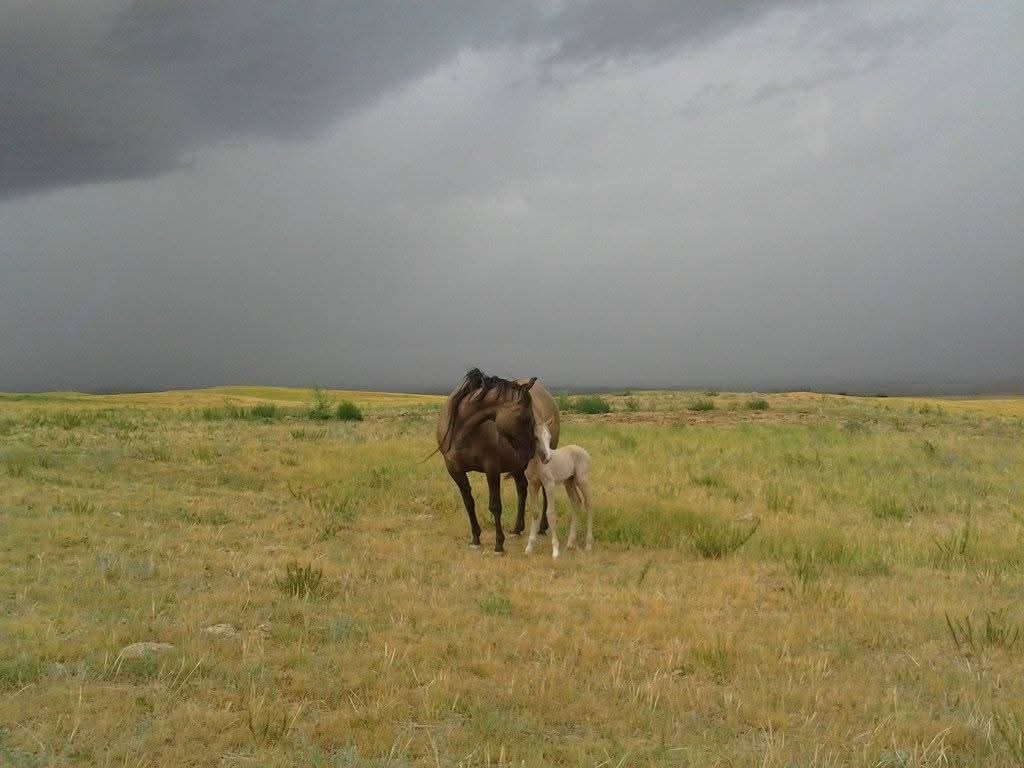
AQHA members rescind rules that limited use of frozen semen and embryos at the 2026 AQHA Convention
The “2-Year Rule,” as it has come to be known, was revisited and ultimately changed at the 2026 AQHA Convention, serving as a strong example of how AQHA’s member-driven governance process works in practice.
Many AQHA members attended the 2026 AQHA Convention in March in Las Vegas for the first time to voice their opinions on AQHA’s rules regarding the use of frozen semen after the death or gelding of a stallion (REG111.6) and the use of frozen embryos after the death or spaying of a mare (REG112.10).
“Solo Select Horses would like to extend a sincere thank you to the AQHA for hosting such a well-organized and impactful event (Convention),” wrote Melanie Smith, one of the owners of Solo Select, on Facebook after Convention. Smith is one of the AQHA members who spearheaded the effort to repeal the rules. “Events like this remind us how important it is to stay involved. Whether by serving on a committee or stepping into a director role, participation from members of all ages is what keeps this Association strong and moving forward.”
The Rule’s History
The rule was originally adopted in 2015, when the AQHA Stud Book and Registration Committee approved a limitation allowing horses foaled in and since 2015 to only be bred for two years following their death or sterilization.
“At the time, the committee believed this was in the best interest of the breed,” says AQHA Registrar Tammy Canida. “The intent was to encourage the advancement of future generations, reinforcing the principle that each generation should strive to improve upon the last.”
The two-year timeframe was not arbitrary.
“It was viewed as a reasonable period for stallion owners to fulfill existing breeding contracts and honor rebreeds, while still allowing space for new genetics to enter the marketplace,” Tammy says.
Since its adoption, the rule has been brought before the Stud Book Committee nearly every year, with discussions becoming increasingly robust in recent years.
The Final Decision
Months of member discussion on social media and hours of discourse over two full days in the AQHA Stud Book and Registration Committee meeting at the 2026 AQHA Convention culminated with the committee recommending to table its decision to take any action on these rules and to create a task force to obtain more details on the recent research results and statistics that were presented to the committee during Convention.
“With the review of recent research results, some trends emerged”, Tammy says. “The number of active breeding stallions declined significantly, while the number of mares bred remained relatively the same. Secondly, a growing number of mares were being bred to deceased stallions, including some of the industry’s most heavily used sires. There is an increasing concentration of certain stallions and mares across the industry, regardless of whether those horses are living or deceased. This is an important distinction. It tells us that the issue is not solely about the timing of use after death, but about how frequently certain bloodlines are being used overall.”
These trends raised concerns about genetic concentration and long-term diversity within the breed, Tammy says. While comprehensive studies specific to the Quarter Horse population remain limited, broader scientific research indicates that genetic diversity in livestock populations can decline under similar conditions. The research done on the Quarter Horse population showed that there was a decline in genetic diversity.
A majority of the Stud Book Committee members believed that this was too important of a decision to make and that the recent research needed more discussion. Thus, the Committee voted 16 to 8 against the motion to rescind the “2-Year Rule.”
A day later during the Membership Business Meeting, there was two hours of discussion between members who supported the 2-Year Rule and those who wanted it rescinded. When it came time to vote, the membership voted 237 to 173 to repeal the rules and keep the task force that the Stud Book Committee recommended.
The AQHA Board of Directors supported the membership’s vote.
What’s Next?
“With the removal of the rule, there is no longer a restriction on how long a stallion or mare may be bred after death or sterilization,” Tammy says. “Also, horses previously ineligible to be registered, due to the rule, may now qualify for registration, provided all other registration requirements are met.”
“While computer and database system updates are still being finalized, owners can start submitting applications and initiating the registration process,” she says. “Stallion breeding reports and frozen embryo paperwork also needs to be submitted.”
Recognizing the importance of informed decision-making, the Stud Book and Registration Committee will establish a task force to further study genetic diversity, breeding trends and research findings. This ensures that future decisions are grounded in science, data and what is best for the breed long term. The task force will bring their findings to the 2027 AQHA Convention for discussion within the committee.
“The goal is to provide meaningful data and scientific insight to help guide future discussions, ensuring that decisions continue to support the long-term health and integrity of the American Quarter Horse,” Tammy says.
Here are some of the questions AQHA is getting from members:
Q: Can I now use frozen semen from a stallion that died more than two years ago?
A: Yes. With the rule rescinded, that restriction has been removed.
Q: What about frozen embryos that were previously not eligible?
A: Those embryos may now be eligible for registration, as long as all other AQHA requirements are met.
Q: Does this automatically register horses that were previously denied?
A: No. Registration is not automatic. Each case must still meet AQHA requirements and be submitted by the owners under current rules.
Q: Are there still rules I need to follow?
A: Absolutely. This change only removes the two-year time restriction. All other requirements remain in place.
Q: Why was the rule rescinded?
A: The decision reflects the members’ votes at the AQHA Convention – a true example of AQHA’s governance process. The data indicated that focusing solely on the two-year timeframe did not fully address the larger issue of genetic concentration.
Q: Should I be concerned about future rule changes?
A: Any future considerations will go through AQHA’s member-driven governance process. The task force’s role is to study the data and provide informed recommendations to the AQHA Stud Book and Registration Committee at a future convention.
–Reprinted with permission by AQHA