2026 Fall Homeland | Love is an apple crisp made with apples from your own tree

Connie Sieh Groop Follow
“The best time to plant a tree was 20 years ago. The second best time is now.” -Chinese proverb
-
Connie Groop of Frederick is thankful that friends will share some of their apples this fall.
Connie_looking_for_apples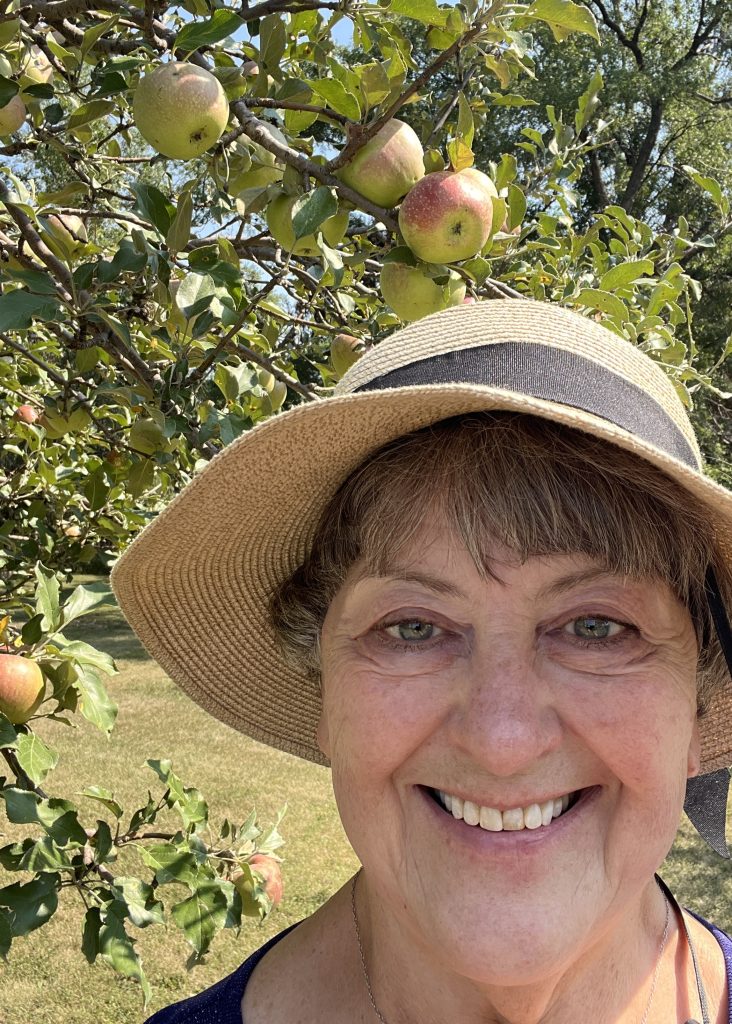
-
Two years ago, Aaron Kiesz, Aberdeen City Forester, oversaw planting of nearly 100 fruit trees in the Aberdeen Arboretum.
Aaron_Kiesz_planting_trees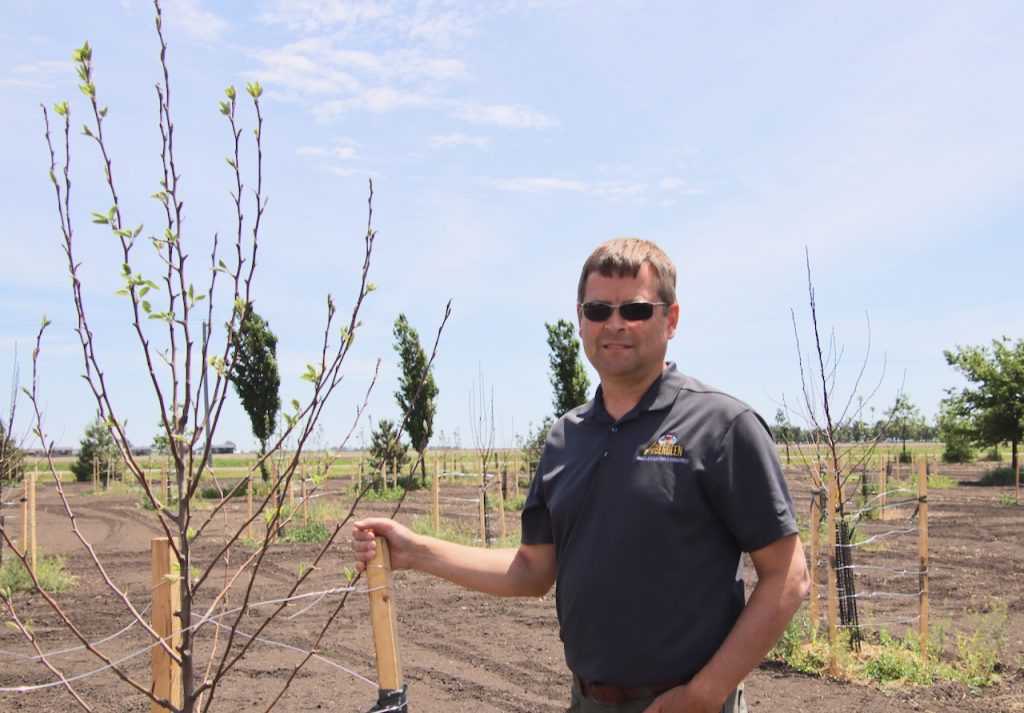
-
This is the apple tree in the yard of Connie Groop when it was full of apples.
Apple_tree_full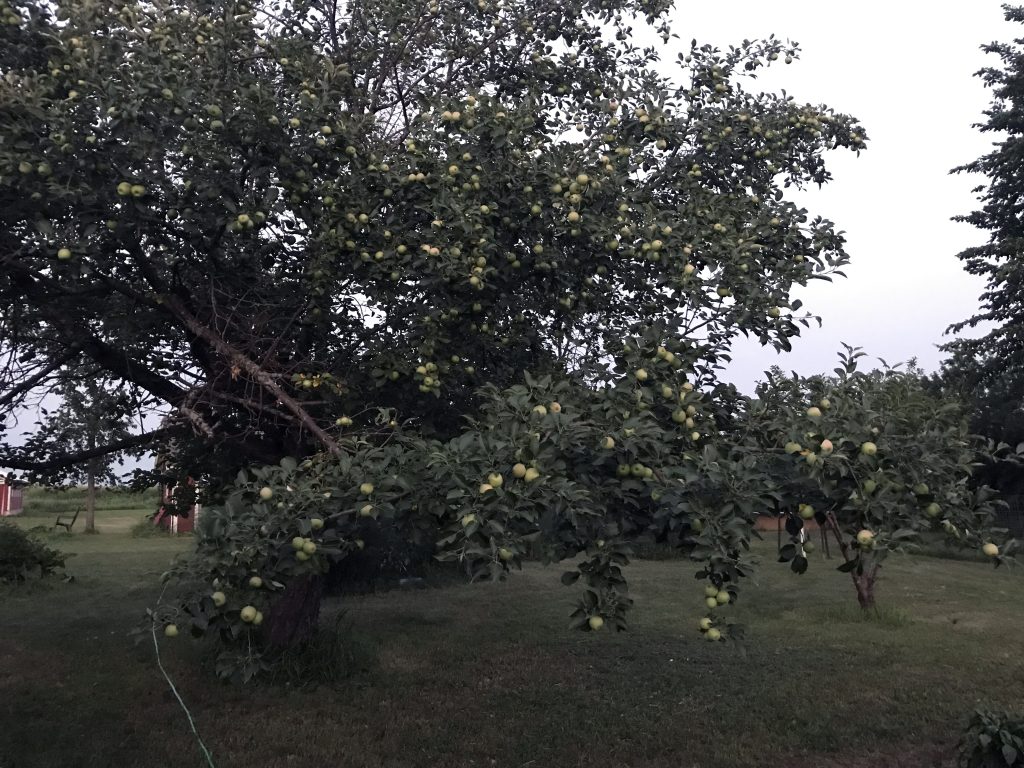
-
-
This is the apple tree of Connie Groop after winds twisted the branches and killed the tree.
Apple tree damage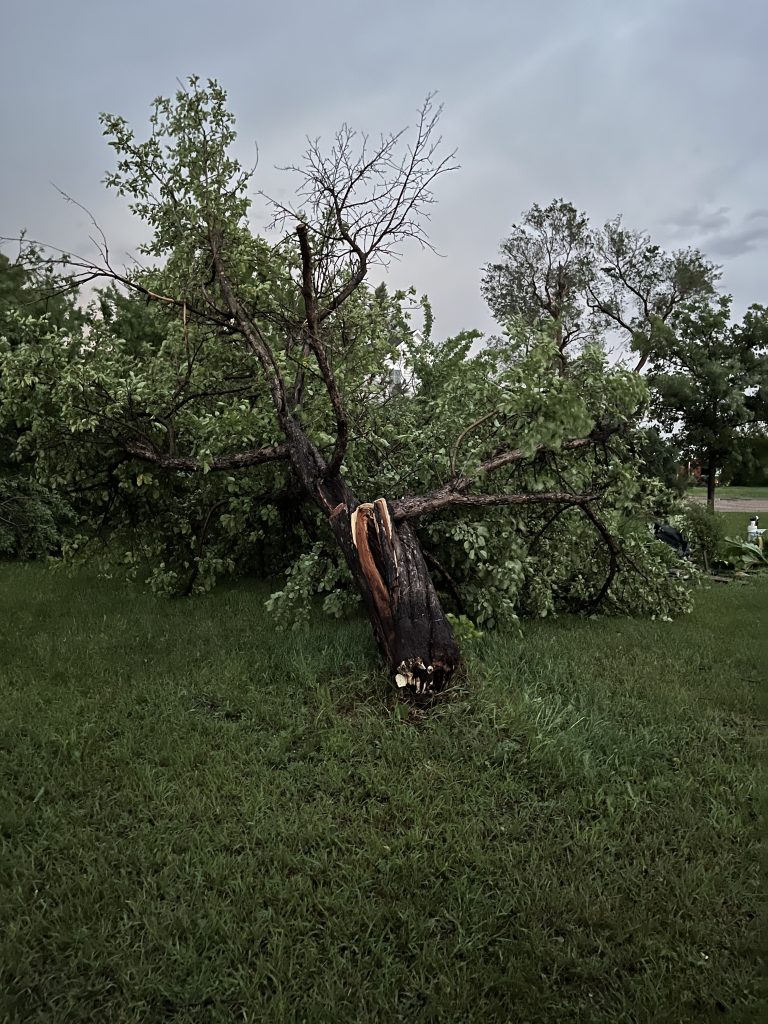
-
Mary Schier of Minnesota shared some of the history of pioneers being frustrated when trying to grow apple seeds in cold climates at a Master Gardener session.
MG_Mary_Schier_speaker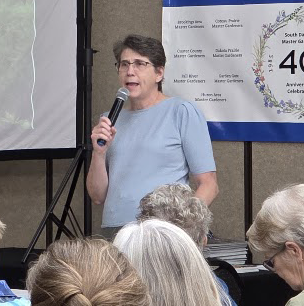
Our apple harvest has gone from abundant to nonexistent. Severe weather events and age destroyed our most prolific tree, and our new trees are stretching their limbs. Spring blossoms brought hope for future delights. But a late frost ended that promise for this year.
For many years, we had more apples than we could use. We’d invite neighbors and friends to climb our tree and pick the red-and-yellow Haralsons before birds found them or they fell to the ground. The tree seemed endlessly productive. Some years, we even helped neighbors rake up windfalls for their hogs—a treat the animals clearly enjoyed. Apple-flavored bacon!
It was always a challenge to claim the best apples—the reddest ones, some as large as softballs—before birds swooped in for a bite. After picking, I cored and sliced them for later use. Some went into freezer bags for pies and crisps, some into a kettle for applesauce, and some into the dehydrator for apple chips. Processing those hardy fruits filled the house with the welcoming scent of cinnamon, spices, and sweet apples.
Apple trees take time to establish. We planted our first one more than 45 years ago, when our daughters were young. Time is needed for them to spread their roots and settle in. After a few years, we watched each spring as delicate white blossoms appeared, and we greedily harvested the fruit.
As the tree aged, fierce winds twisted its branches, but it kept producing. About five years ago, extreme winds finally snapped its limbs, split the trunk and forced us to cut it down. We planted new Haralson Red trees, but they need time, too. Last year, two blossoms survived and grew into promising fruit. I waited too long, though—the birds enjoyed them before I did.
History of hardy trees
Last year, I heard Mary Schier, author of Northern Gardener, share insights about gardening in Minnesota. She shared that when settlers came to this region, they longed to grow the foods they had known in Europe.
Pioneers brought seeds from their homelands, but the seedlings struggled in the harsh climate. Schier shared a quote from W.H. Alderman’s 1958 article on Minnesota horticulture: “Of all the fruits, the apple was the most desired, and repeated loss of trees seemingly served only to whet the appetite for the King of Fruits.”
Many people were determined to cultivate trees that could survive the climate. John Harris and Peter Gideon were among those who experimented with grafting to develop trees hardy enough for temperatures of 20 and 30 degrees below zero. Working with the Minnesota State Horticultural Society and the University of Minnesota Farm School, they shared seedlings with trial stations across the state. Eventually, hardy apple trees flourished in Minnesota and became available in South Dakota. Schier notes that the Haralson variety, introduced in 1923, became prized as a pie apple because the fruit kept for up to four months.
Challenges
Aaron Kiesz, city forester in Aberdeen, South Dakota, described some of the challenges of growing fruit trees in the state. He said growers should first make sure a tree can survive in their USDA Plant Hardiness Zone. Our area is Zone 4a, while Sioux Falls and Custer are in Zone 5a. Those ratings reflect winter severity. Even in the right zone, frost remains one of the biggest and most unpredictable threats to an apple crop. He suggested that purchasing trees locally provides a better opportunity for a tree that is suited to the area’s climate.
Apple trees may be dwarf, semi-dwarf, or standard. Kiesz said dwarf trees do not perform well in this region. Semi-dwarf trees grow to about 15 feet, making them easier to prune and harvest. Standard trees can reach 20 to 25 feet and are the hardiest, though it may take up to five years for them to bear fruit.
Kiesz cautions against planting fruit trees too deeply and urges people to read planting instructions. He recommends adding compost to the planting hole and spreading two to three inches of mulch around the base. In open areas, staking is wise, especially where high winds are likely. If the tree bends in the wind, staking can help prevent roots from snapping as the tree is buffeted by the wind. Watering is essential, with about five gallons twice a week suggested during the first year, and possibly more in extreme conditions.
Once the trees mature, Kiesz said, residents will be able to pick fruit from them. That should take about three more years.
As the old saying goes, the best time to plant a tree was 20 years ago. The second-best time is now.
This year, I’ll have to be content making friends with people who have apple trees and are willing to share. Meanwhile, I’ll keep dreaming of the apples we may pick from our own tree next summer.
For those seeking recommendations for varieties, check out the information at https://extension.sdstate.edu/fruit-variety-recommendations-south-dakota
Like any plant, apple trees can face disease and pest problems. Common concerns include:
Fire blight is bacterial. The earliest sign is a water-soaked look on blossoms, shoots, or young fruit. Within one to three weeks, affected tissue wilts and turns brown or black. Treatment includes removing infected wood, applying protective sprays at the right time, and preventing bacteria from spreading between cuts. Quick action matters; once blackened shoot tips or oozing cankers appear, the bacteria are already moving deeper into the tree.
Apple scab is a fungal disease that is difficult to control. It can be treated, but it requires consistent effort.
Cedar apple rust is another fungal disease, marked by yellow-orange spots on leaves.
Codling moth infestations can leave worms in apples. Treatment begins after the first moth flight, with spraying typically best when most apple blossom petals have fallen.
Apple maggot is caused by a fly. Red balls coated with Tanglefoot can be hung in trees to detect infestations, with treatment beginning in early June.
For help to diagnose problems, visit: https://www.ndsu.edu/agriculture/extension/extension-topics/gardening-and-horticulture/trees-and-shrubs/apple-trees
To encourage people to learn more about fruit trees and their uses, Kiesz has planted nearly 100 fruit trees in the Aberdeen Arboretum on the south end of the city. Signs identify each tree and fruit type. Visitors are encouraged to see the different varieties and learn which are best for eating, baking, or pollinating.
Simply Divine Apple Crisp
Mix together until crumbly;
½ cup white sugar
½ cup brown sugar
¾ cup flour
¼ cup margarine – melted
1cup of old-fashioned oatmeal
1 pkt of instant Anthem Oats chia oatmeal
Spread 4 cups peeled, sliced apples in greased 9 x 13 pan.
Pour over apples 2 tablespoons lemon juice mixed with ½ cup water. Sprinkle generously with cinnamon. Lightly sprinkle with nutmeg. Spread crumbly mixture over apples.
Bake at 350 for 50 to 60 minutes.